
Review · VERONA
Discover the old market and make fresh pasta
Fresh pasta starts at the market. This four-hour class combines a walk through Villafranca’s old market with hands-on cooking, local wine, and a meal you help create. I especially like the market-to-table format and the small group limit of 10, which gives the chef room to offer practical advice. The main caution is uncertain communication before arrival, since one booking received confirmation only about an hour before the scheduled start.
You meet in front of the Scaliger Castle in Villafranca, then choose ingredients before cooking in a typical Venetian kitchen with a garden and castle views. The chef is praised for being attentive, professional, and generous with cooking tips, but I would confirm the meeting details early if your schedule is tight.
Key points at a glance
- Market shopping comes first: On Wednesdays, you visit Villafranca’s market stalls and choose ingredients for the meal.
- Handmade pasta is the main lesson: You work with eggs and flour, then shape tortellini called Nodo d’amore, pappardelle, or seasonal vegetable tortelli.
- The setting has local character: Cooking takes place in a Venetian-style kitchen with a garden and a view toward Scaliger Castle.
- Tiramisu is part of the menu: You prepare Italy’s best-known coffee dessert along with the pasta dishes.
- Wine is included in the experience: Your meal is paired with renowned wines from the Verona area.
- The group stays small: No more than 10 people take part, with instruction in Italian and English.
Starting at Scaliger Castle in Villafranca
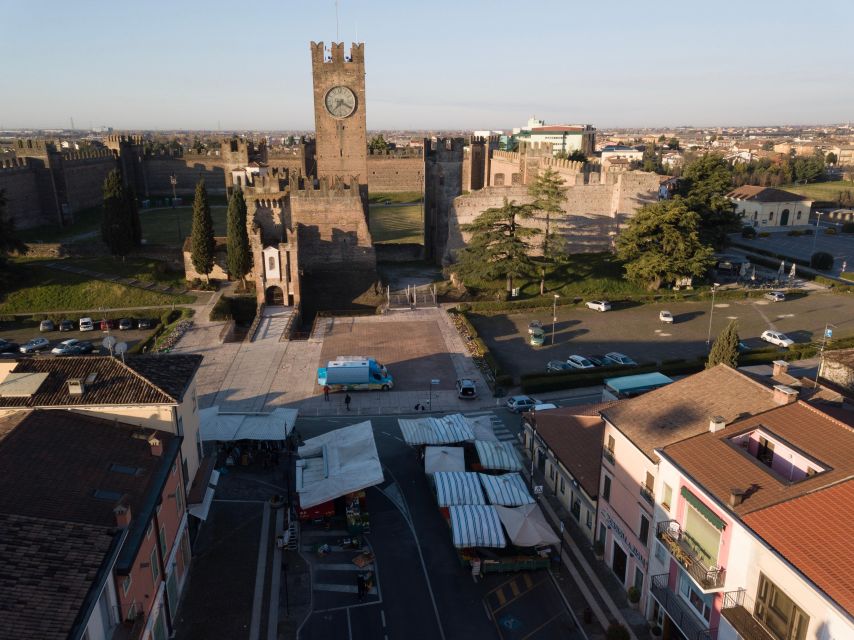
The experience begins in front of the Scaliger Castle, at coordinates 45.3514404296875, 10.846451759338379. The host’s contact details are provided after booking, so you should keep them handy on the day.
Starting at the castle gives the class a clear sense of place. You are not being dropped into an anonymous cooking studio. First, you meet in a recognizable part of Villafranca, then walk into the town’s food life before touching a mixing bowl.
The castle also makes the meeting point easy to identify, although the experience does not include a full castle tour. The castle is your starting landmark, not the main attraction. If you arrive early, you can use the area around it to get oriented before meeting the chef.
There is no stated hotel pickup or private transport. Plan to reach Villafranca independently unless the host gives you different instructions after booking. That matters if you are staying in central Verona and have built your morning around a tight timetable.
More Fresh Pasta Workshops in Verona:
- Verona: Hands-on Fresh Pasta and Tiramisù Cooking Class
★ 4.9 · 295 reviews - Verona Arena: The ORIGINAL Fresh Pasta and Tiramisu Cooking Class with wine
★ 4.9 · 128 reviews - Verona: Authentic Pasta Making Class with a Local Family
★ 5.0 · 64 reviews
Wednesday market shopping and local ingredients
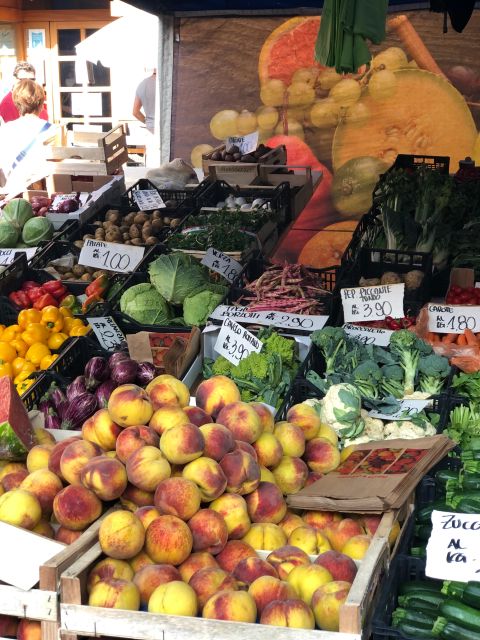
On Wednesdays, the class begins with a walk among the market stalls. Together with the chef, you choose the products that will be used later in the kitchen. This is one of the best features of the experience because it connects the cooking lesson to real ingredients, not just a prepared pile of food waiting on a workbench.
The market visit also gives the chef a chance to explain how products can be used in more than one way. One particularly useful part of the instruction is learning how to work with the ingredients available, then adapt them across different dishes. That kind of advice is practical at home, where your vegetables and fillings will rarely match a recipe perfectly.
Timing matters. Villafranca’s market day is Wednesday. On other days, you choose products with the chef in selected local shops instead. The class still has a food-shopping element, but it will not have the same market-stall setting.
I would choose Wednesday if the market visit is important to you. If Wednesday does not fit your plans, the local-shop version still keeps the ingredient selection connected to the cooking, which is more useful than simply arriving after all the buying has been done.
The details of the market route and the exact ingredients are not fixed in advance. Seasonal vegetables may shape the filling, so the menu can vary. That is a plus for freshness and local context, but you should not book expecting one rigid list of dishes every time.
Kneading dough the old-fashioned way
After shopping, you move only a short distance to the cooking location. The class takes place in a typical Venetian kitchen with a garden and a view of the castle. The setting helps keep the lesson informal and rooted in the area.
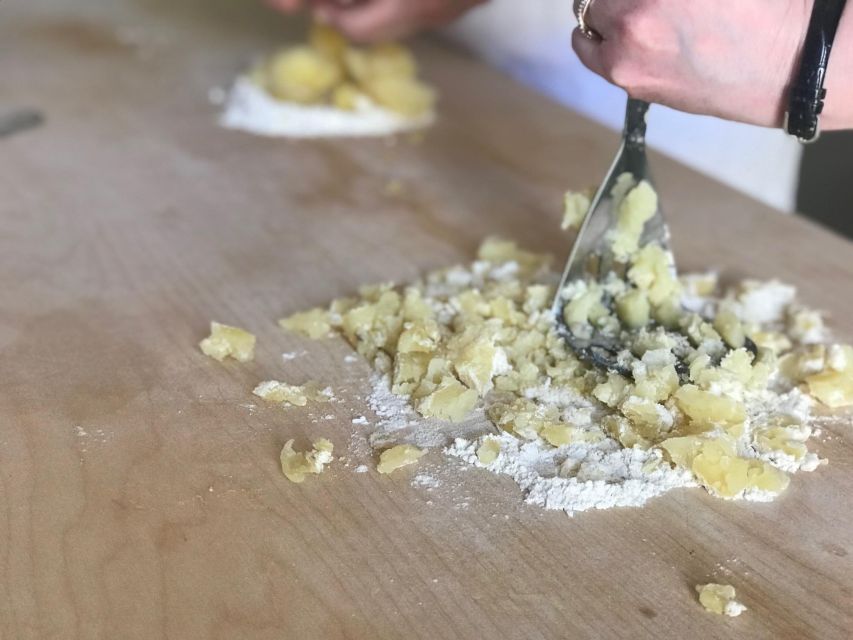
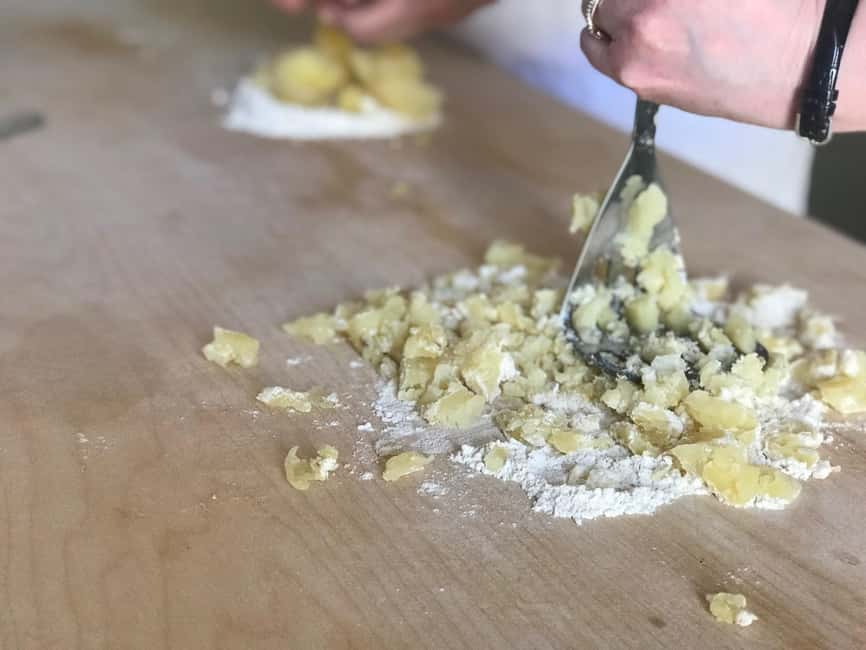
The central lesson uses two simple ingredients: eggs and flour. You knead the dough by hand and learn the techniques used to make fresh pasta in the style of Italian grandmothers. This is not just a demonstration where you watch someone else roll the dough. You are expected to work it yourself.
That hands-on approach is valuable because fresh pasta depends on feel. You learn how the dough changes as you knead it, how to handle it, and how to shape it into different forms. The available information does not specify every tool or the exact amount of dough per person, so expect instruction around the main techniques rather than a highly technical culinary-school session.
The chef’s teaching style is a strong part of the experience. The chef is described as attentive, prepared, and professional, with a willingness to explain ideas and offer advice. If you want small tips that can improve your everyday cooking, this class appears better suited than a quick photo opportunity with a token pasta activity.
Shaping Nodo d’amore and seasonal pasta
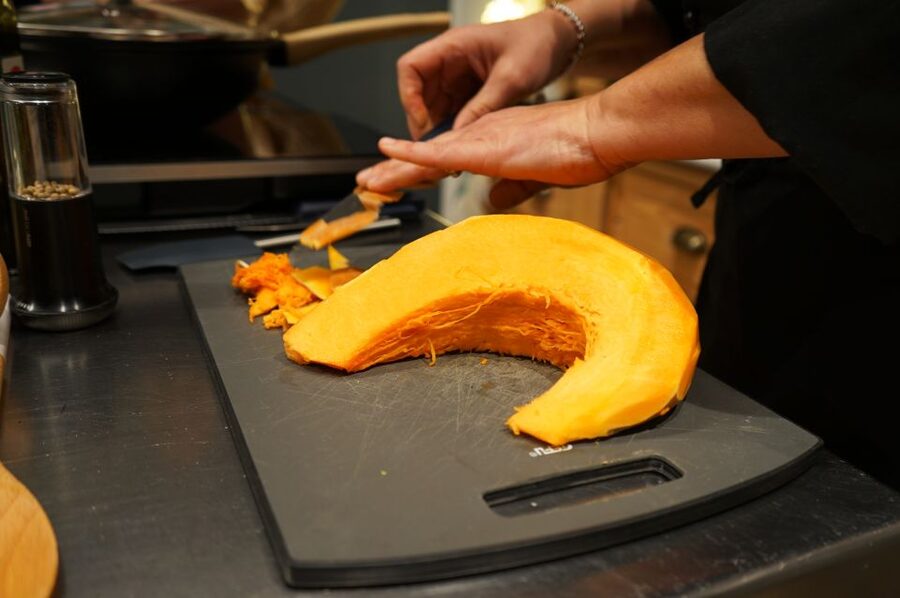
The signature pasta is tortellini Nodo d’amore, a local specialty whose name means knot of love. You also may prepare pappardelle or tortelli filled with seasonal vegetables bought during the earlier food stop.
The shapes give the class variety. Pappardelle lets you practice cutting broad ribbons, while tortellini and tortelli require more care with filling, folding, and sealing. The seasonal vegetable filling also makes the market visit matter, since what you buy helps determine what goes into the pasta.
You should expect some variation in the final menu. The description names the possible pasta types, but it does not promise that every class will prepare all of them. The chef may choose based on the market products, the season, and the pace of the group.
This is a good match for someone who wants to leave with skills rather than only a full stomach. You will get more from it if you enjoy asking questions and paying attention to the small decisions behind the dish. The class has a maximum of 10 people, so it should be easier to follow the chef than in a large demonstration.
Still, a small group does not guarantee one-to-one instruction at every moment. If all 10 participants are shaping pasta at once, you may need to wait briefly for help. The advantage is that the class remains limited enough for the chef to keep an eye on the work.
More Market and Cooking Classes in Verona:
- Bologna Food & Market Tour with 6 Tastings, Pasta, Wines & More
★ 5.0 · 1,328 reviews - Pasta and Tiramisu Cooking Class with optional Local Market Tour
★ 5.0 · 515 reviews - Rome: Pasta Cooking Class with Market Visit and Wine
★ 4.9 · 277 reviews - Kitchen of Mamma: Pasta Cooking Class with market visit in Rome
★ 5.0 · 140 reviews
Making tiramisu before lunch
Pasta is not the only dish on the menu. You also prepare tiramisu, Italy’s favorite dessert. This gives the lesson a useful second rhythm: first you work with dough and savory fillings, then you turn to a classic sweet course.
The dessert is a sensible addition because it rounds out the meal you later taste together. You are not learning one isolated technique and then leaving. You are helping prepare several parts of a shared Italian meal.
The supplied details do not specify the exact tiramisu method, ingredients, or whether coffee, cocoa, or another finishing ingredient is used. You should expect a traditional tiramisu lesson, but do not assume a specific recipe unless the chef confirms it.
For home cooks, the dessert may be the easiest part to repeat. Fresh pasta takes practice, while tiramisu can often be recreated with more predictable results. If you are choosing the class for a family or mixed-interest group, the pasta and dessert combination gives different people something to enjoy.
Tasting the meal with Veronese wine
Once the food is ready, you eat what you have prepared in good company. The dishes are paired with renowned wines from the Verona area, adding a local drink component to the meal.
This is where the class earns value beyond a standard cooking lesson. You are not simply collecting a recipe. You are linking the ingredients, the cooking methods, and the regional wine tradition in one sitting. The meal also gives you time to enjoy the results without rushing straight to the next sightseeing stop.
Alcohol is part of the tasting, and alcohol and drugs are not allowed outside the stated experience rules. If you do not drink, the supplied information does not explain whether nonalcoholic alternatives are available, so ask the host before booking if that matters to you.
The wines are described as Veronese, but specific labels and quantities are not provided. I would not book this expecting a formal wine seminar with detailed vintages. Think of the wine as a pairing that supports the meal, not as the main event.
What the four-hour schedule means for your day
Four hours is long enough for the market or shop visit, the cooking lesson, and the shared meal. It is also long enough that you should not place it between two tightly timed activities.
The experience has several stages, and none should be treated as filler. The shopping gives context, the pasta lesson supplies the main activity, the tiramisu adds another recipe, and the meal gives you time to eat what you made.
Because the exact starting time varies, check availability for the date you want. The details provided do not give a fixed daily departure hour. Market day is Wednesday, so match the start time with the market schedule when possible.
I would reserve this for a morning or early afternoon when you can let the four hours unfold. You may be able to fit sightseeing before or after it, but the class is not a quick one-hour stop.
Language, group size, and the booking caution
Instruction is available in Italian and English. That makes the class practical for English-speaking visitors, while the Italian setting remains central to the experience.
The group is limited to 10 participants. This is a useful middle ground. You get the social side of cooking with other people, but the class should not feel like a large food-production line.
The main practical concern is confirmation and customer service. One booking had unclear instructions and received confirmation only about an hour before the morning start, with poor help when trying to adjust the arrangement. That does not prove every booking will have the same problem, but it is enough reason to contact the host if you have not received clear meeting information.
The host’s contacts are provided, and I would use them. Confirm the meeting time, the exact point in front of the castle, and how to reach the cooking location. This is especially important if you are coming from Verona or coordinating a train, taxi, or other scheduled activity.
Free cancellation is available up to 24 hours in advance for a full refund. You can also reserve and pay later, which is useful when your Italian plans are still shifting. Those policies reduce the financial risk, but they do not remove the need to verify the meeting details.
How the value compares with other Verona cooking classes
No price is provided here, so I cannot judge the exact cost in euros. I can judge what you receive for the four-hour commitment.
You are paying for more than a recipe demonstration. The experience includes a food-shopping component, hands-on pasta work, tiramisu preparation, a shared meal, wine, and a small group setting. If you value personal instruction and local ingredients, that combination can justify a higher price than a short pasta class held entirely indoors.
The value is weaker if you mainly want a fast lesson or a formal wine tasting. The market visit and meal take time, and the class is built around participation rather than a polished performance.
Compared with a cooking class in central Verona, Villafranca adds a change of setting and a castle meeting point. The supplied details do not include transport between Verona and Villafranca, so factor that into your budget and schedule. A lower class price may not be a better deal if reaching it is awkward.
Who should book this experience
I would recommend it to you if you enjoy food, small groups, and practical instruction. It suits couples, friends, and families who want to spend part of the day doing something rather than only looking at monuments.
It is also a good choice for anyone who wants a regional experience connected to local buying and cooking. The Wednesday market is particularly appealing if you want to see the ingredients before they reach the plate.
You may want to skip it if you dislike group activities, do not drink wine, or need exact confirmation far in advance. The chef’s warm and helpful teaching style is a major benefit, but the pre-arrival communication issue means you should be proactive.
This is not the right pick if your main goal is a guided visit inside Scaliger Castle. The castle serves as the meeting landmark, while the real focus is food.
Should you book the Villafranca pasta class?
Book it if you want a friendly, hands-on afternoon that ties together a local market, handmade pasta, tiramisu, and Veronese wine. The strongest reasons are the attentive chef, the chance to make several pasta shapes by hand, and the small group size.
Choose Wednesday for the market version, and confirm the meeting instructions directly with the host. If you do that and allow the full four hours, this should be a rewarding food experience with useful skills to take home.
FAQ
Where does the cooking experience begin?
You meet the chef in front of the Scaliger Castle in Villafranca, Italy. The host’s contact details are provided for meeting information.
How long does the experience last?
The experience lasts four hours. Starting times vary, so you need to check availability for your chosen date.
Is the market visit available every day?
Villafranca’s market day is Wednesday. On other days, you choose products with the chef in selected local shops.
What pasta dishes will I prepare?
You will learn to make fresh pasta with eggs and flour. The class includes tortellini Nodo d’amore, and may also include pappardelle or tortelli filled with seasonal vegetables.
Is tiramisu included?
Yes. You prepare tiramisu as part of the cooking experience.
Is wine included?
The meal is enjoyed with local Veronese wines. Specific wines and quantities are not stated.
What languages are offered, and how large is the group?
Instruction is available in Italian and English. The group is limited to 10 participants.
More Shopping Tours in Verona
- Private Florence Market Tour and Pasta Making Class with Cinzia
★ 5.0 · 8 reviews - Trionfale Market Tour and Gnocchi Cooking Class with a Masterchef
★ 5.0 · 5 reviews - Pasta & Tiramisu Cooking Class + Italian Market Tour in Florence
★ 5.0 · 5 reviews - Dolce Vita by Day Market Tour & Pasta Making Class
★ 5.0 · 4 reviews
More Market Visits in Verona
- Farmers’ Market Shopping with Cooking Class and Pasta Making
★ 5.0 · 91 reviews - Rome: Testaccio Food & Market Tour with Pasta & Wine
★ 5.0 · 38 reviews - Farmer’s Market and Pasta Making with Italian Wine
★ 5.0 · 15 reviews - MaMa Florence Guided Market Tour and 4 Course-Pasta Cooking Class
★ 5.0 · 15 reviews
Just added around Verona
- Verona: Tortellini Cooking Class and Lunch with Mamma Ivana★ 5.0 · 20 reviews
- Verona: Pasta & Tiramisu Cooking Class at a Local’s Home★ 5.0 · 16 reviews
- Verona: Pasta Cooking Class with Wine Tasting★ 5.0 · 4 reviews
- Verona: Prosecco and Pasta Making Class at a Local’s Home★ 5.0 · 10 reviews
- Verona: My Granny’s secrets making gnocchi★ 5.0 · 7 reviews
- Bardolino: Garda Lake Pasta Cooking Class at the Agritourism★ 5.0 · 32 reviews
- Cesarine: Small group Pasta and Tiramisu class in Verona★ 5.0 · 8 reviews
- Vegan Pasta in Verona in a family home Kitchen★ 5.0 · 2 reviews
Fresh Pasta Workshops, compared.
Pasta Making Class with Wine, Limoncello, and Dessert
Read our review →
Enjoy Spritz and Pasta Making in Piazza Navona
Read our review →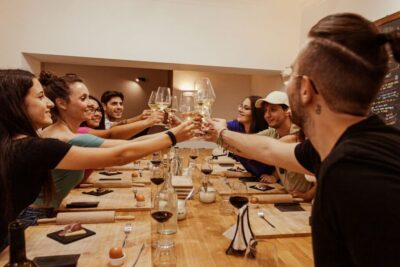
Pasta Making & Wine Tasting with Dinner in Frascati from Rome
Read our review →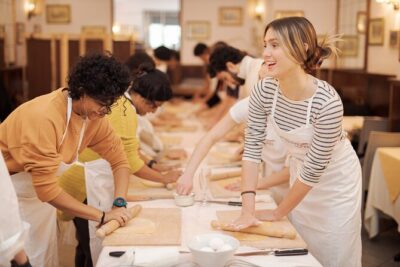
The Secrets to Learn Fresh Pasta and Tiramisù in a Glam Home
Read our review →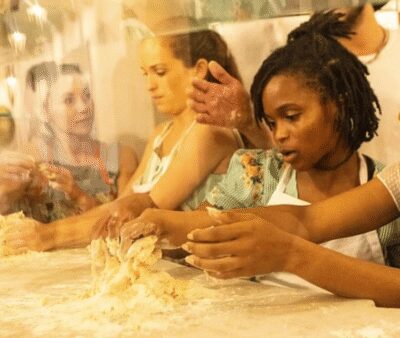
Pasta Making with Wine Tasting and Dinner in Frascati
Read our review →
Browse the lists this tour appears in