
Review · BARI
Bari: Pasta Experience Walking Tour
Pasta tastes better when you make it yourself. This Bari walking tour combines the city’s main sights with a cheerful orecchiette lesson inside a local home, giving you both an introduction to Bari and a real taste of Apulian daily life. I like the mix of history and hands-on cooking, especially the chance to meet a local pasta maker rather than simply watch a demonstration.
I also like the compact 2.5-hour format, which gives you a useful first look at the old town without taking up a full morning or afternoon. The main consideration is that the pasta session can change if the local nonna is unavailable, as happened on some departures, so the cooking portion is the one part of the experience you cannot treat as absolutely fixed.
Key points to know before booking
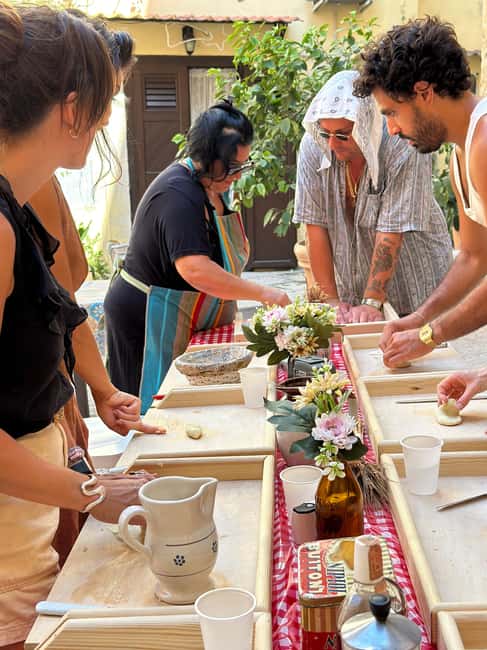
- You make orecchiette yourself: This is a practical lesson, not just a demonstration. You knead semolina dough and shape the small ear-like pasta by hand.
- The walk covers Bari’s historic core: Expect the Basilica of St. Nicholas, Bari Cathedral, the Swabian Castle area, main squares, and narrow lanes.
- The pasta stop takes place in a local home: Nonna Maria and other local women share their methods, stories, and a slice of ordinary Bari life.
- Food and drink are part of the experience: Your package includes an orecchiette tasting and a glass of wine. Some departures have also included gelato, focaccia, or other small tastings.
- Guides are praised for warmth and clarity: Alessia, Barbara, Chiara, Carlotta, Anna Rita, Simona, Vincenzo, and others have led departures in a friendly, easygoing style.
- The meeting point is central: Velo Service is a few steps from Piazza Mercantile, and luggage storage is included.
Starting near Piazza Mercantile
You meet at the VELO SERVICE Tour & Rental Store, just a few steps from Piazza Mercantile. That is a handy starting point because you are already close to Bari Vecchia, the old quarter where much of the tour takes place.
The activity begins as a walking tour, so wear comfortable shoes. Bari’s old streets can be uneven, and the route is about seeing the city at street level rather than covering long distances by vehicle. The experience is wheelchair accessible, but you should still confirm that the planned route and the day’s pasta venue suit your needs when booking.
Your guide may be Alessia, Barbara, Chiara, Carlotta, Anna Rita, Simona, Vincenzo, or another member of the multilingual team. The strongest descriptions of the experience point to guides who keep the information lively, answer questions patiently, and adjust their pace to the group. Anna Rita was praised for being especially warm and fun, while Barbara was noted for making the history brief, clear, and easy to follow.
The language options are English, Spanish, French, German, and Italian. This matters in a mixed group, where the guide may need to explain the same point in more than one language. The tour works best when the guide keeps the storytelling moving, and the available feedback suggests that this is usually handled well.
More Walking Tours in Bari:
- Bari Walking Tour with Pasta Experience
★ 4.5 · 270 reviews - Little Italy Food and Drink Walking Tour: Pizza, Pasta & Piazzas
★ 5.0 · 37 reviews - Trastevere Rome Walking Food Tour: Pasta, Wine and Gelato
★ 5.0 · 2 reviews
Seeing Bari through its old lanes
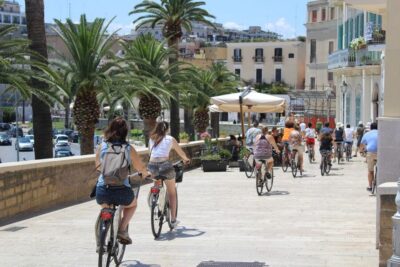
The first section gives you a broad introduction to Bari. You pass through the old town’s narrow alleys and main squares, with the guide explaining the city’s buildings, customs, and everyday routines.
I like this kind of opening because Bari is easy to misread if you only walk from one major sight to the next. The lanes are part of the experience. You may see locals going about their day, hear conversations from open doorways, and catch glimpses of the small domestic world behind the stone walls. The tour is designed to include contact with local people, not just a sequence of monuments.
The group visits the Basilica of St. Nicholas, one of Bari’s key landmarks. The basilica is important to the city’s religious identity and is also tied to the story of Saint Nicholas, a figure with followers well beyond Italy. The stop gives the guide a chance to explain why this church matters to Bari, rather than leaving you to admire the exterior and move on.
You also see Bari Cathedral, officially the Cathedral of San Sabino. Its place in the old town helps you understand how the city’s religious buildings fit into the wider medieval center. The Swabian Castle adds a different note, bringing military and political history into a walk that could otherwise focus only on churches and food.
The route also includes the main squares and lesser-known corners of the old town. It is not a museum-heavy visit, and entry fees to museums are not included. That is not a problem for most people booking this experience, since its purpose is a street-level introduction rather than an indoor sightseeing tour.
Walking Bari’s pasta street
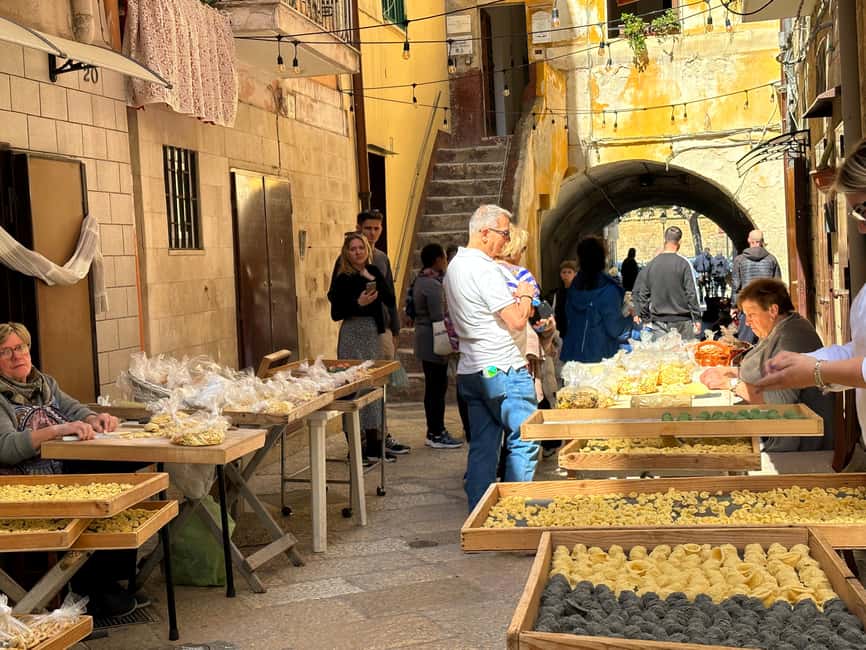
One of the most memorable parts of the route is the walk through the lanes associated with handmade orecchiette. In this part of Bari, women have long made the pasta by hand, often working in front of their homes or near open doorways.
The scene described for this experience is wonderfully ordinary. Grandmothers begin early, sing old songs, sweep stone floors, and set fresh orecchiette out on mesh screens and wooden trays to dry. You are not being shown a staged cooking theater. You are seeing a tradition linked to kitchens, neighbors, and daily work.
That is why this tour feels different from a standard food walk. The pasta is not treated only as a dish to sample. It becomes a way to talk about family, work, local identity, and the rhythm of the old town.
The exact stop may vary. The activity describes a local woman’s home opened to visitors, with Nonna Maria named as one of the pasta makers. Past departures have also included sessions with women called Portia, Porzia, and Donna Carmela. You should think of these as different hosts connected with the same local tradition, not a guarantee that one particular person will lead your class.
Making orecchiette with a local nonna
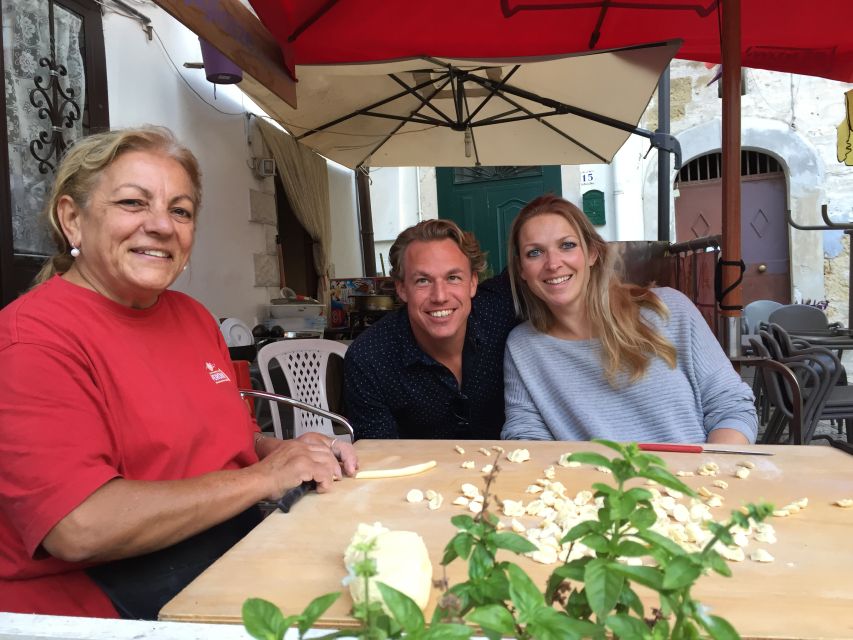
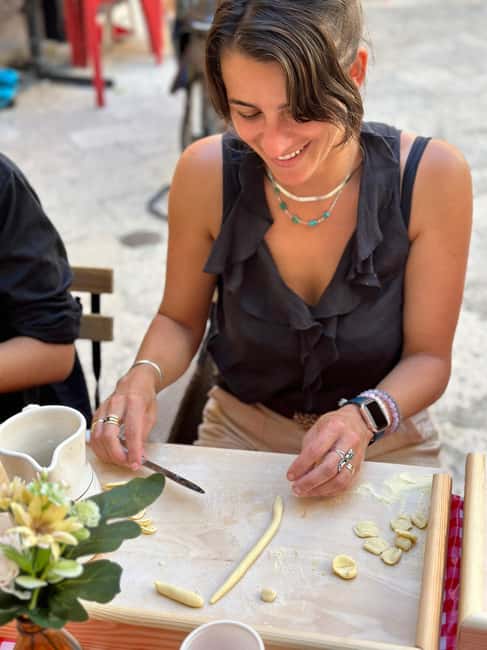
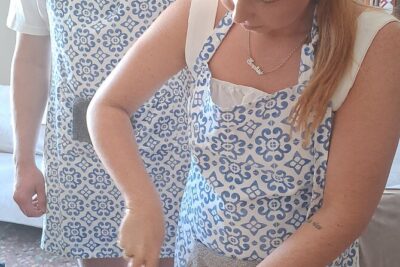
The cooking class is the heart of the experience. You sit with the local pasta maker, handle semolina dough, and learn how to shape orecchiette. The name means little ears, and the shape comes from pressing and dragging small pieces of dough across a surface with a knife or similar tool.
It looks simple until you try it. Several people found the shaping harder than expected, which is part of the fun. A nonna who has made pasta for decades can make the motion look effortless, but your first pieces may be uneven, oversized, or shaped more like tiny shells. That gives the class a relaxed feel. You are learning a skill, not taking an exam.
The host usually keeps the session social. You can ask questions, chat, and watch the pasta take shape around you. The descriptions of Nonna Maria emphasize her conversation while kneading and forming the dough. The lesson is as much about meeting her and hearing about local life as it is about producing perfect pasta.
This is also where the tour feels most personal. A cooking school can teach you technique, but a local home gives the activity a sense of place. You are not simply making Italian pasta in a generic studio. You are making Bari’s traditional pasta in the setting where it belongs.
The class is described as a leisure activity, so do not expect a full culinary course. In a short tour, you will learn the basic movement and enjoy the process. If you already make pasta at home, you may not learn every professional trick, but you will still gain a local version of a familiar Italian craft.
A few more classes around Bari worth a look
- Bari: Pasta and Tiramisu Cooking Class with Wine
★ 5.0 · 273 reviews - Apulian Cooking Class with Aperitif and Wine in Polignano a Mare
★ 5.0 · 89 reviews - Bari Bike Tour with Pasta Experience
★ 5.0 · 87 reviews - Apulian cooking class fresh pasta and focaccia
★ 5.0 · 68 reviews
Eating orecchiette with sauce and wine
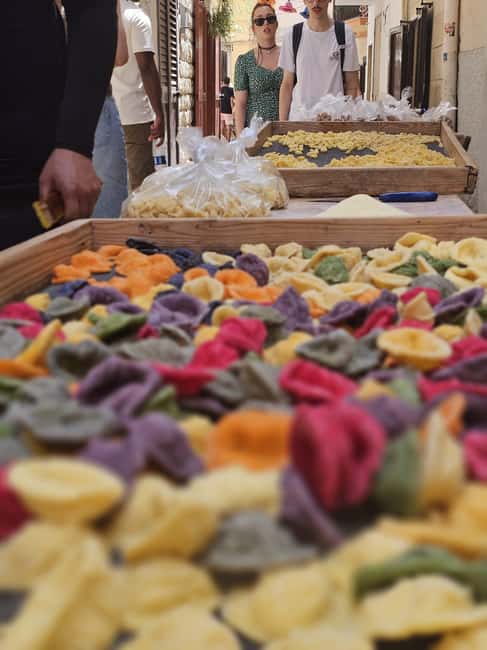
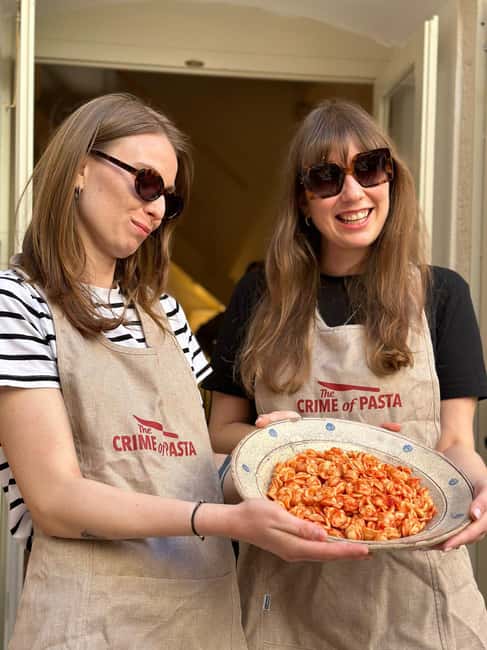
After shaping the pasta, you get to taste orecchiette with homemade fresh tomato sauce. That meal is important because it closes the loop between making the dough and understanding how the finished food fits into local life.
A glass of wine is included, giving the food stop a simple Apulian feel. You are not paying for a long restaurant meal, but for a modest tasting tied directly to the class. Some departures have also included ice cream or gelato, focaccia, and other small food stops. These extras have varied by guide and day, so I would treat them as pleasant additions rather than guaranteed inclusions.
The food is one of the reasons the price makes sense. At $72 per person, this is more expensive than a basic free walking tour and more than a quick plate of pasta. But the fee covers a guided city walk, a pasta-making session, orecchiette tasting, wine, and luggage storage. You are also paying for access to a local host and a structured introduction to Bari.
Value depends on what you want. If your priority is seeing as many monuments as possible, you may prefer a longer historical tour. If you want a personal food experience and a practical activity, the package is stronger. One participant felt a lower price would have been ideal, while still recommending the experience. That is a fair way to view it: good value for a combined food and sightseeing activity, but not the cheapest way to see Bari.
Small extras that can make the afternoon
The tour sometimes includes more than the basic pasta and wine. Several departures had a gelato stop, including a visit to Gelateria Gentile, which was singled out as a favorite. Another group enjoyed focaccia, while some experienced an unexpected musical performance near the end.
These details help explain why the tour can feel more like a local afternoon than a strict checklist. At the same time, you should not book it solely for gelato or music. The clearly stated inclusions are the pasta-making class, orecchiette tasting, a glass of wine, and luggage storage. Additional food or entertainment may depend on the route and the guide.
The music element, when it happens, has included participation rather than a formal concert. That makes it a lighthearted finish, especially after the group has spent time cooking together. You might find the atmosphere playful and spontaneous, though the main value remains the walk and pasta session.
The tour’s timing and pace
At 2.5 hours, the experience is short enough to fit into a busy Bari schedule. I would book it early in your stay if possible. The walk gives you a quick map of the old town, and the guide can point out places you may want to revisit on your own.
The pacing has been praised for allowing enough explanation without overwhelming the group. Guides have also left time for people to look around and ask questions. That balance matters because Bari’s old town rewards both listening and wandering. You want context, but you also want a moment to notice the details yourself.
The tour is not designed for a long sit-down meal or an extended visit inside each monument. The churches and castle area are part of the walking overview, while the pasta house receives the most interactive attention. If you want detailed art history, museum access, or a full historical lecture, this is not the right format.
What happens if the pasta session changes
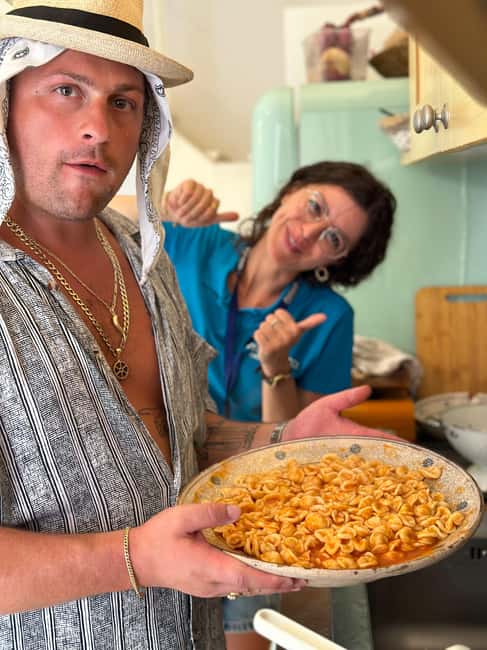
The local home visit is the part most dependent on circumstances. On some occasions, the nonna has been unavailable because of a personal problem. In those cases, the guide has replaced or adjusted the food portion with tastings and extra time around Bari.
That is worth knowing before you book. The pasta experience is the main reason to choose this tour, so a last-minute change would be disappointing. Still, the examples of guides adding food stops, extra explanations, or more time to the walk show that the company has tried to keep the outing worthwhile.
I would not consider this a reason to avoid the tour. I would simply book it with the understanding that a local host’s availability cannot be controlled completely. If making pasta is your single must-have activity, look for a booking with clear cancellation terms and keep a little flexibility in your schedule.
Free cancellation is available up to 24 hours before the start time, and you can reserve now and pay later. Those terms are useful here because the activity includes a local home visit and because travel plans in Puglia can shift. Entry fees to museums are not included, though museum admission is not central to this route.
Who will enjoy this Bari experience most?
This tour suits a first-time visitor who wants a quick orientation with food at its center. Couples, families, and small groups can all take part in shaping the pasta, and the activity does not require previous cooking experience.
It is also a good choice if you enjoy meeting local people more than checking off every sight. The home visit, pasta street, and conversations with local women give you a stronger sense of daily Bari than a standard monument-only route.
You may want a different tour if you dislike group activities, need a long museum visit, or want a serious cooking class with detailed recipes and extended instruction. The class is friendly and hands-on, but it is still one part of a wider walking tour.
For the best experience, arrive ready to walk, listen, and make imperfect pasta. The guide’s personality matters, and the team has included many strong hosts, but the format works best when you join in rather than stand back and watch.
Should you book the Bari Pasta Experience Walking Tour?
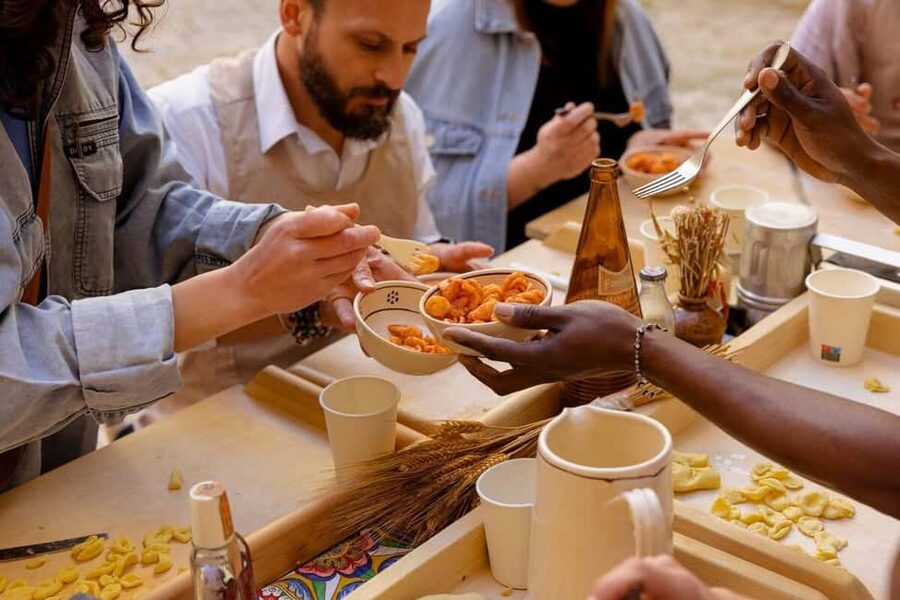
I would book it if you want Bari history served with lunch rather than a formal sightseeing lecture. The route covers the essential old-town sights, and the pasta lesson gives you a real connection to the city’s food culture.
At $72, it is not a bargain walking tour. It is a combined city introduction, cooking activity, tasting, wine stop, and local encounter. For many people, that combination is worth the extra cost, especially at the start of a Puglia trip.
Book it for the orecchiette, the narrow lanes, and the chance to sit with a local pasta maker. Just keep your expectations flexible about extras such as gelato, focaccia, music, and the identity of the nonna hosting your group.
FAQ
How much does the Bari Pasta Experience Walking Tour cost?
The price is $72 per person.
How long does the experience last?
The tour lasts 2.5 hours.
Where does the tour begin?
It begins at the VELO SERVICE Tour & Rental Store, a few steps from Piazza Mercantile.
What is included in the price?
The experience includes a leisure pasta-making class, orecchiette tasting, a glass of wine, and luggage storage.
Is the pasta made by the participants?
Yes. You prepare and shape traditional orecchiette with a local pasta maker.
Which Bari sights are included?
The walking tour includes the Basilica of St. Nicholas, Bari Cathedral of San Sabino, the Swabian Castle area, main squares, and narrow streets of the old town.
Which languages are available?
The live guides operate in English, Spanish, French, German, and Italian.
Is the tour wheelchair accessible?
Yes, the activity is listed as wheelchair accessible.
Can I cancel or pay later?
You can cancel up to 24 hours in advance for a full refund. You can also reserve now and pay later.
Just added around Bari
- Cesarine: Pasta & Tiramisu Class at Local’s Home in Bari★ 5.0 · 2 reviews
- Premium Cooking Class in Bari: Pasta & Tiramisu, free wine bottle★ 5.0 · 2 reviews
- Fresh pasta and dinner in my biogarden★ 5.0 · 8 reviews
- Artisanal ice cream pasta course in Castellana caves★ 5.0 · 6 reviews
- Cesarine: Private Pasta Class & Meal at Local’s Home in Bari★ 5.0 · 4 reviews
- Bari Pasta Experience by Rickshaw★ 4.5 · 31 reviews
- Cooking class of Tagliatelle and Tiramisu in Altamura★ 5.0 · 7 reviews
- Gioia del Colle: Premium E-Bike & Private Pasta Experience★ 5.0 · 4 reviews
Bari Pasta Classes, compared.
Apulian Cooking Class with Aperitif and Wine in Polignano a Mare
Read our review →
Cesarine: Small group Pasta and Tiramisu class in Bari
Read our review →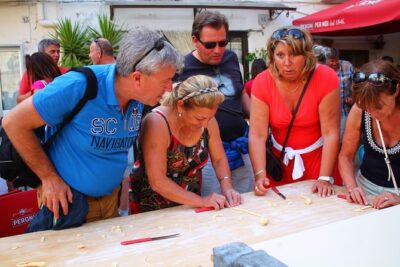
People of Bari unusual guided tour with pasta making at Grandma house
Read our review →Browse the lists this tour appears in