
Review · ROME
Rome Pasta Making Class with Italian Sauces and Wine Included
Fresh pasta is a better souvenir than a fridge magnet. This three-hour Rome cooking class puts you at a table with flour, eggs, sauces, and a chef who teaches by doing. I especially like the small group of up to 10 and the chance to prepare several pasta shapes, not just one quick recipe. The possible drawback is the location outside Rome’s historic center, so you’ll need to allow time to reach the meeting point.
I also like that the meal comes after the work, with wine and coffee included. Chef William, Leo, Riccardo, and the rest of the team are praised for keeping the class warm, funny, and practical. Dietary changes are possible, but the more unusual requests, such as gluten-free or vegan menus, require a private class.
Key points to know before booking
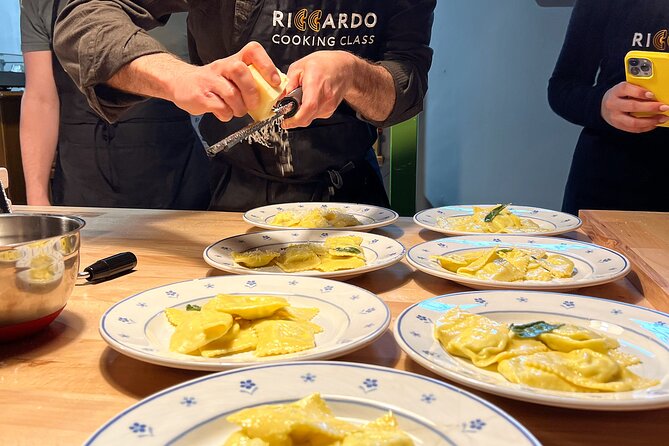
- Three pasta shapes in one class: You may prepare ravioli, fettuccine, spaghetti alla chitarra, tortellini, or other traditional forms.
- Three Roman-style sauces: Carbonara, arrabbiata, butter and sage, cacio e pepe, and gricia-style sauces may be included depending on the menu.
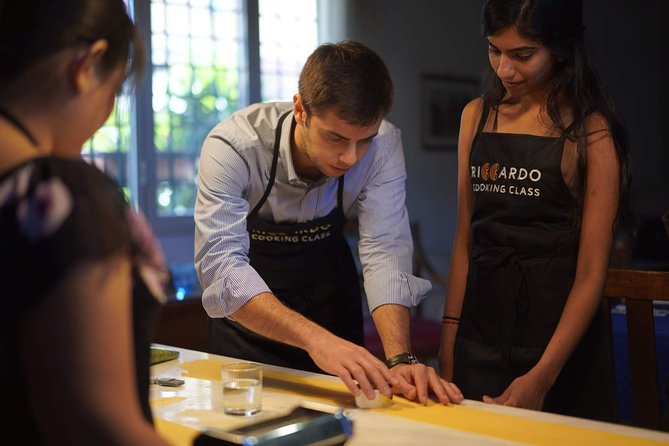
- Hands-on from start to finish: You make the dough, roll it, shape it, cut it, and help prepare the sauces.
- Small-group setting: The class is limited to 10 people, creating more time for questions and individual help.
- Wine and coffee are included: You sit down to eat the pasta you made, with drinks served as part of the experience.
- Private classes allow more choice: Gnocchi, tiramisu, risotto, gluten-free, dairy-free, and vegan options can be arranged privately.
What this Rome pasta class is really like
The class lasts about three hours and begins at Circonvallazione Gianicolense 418, in the 00151 area of Rome. The meeting point is near public transportation, but it is not beside the Colosseum, Pantheon, or Trevi Fountain. Plan your route before class and avoid scheduling a major museum or timed attraction immediately afterward.
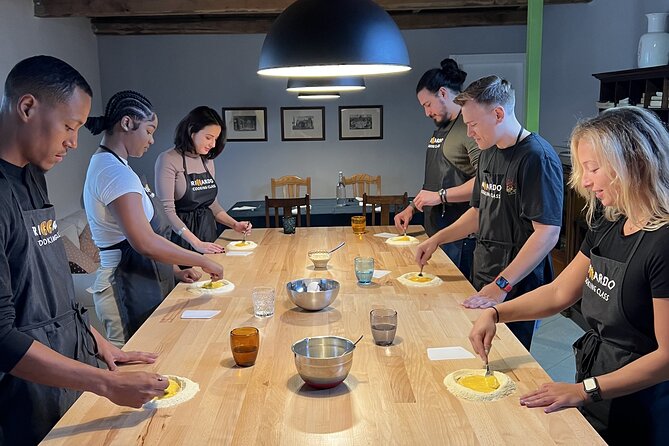
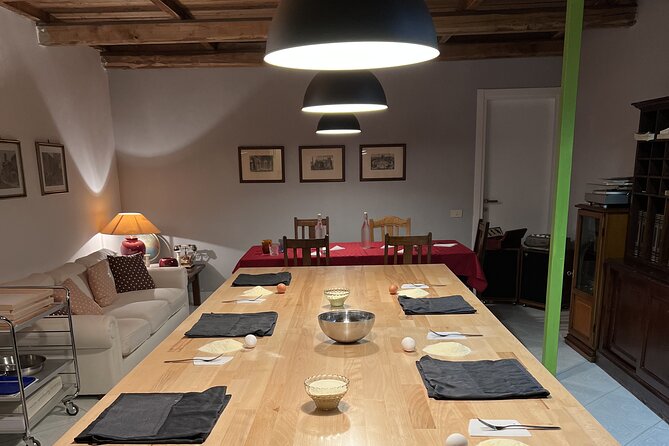
The setting may be Riccardo’s grandmother’s house or The Cooking Lab. That family connection helps explain the tone of the class. This is designed to feel more like cooking with an Italian family than watching a formal demonstration from the back of a room.
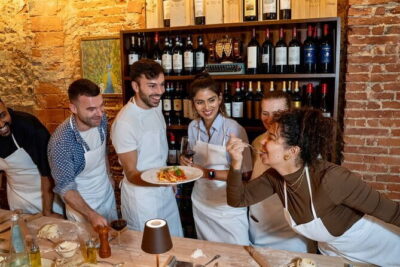
You work in English, and the class accepts a maximum of 10 people. That is small enough for the chef to check your dough and shaping technique, but large enough for the room to have a social feel. Several people have ended up chatting with one another and forming an easy group bond while cooking.
The class suits complete beginners, confident home cooks, couples, families, and older teenagers. You do not need to arrive with pasta-making experience. You should arrive ready to use your hands, ask questions, and eat a fair amount.
More Fresh Pasta Workshops in Rome
- Rome: Pasta Making Class with Wine, Limoncello, and Dessert
★ 4.9 · 3,177 reviews - Enjoy Spritz and Pasta Making in Piazza Navona
★ 5.0 · 1,681 reviews - Pasta Making & Wine Tasting with Dinner in Frascati from Rome
★ 5.0 · 1,326 reviews
Starting with dough, flour, and the basic technique
The best part of this type of class is that you do not simply receive a plate of pasta at the end. You learn how the pasta begins.
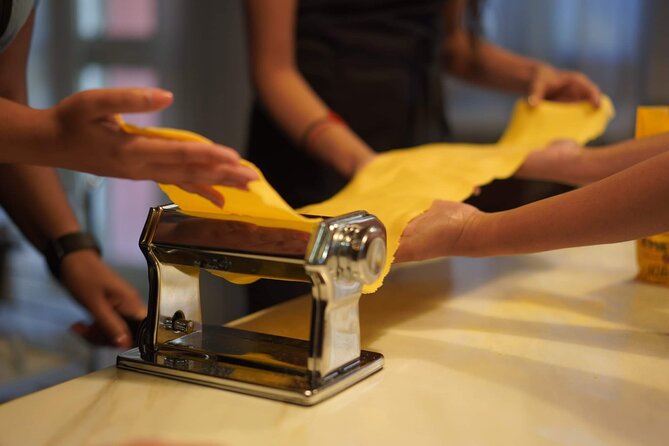
You work with fresh ingredients and prepare the dough from scratch. The chef demonstrates the method, then guides you as you mix, knead, roll, and shape. The instruction is hands-on, so you can see how the dough should feel rather than relying only on measurements.
That point matters. Pasta dough changes with humidity, flour, egg size, and handling. The teaching focuses on practical judgment, including the useful idea of cooking by taste instead of blindly following quantities. It is the sort of tip that helps you at home when your sauce needs more salt or your dough feels too dry.
The chefs also explain pasta tools and techniques. One particularly useful lesson is learning how different shapes call for different handling. Ravioli requires filling and sealing. Fettuccine needs even rolling and cutting. Spaghetti alla chitarra has its own method and texture.
You should expect some flour on the table and a little unevenness in your first shapes. That is part of the point. The class is not a polished television demonstration. You make the pasta yourself, with help when something goes wrong.
Three pasta shapes, not one quick demonstration
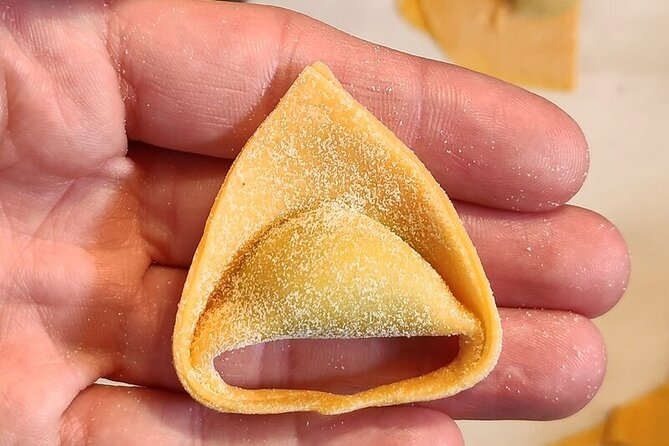
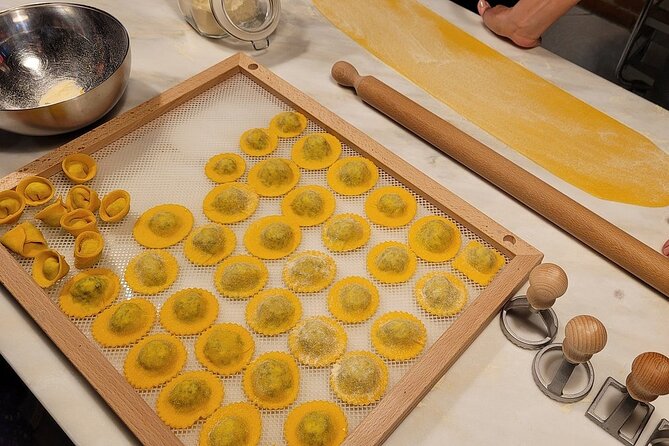
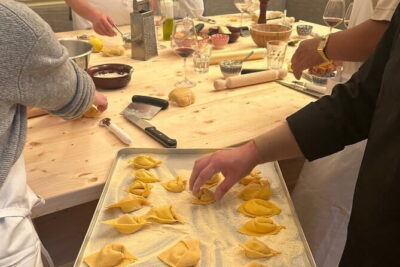
The sample menu includes ricotta-filled ravioli, fresh handmade fettuccine, and spaghetti alla chitarra. Other possible shapes include tortellini and cappelletti. The exact selection can vary, especially when the chef adjusts the menu for the group.
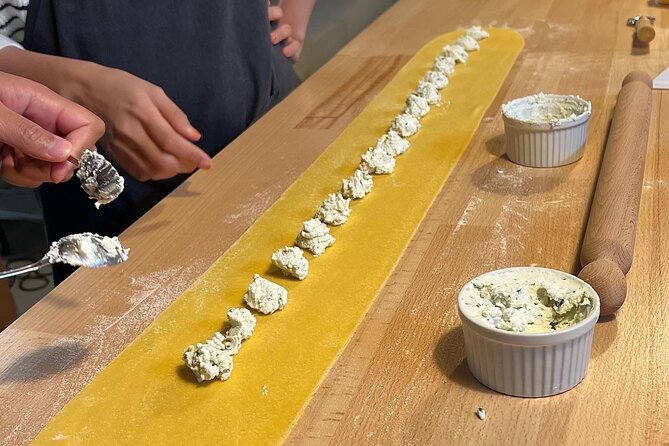
Ravioli gives the class a stuffed pasta lesson. You learn to handle the filling, place it carefully, seal the edges, and avoid trapping too much air. The ricotta filling pairs well with the simple butter and sage sauce used in the sample menu.
Fettuccine gives you a more direct lesson in rolling and cutting. It is familiar, forgiving, and easy to recreate at home. The finished noodles also provide a good base for a stronger sauce such as arrabbiata or a Roman cheese sauce.
Spaghetti alla chitarra adds variety. The name refers to the guitar-like cutting tool used to form the strands. It is not the same as buying dried spaghetti at a supermarket. The shape has a different feel and gives you another way to think about how pasta thickness affects sauce.
Making three types in one session keeps the class moving. It also means you do not leave knowing only one trick. The trade-off is that three shapes and three sauces make for a full session, so anyone hoping for a slow, highly specialized lesson on one pasta style may find the pace busy.
Roman sauces and why the meal matters
The sauces are more than toppings added after the cooking. They give the class a useful introduction to the balance of Roman pasta cooking.
The sample menu includes carbonara, arrabbiata, butter and sage, and handmade pasta served with sauce. Other sessions may use cacio e pepe or a gricia-style sauce, with adjustments for vegetarian participants and personal preference.
Carbonara depends on timing, heat, and texture. It is easy to make poorly if the egg mixture scrambles or the sauce turns watery. A class demonstration gives you a better sense of how the ingredients come together than a recipe card alone.
Arrabbiata brings tomato, garlic, and chili into the lesson. It is direct, bold, and easy to repeat in your own kitchen. Butter and sage is simpler, which makes it a good match for delicate ricotta ravioli. The sauce lets the pasta and filling remain the main attraction.
Cacio e pepe and gricia-style sauces teach another useful lesson: a short ingredient list does not mean an easy dish. Cheese, pepper, pasta water, and timing must work together. You learn why Roman cooking often depends on technique more than a long shopping list.
After cooking, you sit down to eat what the group prepared. Wine is included, and coffee is also served. This shared meal is a major part of the value. You are not just taking a lesson and leaving with a container. You get time to taste the result, compare textures, and enjoy the social side of the class.
More Pasta Classes with Wine in Rome
- Rome: Pasta & Tiramisu Class with Fine Wine by the Vatican
★ 4.9 · 4,852 reviews - Rome Cooking Class: Make Pasta and 3 Spritz Cocktails
★ 5.0 · 2,937 reviews - Learn to Make Pasta & Tiramisu with Wine and Limoncello Included
★ 5.0 · 2,345 reviews - Fettuccine & Tiramisù: Cooking Class with Wine & Limoncello
★ 4.9 · 2,103 reviews
The chefs make the difference
The teaching team includes Chef Riccardo, William, and Leo. The specific instructor may vary, but the consistent strength is the personal teaching style.
William is described as funny, attentive, and clear. He guides people closely without making beginners feel awkward. Leo is praised for patience, humor, and an engaging manner, which can be especially helpful if someone in your group is reluctant to cook.
Riccardo is also described as a strong teacher for both experienced home cooks and beginners. That range matters. A class can lose confident cooks if every step is too basic, while newcomers can feel lost if the chef moves too fast. Here, the instruction appears to make room for both.
The strongest teaching detail is the focus on why things work. You learn about pasta shapes, tools, sauces, and taste rather than copying a fixed sequence without context. Several participants have felt confident enough to repeat the pasta at home, and recipes are sent afterward by mail.
That recipe follow-up is useful. You may remember the broad method during your holiday, but the details of sauce ratios, shaping, and cooking time are easier to lose once you return home. Having the recipes gives the class a longer life beyond your Rome itinerary.
Small groups, family groups, and private options
The standard class has a maximum of 10 people. That is a good size for a cooking lesson. You get the energy of a shared activity without the scale of a large workshop.
Couples can treat it as a relaxed date activity. Families with older teenagers can divide up the work and cook together. One family of four described the class as suitable for adults and older children, with enough food to leave everyone full.
It also works for mixed ability levels. A confident cook can ask about technique, while a first-time pasta maker can follow the chef step by step. The social element is part of the charm, but it also means you should not expect a private conversation with the chef every minute.
A private class is the better choice if your menu needs serious adjustment. The provider can arrange special recipes such as gnocchi, tiramisu, or risotto, along with gluten-free, dairy-free, or vegan menus. Vegetarian dishes are available, but you should share allergies and dietary restrictions before booking.
A private class may also suit a family or friend group that wants more control over the menu. The standard class offers a set of traditional preparations, while private arrangements allow a more customized session.
Is $95.53 a fair price?
The listed price is $95.53 per person. That is not the cheapest way to eat pasta in Rome, but it covers much more than a restaurant meal.
You receive about three hours of instruction, ingredients, several pasta preparations, multiple sauces, wine, coffee, and the meal you help create. You also receive practical skills and recipes for later use. If you value active experiences, the price compares well with an ordinary dinner because the meal is only one part of what you are buying.
The strongest value comes when you take the class early in your Rome visit. You can use the rest of your trip to notice pasta shapes and sauces with a better understanding of what you are eating. You may also return home with a dinner idea instead of another souvenir.
Group discounts are available, although the exact savings are not provided. The class is also booked well ahead, with an average booking time of 44 days before the date. That suggests you should reserve early if your Rome schedule is fixed, especially for a particular day or a private format.
The main value question is simple: do you want to watch someone cook, or do you want to make the food yourself? If you prefer a quick meal and a short activity, this may feel long and expensive. If you like learning by doing, the three-hour format earns its price.
Timing, meeting point, and practical planning
The activity begins and ends at the same meeting point, Circonvallazione Gianicolense 418. It is near public transportation, but the information does not specify the best route from your hotel or the historic center. Check a current map and allow extra time so you do not arrive flustered and late.
The class is offered in English. Confirmation arrives when you book, and mobile tickets are accepted. You should tell the provider about food allergies or dietary restrictions in advance rather than waiting until you sit down at the table.
The activity is approximately three hours. Since you will eat during the class and wine is included, it makes sense to treat it as a substantial meal rather than a small snack between sightseeing stops.
Free cancellation is available if you cancel at least 24 hours before the start time. Within 24 hours, refunds are not provided and changes are not accepted. The cut-off uses Rome’s local time.
Who will enjoy this class most?
I would choose this class for you if you want a relaxed break from monuments and museums, especially after several days of walking through Rome. It gives your hands something to do and your brain a different kind of work.
It is a particularly good match for:
- Couples who want a shared activity
- Families with older teenagers
- First-time pasta makers
- Home cooks who want practical technique
- People seeking a meal and activity in one booking
- Vegetarians who want the menu adjusted within the available options
- Private groups needing vegan, gluten-free, dairy-free, or special recipes
I would be more cautious if you have severe dietary needs and are considering the standard group class. Contact the provider first, since the information specifically confirms the broader special-diet options for private classes.
I would also think twice if your Rome plan is tightly packed. Three hours, plus travel to and from Gianicolense, is a real block of time. That is not a flaw, but it needs to fit your day.
Should you book the Rome pasta-making class?
Yes, if you want a hands-on food experience with a strong social side and useful skills to take home. The best features are the small class size, the three pasta shapes, the sauce instruction, and the patient teaching style associated with William, Leo, and Riccardo.
Book it early if you need a certain date, and choose the private option if you require a customized menu. Check the route to Circonvallazione Gianicolense before booking, then arrive ready to knead, roll, taste, and eat.
This is not just a plate of pasta with a lesson attached. It is a full meal that you help make, with enough technique to keep working in your own kitchen after Rome.
FAQ
How long is the Rome pasta-making class?
The class lasts approximately three hours.
Where does the class begin?
It begins at Circonvallazione Gianicolense 418, 00151 Rome, Italy.
Where does the activity end?
The activity ends back at the same meeting point.
How many people can join the standard class?
The class has a maximum of 10 participants.
Is the class offered in English?
Yes, the class is offered in English.
What pasta can I learn to make?
Possible pasta types include ravioli, fettuccine, tortellini, cappelletti, and spaghetti alla chitarra. The sample menu includes ricotta-filled ravioli, fettuccine, and spaghetti alla chitarra.
Which sauces are included?
The sample menu includes carbonara, arrabbiata, and butter and sage sauce. Cacio e pepe or a gricia-style sauce may also be used, depending on the menu and dietary preferences.
Are wine and coffee included?
Yes. Complimentary wine and coffee are included, and you eat the pasta prepared during the class.
Can the class accommodate dietary restrictions?
Vegetarian options are available. Gluten-free, dairy-free, vegan, and other special menus can be arranged for a private class. You should provide allergy and dietary information in advance.
Can I cancel for a full refund?
Yes, if you cancel at least 24 hours before the experience start time. Cancellations or changes made less than 24 hours before the start time are not accepted for a refund.
More Wine Tours in Rome
- Rome Pasta and Tiramisu Class: Ravioli, Fettuccine & Fine Wine 5*
★ 5.0 · 1,319 reviews - Rome Cooking Class: Make Pasta, Dine & Drink Wine With Local Chef
★ 5.0 · 1,263 reviews - Rome: Combo Pizza and Pasta Cooking Class with Wine
★ 4.6 · 1,180 reviews - Rome: Pasta Making with Wine Tasting and Dinner in Frascati
★ 4.9 · 979 reviews
Just added around Rome
- Spritz and Pasta! Spritz, Fettuccine & Tiramisù★ 5.0 · 2 reviews
- Top Class in Fettuccine, Ravioli, and Tiramisu★ 5.0 · 7 reviews
- Rome: Pasta and tiramisu class with wine pairing at Come Na Vorta★ 5.0 · 30 reviews
- Traditional Pasta Cooking Class with Tiramisu Small Group★ 5.0 · 7 reviews
- Trastevere Food Tour with Pasta-Making Class★ 5.0 · 5 reviews
- The Original Fettuccine Alfredo Experiences in Roma★ 4.5 · 38 reviews
- Italian Pasta & Dessert Class in Historic Center (3-Course Meal)★ 5.0 · 2 reviews
- The Pasta Factory Class★ 4.5 · 21 reviews
Pasta Classes with Wine, compared.
Pasta & Tiramisu Cooking Class with Unlimited Wine
Read our review →
Pasta & Tiramisu Class with Fine Wine by the Vatican
Read our review →
Pasta Making Class with Wine, Limoncello, and Dessert
Read our review →
Rome Cooking Class: Make Pasta and 3 Spritz Cocktails
Read our review →
Learn to Make Pasta & Tiramisu with Wine and Limoncello Included
Read our review →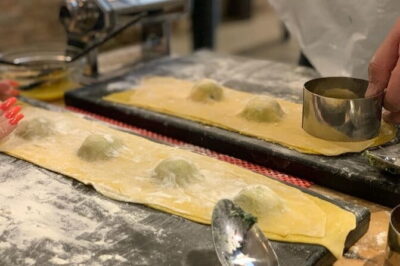
Cooking Class Pasta & Tiramisu Making Unlimited Wine
Read our review →Browse the lists this tour appears in