
Review · ITALY
Pompeii: guided tour of the ruins and cooking class fresh pasta
Pompeii tastes better with homemade pasta. This private half-day experience pairs a guided walk through the ancient city with a hands-on cooking class in the Pompeian countryside. I like the strong mix of archaeology and food, plus the small-group format that lets you ask questions without shouting over a crowd.
I also like the personal touch from hosts such as Sabrina, who brings garden produce into the meal and explains how local dishes are made. The main drawback is the price, $300.40 per person, especially since the €20 Pompeii entrance fee is extra. You will also need to plan your timing carefully if you want to explore beyond the guided route.
- Pompeii with an archaeologist: See the theaters, forum, baths, houses, temples, shops, workshops, and brothel with expert context.
- A private group of up to 10: The format allows more questions and personal help than a large coach tour.
- Fresh ingredients from the garden: Pick produce from the family garden before using it in your meal.
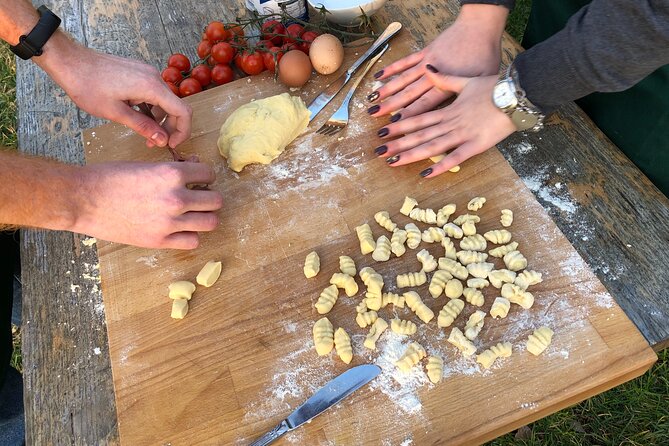
- A real cooking lesson: Depending on the day, you may prepare ravioli, gnocchi, or another traditional Campania dish.
- Vesuvius views at lunch: Eat among olive and citrus trees with views toward Mount Vesuvius and the Lattari Mountains.
- Gragnano wine included: Your meal comes with one glass of local Gragnano DOC wine, along with water, dessert, and lunch or dinner.
Why Pair Ancient Pompeii With a Cooking Class?
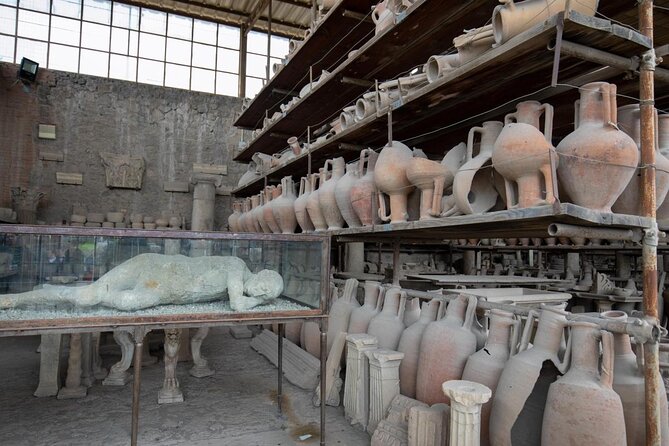
Pompeii can be a demanding place to visit. The ruins cover a large area, the stone streets are uneven, and it is easy to spend hours looking at walls without understanding how the city worked. A good guide turns those remains into homes, businesses, bathhouses, theaters, temples, and ordinary streets.
This experience adds a second side of Campania. After the ruins, you move from ancient stone to a working garden, local ingredients, family recipes, and a shared meal. I like that contrast. You do not just look at Pompeii as a museum site. You connect it with the food culture of the surrounding region.
The total program takes about five to six hours. Around two hours are set aside for Pompeii, followed by about three hours at the garden and cooking class. That makes this a substantial half-day outing, not a quick stop between other activities.
The experience is offered in English. The maximum group size is 10, although the private format is especially useful for families, couples, and small groups with different interests.
Walking Through Pompeii With an Archaeologist
The tour begins at the Archaeological Park of Pompeii, at Scavi di Pompei on Viale delle Ginestre. The entrance ticket is not included, so budget an additional €20 per person for admission.
The route covers many of Pompeii’s key sights. You walk along Via dell’Abbondanza, the city’s main street, where shops and workshops help explain the commercial side of Roman life. This is one of the best places to picture Pompeii as a working city rather than a silent collection of ruins.
You also visit the theaters, important houses with frescoes and decorations, the thermal baths, the brothel, the forum, the Temple of Apollo, the Temple of Jupiter, and the Basilica. That is a wide selection for a two-hour visit, so the guide must choose the pace carefully.
Guides named in the experience include Clelia, Carla, Lucy, and Lello. The individual guide may vary, but the key advantage remains the same: you can ask what a building was used for, how the spaces fit together, and what details matter before moving on.
I would not treat this as a full-day archaeological study. Pompeii is too large for that. Instead, think of the guided route as a well-chosen introduction to the city’s most important areas. If you want to spend extra time inside the park, discuss that before the tour begins.
The timing matters. The cooking class follows the ruins, and the second part cannot be pushed back indefinitely. One visitor wanted more time to explore Pompeii alone after the guided walk and was given some flexibility, but the schedule still had limits. Since the admission ticket is valid for one entry, you cannot simply leave and return later without paying again.
That is useful planning advice. If Pompeii is your main goal, ask about an earlier start so you can build in independent sightseeing before the cooking class. If food and company matter just as much, the standard two-hour route should give you a good overview without tiring you before lunch.
More Fresh Pasta Workshops in Italy:
- Rome: Pasta Making Class with Wine, Limoncello, and Dessert
★ 4.9 · 3,177 reviews - Pastamania – Florence Pasta Making Class
★ 5.0 · 3,050 reviews - Enjoy Spritz and Pasta Making in Piazza Navona
★ 5.0 · 1,681 reviews
What the Pompeii Walk Feels Like
The appeal of a private guide is not just the extra information. It is the ability to slow down when you want a better explanation or move along when a particular building does not interest you.
The houses with painted decoration are a strong part of the route. Their frescoes and room layouts show how Roman homes were arranged and decorated. The baths add another useful piece of daily life, while the forum and temples show the public and religious side of Pompeii.
The brothel is included as well. It is a famous stop, but a guide helps place it within the wider city instead of treating it as a quick joke or photo opportunity. The same applies to the theaters and shops. Each site becomes more useful when someone explains its purpose and setting.
Expect to walk for about two hours. The experience is described as suitable for most participants, and service animals are allowed. Still, Pompeii’s ancient streets are not smooth modern sidewalks. If anyone in your group has a foot problem or tires easily, tell the guide in advance and ask for a gentler pace.
One group did exactly that because a participant had a foot injury. The visit lasted a little over two hours and moved at a slower speed. That flexibility is a real benefit of a private arrangement, though you should not assume that every timing request can be granted.
From Ruins to the Giardini Balestrieri Garden
After Pompeii, private transportation takes you to the garden of Giardini Balestrieri in the Pompeian countryside. The setting is a major part of the experience. You eat among olive and citrus trees, with views toward Vesuvius and the Lattari Mountains.
The garden is not just a backdrop. You are shown the plants and produce, and you may pick ingredients to use in the meal. That small action gives the cooking class a clear sense of place. The food is not presented as an abstract Italian recipe. It begins with what grows nearby.
The pace also changes here. Pompeii asks you to concentrate on ruins and explanations. The garden portion is more relaxed, social, and practical. Sabrina is the main host named in the experience, with Rosalba and other family members also helping on some occasions.
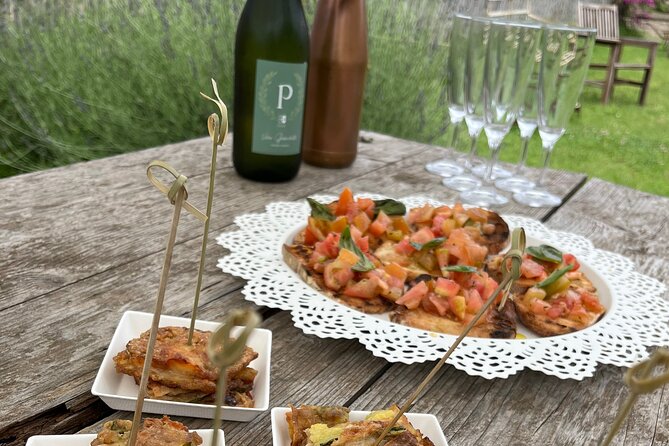
Before the pasta lesson, you may be served bruschetta topped with fresh vegetables from the garden. This provides a light start while you learn about the ingredients and prepare for the main dish.
Making Ravioli, Gnocchi, or Another Campania Dish
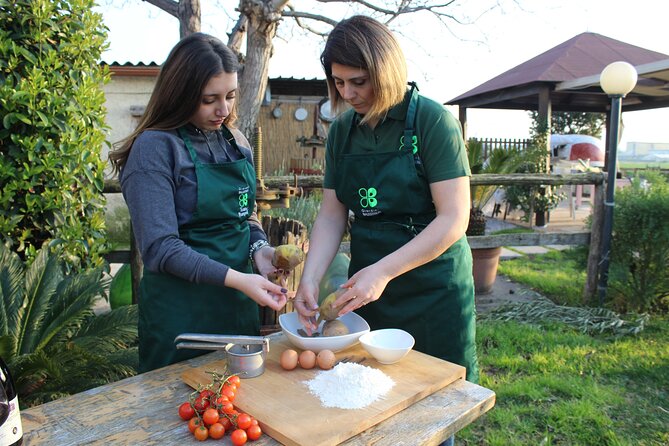
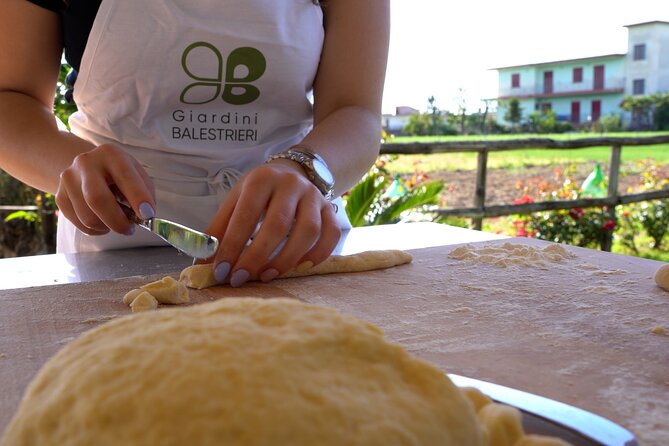
The exact recipe can vary. The experience description promises a typical dish from the Campania tradition, while past sessions have included ravioli with ricotta and spinach filling and gnocchi made with potatoes.
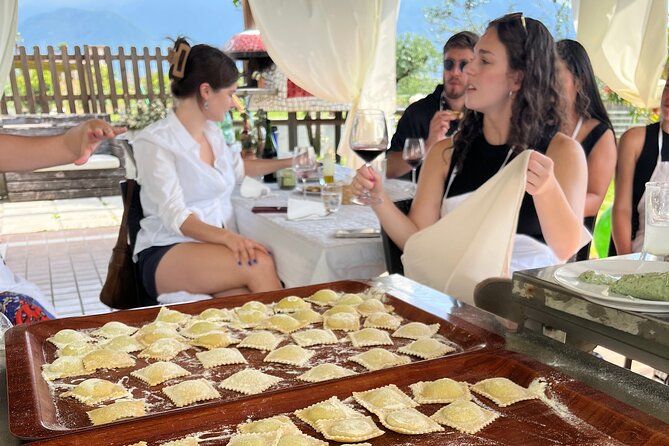
In the ravioli lesson, Sabrina provides the tools and filling, then shows you how to make the pasta. Each person shapes their own pieces, which are later boiled and served with simple butter and sage. That kind of preparation is approachable because the sauce does not hide the pasta.
In another class, the focus was potato gnocchi with fresh tomato sauce. The food was described as fresh and generous, with the cooking lesson led by Sabrina and family members. You should not book this expecting one rigid menu every time. The precise dish depends on the session and available ingredients.
That flexibility is part of the charm, but it is worth asking about the planned recipe if someone in your group has dietary needs or a strong preference. The supplied details do not promise vegetarian, vegan, gluten-free, or allergy-specific menus.
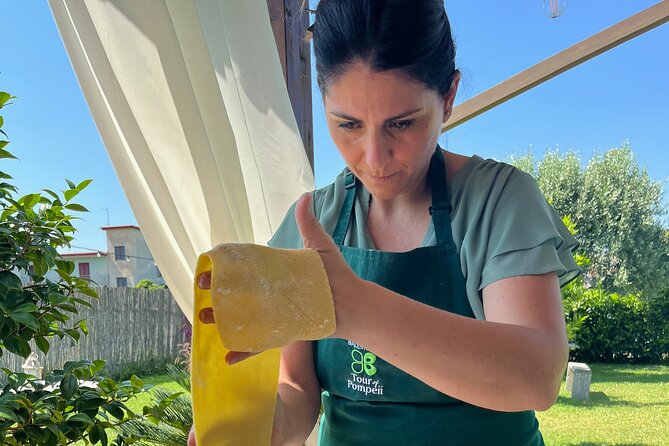
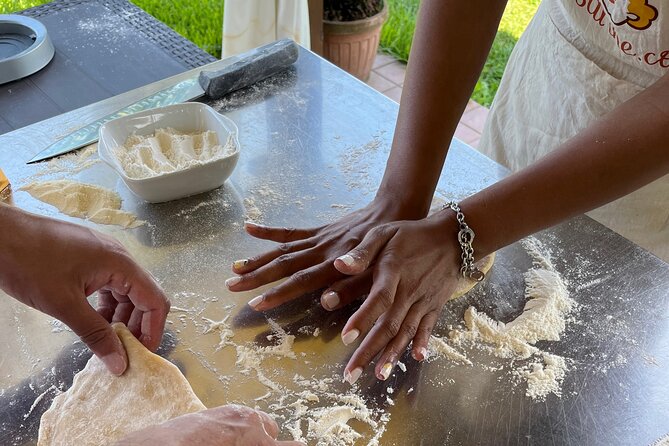
The class is designed for participation, not just demonstration. You handle ingredients, use the tools, and learn the basic technique before sitting down to eat. I like this format because you leave with a cooking memory, not only another restaurant meal.
More Guided Tours in Italy:
- From Taormina: Private/Guided Godfather with appetizer and Pasta
★ 5.0 · 233 reviews - Olbia: Traditional Pasta-Making Guided Workshop
★ 4.5 · 73 reviews - People of Bari unusual guided tour with pasta making at Grandma house
★ 5.0 · 54 reviews - Olbia: Sardinian Pasta-Making Guided Workshop
★ 5.0 · 51 reviews
Lunch, Dessert, and Gragnano Wine
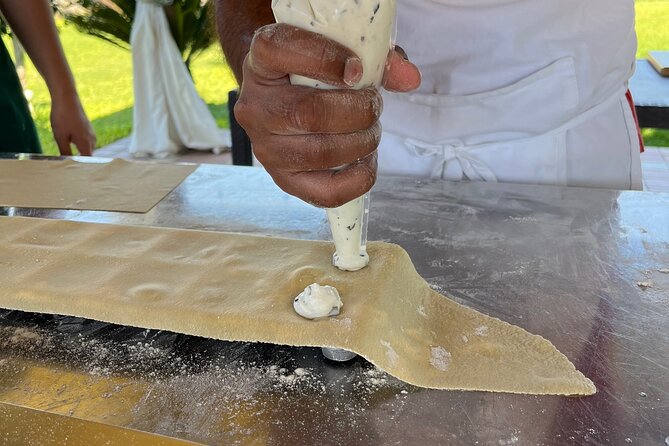
The meal includes lunch or dinner, dessert, still and sparkling water, and one glass of Gragnano DOC wine. Gragnano is a local wine from the area, and it fits the regional focus of the meal.
The food served can go beyond the dish you prepare. Past meals have included bruschetta, ravioli, gnocchi with tomato sauce, lemon cake, and tiramisu. Homemade limoncello and Prosecco were also served on particular occasions, but they are not listed as standard inclusions, so do not count on them unless confirmed.
The portions appear generous. That is useful after a morning walking through Pompeii, but it also means this is not a light tasting menu. Plan for a full meal and a fairly long stay at the table.
The garden setting helps the meal feel personal. You are not being rushed through a restaurant table before the next group arrives. The aim is to cook, eat, talk, and enjoy the family setting. That social side is one of the strongest reasons to choose this experience over a basic ruins tour.
Is $300.40 Per Person a Fair Price?
At $300.40 per person, this is expensive compared with a standard Pompeii entrance ticket or a large group walking tour. The €20 admission fee is also extra, which raises the total cost.
The value comes from the combination. You are paying for a private guided visit, private transportation, a three-hour cooking and meal experience, food, dessert, water, wine, and personal attention in a group capped at 10 people.
For a couple or family that wants one organized experience, the price may make sense. You avoid arranging separate guides, transport, and a cooking class. The private setting is also valuable if your group wants to ask many questions or needs a slower walking pace.
For a solo visitor or budget-conscious pair, it is harder to justify. You could spend much less on Pompeii alone and eat at a local restaurant afterward. The cooking lesson and family setting are the parts that need to matter to you.
I would see this as a special-occasion experience rather than a bargain activity. Birthday celebrations and family outings have worked especially well, with Prosecco served for one birthday group. If your priority is authentic local food and personal contact, the cost buys more than a meal. If your priority is seeing every corner of Pompeii, spend the money on additional park time instead.
Who Should Book This Experience?
This suits you if you want both culture and food in the same day. It works especially well for families, small groups, couples, and cruise passengers who want a planned outing with private transportation.
It is also a good choice if one person in your group loves ancient history while another is happier in a kitchen. The two parts balance each other instead of forcing everyone to spend the whole day on one interest.
You should think twice if you dislike fixed schedules. The ruins and cooking class need to fit together, and extra time inside Pompeii must be arranged in advance. You should also think twice if you want a highly formal culinary course. This is a friendly, family-led lesson built around local food, not a professional chef school.
The experience is offered in English, and most participants can take part. Service animals are allowed. It is near public transportation, and private transportation is included, but the stated meeting point remains Scavi di Pompei, where the activity also ends.
Free cancellation is available if you cancel at least 24 hours before the start time. Changes or cancellations inside that window are not accepted for a refund. The activity also requires a minimum number of participants, so an operator cancellation may lead to another date or a full refund.
Should You Book the Pompeii Pasta Experience?
Book it if you want Pompeii explained clearly, then want to sit down with local people and cook a regional dish using garden ingredients. The best parts are the personal guide, the family welcome, the Vesuvius views, and the chance to make food rather than simply order it.
Before paying, confirm the start time, the exact recipe, and how much independent Pompeii time you can have. Remember that the €20 entrance ticket is extra and that the cooking class limits how long you can remain in the ruins.
I would recommend it to anyone who values a relaxed, personal day over the lowest possible price. If you want only the archaeological site, choose a simpler Pompeii tour. If you want the ruins to lead into a generous Campania meal, this is a memorable pairing.
FAQ
How long does the experience last?
The experience takes approximately five to six hours. About two hours are spent at the Archaeological Park of Pompeii, followed by about three hours at the garden and cooking class.
Is the Pompeii entrance ticket included?
No. Admission to Pompeii is not included. The stated entrance cost is €20 per person.
What sights are included in the Pompeii visit?
The route includes the theaters, important houses with frescoes and decorations, Via dell’Abbondanza, shops and workshops, the thermal baths, the brothel, the forum, the Temple of Apollo, the Temple of Jupiter, and the Basilica.
Is the tour offered in English?
Yes. The experience is offered in English.
What kind of food will I prepare?
You will learn to cook a typical dish from the Campania region. Past sessions have included ravioli with ricotta and spinach and potato gnocchi with tomato sauce, but the exact recipe may vary.
Is food included after the cooking class?
Yes. Lunch or dinner, dessert, still and sparkling water, and one glass of Gragnano DOC wine are included.
How many people can join?
The activity has a maximum of 10 participants. It is described as a private experience.
Where does the experience start and end?
It starts at Scavi di Pompei, Viale delle Ginestre, 80045 Pompei, Italy. The activity ends back at the meeting point.
Can I cancel for a full refund?
Yes, if you cancel at least 24 hours before the experience start time. Cancellations or changes made less than 24 hours in advance are not accepted for a refund.
Just added around Italy
- Verona: Tortellini Cooking Class and Lunch with Mamma Ivana★ 5.0 · 20 reviews
- Volterra: Fresh Pasta Cooking Class at a Tuscan Farmhouse★ 5.0 · 33 reviews
- Vicenza: Pasta & Tiramisu Cooking Class at a Local’s Home★ 5.0 · 5 reviews
- Verona: Pasta & Tiramisu Cooking Class at a Local’s Home★ 5.0 · 16 reviews
- Verona: Pasta Cooking Class with Wine Tasting★ 5.0 · 4 reviews
- Venice: Share Your Pasta Love in a Local’s Home★ 4.8 · 20 reviews
- Verona: Prosecco and Pasta Making Class at a Local’s Home★ 5.0 · 10 reviews
- Verona: My Granny’s secrets making gnocchi★ 5.0 · 7 reviews
Fresh Pasta Workshops, compared.
Pasta Making Class with Wine, Limoncello, and Dessert
Read our review →
Enjoy Spritz and Pasta Making in Piazza Navona
Read our review →
Pasta Making & Wine Tasting with Dinner in Frascati from Rome
Read our review →
The Secrets to Learn Fresh Pasta and Tiramisù in a Glam Home
Read our review →
Pasta Making with Wine Tasting and Dinner in Frascati
Read our review →
Browse the lists this tour appears in