
Review · ITALY
Cooking class fresh pasta
Fresh pasta makes Sicily easier to remember. This three-hour class takes you from flour and eggs to three types of handmade pasta, then puts your work on the table with Sicilian sauces and wine. I like the hands-on format, and I like that a professional chef teaches both the dough and the cooking methods.
The class also has a warm, personal feel, especially with Chef Simona and her mother involved in some sessions. The main consideration is time: you are paying $112.15 per person for a food experience lasting about three hours, so this works best if you want an actual lesson, not just a quick demonstration.
Key points to know before booking
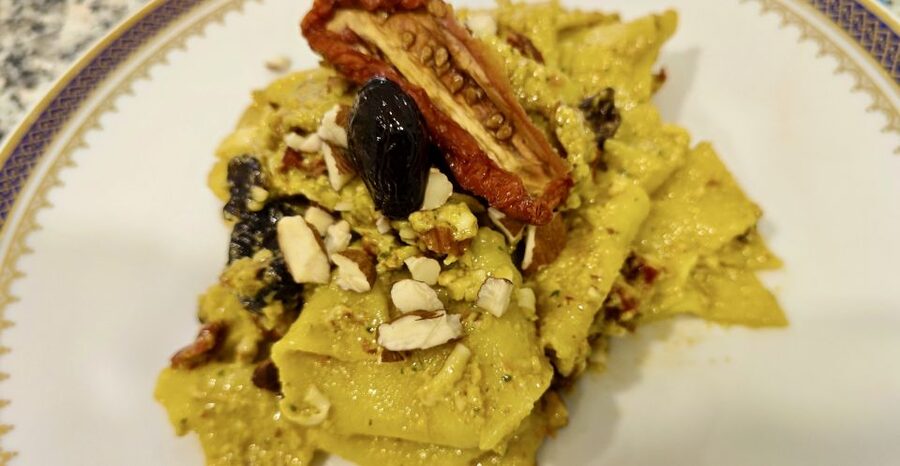
- Three pasta styles in one class: You learn to make tagliatelle, stuffed pasta, and maltagliati using egg dough and Sicilian durum wheat dough.
- Sauces are part of the lesson: Ragù, pasta alla Norma, and Sicilian pesto give you useful recipes to repeat at home.
- A professional cooking laboratory: The lesson takes place in a functional kitchen designed for hands-on preparation.
- The meal is included: The chef cooks what you make, then you sit down to taste the pasta with Sicilian wine.
- Patient instruction: Chef Simona is praised for clear guidance, practical tips, and a calm teaching style.
- Flexible booking: You can cancel up to 24 hours before the class for a full refund and reserve now while paying later.
From flour to fresh pasta in three hours
This class begins with the basic question behind nearly every great Italian meal: how do you turn a few simple ingredients into pasta with character?
You start with the dough. The lesson covers two styles: classic egg pasta and the Sicilian dough made with durum wheat. That distinction matters. Egg pasta gives you one texture and handling method, while durum wheat dough connects the lesson more directly to Sicily’s everyday food traditions.
The chef guides you through the process rather than simply preparing a bowl of dough in front of you. You should expect to work with your hands, learn how the dough comes together, and see how different doughs are suited to different pasta shapes.
The class lasts about three hours, though the exact starting time depends on availability. That is a useful length for this type of activity. You have enough time to make the food, prepare sauces, cook the pasta, and eat without turning the lesson into a rushed kitchen drill.
More Fresh Pasta Workshops in Italy:
- Rome: Pasta Making Class with Wine, Limoncello, and Dessert
★ 4.9 · 3,177 reviews - Pastamania – Florence Pasta Making Class
★ 5.0 · 3,050 reviews - Enjoy Spritz and Pasta Making in Piazza Navona
★ 5.0 · 1,681 reviews
Three pasta shapes, three different techniques
The biggest strength here is the range of pasta you make. This is not a single-shape workshop where you roll dough, cut noodles, and call it a day.
You prepare:
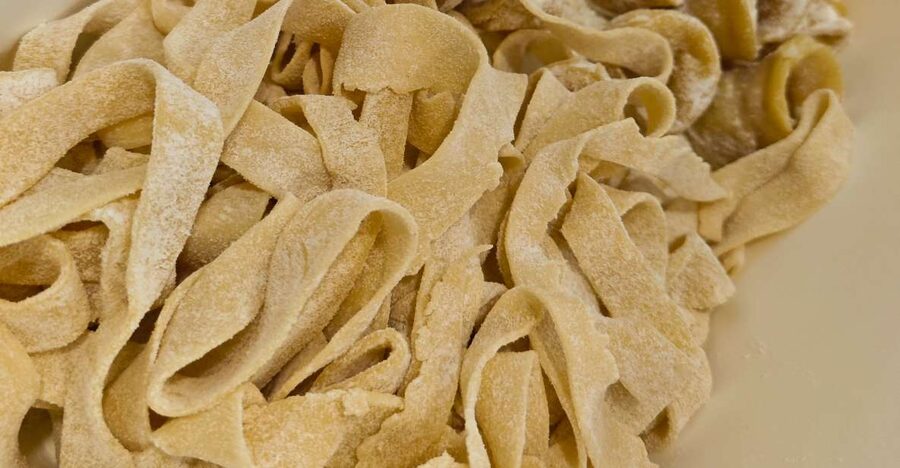
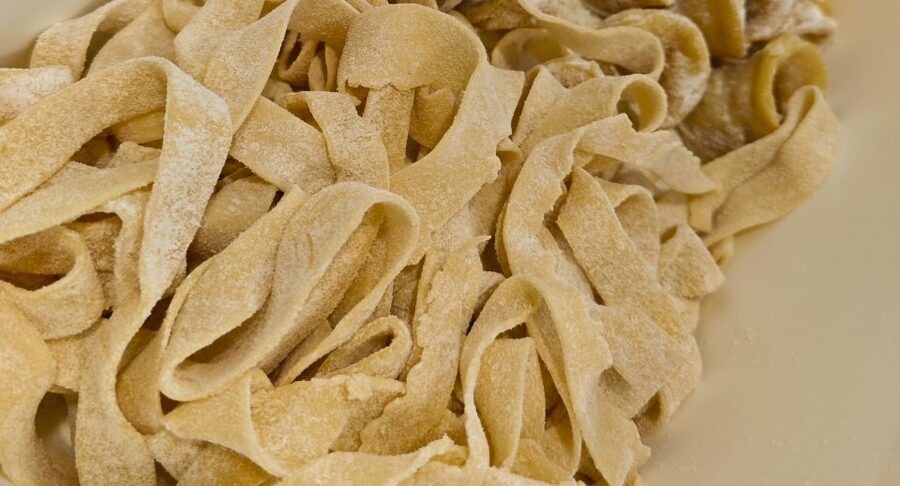
- Tagliatelle
- Stuffed pasta
- Maltagliati
Tagliatelle teaches you how to handle and cut a long pasta shape. It is a good foundation because you can see how thickness and width affect the final bite.
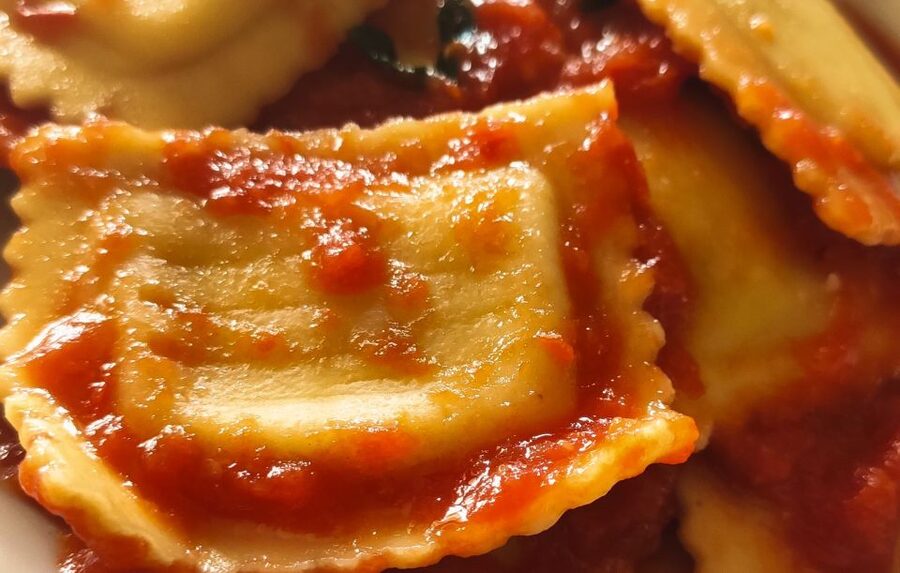
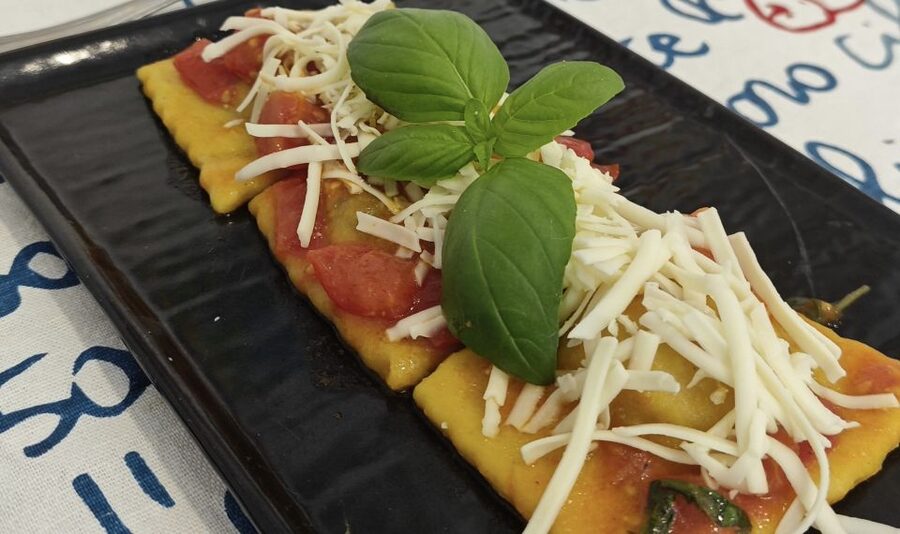
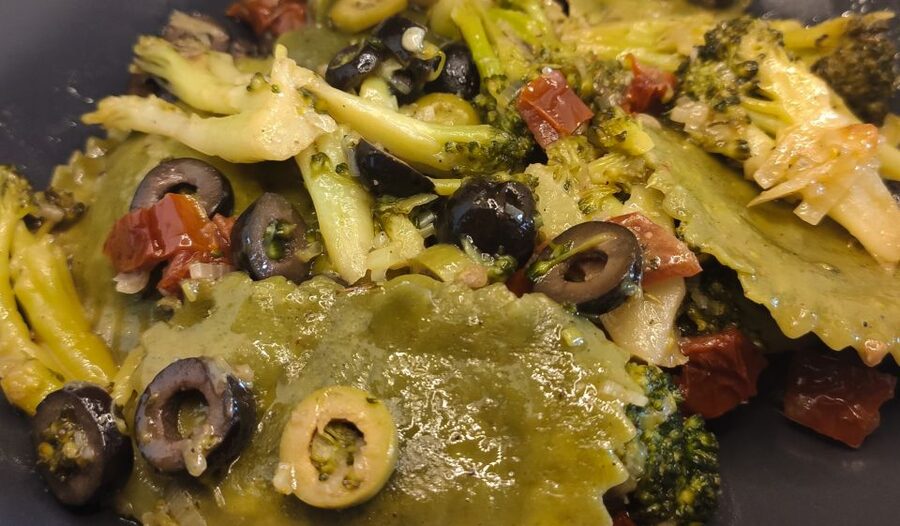
Stuffed pasta adds another layer. You learn how to work with filling, shape the pasta, and seal it properly. The class information does not specify the exact stuffed shape or filling, but the lesson is described as covering the preparation of ravioli-style pasta in some sessions. One detailed account praised the filling as one of the most useful parts of the class.
Maltagliati means roughly badly cut pasta, though the name is more charming than critical. These irregular pieces are a practical Sicilian-style option and a nice reminder that homemade pasta does not need to look factory-perfect. They are often a smart way to use leftover dough, and their uneven edges hold sauce well.
Making three forms gives you skills you can actually use later. You are not just learning one recipe. You are learning how pasta changes when you cut, fill, and shape it in different ways.
Ragù, Norma, and Sicilian pesto
Once the pasta is made, the lesson moves to sauces. This is where the class becomes more useful than a basic pasta-shaping activity.
You learn how to prepare ragù, pasta alla Norma, and Sicilian pesto. Each sauce brings a different idea to the table.
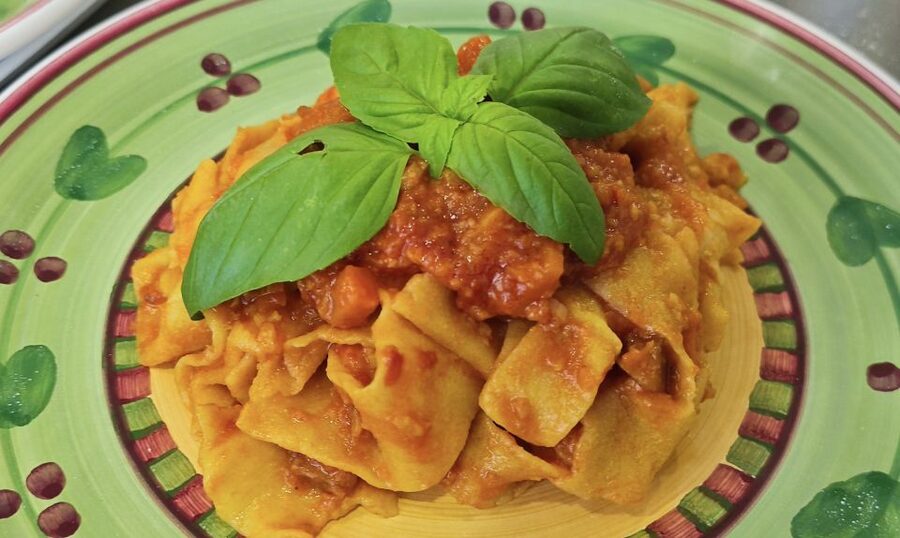
Ragù teaches you how to build a fuller, slower sauce for pasta. One participant singled out the ragù as especially good, so it may be the dish that wins the most immediate affection at the table.
Pasta alla Norma is one of Sicily’s best-known pasta preparations. It gives you a local recipe rather than a generic Italian sauce, and it helps connect the cooking lesson to the island’s food culture.
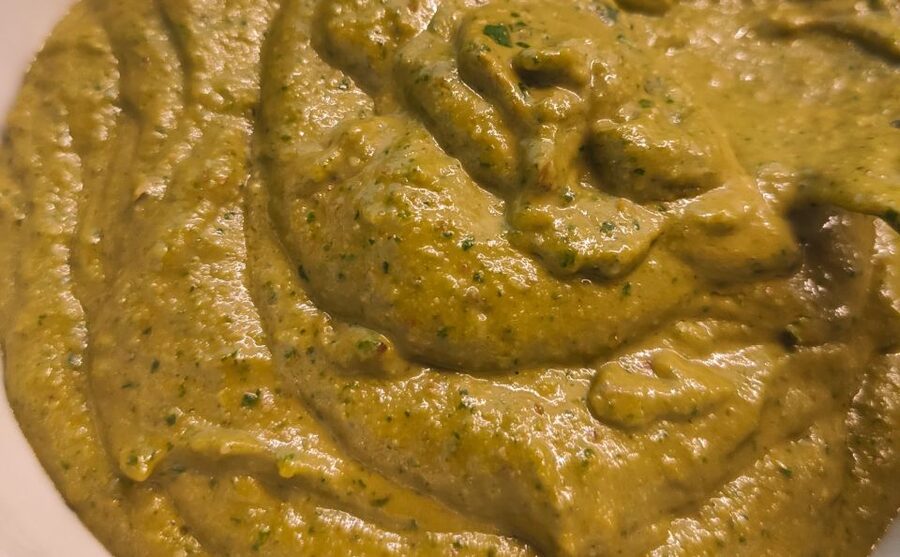
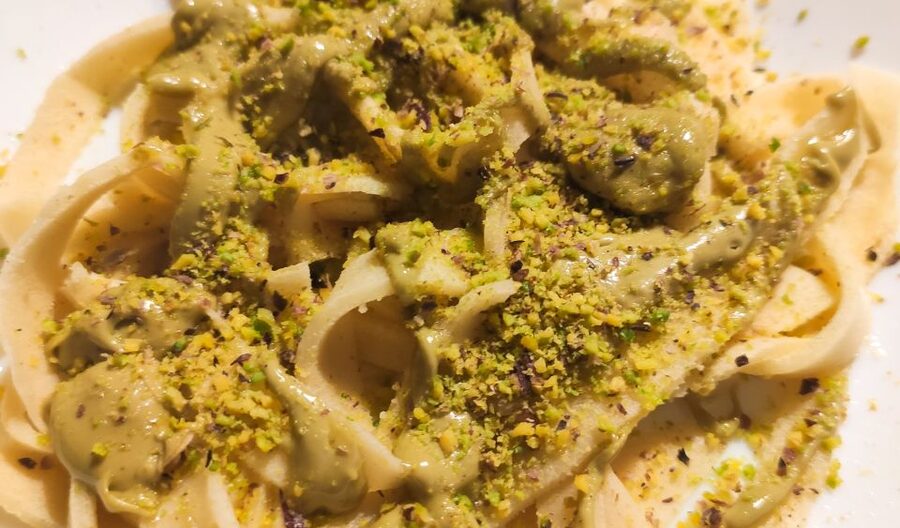
Sicilian pesto offers a different direction. It is not simply the basil pesto you may already know from Liguria. The Sicilian version has its own character and gives you a fresh sauce to prepare alongside the richer ragù and the traditional Norma.
The class information does not provide full ingredient lists or exact recipes, so you should not expect a printed cookbook-style breakdown before you arrive. However, the recipes are provided after the class according to one detailed account. That is a real benefit if you want to repeat the meal at home instead of letting the technique vanish with your holiday photos.
A professional kitchen with room to learn
The cooking takes place in a professional cooking laboratory. That gives the lesson a more practical setting than a casual kitchen demonstration.
You can expect the chef to show you how to move from raw ingredients to finished dough, then from shaped pasta to a cooked meal. The space has been praised as clean and functional, which matters when several people are working with flour, fillings, sauces, and cooking equipment.
Chef Simona receives especially strong praise for her patience and teaching style. That is important for a class involving dough. Pasta can be forgiving, but beginners still need help with texture, thickness, and shaping. A rushed instructor can make the process feel like a test. A patient one lets you understand what your hands should be noticing.
Some sessions also feature Simona’s mother, who adds a family touch to the cooking. That detail gives the class a more personal Sicilian feel, while the professional kitchen keeps the work organized.
Instruction is available in English and Italian. If you do not speak Italian, English guidance is available, but the activity is still about watching, handling, tasting, and copying techniques. You will not need to understand every culinary term to take part.
A few more classes around Italy worth a look
- Florence: Pasta Cooking Class with Unlimited Wine
★ 4.9 · 10,285 reviews - 3 in 1 Cooking Class near Navona: Fettuccine, Ravioli & Tiramisu
★ 5.0 · 7,376 reviews - Florence Pizza or Pasta Class with Gelato Making at a Tuscan Farm
★ 5.0 · 6,801 reviews - Florence: Pasta & Tiramisu Cooking Class with Unlimited Wine
★ 4.9 · 6,708 reviews
The meal at the end is part of the experience
After you make the pasta and sauces, the chef cooks the food for you. You then sit down and taste what you prepared, along with Sicilian wine.
That final meal is not an afterthought. It lets you see whether your pasta shapes worked, how the sauces behave after cooking, and how fresh pasta differs from dried pasta. It also gives the class a proper ending. You are not sent away carrying a container of uncooked dough and a list of instructions.
Portions have been described as generous, and the meal is one of the strongest parts of the experience. Several accounts praise the food itself, with particular enthusiasm for the sauces and the overall quality of the finished dishes.
Wine is included with the tasting. One session also included a bottle of wine to take home, but this should not be treated as a guaranteed feature unless it is confirmed when you book. The dependable promise is the tasting of your pasta with excellent Sicilian wine.
A cannoli was also praised in one account. Since it is not included in the stated activity description, you should view that as an occasional extra rather than a standard part of every class.
Is $112.15 a fair price?
At $112.15 per person, this is not the cheapest meal you can have in Sicily. You are paying for instruction, ingredients, kitchen use, several recipes, the meal, and wine.
The value becomes clearer if you compare it with a standard restaurant visit. A restaurant can give you a fine plate of pasta, but it will not teach you how to make three pasta shapes or prepare three different sauces. Here, you get a meal plus skills you can carry home.
I would consider the price fair for someone who enjoys cooking and wants more than a sightseeing stop. It is particularly good value if you take advantage of the recipes afterward. The class becomes expensive if you are mainly interested in eating and do not want to spend time mixing dough, shaping pasta, or making sauces.
The number of people in each class is not provided, so you should check that detail if group size matters to you. A smaller group usually means more direct help with shaping and filling, while a larger group may feel more social but offer less individual attention.
What makes this class distinctly Sicilian
Fresh pasta is associated with Italy as a whole, but the class avoids presenting it as one single national formula.
The use of durum wheat dough is a clear Sicilian touch. The sauces also keep the lesson connected to the island, especially pasta alla Norma and Sicilian pesto. These details give you a better sense of regional cooking than a class built only around familiar tourist favorites.
The meal also lets you compare two kinds of food knowledge. You learn the technical side, such as dough preparation and pasta shapes. Then you taste the cultural side, where local ingredients and recipes show why Sicilian cooking does not taste exactly like food from Rome, Bologna, or Naples.
That balance is what I would want from a cooking class in Sicily. You get something practical, but you also get a sense of place.
Who will enjoy it most?
This class suits people who want an active food experience. You should book it if you enjoy learning by doing and do not mind getting flour on your hands.
It is a good fit for:
- Couples looking for a shared activity
- Families who enjoy cooking together
- Food-focused visitors who want local recipes
- Beginners who want patient instruction
- Home cooks who already make pasta and want new techniques
- Anyone who prefers a meal with a story behind it
Experienced home cooks should not assume the class will be too basic. One participant who had been making Italian food and fresh pasta for years still learned useful tips and new methods.
The class may be less suitable if you want a short, polished food demonstration with little participation. You will be involved from the dough stage onward, and the three-hour duration requires a real time commitment.
Practical advice for getting the most from the lesson
Check the available starting times before planning the rest of your day. The activity lasts about three hours, and the meal comes at the end, so avoid placing an important appointment too close afterward.
Arrive ready to work. The class is hands-on, not simply a talk from a chef. You will get more from it if you pay attention to the feel of the dough and the way the chef handles each shape rather than focusing only on the final plate.
Ask questions while the dough is in front of you. This is the best moment to clarify texture, thickness, filling, and shaping. Those details are hard to remember later if you only watch.
Keep the recipes and use them soon after returning home. Fresh pasta skills improve through repetition. Start with tagliatelle, then try stuffed pasta once you feel comfortable sealing the edges.
The class has a 4.8 rating from 17 reviews, with repeated praise for the food, the friendly welcome, the clean kitchen, the generous portions, and Simona’s instruction. That is a small sample, but the praise is consistent on the points that matter most.
Cancellation and booking flexibility
You can cancel up to 24 hours before the activity for a full refund. You can also reserve your place and pay later, which helps if your Sicilian schedule is still changing.
English and Italian instruction are available. The activity is listed as lasting three hours, with starting times shown according to availability.
Should you book this Sicilian pasta class?
Book it if you want to learn, eat, and take home skills rather than simply order another plate of pasta. The combination of three pasta types, three sauces, hands-on instruction, wine, and a complete meal gives the $112.15 price a reasonable basis.
I would especially recommend it to home cooks, couples, and food lovers who want a local activity with a practical result. Chef Simona’s patient approach and the warmth of her mother help give the lesson a welcoming character.
Think twice if you dislike group cooking, have limited time, or want a quick tasting with no kitchen work. For everyone else, this is a useful and tasty way to spend three hours in Sicily, with recipes that can keep the memory going long after the last glass of wine.
FAQ
How long does the fresh pasta class last?
The class lasts about three hours. Starting times depend on availability.
How much does the cooking class cost?
The price is $112.15 per person.
Which types of pasta will I make?
The class covers tagliatelle, stuffed pasta, and maltagliati. Two doughs are prepared: classic egg pasta and Sicilian durum wheat dough.
Which sauces will I learn to prepare?
The lesson covers ragù, pasta alla Norma, and Sicilian pesto.
Is food included after the lesson?
Yes. The chef cooks the pasta you make, and you sit down to taste the food with Sicilian wine.
Which languages are available?
Instruction is available in English and Italian.
Can I cancel the booking for a refund?
Yes. You can cancel up to 24 hours in advance for a full refund. You can also reserve now and pay later.
Just added around Italy
- Volterra: Fresh Pasta Cooking Class at a Tuscan Farmhouse★ 5.0 · 33 reviews
- Vicenza: Pasta & Tiramisu Cooking Class at a Local’s Home★ 5.0 · 5 reviews
- Verona: Tortellini Cooking Class and Lunch with Mamma Ivana★ 5.0 · 20 reviews
- Verona: Pasta & Tiramisu Cooking Class at a Local’s Home★ 5.0 · 16 reviews
- Verona: Pasta Cooking Class with Wine Tasting★ 5.0 · 4 reviews
- Venice: Share Your Pasta Love in a Local’s Home★ 4.8 · 20 reviews
- Verona: Prosecco and Pasta Making Class at a Local’s Home★ 5.0 · 10 reviews
- Verona: My Granny’s secrets making gnocchi★ 5.0 · 7 reviews
Fresh Pasta Workshops, compared.
Pasta Making Class with Wine, Limoncello, and Dessert
Read our review →
Enjoy Spritz and Pasta Making in Piazza Navona
Read our review →
Pasta Making & Wine Tasting with Dinner in Frascati from Rome
Read our review →
The Secrets to Learn Fresh Pasta and Tiramisù in a Glam Home
Read our review →
Pasta Making with Wine Tasting and Dinner in Frascati
Read our review →
Browse the lists this tour appears in