
Review · ITALY
Salento: Authentic Cooking Experience with Fresh Pasta and Local Products
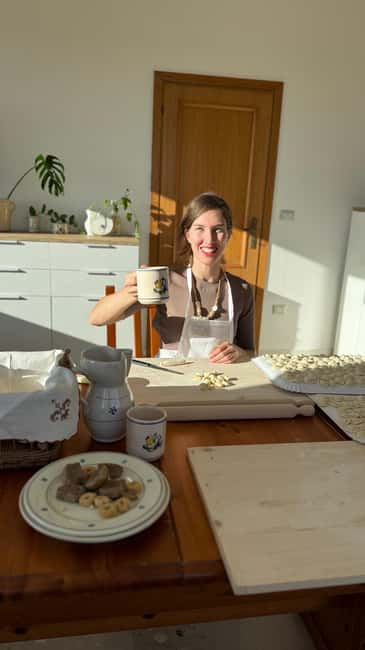
Fresh pasta teaches more than recipes. This Salento cooking class gives you a wooden board, simple ingredients, and patient guidance from Giulia, a local host who brings family recipes to life. I like the small group size of eight and the warm, home-style setting. I also like that you eat the pasta you make, with taralli and local wine included. The main consideration is the meeting point, which can be hard to spot beside the Autoservice Giacquinto auto body shop.
The class lasts about two and a half hours, with roughly an hour for pasta making, 30 minutes for tasting, and another hour for the meal. Families are especially well suited, since children as young as two have enjoyed the activity. One detail needs checking before you book: the description names orecchiette and sagne torte, while the inclusions mention orecchiette and cavatelli.
Key things to know before booking
- You make two traditional pasta shapes: The experience focuses on orecchiette and a second Salento-style shape, described as sagne torte in one place and cavatelli in another.
- Giulia is the central host: Her patient, friendly teaching style has been praised by families, couples, and people taking the class alone.
- The group is limited to eight: That keeps the lesson personal and gives you room to ask questions.
- The meal is part of the lesson: You taste the pasta you prepare, alongside taralli and local wine.
- Children can take part: Families with children aged two, five, six, and seven have enjoyed the class.
- The meeting point needs attention: Look for the building next to Autoservice Giacquinto, and check the name on the doorbell if the exterior is not obvious.
Why handmade pasta matters in Salento
In Salento, pasta is not just a restaurant dish. It is a practical home skill, shaped by local ingredients, family habits, and the time people spend around a table. This class gives you a chance to learn those basics with your hands instead of simply ordering another plate of pasta.
The appeal is not technical perfection. You are not signing up for culinary school or a chef competition. You are learning how dough responds to your fingers, how a small piece becomes a shell or curl, and how much care goes into a food that often looks simple on the plate.
Orecchiette are the best-known shape in this part of Italy. The name refers to their small, ear-like form. The class also includes a second local pasta style, though the supplied details use both sagne torte and cavatelli for that shape. If the distinction matters to you, ask Giulia which recipe will be prepared on your date.
I like this kind of activity because you leave with something more useful than a photograph. You can try the technique again at home, even if your first pieces are not perfectly shaped. That is part of the fun.
More Fresh Pasta Workshops in Italy:
- Rome: Pasta Making Class with Wine, Limoncello, and Dessert
★ 4.9 · 3,177 reviews - Pastamania – Florence Pasta Making Class
★ 5.0 · 3,050 reviews - Enjoy Spritz and Pasta Making in Piazza Navona
★ 5.0 · 1,681 reviews
Meeting Giulia and finding the class
The experience provider is The Puglian Table with Giulia. The host named most often in the supplied details is Giulia, with Antonio also mentioned as part of the welcome for one family. The tone is informal and personal rather than restaurant-like.
The address is SS275, 44 in Salento. The building is next to the Autoservice Giacquinto auto body shop. This is a useful landmark, but it may not look like a classic cooking school from the street.
One practical tip is worth keeping in mind: the entrance was not immediately clear to at least one participant, although the name on the doorbell matched. I would arrive with the address, the auto shop landmark, and the host’s name ready. If you are driving, give yourself a few extra minutes to get your bearings.
Transportation is not included, so you must make your own way there. The activity information does not state that pickup is available. If you are staying elsewhere in Apulia, check the driving time carefully before booking, since a cooking class loses some of its charm if you arrive rushed.
The first hour: shaping orecchiette by hand
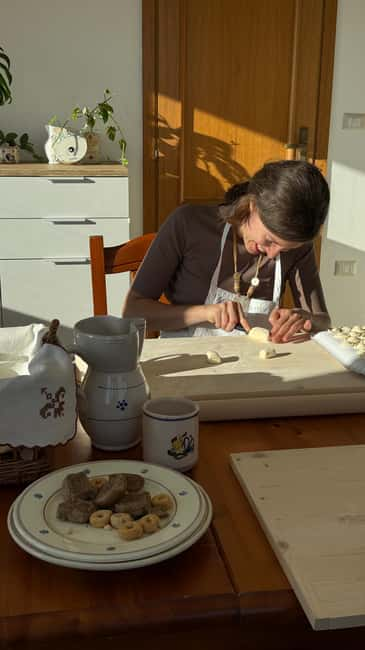
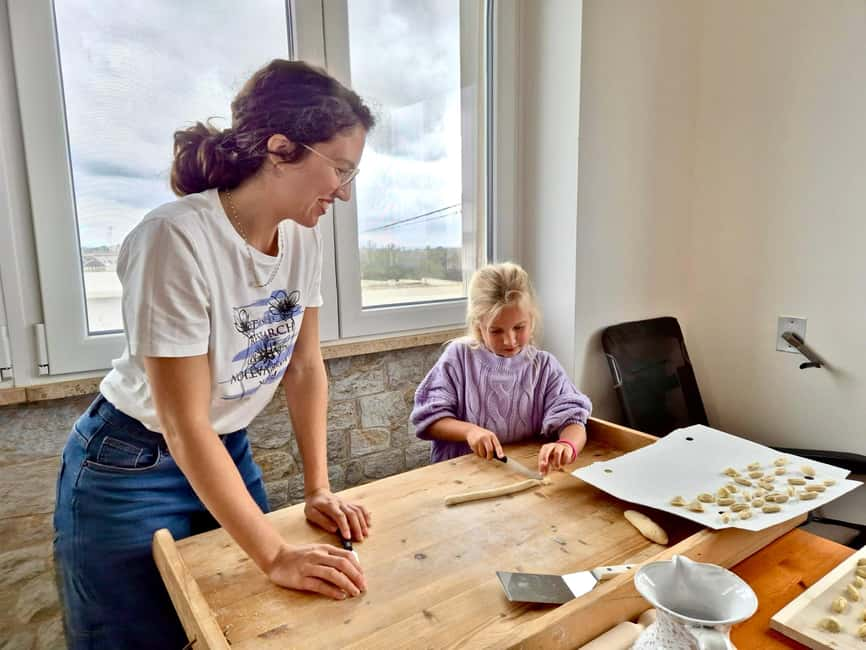
The pasta lesson takes about one hour. Each person receives a wooden board and utensils, along with fresh ingredients and instruction from the local host.
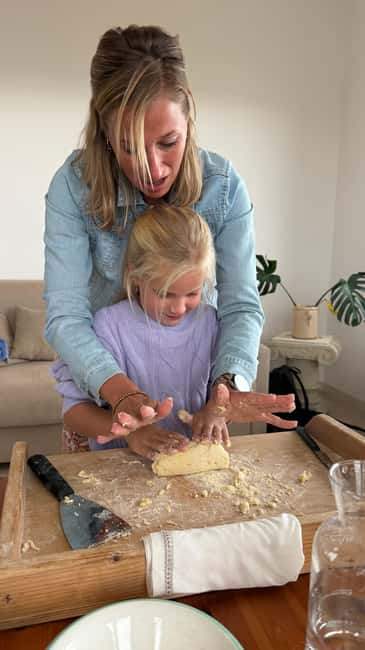
This setup matters. You are not watching Giulia work from across a kitchen. You get your own surface and make the pasta yourself. That makes the class suitable for children and beginners, since everyone can work at a comfortable pace.
Giulia’s teaching style appears to be one of the experience’s strongest points. She is described as patient, open, attentive, and good at explaining each step. You can ask questions during the process, and the small group limit means you should not feel lost in a crowd.
The class also includes stories about cooking and life in Italy. That gives the food some context without turning the session into a formal lecture. You learn the gestures behind the pasta, but you also get a sense of how recipes move through families.
For families, this is a strong choice. Children aged two and six were able to take part and enjoy the food, while another family with children aged five and seven found the activity easy to follow. Very young children may need help from an adult, but the experience has clearly worked well as a shared family activity.
You should expect a relaxed lesson rather than identical pasta pieces. Some orecchiette may look neat, while others may look slightly lopsided. That is fine. The point is to learn the motion and enjoy the process.
The second pasta shape and the value of clarification
The experience description refers to sagne torte, a traditional Salento pasta, while the included features refer to orecchiette and cavatelli. These are not the same shape, so I would confirm the exact pasta pairing when you reserve.
This is not necessarily a problem. The lesson is still built around fresh pasta made by hand, and both names point to regional cooking rather than a generic pasta workshop. Still, clear information helps you know what you are paying for, especially if you have chosen the class because of one particular pasta shape.
The wording may reflect a change in the lesson or a translation difference. Ask whether the class on your date covers orecchiette with sagne torte, or orecchiette with cavatelli. That simple question removes the only notable uncertainty in the food program.
A few more classes around Italy worth a look
- Florence: Pasta Cooking Class with Unlimited Wine
★ 4.9 · 10,285 reviews - 3 in 1 Cooking Class near Navona: Fettuccine, Ravioli & Tiramisu
★ 5.0 · 7,376 reviews - Florence Pizza or Pasta Class with Gelato Making at a Tuscan Farm
★ 5.0 · 6,801 reviews - Florence: Pasta & Tiramisu Cooking Class with Unlimited Wine
★ 4.9 · 6,708 reviews
A 30-minute tasting with taralli and local wine
After the pasta lesson, you have about 30 minutes to taste the results. The aperitif includes taralli and local wine, giving you something to enjoy while the meal comes together.
Taralli are crunchy ring-shaped snacks common in southern Italy. They are simple, salty, and well suited to a glass of wine. Their presence makes the welcome feel distinctly local rather than like a generic cooking-class snack.
The wine is another small but meaningful touch. The supplied information does not specify the producer or variety, so you should not expect a formal tasting with technical notes. Instead, think of it as a convivial drink shared during a food experience.
If you do not drink alcohol, the details do not state whether a nonalcoholic alternative is available. Ask ahead if that matters to you. Smoking is not allowed during the activity.
The tasting also gives you a pause between shaping pasta and eating the full meal. That helps the experience feel social rather than hurried.
The final meal: eating what you made
The final hour is set aside for lunch or dinner, with the pasta you prepared served for you to enjoy. This is the payoff of the class, but it also changes how you think about the food.
A plate of handmade pasta tastes different when you have spent time shaping each piece. You notice texture and size more closely. You also gain a better sense of why regional pasta dishes are tied to patience and repetition.
The meal takes place in a friendly, family-style atmosphere. You are not simply handed food and sent on your way. Giulia joins the social side of the experience, and the tone described by participants is closer to being welcomed into a home than attending a large commercial demonstration.
One especially personal detail is the connection to Casa de Nona Tina, the family home associated with Giulia’s grandmother and her recipes. The experience also includes references to a garden and plans for a vegetable garden, with parts of the setting accessible to people taking part. These details give the class a sense of place and family continuity.
The information does not promise a fixed menu beyond the pasta, taralli, local products, and wine. If you have allergies, dietary restrictions, or foods you avoid, contact the host before booking rather than assuming substitutions are available.
Why the small group size changes the experience
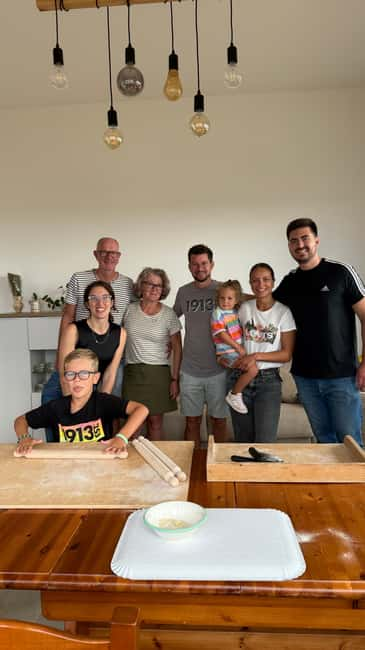
The class accepts no more than eight people. That is small enough for the host to watch your technique and answer questions without the session becoming crowded.
For a couple or solo participant, a group of eight still leaves room for conversation. For a family, it means children can participate without disappearing at the back of a room. The experience has also worked especially well when only two people attended, creating a more private, hosted feel.
A small group does not guarantee silence or a private class. Your date may include other families, couples, or friends. Still, the limit supports the personal style promised by the activity.
I would choose this class for conversation as much as for food. If you want a polished cooking demonstration with a strict timetable, this may feel too informal. If you like asking questions, hearing personal stories, and learning at a human pace, the format should suit you well.
The family connection behind the food
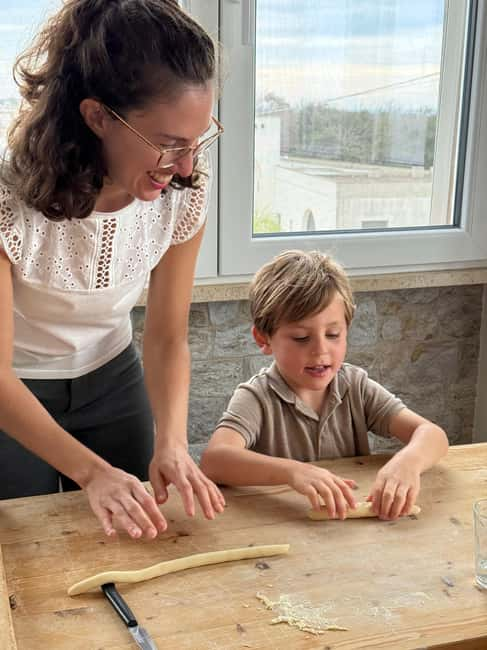
The host’s personal connection to her grandmother’s cooking adds weight to the lesson. The class is not presented as a set of detached recipes. It is tied to Casa de Nona Tina, family memories, and traditional dishes passed from one generation to another.
That matters because the best local food experiences often explain why people cook a dish, not just how. You may hear about earlier ways of life, present plans, and the food grown around the home. The supplied details describe open conversation about family, daily life, and future projects.
This is also why the class can work for people who are not serious cooks. You are not required to know pasta terms or Italian food customs. Giulia’s role is to guide you through the process and make the setting comfortable.
The strongest praise is directed at her warmth and patience. Several families valued how she treated children, and couples appreciated the relaxed welcome. That personal attention is likely the main reason the class feels different from a standard group lesson.
Price and overall value at $35
At $35 per person, this is an appealing price for a two-and-a-half-hour experience that includes instruction, ingredients, equipment, the pasta meal, taralli, and local wine.
The value is strongest if you count the activity as both a meal and a cultural experience. You are not paying only for a plate of pasta. You are also paying for hands-on instruction, a small group, a local host, and time in a family setting.
The price is less compelling if you only want to eat. A restaurant meal may be simpler, especially if you have limited time. This class earns its value through participation, conversation, and the skill you can take home.
The booking terms add flexibility. You can reserve now and pay later, and cancellation is free up to 24 hours in advance for a full refund. Check the available start times because the activity runs for 2.5 hours and the schedule may affect transport plans.
Who should book this Salento pasta class
I would recommend it most strongly to:
- Families who want children to take part in a real food activity
- Couples looking for a personal meal with a local host
- Solo visitors who enjoy conversation and hands-on learning
- Friends who want an easy group activity in Salento
- Beginners who would like to learn fresh pasta without pressure
- Food lovers who value family recipes and regional cooking
It may be less suitable if you need a highly formal class, a private booking, or a clearly specified menu for dietary reasons. It may also be inconvenient if you do not have a practical way to reach SS275, 44, since transportation is not included.
Language should not be a major barrier for most visitors. The live guide service is offered in English, French, and Italian, though some content may be presented in its original language.
My advice before you reserve
Confirm the second pasta shape first. Ask if your session will feature sagne torte or cavatelli alongside orecchiette.
Then save the meeting point details. The building is next to Autoservice Giacquinto, and the doorbell name may be more useful than the exterior. Allow a little extra time so you are not searching at the exact start time.
If you are bringing children, expect them to participate with adult help. The class has worked well for young children, but the supplied details do not promise special childcare or a separate children’s program.
Finally, contact the host about allergies, dietary needs, and nonalcoholic drinks. The activity includes fresh ingredients, local products, wine, and a shared meal, but it does not list alternate menus.
Should you book it?
Yes, if you want to do something in Salento rather than simply see it. The combination of handmade pasta, local wine, taralli, and Giulia’s personal welcome offers good value at $35.
I would book this for a relaxed half-day, especially with children or a small group of friends. Just verify the second pasta shape and plan carefully for the slightly unclear meeting point. If those details suit you, this is the kind of simple, warm experience that can become one of your most memorable meals in Apulia.
FAQ
How long does the Salento cooking experience last?
The experience lasts 2.5 hours. The schedule includes about one hour of cooking, 30 minutes of food tasting, and one hour for lunch or dinner.
What pasta will I learn to make?
The experience description names orecchiette and sagne torte. The included features name orecchiette and cavatelli, so ask the host to confirm the second pasta shape for your date.
Is the pasta-making class hands-on?
Yes. Each participant receives a wooden board and utensils, then makes the pasta with guidance from the local host.
Is food and wine included?
Yes. The experience includes fresh ingredients, a tasting of the pasta you prepare, taralli, and local wine.
Is the activity suitable for children?
Yes. Families with children aged two, five, six, and seven have taken part successfully. Young children may need help from an adult.
What languages are available?
The live guide service is available in English, French, and Italian. Some content may be presented in its original language.
Where is the meeting point?
The address is SS275, 44 in Salento. The building is next to the Autoservice Giacquinto auto body shop. The doorbell name may help you identify the correct entrance.
Is transportation included?
No. You must arrange your own transportation to and from the activity.
Just added around Italy
- Verona: Tortellini Cooking Class and Lunch with Mamma Ivana★ 5.0 · 20 reviews
- Volterra: Fresh Pasta Cooking Class at a Tuscan Farmhouse★ 5.0 · 33 reviews
- Vicenza: Pasta & Tiramisu Cooking Class at a Local’s Home★ 5.0 · 5 reviews
- Verona: Pasta Cooking Class with Wine Tasting★ 5.0 · 4 reviews
- Verona: Pasta & Tiramisu Cooking Class at a Local’s Home★ 5.0 · 16 reviews
- Venice: Share Your Pasta Love in a Local’s Home★ 4.8 · 20 reviews
- Verona: Prosecco and Pasta Making Class at a Local’s Home★ 5.0 · 10 reviews
- Verona: My Granny’s secrets making gnocchi★ 5.0 · 7 reviews
Fresh Pasta Workshops, compared.
Pasta Making Class with Wine, Limoncello, and Dessert
Read our review →
Enjoy Spritz and Pasta Making in Piazza Navona
Read our review →
Pasta Making & Wine Tasting with Dinner in Frascati from Rome
Read our review →
The Secrets to Learn Fresh Pasta and Tiramisù in a Glam Home
Read our review →
Pasta Making with Wine Tasting and Dinner in Frascati
Read our review →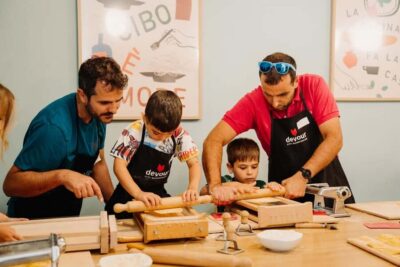
Browse the lists this tour appears in