
Review · SIENA
Siena: Private Handmade Pasta Cooking Class in Tuscany
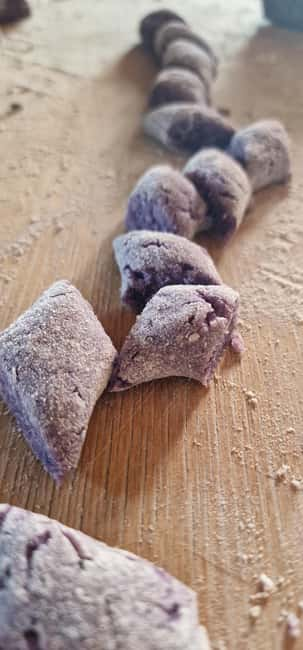
Fresh pasta tastes better in the Tuscan hills. This private class near Siena takes you into a farmhouse built in 1720, where you make two pasta dishes from scratch with a chef’s close help. I like the personal format and the meal that follows, with wine pairings, dessert, water, and espresso included. The main drawback is practical: you must arrange your own transport to the countryside.
You should also know that this is not a quick demonstration where you watch someone else do the work. You handle the dough, fillings, shapes, and sauces yourself. The class is especially good if you want to understand the small details, such as the right dough texture, that cookbooks often skip. It is not suitable for wheelchair users, and the four to four-and-a-half-hour schedule takes a solid part of your day.
Key things to know before booking
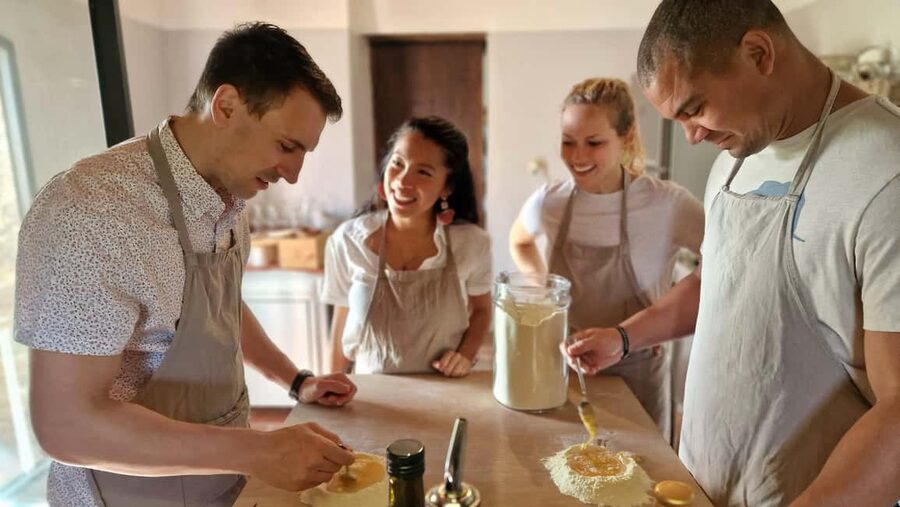
- You make two kinds of pasta: The class covers dough, fillings, shapes, and sauces, with the pasta types tailored to your preferences.
- The setting is a 1720 Tuscan farmhouse: You cook in a private kitchen studio in the Siena countryside, not in a generic city classroom.
- The meal is part of the experience: You eat the pasta you prepared with wine pairings, dessert, water, and espresso coffee.
- The teaching is hands-on: A professional chef guides you through each stage and helps you correct the dough as you work.
- Local ingredients shape the meal: Vegetables come from the organic garden, with additional products from nearby farms.
- Plan your own ride: Transportation is not included, though private parking is reserved at the studio.
A farmhouse kitchen outside Siena
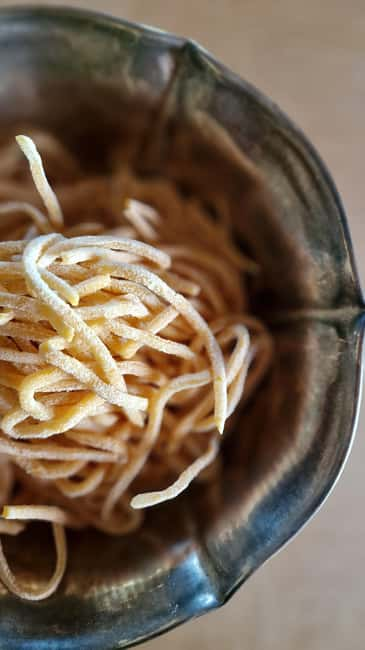
The class takes place in a private kitchen studio in the countryside around Siena. The farmhouse dates to 1720, which gives the setting a sense of place that a modern cooking school cannot easily copy.
That detail matters because the setting is part of the meal. You are not simply learning a recipe under bright classroom lights and then leaving. You cook and eat in an old Tuscan home, surrounded by the sort of rural setting associated with the food itself.
The kitchen has air conditioning, a useful comfort during warm Tuscan months. You should wear comfortable clothes, since the class lasts up to four and a half hours and includes real hands-on preparation.
Private parking is reserved for you at arrival. Still, the operator does not provide transportation. You need to follow the driving directions to The Tuscan Kitchen Studio and get there independently. If you do not have a car, confirm your transport plan before paying, since the countryside location makes this a more important issue than it would be for a class in central Siena.
More Fresh Pasta Workshops in Italy:
- Rome: Pasta Making Class with Wine, Limoncello, and Dessert
★ 4.9 · 3,177 reviews - Pastamania – Florence Pasta Making Class
★ 5.0 · 3,050 reviews - Enjoy Spritz and Pasta Making in Piazza Navona
★ 5.0 · 1,681 reviews
Your first task: learning the pasta dough
The class begins with the foundation of handmade pasta: the dough. This is where the experience offers more than a recipe card.
You learn how the dough should feel and look as you work it. That may sound basic, but texture is one of the hardest parts to learn from a cookbook. A written recipe can tell you how much flour or liquid to use, yet it cannot easily explain when the dough is too dry, too soft, or ready to shape.
The chef provides personal guidance at each step, so you can adjust your dough rather than blindly follow measurements. This is one of the strongest reasons to choose a private class. If you are uncertain, you can ask immediately and get help with the exact dough in front of you.
The teaching also appears suited to beginners who want a successful result, not just a pleasant afternoon. One participant particularly valued learning how dough changes into the right consistency for different pasta styles, along with practical tips that are rarely found in cookbooks. That is the kind of instruction you can take home and use again.
Shaping two pasta creations
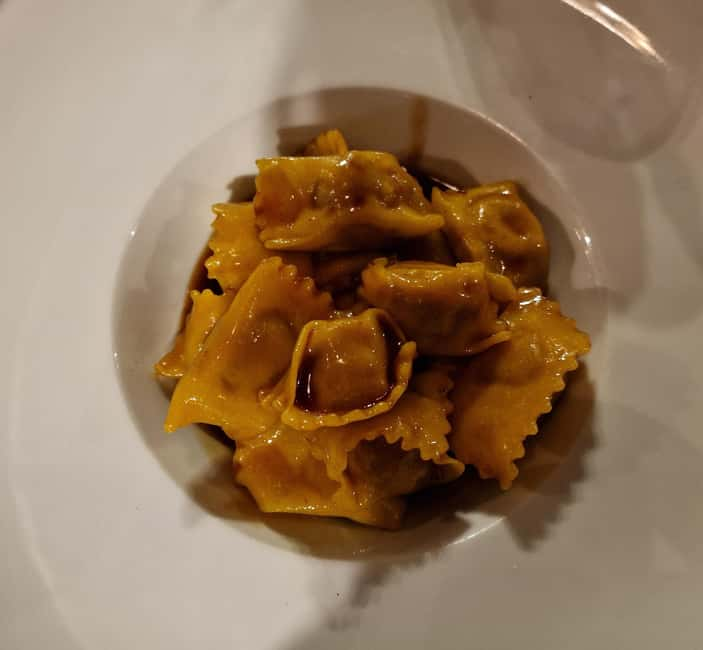
After the dough, you work on two pasta types of your choice. The description does not promise one fixed menu, which is a real advantage if you already have a particular pasta in mind.
You may want to learn a filled pasta, a shaped pasta, or two different styles for comparison. The important point is to discuss your preferences in advance so the chef can tailor the session appropriately. Since the class is private or limited to a small group, you should have room to focus on the techniques that interest you most.
The shaping stage is also where the class becomes more than a standard cooking lesson. Handmade pasta depends on touch and repetition. You learn how to handle the dough, form the pieces, and prepare them for cooking. If you have tried making pasta at home and ended up with uneven pieces, this guided practice can help you see what your hands should be doing.
There is a small trade-off here. Because the class is personalized, the exact dishes and sequence may depend on your chosen pasta types. If you want a fixed menu with a known set of recipes, this format may feel less predictable. If you want instruction that fits your interests, the flexibility is a plus.
Fillings, sauces, and the complete plate
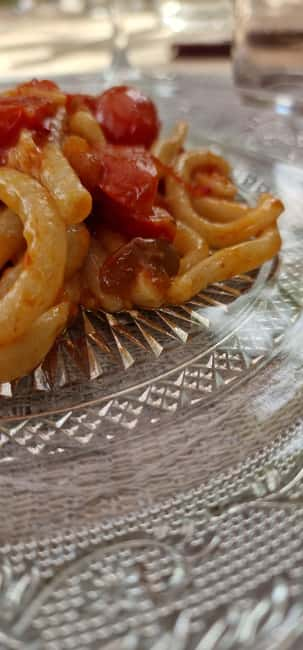
The class does not stop with pasta shapes. You also prepare fillings and sauces from scratch, so you learn how the parts work together.
That gives the lesson a useful structure. You are not merely practicing a pasta form and then watching the chef finish the dish. You work through the elements that determine the final flavor and texture. The chef and sommelier provide guidance throughout, including the match between the finished food and the wine served with it.
The ingredient policy adds another layer. Vegetables come from the organic garden, and other products are sourced from neighboring local farms. The result should reflect the area and the season, although the specific vegetables and dishes are not fixed in advance.
You should share dietary restrictions or food preferences before the class. The operator asks for this information ahead of time, which is especially important in a lesson involving dough, fillings, sauces, and a full meal. Do not wait until you arrive if you need changes.
More Private Pasta Classes in Italy:
- Rome: Pasta Making Class with Tiramisu & Wine PRIVATE OPTION
★ 4.8 · 404 reviews - From Taormina: Private/Guided Godfather with appetizer and Pasta
★ 5.0 · 233 reviews - Cesarine: Private Pasta Class & Meal at Local’s Home in Bologna
★ 5.0 · 111 reviews - Cesarine: Private Pasta Class at Local’s Home in Messina
★ 5.0 · 53 reviews
Eating the pasta you made
The best part of the schedule may be the meal after the work is finished. You serve and eat the pasta you prepared, rather than taking it home or watching someone else plate it.
This makes the four-and-a-half-hour schedule feel like a complete outing. You learn, cook, sit down, and enjoy the results in the same farmhouse. The meal includes wine pairings, dessert, water, and espresso coffee, so you do not need to budget separately for those items.
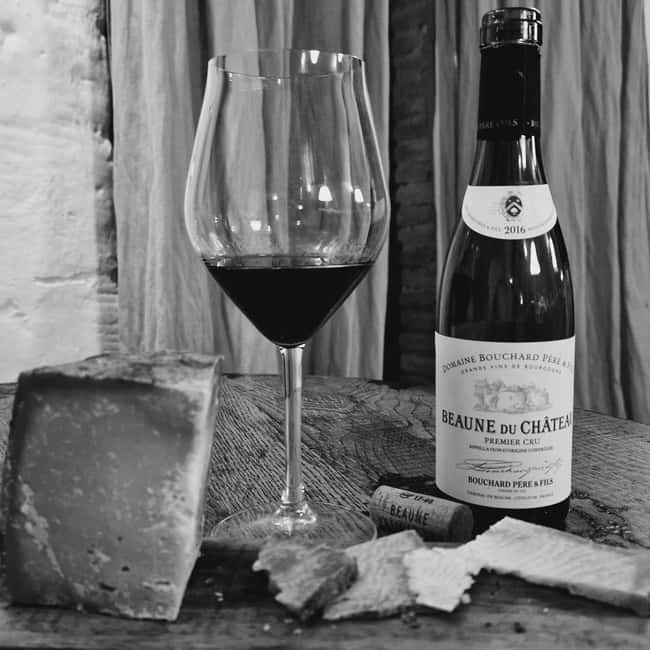
The wine pairing is useful even if you are not an expert. It connects the food to Tuscan dining habits and gives the meal a more polished finish. You are not only learning a technique, but also seeing how handmade pasta fits into a full Italian meal.
The meal also gives you time to slow down after the practical work. Pasta making can be messy and focused. Sitting down afterward lets you enjoy the result without rushing straight to another sightseeing stop.
Keep in mind that the experience is built around the pasta you make. If your main goal is a broad Tuscan tasting menu with many courses, this may not be the right choice. If you want to eat your own work and understand how it was made, the format has clear value.
Why the private format matters
At $294 per person, this is not a cheap cooking class. I would not choose it simply because you want to eat pasta in Tuscany. You can find less expensive meals and shorter demonstrations.
The price makes more sense if you value individual instruction. A private or small-group class gives the chef time to focus on your dough, your shaping technique, and your questions. The meal, wine pairings, dessert, coffee, ingredients, equipment, and recipe eBook are included, so the price covers more than the teaching alone.
You also receive an eBook containing the recipes prepared during the class. That is useful because handmade pasta depends on remembering process, not only ingredients. You can refer back to the recipes at home while practicing the techniques you learned.
The strongest value is the correction and feedback. A recipe can tell you what to add, but a chef can show you why your dough is not behaving as it should. The experience is particularly worthwhile if you have already tried making pasta and want to improve, or if you want a personal introduction instead of a large group event.
The cost may be harder to justify for someone who rarely cooks. If you are looking for a light activity between Siena sightseeing stops, four to four-and-a-half hours is a major commitment. Think of this as a half-day food experience, not a quick add-on.
What the teaching style seems to offer
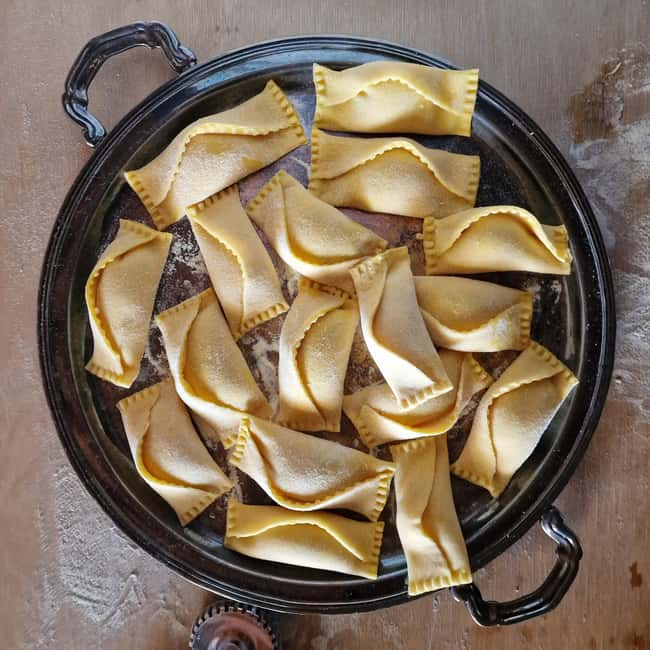
The class aims to give you small victories along the way. The chef does not simply demonstrate and leave you to copy the motions. The instruction is designed to help you succeed with the dough and pasta shapes.
That approach matters for first-time pasta makers. You can feel when dough is becoming workable, but knowing why it has reached that point takes practice. Personal corrections help turn a vague cooking instinct into something you can repeat.
The class also suits a couple or a small private party particularly well. You can choose preferred pasta styles and ask for help at your own pace. A private format may be less lively than a larger social class, but it gives you more control over the food and the instruction.
The available languages are Italian, English, and French. If you have a language preference, select or confirm it when booking. No guide names are provided, but the professional chef and sommelier are part of the teaching and dining experience.
Planning the half-day
The advertised duration is four to four-and-a-half hours. Starting times vary, so check availability when you choose your date.
Allow extra time around the class for driving to the farmhouse. Transportation is not included, and you should not plan a tight connection with a train, museum reservation, or another tour. The countryside setting is part of the appeal, but it also means you need to think ahead about the route.
Private parking is reserved for your arrival. Bring comfortable clothes rather than anything formal. You will be working with dough, fillings, sauces, and cooking equipment, so practical clothing makes more sense.
The studio has air conditioning, which helps in hot weather. You should still treat the class as an active cooking session rather than a seated tasting. The work is manageable, but the long duration makes comfort important.
The activity is not suitable for wheelchair users. That limitation should guide your decision before booking, since the class takes place in a historic farmhouse.
Who will enjoy this most
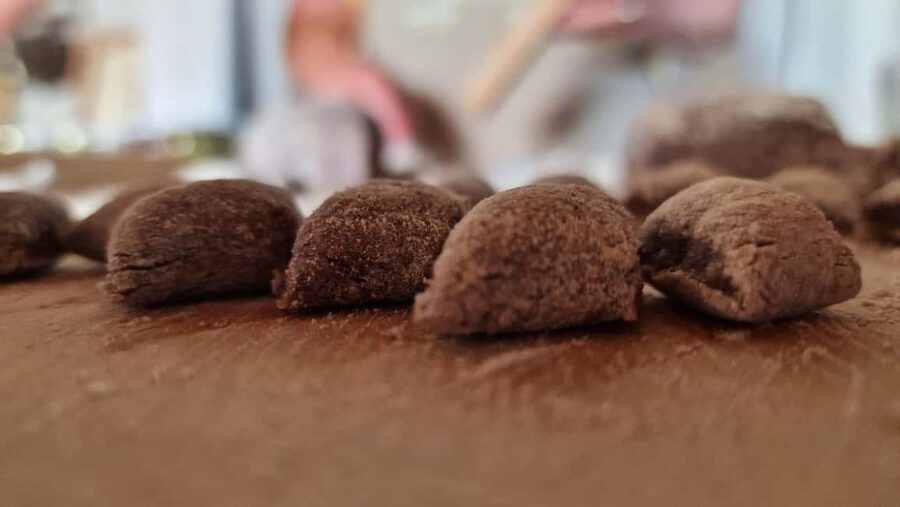
I would recommend this class to couples, families with an interest in cooking, and small groups who want a private Tuscan activity. It is also a good match for anyone who has wanted to make pasta by hand but has struggled with dough texture or shaping.
You will get the most from it if you ask questions, try the techniques yourself, and tell the chef what you want to learn. The flexible pasta choices give you a chance to focus on a specific skill rather than passively follow a preset lesson.
Food lovers who care about local ingredients should also appreciate the organic garden and nearby farm products. The class connects the cooking lesson with the place around it, without turning the meal into a formal food lecture.
I would be more cautious about recommending it to someone with only a short visit to Siena, a strict sightseeing schedule, or no way to reach the countryside. The price and time are easier to justify when cooking is one of your main reasons for visiting Tuscany.
What you take home
The main souvenir is not a packaged product. It is the ability to judge pasta dough, shape it, prepare fillings and sauces, and repeat the process later.
The recipe eBook gives you a practical reference. More valuable, though, is the memory of how the dough felt when it was ready. That is the detail that often separates a successful homemade pasta attempt from a disappointing one.
You also leave with a meal in mind, not just a list of instructions. You have seen the pasta through several stages, then eaten it with wine, dessert, and coffee. That complete process gives the class a stronger sense of purpose than a lesson where cooking ends at the final demonstration.
Should you book this pasta class?
Book it if you want personal instruction, two handmade pasta dishes, and a full Tuscan meal in an old farmhouse outside Siena. The chef’s close help with dough consistency and pasta shapes is the strongest reason to pay the premium.
Skip it if you need a low-cost activity, cannot arrange transportation, use a wheelchair, or have less than half a day available. For everyone else, the class offers a practical skill, a relaxed meal, and a setting that feels connected to Tuscan food traditions rather than built only for tourism.
FAQ
Where does the pasta class take place?
The class takes place at The Tuscan Kitchen Studio, a private kitchen studio in the Siena countryside. It is located in a farmhouse built in 1720.
How long does the experience last?
The class lasts approximately four to four-and-a-half hours.
How much does the class cost?
The listed price is $294 per person.
Is the class private?
Private and small-group options are available. The class is designed to be intimate and personalized.
How many types of pasta will I make?
You will prepare two different types of pasta, based on your preferred styles.
What does the cooking lesson cover?
The lesson covers pasta dough, fillings, shapes, and sauces. A professional chef guides you through each stage.
Is a meal included?
Yes. You eat the pasta prepared during the class, with wine pairings, dessert, water, and espresso coffee.
Are ingredients and cooking equipment provided?
Yes. The necessary professional cooking equipment is provided, along with farm-fresh vegetables and products from local farms.
Is transportation included?
No. You must arrange transportation to and from the activity location. Private parking is reserved at the studio.
Can dietary restrictions be accommodated?
You should inform the operator of dietary restrictions or food preferences in advance. The available information does not specify which individual restrictions can be accommodated.
What languages are available?
The class is offered in Italian, English, and French.
Is the farmhouse wheelchair accessible?
The experience is not suitable for wheelchair users.
What should I wear?
Wear comfortable clothes suitable for a hands-on cooking class.
Can I cancel the booking?
You can cancel up to 24 hours in advance for a full refund. A reserve-now, pay-later option is also available.
Just added around Italy
- Verona: Tortellini Cooking Class and Lunch with Mamma Ivana★ 5.0 · 20 reviews
- Volterra: Fresh Pasta Cooking Class at a Tuscan Farmhouse★ 5.0 · 33 reviews
- Vicenza: Pasta & Tiramisu Cooking Class at a Local’s Home★ 5.0 · 5 reviews
- Verona: Pasta & Tiramisu Cooking Class at a Local’s Home★ 5.0 · 16 reviews
- Verona: Pasta Cooking Class with Wine Tasting★ 5.0 · 4 reviews
- Venice: Share Your Pasta Love in a Local’s Home★ 4.8 · 20 reviews
- Verona: Prosecco and Pasta Making Class at a Local’s Home★ 5.0 · 10 reviews
- Verona: My Granny’s secrets making gnocchi★ 5.0 · 7 reviews
Fresh Pasta Workshops, compared.
Pasta Making Class with Wine, Limoncello, and Dessert
Read our review →
Enjoy Spritz and Pasta Making in Piazza Navona
Read our review →
Pasta Making & Wine Tasting with Dinner in Frascati from Rome
Read our review →
The Secrets to Learn Fresh Pasta and Tiramisù in a Glam Home
Read our review →
Pasta Making with Wine Tasting and Dinner in Frascati
Read our review →
Browse the lists this tour appears in