Review · ITALY
Pasta Academy Sfoglina Simonetta
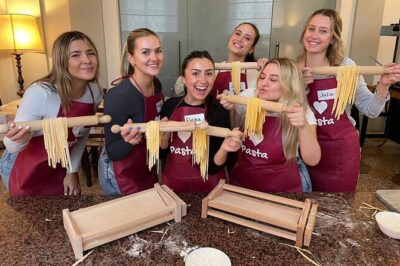
A rolling pin can change your lunch. In Ancona, Simonetta teaches the old-school art of making fresh pasta by hand, using a board and rolling pin instead of a machine. This private, English-language class lasts about three hours and includes your meal.
I like the individual workstation, since you can follow each stage yourself instead of watching from the sidelines. I also like Simonetta’s serious pasta credentials: she has worked internationally, helped starred chefs produce fresh pasta, teaches at hotel schools, and was named Best Lady Chef of Italy in 2024. The main drawback is the price, $157.28 per person, which is a lot for a pasta lesson unless you value private instruction and lunch.
Key points at a glance
- Traditional board-and-rolling-pin method: You learn the older technique that gives pasta a porous surface and helps sauce cling.
- Private three-hour class: Only your group takes part, so Simonetta can guide you through the dough, shaping, cooking, and storage.
- Several pasta forms: The lesson covers shapes such as tagliatelle, pappardelle, ravioli, and tortellini.
- Lunch is included: Your handmade tagliatelle is served with meat sauce or vegetarian sauce.
- Central Ancona meeting point: The class begins at 9:00 am at Piazza San Francesco and finishes there.
- A specialist instructor: Simonetta has international experience, worked with starred restaurants, and received Italy’s Best Lady Chef award in 2024.
Why this Ancona pasta class feels different
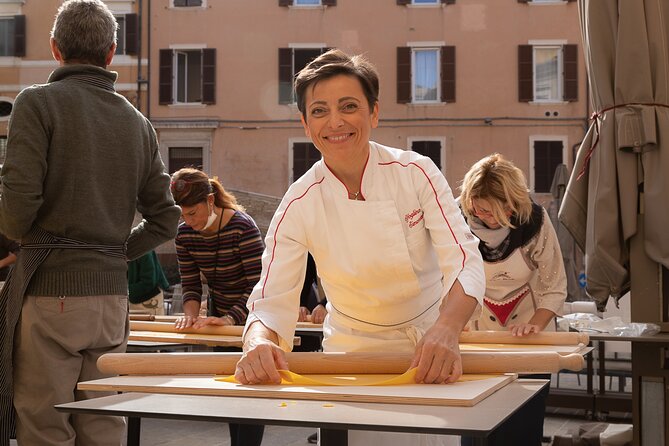
Many cooking classes use modern pasta rollers because they are quick and easy. That is not the point here. Simonetta teaches you to work the dough with a board and rolling pin, the method traditionally used to create sfoglia, the thin sheet of pasta that gives a sfoglina her name.
The technique takes more effort than feeding dough through a machine. That is also its value. You learn to feel the dough, judge its thickness, and shape it with your hands. The slightly porous finish helps sauce cling to the pasta instead of sliding to the bottom of the plate.
I like this approach because it gives the class a clear link to Italian home cooking. You are not simply assembling a dish for a photograph. You are learning a physical skill that has been passed through generations, with the tools and gestures at the center of the lesson.
The class is also private. Only your group participates, which can make a major difference if you want to ask questions, work at your own pace, or avoid the awkwardness of trying to copy a teacher from the back of a crowded room. You still need to be comfortable with hands-on work, but you should have direct guidance through each step.
A few more classes around Italy worth a look
- Florence: Pasta Cooking Class with Unlimited Wine
★ 4.9 · 10,285 reviews - 3 in 1 Cooking Class near Navona: Fettuccine, Ravioli & Tiramisu
★ 5.0 · 7,376 reviews - Florence Pizza or Pasta Class with Gelato Making at a Tuscan Farm
★ 5.0 · 6,801 reviews
Meeting Simonetta at Piazza San Francesco
The class begins at 9:00 am at Piazza San Francesco in Ancona, at Piazza S. Francesco, 60121 Ancona AN, Italy. The meeting point is near public transportation, so you do not need to arrange private transport to reach the start.
The early start is practical. Fresh pasta involves several stages, and the class needs enough time to mix, roll, shape, preserve, and cook it before lunch. If you are planning a full day in Ancona, this timing leaves the rest of the day open after the class ends.
You should arrive ready to work rather than treating this as a demonstration. The format gives every participant a workstation and ingredients, so you will be involved from the beginning. Wear something comfortable and avoid planning an important appointment immediately afterward. The class is listed at approximately three hours, but cooking sessions can feel relaxed once the work gets going.
The activity returns to the same meeting point. Private transportation is not included, so you are responsible for getting to Piazza San Francesco and making your way onward afterward.
Mixing the dough by hand
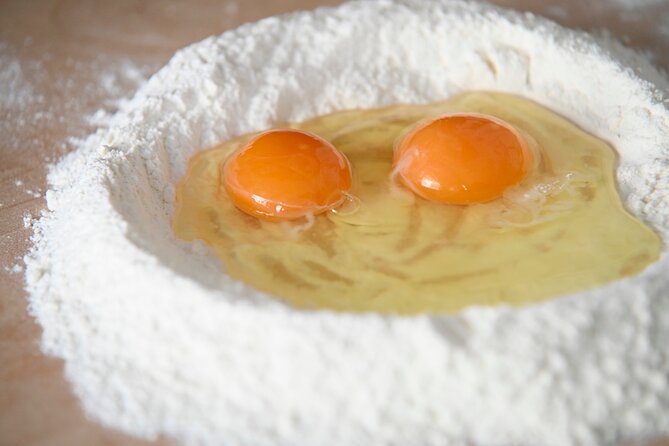
The first major stage is the dough. You will work through the basic mixture before moving on to rolling and shaping. The value here is not just learning a recipe. It is seeing how the dough changes as you work it and how its texture affects the final pasta.
Simonetta leads the process step by step. That matters because pasta dough can look simple but respond differently depending on how it has been worked. A private lesson gives you the chance to ask about texture and technique at the moment you need help, rather than trying to remember a quick explanation later.
The class does not promise a shortcut. The old method requires attention and some patience. If you want a fast activity with little effort, this may feel demanding. If you enjoy learning a craft and want to understand what your hands are doing, it is one of the strongest parts of the experience.
Simonetta’s professional background adds weight to this stage. She has supported starred chefs with fresh pasta production and works with hotel schools to pass on traditional rolling-pin techniques. That combination of restaurant experience and teaching experience should suit both beginners and cooks who already make pasta at home.
Rolling the sfoglia with a board and pin
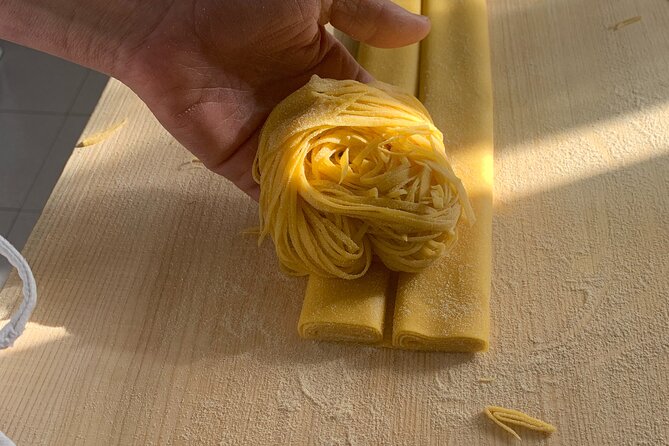
Rolling the dough is the heart of the class. Instead of relying on a pasta machine, you use the board and rolling pin to turn the dough into a thin sheet.
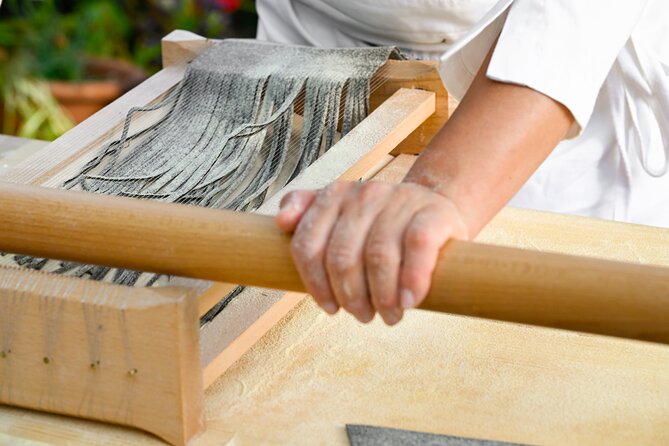
This method is slower, but it helps you understand the shape and feel of the pasta. You need to roll evenly and pay attention to thickness. The goal is not just a smooth sheet. The traditional process creates porosity, which helps the finished pasta hold its sauce.
For me, this is the part that makes the experience more memorable than a standard cooking lesson. A machine can produce consistent pasta, but it hides much of the process. With the rolling pin, you see how small changes in pressure and movement affect the sfoglia.
Do not expect perfect results on your first attempt. A private course is useful here because Simonetta can correct your technique as you go. The relaxed atmosphere praised in the feedback is especially important during this stage, when the dough may not behave exactly as you expect.
Same kitchen, a different thing to make:
- Florence: Pasta & Tiramisu Cooking Class with Unlimited Wine
★ 4.9 · 6,708 reviews - Florence: Pasta Cooking Class with Unlimited Wine
★ 5.0 · 6,413 reviews - Rome: Pasta & Tiramisu Class with Fine Wine by the Vatican
★ 4.9 · 4,852 reviews - Rome: Pasta Making Class with Wine, Limoncello, and Dessert
★ 4.9 · 3,177 reviews
Shaping tagliatelle, pappardelle, ravioli, and tortellini
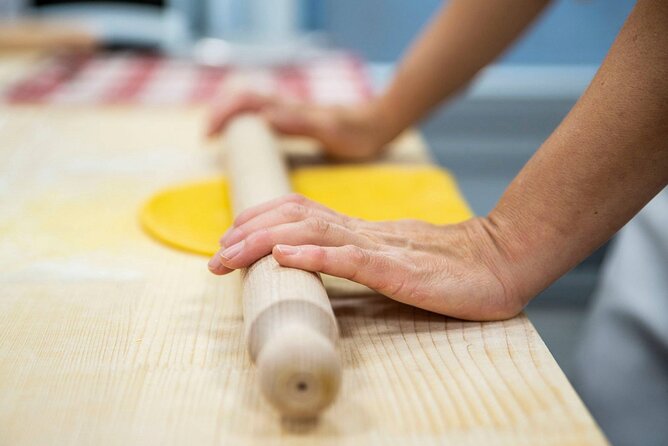
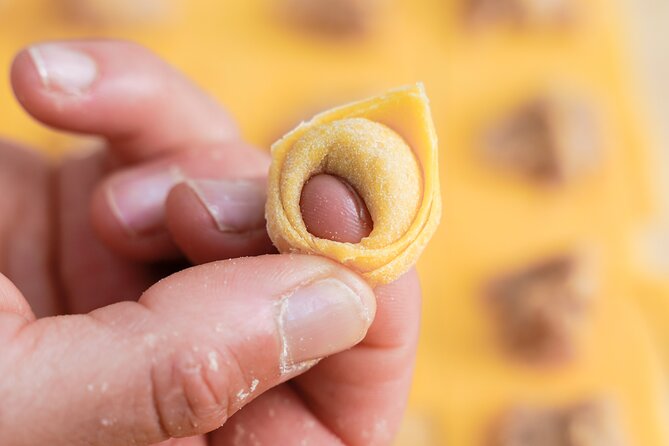
Once the sheet is ready, the class moves into shaping. The stated examples include tagliatelle, pappardelle, ravioli, and tortellini. These forms require different cuts, folds, and handling, so this section broadens the lesson beyond one basic noodle.
Tagliatelle is the practical centerpiece because it becomes your lunch. Pappardelle gives you a wider noodle to compare with it. Ravioli and tortellini introduce filled pasta, with folding and sealing techniques that demand more precision.
The class may not produce equal quantities of every shape, since the exact balance depends on the lesson. You should think of these as the pasta forms covered during the process, not a guarantee of a large take-home assortment.
That said, learning several shapes in one session gives you more to practice later. You leave with a better sense of how the same dough can become different dishes. It also shows why handmade pasta is not one single skill. Cutting long noodles and sealing filled pasta require different movements.
Preservation, cooking, and the included lunch
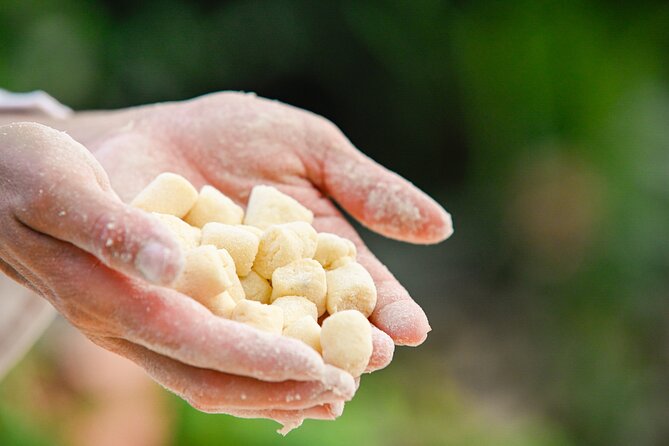
The lesson also covers conservation methods. This is a useful addition because fresh pasta has a short working window, and proper storage affects its texture. The class is not limited to making pasta and eating it immediately. You also learn what to do with pasta that you want to keep.
The final cooking stage brings the work to the table. Lunch consists of handmade tagliatelle with either meat sauce or vegetarian sauce. The inclusion of lunch adds practical value to the price, since you are not paying for instruction and then arranging a separate meal.
The sauce choice is helpful for different diets, though the information only specifies meat or vegetarian sauce. If you have a gluten intolerance or allergy, address it before booking and confirm what can be accommodated. Do not assume that a traditional pasta class can automatically provide a safe alternative.
The meal also gives you a direct test of the technique. You can see how the handmade noodles hold the sauce and compare the result with dried or machine-made pasta. That connection between preparation and eating is part of what makes the class feel complete.
Simonetta’s experience and teaching style
Simonetta is not presented as a casual hobby cook. Her background includes an international career, work with starred chefs, and collaboration with hotel schools. She was also recognized as Best Lady Chef of Italy in 2024.
Those credentials do not guarantee that every participant will love the class, but they do explain the focus on traditional technique. This is a lesson built around the craft of fresh pasta, not a general Italian food tour with a few minutes of cooking added.
The feedback describes the class as relaxed and enjoyable, with Simonetta teaching participants how to make a perfect pasta. I would treat that as a useful sign for beginners. A technically serious teacher can still create a friendly class, and the private format gives you more room to ask simple questions without feeling out of place.
The course is offered in English. That makes the instruction accessible to English-speaking visitors, though you should still expect the work itself to be hands-on and visual. Pasta technique is often easier to understand by watching a movement than by hearing a long explanation.
Is $157.28 a fair price?
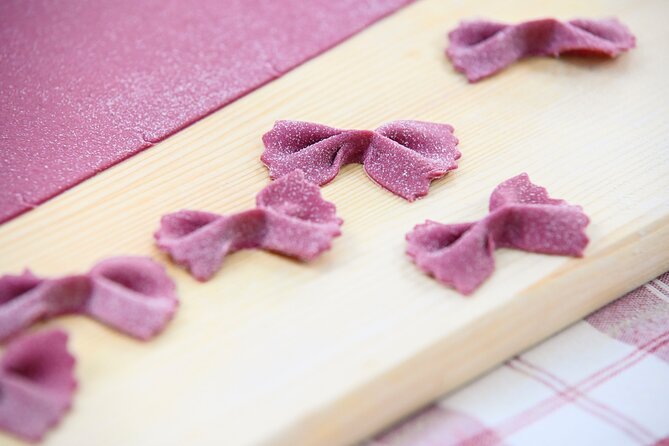
At $157.28 per person, this is not a budget meal or a quick market activity. The price makes more sense when you add up what is included: private instruction, your own workstation and ingredients, a three-hour lesson, several pasta shapes, cooking guidance, and lunch.
The private format is the biggest value factor. If you are part of a small group that wants personal instruction, the cost may feel reasonable. You are paying for time with a specialist rather than joining a large class where the teacher must divide attention among many people.
The price is harder to justify if your main goal is simply to eat pasta. Ancona has other ways to enjoy local food, and this class asks you to work for the meal. You should book it because you want the process, not only because lunch is included.
I would also consider the expertise. Simonetta has worked with professional kitchens and hotel schools, and her 2024 award adds to her profile. For someone who wants to improve technique or understand traditional sfoglia, those credentials make the cost easier to defend.
The experience is booked about 33 days in advance on average. That suggests you should not leave it until the last moment, particularly if your Ancona visit is built around a fixed schedule.
Who should book this class?
I would recommend it most strongly to:
- First-time pasta makers who want direct help
- Home cooks interested in traditional tools and methods
- Couples, families, or friends who prefer a private activity
- Small teams looking for a hands-on team-building event
- Food-focused visitors who want lunch tied to the cooking process
- Cooks curious about tagliatelle, pappardelle, ravioli, and tortellini
The class may be less suitable if you dislike repetitive handwork or want a short, passive demonstration. The rolling-pin method is the point, so replacing it with a machine is not part of the plan.
It also may not fit travelers with strict gluten allergies unless Simonetta confirms an appropriate arrangement in advance. The available information notes gluten intolerances and allergies, but it does not promise a specific substitute or separate preparation.
Booking, timing, and cancellation advice
Confirmation is sent within 48 hours of booking, subject to availability. Since the experience often sells around 33 days ahead, I would reserve before your trip rather than waiting until you are already in Ancona.
You can cancel for a full refund up to 24 hours before the 9:00 am start time. Cancellations or changes made less than 24 hours before the class are not refunded or accepted. The cut-off uses Ancona local time, so check the time carefully if you are arranging the class from another country.
A minimum number of participants is required. If the class is canceled because that minimum is not met, you are offered another date or experience, or a full refund.
The final verdict: book it for the craft
I think this is a strong choice if you want to learn traditional pasta making rather than simply watch someone cook. The private instruction, specialist teacher, old-fashioned rolling-pin method, and included lunch give the three-hour session a clear purpose.
The cost is the main question. At $157.28, you should be ready to value personal teaching and hands-on practice. If that sounds worthwhile, book ahead and confirm any gluten concerns before paying. If you only want an inexpensive meal, choose a restaurant instead. If you want to understand how handmade pasta is formed from dough to plate, this Ancona class is a well-focused pick.
FAQ
Where does the pasta class begin?
It begins at Piazza San Francesco, Piazza S. Francesco, 60121 Ancona AN, Italy.
What time does the class start?
The class starts at 9:00 am.
How long does the experience last?
It lasts approximately three hours.
Where does the activity end?
The activity ends back at the meeting point.
Is private transportation included?
No. Private transportation is not included.
Is the class private?
Yes. Only your group participates in the activity.
Is the lesson offered in English?
Yes. The experience is offered in English.
What pasta-making method will I learn?
You will learn to make pasta by hand with a board and rolling pin, without using a machine.
What pasta shapes are covered?
The class includes preparation of shapes such as tagliatelle, pappardelle, ravioli, and tortellini.
Is lunch included?
Yes. Lunch includes handmade tagliatelle with meat sauce or vegetarian sauce.
Can I cancel for a full refund?
Yes. You can cancel at least 24 hours before the start time for a full refund. Changes or cancellations made less than 24 hours before the start time are not accepted or refunded.
Just added around Italy
- Verona: Tortellini Cooking Class and Lunch with Mamma Ivana★ 5.0 · 20 reviews
- Volterra: Fresh Pasta Cooking Class at a Tuscan Farmhouse★ 5.0 · 33 reviews
- Vicenza: Pasta & Tiramisu Cooking Class at a Local’s Home★ 5.0 · 5 reviews
- Verona: Pasta & Tiramisu Cooking Class at a Local’s Home★ 5.0 · 16 reviews
- Verona: Pasta Cooking Class with Wine Tasting★ 5.0 · 4 reviews
- Venice: Share Your Pasta Love in a Local’s Home★ 4.8 · 20 reviews
- Verona: Prosecco and Pasta Making Class at a Local’s Home★ 5.0 · 10 reviews
- Verona: My Granny’s secrets making gnocchi★ 5.0 · 7 reviews
Italy Pasta Classes, compared.
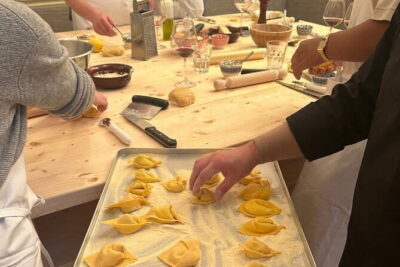
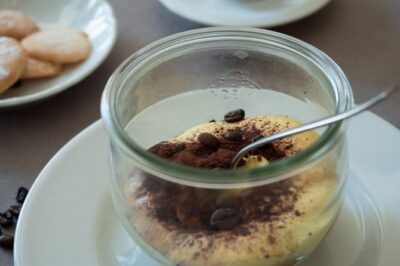
3 in 1 Cooking Class near Navona: Fettuccine, Ravioli & Tiramisu
Read our review →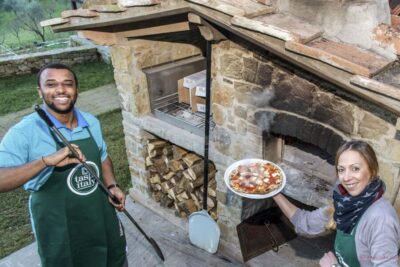
Florence Pizza or Pasta Class with Gelato Making at a Tuscan Farm
Read our review →
Pasta & Tiramisu Cooking Class with Unlimited Wine
Read our review →
Pasta & Tiramisu Class with Fine Wine by the Vatican
Read our review →
Pasta Making Class with Wine, Limoncello, and Dessert
Read our review →