
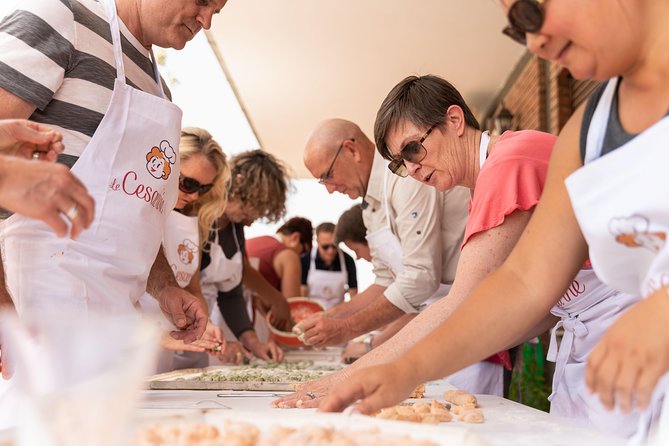
Review · ITALY
Pasta Making Class with Mamma in Assisi
Fresh pasta makes Assisi taste even better. This two-hour class pairs hands-on cooking with the warmth of an Italian home kitchen, and I especially like Eleonora’s patient teaching and the chance to eat what you make with wine. The surprise tasting of local cheese, olive oil, bread, and wine across the street adds another welcome local touch.
The class costs $161.77 per person, so it is not a cheap meal or a casual demonstration. I also see one practical concern: pasta, tiramisù, fillings, and class details may need confirming in advance, especially for vegetarians or anyone with allergies.
Key points at a glance
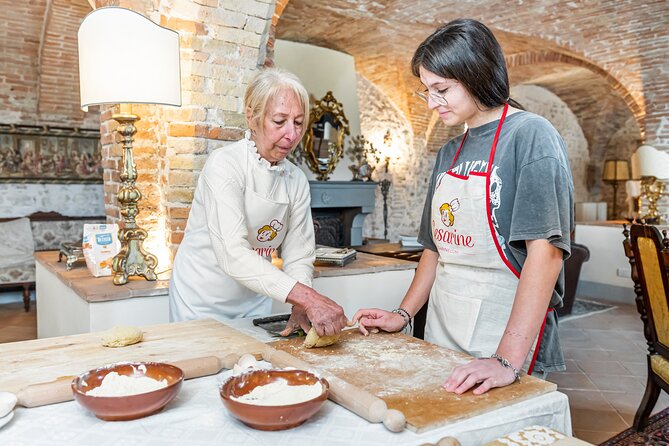
- Three pasta shapes from one dough: Learn techniques for fettuccine, ravioli, and tortellini, with some sessions also including tagliatelle.
- Eleonora gets high marks for patient instruction: She demonstrates each step, corrects technique kindly, and works closely with each student.
- Wine and local food begin the experience: A tasting across the street may include cheese, meats, bread, olive oil, and regional wine.
- You eat some of your work and take some home: The class can produce a fresh pasta meal plus noodles or other pasta to cook later.
- Small groups make a real difference: The maximum is 12, but several sessions had only one or two participants.
- Tiramisù is part of the advertised experience: Confirm this with the host before arriving, as at least one session had a mismatch in expectations.
Why this Assisi cooking class is worth considering
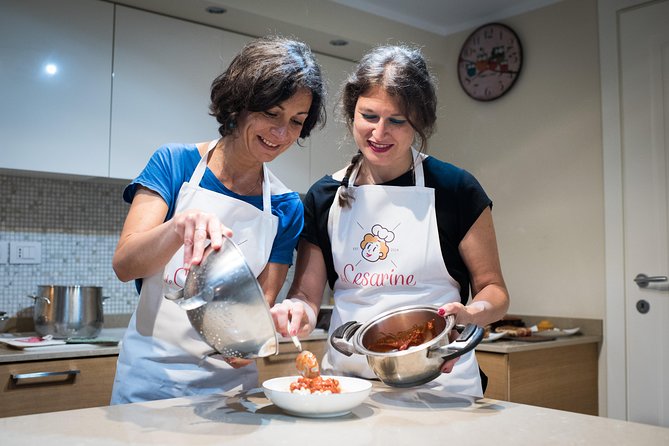
I like cooking classes that teach a skill you can use after the holiday. This one is not just a plate of pasta delivered to your table. You work with dough, learn how to roll it, practice cutting it, and shape filled pasta under guidance.
That matters because fresh pasta often looks simple until you try it. The dough can be too thick, too dry, or unevenly cut. Eleonora is described as patient but willing to correct poor technique. That is exactly what you want in a class. Polite encouragement is pleasant, but clear instruction is what helps you repeat the result at home.
The class is also a social experience. You meet an Italian home cook, possibly share the table with other participants, and enjoy conversation over wine and food. If you are visiting Assisi with a partner, sibling, or young child, the setting can work well. One family even found that their two-year-old quickly became friendly with the host.
Still, keep the price in view. At $161.77 per person, this costs far more than ordering pasta in an Assisi restaurant. You are paying for instruction, a personal connection, the food, the local tasting, and the small-group format. The value is strongest if you want to learn, not simply eat.
More Fresh Pasta Workshops in Italy:
- Rome: Pasta Making Class with Wine, Limoncello, and Dessert
★ 4.9 · 3,177 reviews - Pastamania – Florence Pasta Making Class
★ 5.0 · 3,050 reviews - Enjoy Spritz and Pasta Making in Piazza Navona
★ 5.0 · 1,681 reviews
Finding the class on Via Borgo Aretino
The meeting point is Via Borgo Aretino 6, 06081 Assisi PG, Italy. The activity ends at the same point, and the location is near public transportation.
That return to the starting point keeps the logistics simple. You do not need to arrange a separate ride after the meal, and you can continue sightseeing in Assisi once the class ends. You should still check the exact address before setting out. One booking problem placed a participant 11 kilometers away from the expected class location when another class connected with the same partner was only a five-minute walk from the hotel.
The provider explained that the system may assign a nearby location when Assisi hosts are full. This is an important detail. Check your confirmation carefully, and contact the host if the assigned address is unclear. If wine is part of the event, location matters even more.
The class is offered in English. That does not mean every exchange will be perfectly smooth. One couple found a language gap at times, but also found Eleonora patient and thorough. A little patience on both sides should help.
The local tasting across the street
Several sessions began with an unexpected tasting at a shop across the street. Francesco, the shop owner, served regional wine and a selection of foods such as cheese, cured meats, bread, and olive oil.
This opening is one of the nicest details of the experience. It gives you a taste of Umbrian hospitality before you sit down to work. It also adds context to the meal. Pasta is not isolated from the rest of Italian food culture. Olive oil, cheese, wine, bread, and cured meats all help explain how a simple meal becomes a social event.
The tasting also appears to vary somewhat by session. It is best to treat it as a likely bonus rather than a guaranteed full antipasti course. The advertised meal centers on pasta, and the class is only about two hours long.
If you do not drink alcohol, selected beverages are also offered. The available information does not give a full nonalcoholic drinks menu, so contact the host if that point matters to you.
Making pasta by hand with Eleonora
The central lesson is fresh pasta made from scratch. You prepare one basic dough and use it to form several shapes. The exact combination described across sessions includes fettuccine, tagliatelle, ravioli, and tortellini.
The useful part is not only learning the names. You practice the movements that make the pasta work: rolling the dough to a suitable thickness, cutting clean strands, filling pasta without overloading it, and shaping the dough so it stays closed during cooking.
One particularly useful lesson is the cutting method for noodles. A participant who had made pasta before still learned new tips for rolling and cutting. That is a good sign for experienced home cooks. Beginners should also feel comfortable, since Eleonora demonstrates the steps and helps each person improve.
The class can be very hands-on, but the amount of direct practice may depend on the group and the way the session is run. One participant felt the class was closer to a cooking demonstration than a fully hands-on lesson. If you want every minute to involve your own dough, ask about the format before booking.
Small numbers can change the entire experience. Although the maximum group size is 12, several sessions had only one or two participants. In those cases, Eleonora could watch technique closely and give individual help. That is a major benefit for anyone who wants to leave with genuine confidence.
Larger groups may still be enjoyable, but expect less one-to-one attention. The class is best suited to people who like to ask questions, try a technique, make mistakes, and try again.
A few more classes around Italy worth a look
- Florence: Pasta Cooking Class with Unlimited Wine
★ 4.9 · 10,285 reviews - 3 in 1 Cooking Class near Navona: Fettuccine, Ravioli & Tiramisu
★ 5.0 · 7,376 reviews - Florence Pizza or Pasta Class with Gelato Making at a Tuscan Farm
★ 5.0 · 6,801 reviews - Florence: Pasta & Tiramisu Cooking Class with Unlimited Wine
★ 4.9 · 6,708 reviews
Ravioli and tortellini fillings
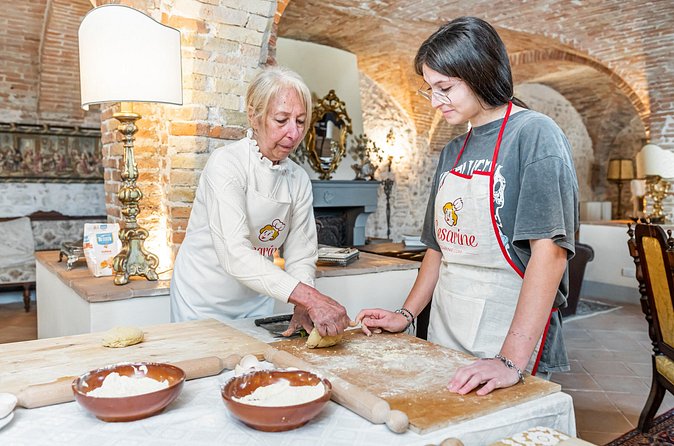
Filled pasta gives the lesson a second level of difficulty. You need enough filling to create flavor, but not so much that the pasta will not seal. You also need to press out air and shape each piece neatly.
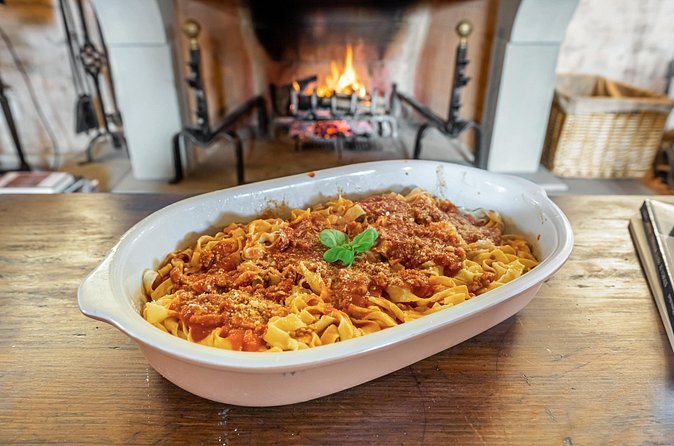
Sessions included fillings such as spinach and ricotta, along with a meat filling for ravioli in at least one class. A simple ragu was also prepared for the pasta. These details make the lesson more useful than a basic noodle-making workshop because you learn how the shapes fit with different sauces and fillings.
You should tell the host about dietary needs before arriving. One vegetarian participant could not eat the pre-prepared ravioli filling because the host had not been told about the preference. The host said a cheese filling could have been prepared if she had known.
This is an easy issue to avoid. Food allergies, vegetarian preferences, and other restrictions should be stated clearly during booking and confirmed directly with the host. Do not assume that a general allergy question covers vegetarian needs.
Tiramisù and the question of what is included
Tiramisù is advertised as part of the experience, and several sessions included it. Some participants made tiramisù with Eleonora and served it as part of the meal. In another case, the host prepared one after discovering that the booking system and her own class description did not match.
That mismatch is worth noting because the experience is marketed around both pasta and tiramisù. If tiramisù is important to you, confirm it before the class. The safest approach is to send a short message asking whether you will prepare it, eat it during the class, or take it away for later.
The dessert is a nice extra, but pasta remains the main lesson. The published sample menu simply lists pasta, and the activity lasts about two hours. You should not assume this is a long multi-course cooking school.
Eating what you make
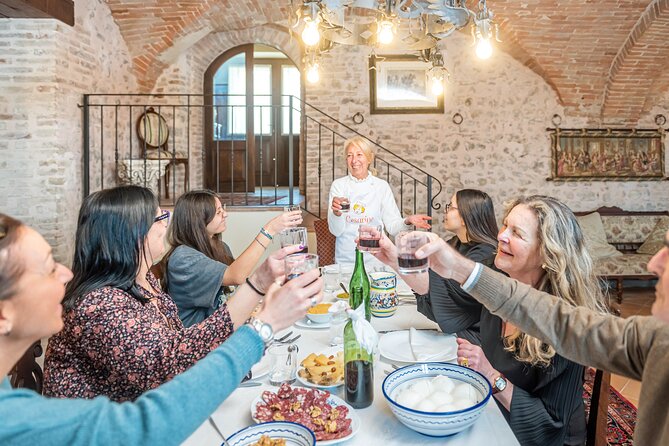
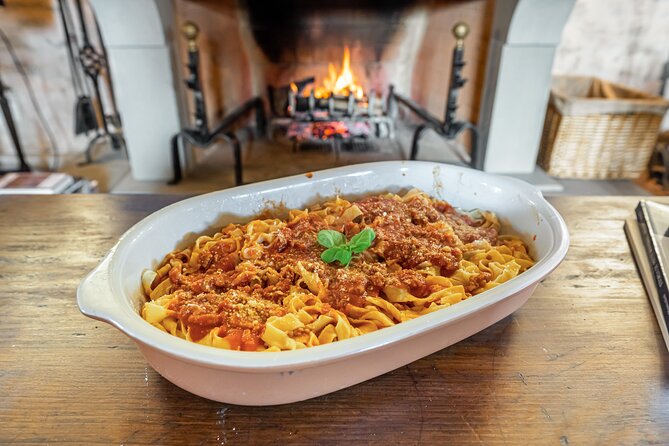
After the lesson, you taste the pasta with wine and selected beverages. In some sessions, the fresh ravioli was cooked and served with sauce, while fettuccine or other noodles were taken home for later.
This split is useful. You get an immediate reward at the table, but you also leave with something you can cook again. That second portion helps turn the class into a practical souvenir rather than a one-time meal.
Several combinations appeared in the class, including spinach and ricotta ravioli with ragu, fresh noodles, and tortellini. The precise dishes can vary, so think of these as examples rather than a fixed menu.
I also like that the meal gives you a chance to talk with the host. The best part of a home cooking class is often the relaxed exchange around the table. The food gives everyone something to do, but the conversation gives the experience its character.
Do not book this expecting a large restaurant-style dinner. One participant described the food as satisfying but not a full meal. The pasta, snacks, wine, and dessert can make a generous experience, but the format is still a compact lesson.
Group size, teaching style, and language
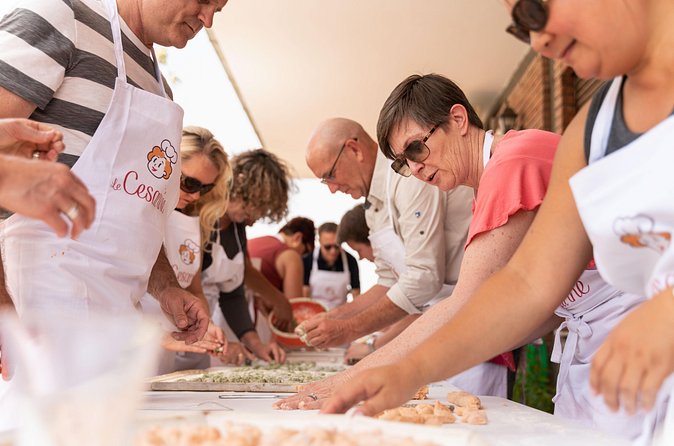
The maximum group size is 12, which is manageable but not intimate by itself. The actual class may be much smaller. Private-feeling sessions occurred when only one or two people booked, and that allowed Eleonora to focus on individual technique.
Her teaching style is one of the strongest reasons to choose this class. She demonstrates, watches your hands, offers corrections, and keeps the mood friendly. Beginners should appreciate the patience, while experienced cooks may benefit from small refinements to rolling and cutting.
The class is offered in English, though communication may not always be perfect. One couple still found the instruction clear enough and enjoyed the host’s patience. You should come ready to watch demonstrations closely and ask questions simply if a step is unclear.
Families can fit into the experience, but remember that pasta shaping requires some patience and table time. The available information confirms that a two-year-old attended one session, but it does not provide a formal age policy.
Price, booking timing, and cancellation
The price is $161.77 per person. That is a premium price for a two-hour activity, but it includes instruction, ingredients, the food you prepare, wine and selected beverages, and sometimes a local tasting before class. You may also take some pasta home.
I would consider it good value if you care about learning fresh pasta and meeting a local cook. If your main goal is a cheap lunch, a restaurant will cost less and take less time. If your goal is a personal food memory and a skill you can repeat, the price makes more sense.
This experience is often booked about 39 days ahead. That suggests you should reserve early if your Assisi dates are fixed, especially if you want a small group.
You can cancel for a full refund up to 24 hours before the start time. Changes or cancellations inside that window are not accepted for a refund. The experience also requires a minimum number of participants. If that minimum is not reached and the class is canceled, you are offered another date or experience, or a full refund.
Who should book this class?
I would choose this class if you enjoy food, prefer personal experiences to formal sightseeing, and want to bring home a useful skill. It suits couples, siblings, solo participants, and small families. The small-group possibility is especially appealing for anyone who wants direct help with technique.
It is also a good choice after a morning of visiting Assisi’s churches and historic streets. The class gives you a slower, more social break from sightseeing, with food at the center.
I would hesitate if you have strict dietary needs that you have not confirmed, if you dislike group cooking, or if you expect a long restaurant meal. I would also check the exact address and the tiramisù arrangement before paying.
Should you book the Pasta Making Class with Mamma in Assisi?
Yes, if you want more than a meal. The best parts are the patient instruction from Eleonora, the chance to shape several kinds of pasta, the local wine and food tasting, and the possibility of taking fresh pasta home.
The main cautions are the high price, occasional uncertainty about the tiramisù portion, and the need to confirm dietary requirements and location. With those details checked in advance, this is a warm, practical way to spend two hours in Assisi and carry a bit of Italian kitchen know-how home.
FAQ
Where does the pasta class begin?
The class begins at Via Borgo Aretino 6, 06081 Assisi PG, Italy.
Where does the activity end?
The activity ends back at the meeting point.
How long does the class last?
The class lasts approximately two hours.
Is the experience offered in English?
Yes. The experience is offered in English.
How many people can join the class?
The maximum group size is 12 participants. Actual sessions may be much smaller.
What kinds of pasta can I learn to make?
The class can include fettuccine, tagliatelle, ravioli, and tortellini. The exact combination may vary.
Is tiramisù included?
Tiramisù is part of the advertised experience, and several sessions included it. Confirm the arrangement with the host before arriving because class details have not always matched.
Can I take pasta home?
Yes. Some participants took fresh noodles or other pasta home to cook later.
What is the cancellation policy?
You can cancel at least 24 hours before the start time for a full refund. Cancellations or changes made less than 24 hours before the start time are not accepted for a refund.
Just added around Italy
- Verona: Tortellini Cooking Class and Lunch with Mamma Ivana★ 5.0 · 20 reviews
- Volterra: Fresh Pasta Cooking Class at a Tuscan Farmhouse★ 5.0 · 33 reviews
- Vicenza: Pasta & Tiramisu Cooking Class at a Local’s Home★ 5.0 · 5 reviews
- Verona: Pasta & Tiramisu Cooking Class at a Local’s Home★ 5.0 · 16 reviews
- Verona: Pasta Cooking Class with Wine Tasting★ 5.0 · 4 reviews
- Venice: Share Your Pasta Love in a Local’s Home★ 4.8 · 20 reviews
- Verona: Prosecco and Pasta Making Class at a Local’s Home★ 5.0 · 10 reviews
- Verona: My Granny’s secrets making gnocchi★ 5.0 · 7 reviews
Fresh Pasta Workshops, compared.
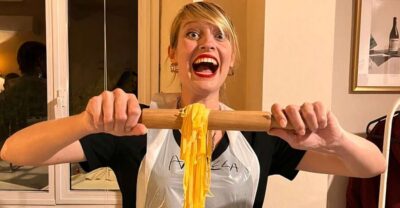
Pasta Making Class with Wine, Limoncello, and Dessert
Read our review →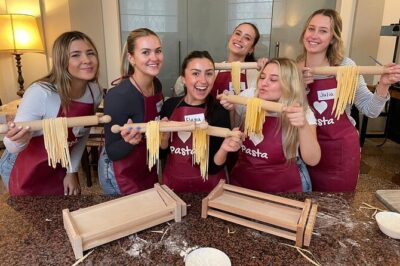
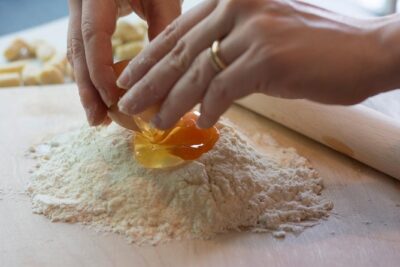
Enjoy Spritz and Pasta Making in Piazza Navona
Read our review →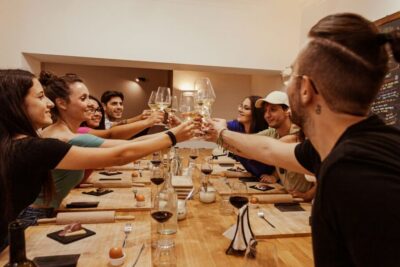
Pasta Making & Wine Tasting with Dinner in Frascati from Rome
Read our review →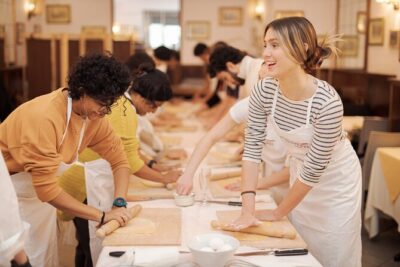
The Secrets to Learn Fresh Pasta and Tiramisù in a Glam Home
Read our review →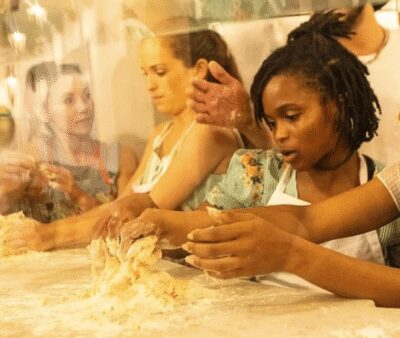
Pasta Making with Wine Tasting and Dinner in Frascati
Read our review →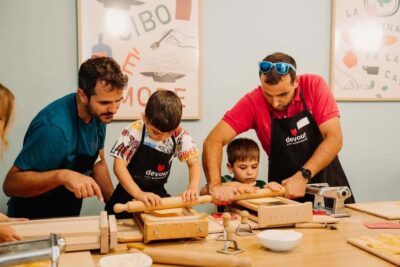
Browse the lists this tour appears in