
Review · FLORENCE
Share Your Pasta Love in a Local’s Home in Florence
Fresh pasta tastes better when you make it yourself. This Florence home cooking class trades a formal school kitchen for a local home, where you mix, knead, and shape pasta before sitting down to eat it with wine. I like the personal setting, and I like that the meal includes an aperitivo and pasta you helped prepare. The main point to consider is the short 90-minute schedule, which leaves little room for a slow, elaborate lesson.
The class costs $70.89 per person and accepts up to 20 people. That is fair value if you want food, instruction, and a taste of local hospitality in one sitting, though the group may feel less private than the warm reviews of individual hosts suggest. Donatella, Ivana, and their families receive special praise for patience, conversation, and making couples feel welcome.
Key points at a glance
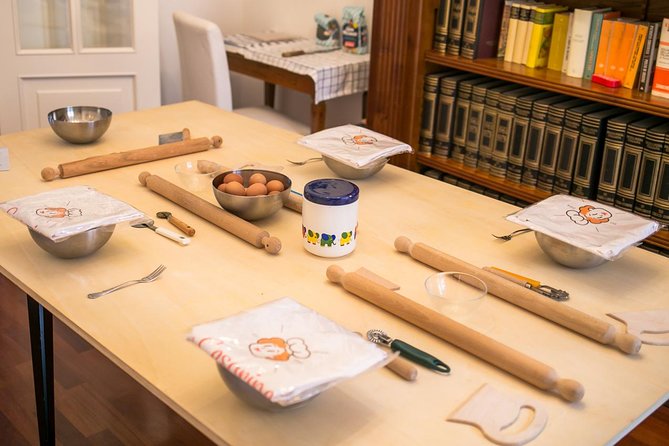
- Cook in a real Florentine home: You prepare pasta in a local kitchen rather than a large commercial cooking school.
- Make pasta by hand: The lesson covers mixing, kneading, rolling, and shaping traditional pasta.
- Expect Tuscan varieties: Pici, tortelli, and pappardelle are listed as sample regional dishes, with tagliatelle and ravioli also possible.
- Start with an aperitivo: A small appetizer and a drink set the tone before the hands-on work begins.
- Share a meal with wine: One bottle is provided for every three participants, followed by the pasta you made.
- Plan ahead: The class is often booked about 24 days in advance, and free cancellation ends 24 hours before the start time.
A Florentine kitchen instead of a cooking-school classroom
The appeal here is simple: you enter a local home, meet a home cook, and make a meal in the same place where the host normally prepares food. That setting gives the class a human touch that a polished culinary studio may lack.
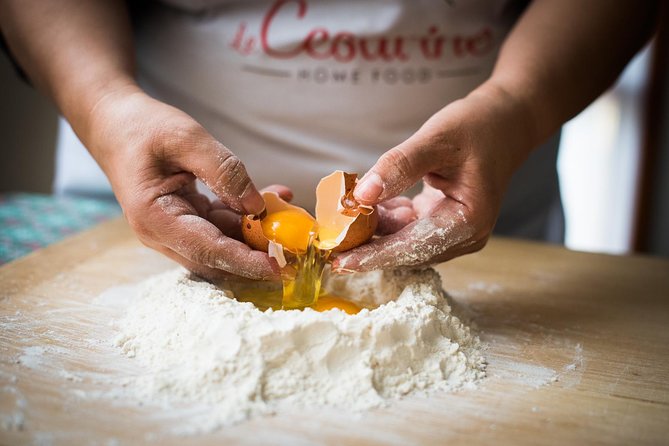
You will not just watch someone roll dough while standing behind a counter. The plan is hands-on. You mix ingredients, knead the dough, and shape the pasta with guidance from the host. For many people, that physical work is the best part. You see how the dough feels, how much pressure to use, and how pasta changes as it goes from a rough mixture to a finished dish.
The class is offered in English, which helps when the lesson depends on small instructions. Pasta making is not difficult in theory, but the details matter. The right texture, the thickness of the dough, and the way you shape a filled pasta all make a difference. A patient teacher can save you from producing something closer to a floury scarf than a proper noodle.
The home setting also changes the social mood. You are not only taking a class. You are sharing a table with people who have come together around food. That makes this a strong choice for couples, small groups of friends, and families with teenagers or adult children.
More Home Cooking Classes in Florence:
- Private Pasta & Tiramisu Class at Cesarina’s home in Florence
★ 5.0 · 28 reviews - Pastamama, Home Cooking Classes at Grace’s Home
★ 5.0 · 521 reviews - Small Group Pasta and Tiramisu Class at Local’s Home in Venice
★ 4.5 · 236 reviews
The welcome: aperitivo before the flour
The experience begins with a warm welcome, a small appetizer, and an aperitivo. This opening matters because it gives everyone time to settle in before the work starts.
An aperitivo is not meant to replace dinner. Think of it as a light introduction to the meal and to the host’s way of entertaining. It lets you taste something local, meet the other participants, and get comfortable in the kitchen.
The pace should be friendly rather than rushed at this point, but remember that the whole class lasts about 90 minutes. If you are hoping for a long tasting menu, a full lesson on sauces, and several hours at the table, this is not that kind of event. It is a compact introduction to pasta making with a meal attached.
That short length is useful for a busy Florence schedule. You can fit the class between sightseeing plans without giving up an entire afternoon. At the same time, it means the host must keep the lesson moving. The focus is on core pasta skills, not every stage of Tuscan cooking.
Mixing and kneading: the useful part of the lesson
The first serious task is preparing the dough. You learn how the ingredients come together and how kneading develops the texture. This is where a hands-on class earns its place over a restaurant meal.
I like this stage because it gives you something you can repeat at home. You are not only collecting a pleasant memory. You are learning a basic technique that can become a meal in your own kitchen. The host’s advice can also help you avoid common mistakes, especially when the dough feels too dry, too sticky, or uneven.
The reviews highlight patient instruction, with special praise for hosts such as Donatella and Ivana. Ivana is described as teaching three types of homemade pasta and giving careful, caring instructions in her private kitchen. That kind of attention is valuable when several people are working at once.
Still, a group of up to 20 affects how much individual help you receive. You should expect a shared lesson rather than a private tutorial. If you need constant one-to-one correction, ask about a private course before booking. The larger group is also part of the fun for people who like conversation, but it may not suit someone seeking a quiet, intimate cooking session.
Shaping pasta: pici, tortelli, and pappardelle
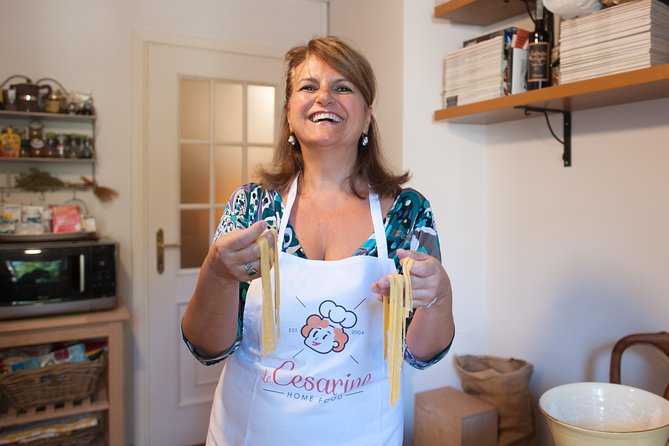
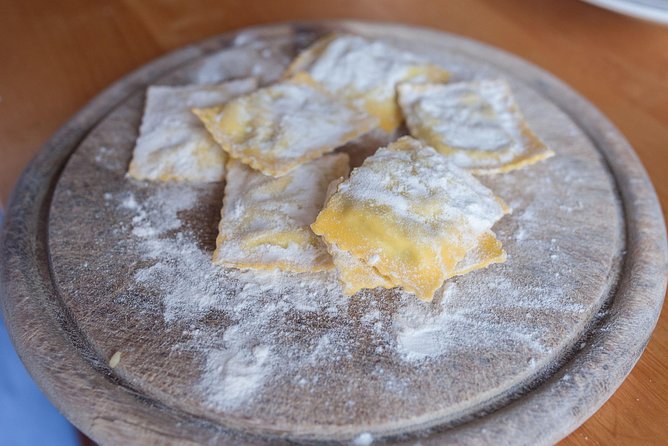
The pasta shape depends on the session and the host. The sample regional choices include pici, tortelli, and pappardelle. Tagliatelle and ravioli are also listed as possible classic pasta styles.
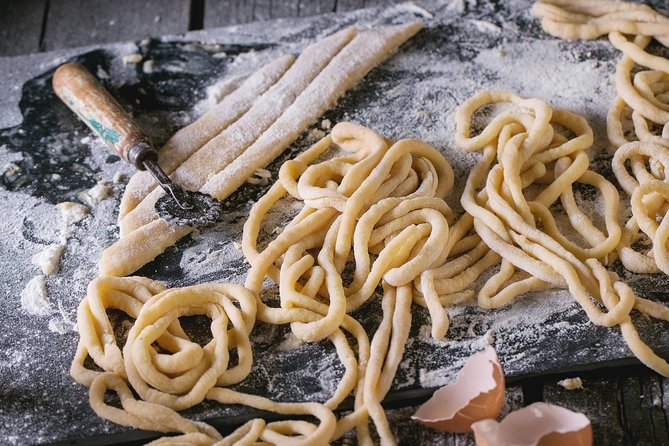
Each one gives you a different kind of lesson. Pici is a thick, hand-rolled Tuscan pasta, so it shows how much can be done without elaborate equipment. Pappardelle and tagliatelle help you practice rolling and cutting broad ribbons. Tortelli and ravioli add the challenge of filling and sealing pasta neatly.
That variety is one of the most appealing parts of the class. You might leave with more than one technique, rather than learning a single shape and stopping there. The specific menu is not fixed in the information provided, so you should treat these as examples, not a promise of every dish.
Filled pasta can take more patience than long noodles. Sealing the edges properly matters, and beginners may produce some irregular shapes. That is not a problem. A homemade tortelli does not need to look machine-made to taste good. In fact, the odd one often becomes the most memorable piece on the plate.
The reviews describe one couple making tortellini from scratch and another group preparing three types of pasta. Those details suggest that the host may adapt the lesson to the group, but you should not assume that every booking includes three pasta varieties.
A few more classes around Florence worth a look
- Florence: Pasta Cooking Class with Unlimited Wine
★ 4.9 · 10,285 reviews - Florence Pizza or Pasta Class with Gelato Making at a Tuscan Farm
★ 5.0 · 6,801 reviews - Florence: Pasta & Tiramisu Cooking Class with Unlimited Wine
★ 4.9 · 6,708 reviews - Florence: Pasta Cooking Class with Unlimited Wine
★ 5.0 · 6,413 reviews
Sitting down to eat what you made
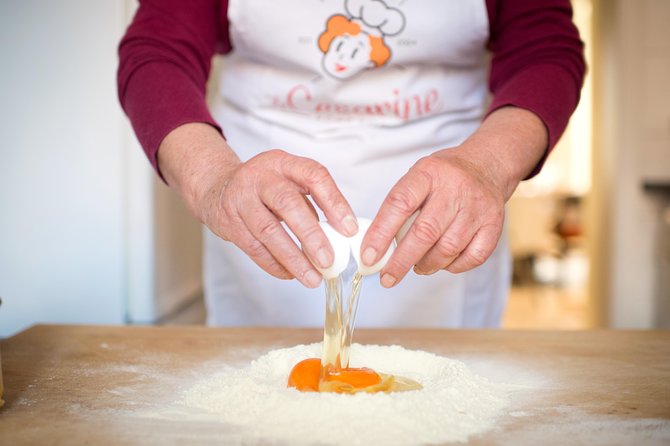
Once the pasta is ready, you gather around the table in the home and eat the finished dish. This is the payoff, but it is also a continuation of the social part of the class.
The meal includes local wine, with one bottle provided for every three participants. That works out to roughly a third of a bottle per person when shared evenly. It is enough to accompany the meal, but it is not a wine tasting or an unlimited drinks package.
The home-cooked pasta is the main course. The sample menu lists fresh pasta dishes, with regional examples such as pici, tortelli, and pappardelle. One highly praised host also provided dessert, but dessert is not listed as a standard inclusion, so you should regard it as a welcome extra rather than something guaranteed.
Eating together gives you a better sense of the class than simply carrying your pasta away. You can compare shapes, talk with the host, and enjoy the meal while the techniques are still fresh in your mind. The setting may also offer a chance to ask about Florence, Tuscan food, and daily life in the city.
Several strong reactions focus on this hospitality. Ivana and her husband Vincent are praised for welcoming a honeymooning couple into their home. Another host, Donatella, is described as gracious and fun, with an easy manner that kept the group laughing. These personal touches are a major reason to choose this experience over a more technical class.
Why the local-home setting matters
Florence has no shortage of food tours and cooking schools. What makes this one different is the invitation into a private home.
That does not automatically make every moment better. A professional school may have more work space, sharper organization, and a wider range of tools. A home may have less room, and a group of 20 can make a private kitchen feel busy.
But the home setting offers something a classroom cannot copy easily. You are seeing how food is shared in a real domestic setting. The host is not only demonstrating a recipe. The host is welcoming you to the table.
One review describes views from a host’s estate adding to the experience. That detail will not apply to every session, since hosts and homes can vary, but it shows how much the surroundings may shape the afternoon. Another booking took place not far from Florence’s city center, suggesting that some homes can be reached without a long trip outside the city. The fixed meeting point is Via Quintino Sella in Florence, and the activity ends back there.
Because the host can vary, I would focus less on a particular promise of scenery and more on the central offer: pasta, conversation, and a meal in a local home.
Price, group size, and the real value
At $70.89 per person, the class is not the cheapest way to eat pasta in Florence. A restaurant meal may cost less, especially if you choose a simple trattoria.
The price makes more sense when you count what it includes: instruction, ingredients for the pasta lesson, an appetizer, an aperitivo, the meal you prepare, and shared wine. You also receive the experience of being hosted in a local home. For someone who wants a food memory rather than just a plate of food, that combination is reasonable.
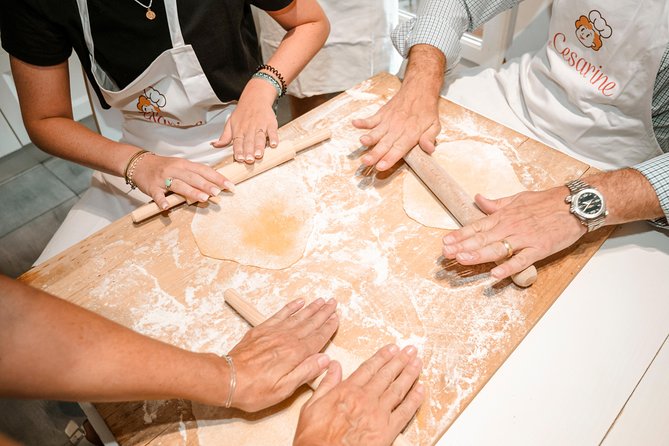
The limit of 20 people is important. A maximum group of that size is manageable for a guided activity, but it is not a small private gathering. You may work alongside several other aspiring pasta makers, which can be lively and social. Couples who want personal time with the host may prefer a private course if one is available.
The rating is 4.7 from 16 reviews, and 94 percent of participants recommend it. Those numbers point to strong satisfaction, though the sample is not large. I would read the praise as evidence that the hospitality and meal are working well, not as a guarantee that every class will feel identical.
Who will enjoy this most?
I would recommend this class to anyone who values contact with local people as much as sightseeing. It suits couples particularly well, especially if you want an evening or afternoon that feels more personal than another restaurant reservation.
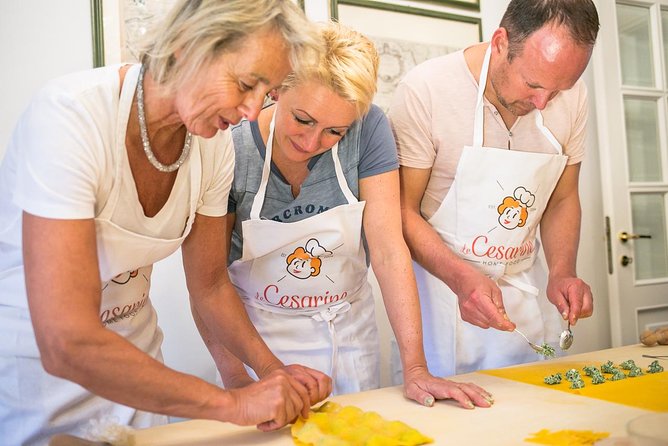
Families with teenage or adult children are also a good fit. The work is active enough to keep everyone involved, and the final meal gives the group a shared reward. Friends can enjoy the social side, especially if nobody minds working in a group.
First-time pasta makers should feel comfortable here. The lesson is built around basic actions, and the hosts praised most warmly are described as patient teachers. You do not need to arrive as an experienced cook.
I would be more cautious if you have strict dietary requirements, since no accommodation details are provided. I would also think twice if you dislike group activities, want a long multi-course meal, or expect a detailed professional chef training session.
Booking and timing advice for Florence
The activity is often booked about 24 days ahead, so reserve early if your Florence dates are fixed. This is especially sensible for a honeymoon, anniversary, or short city break where you have little flexibility.
You receive confirmation when booking, and the ticket is mobile. The class is offered in English. The meeting point is Via Quintino Sella, Florence, and the experience returns to that same point.
The location is near public transportation, which helps, but no exact route or travel time is provided. Leave enough time to reach the meeting point without arriving flustered. Flour, dough, and friendly conversation are easier to enjoy when you are not watching the clock.
Service animals are allowed. Free cancellation is available if you cancel at least 24 hours before the start time. Changes or cancellations made inside that 24-hour window are not accepted for a refund, and the cut-off follows Florence local time.
My call: book it for the welcome, not just the pasta
I would book this experience if you want to combine a simple cooking lesson with a warm local meal. The strongest reasons are the private-home setting, patient instruction, and the chance to eat pasta you shaped yourself. Donatella, Ivana, Vincent, and the other praised hosts sound especially good at making couples and families feel at ease.
I would skip it if you want a private chef lesson, a long tasting menu, or a guaranteed menu with specific pasta shapes and dessert. The group can reach 20 people, and the class lasts only 90 minutes.
For most visitors who want one personal food experience in Florence, the price is justified. Go ready to work with your hands, share a table, and accept that homemade pasta may look a little uneven. That is part of the charm.
FAQ
How long does the pasta-making experience last?
The experience lasts approximately 1 hour and 30 minutes.
Where does the experience begin?
It begins at Via Quintino Sella, Firenze FI, Italy.
Where does the experience end?
The activity ends back at the meeting point.
Is the class offered in English?
Yes. The experience is offered in English.
How many people can join the class?
The maximum group size is 20 participants.
What food and drink are included?
You receive a small appetizer and aperitivo at the start, then eat the fresh pasta you prepare. Local wine is included at a rate of one bottle for every three participants.
Can I cancel for a full refund?
Yes, if you cancel at least 24 hours before the experience start time. Cancellations or changes made less than 24 hours before the start are not refunded or accepted.
Just added around Florence
- Vegan Cooking Class in Florence: Pasta Making & Wine!★ 5.0 · 2 reviews
- Cooking class and home made pasta in Florence with LA VIVANDIERA!★ 5.0 · 5 reviews
- The Art of Pasta and Wine Tasting with Local Sommelier★ 5.0 · 16 reviews
- MaMa Florence: The Art of Corzetti – Hands-On Pasta Class★ 5.0 · 15 reviews
- Tuscan Pasta Masterclass Small-Group Cooking Experience★ 5.0 · 17 reviews
- Hands on Deluxe Traditional 4-course dinner with fresh pasta★ 5.0 · 15 reviews
- Gluten free pasta and dessert class 6 guests max★ 5.0 · 2 reviews
- Hands-On Pasta Making Class in Central Florence with Patrizia★ 5.0 · 5 reviews
Home Cooking Classes, compared.
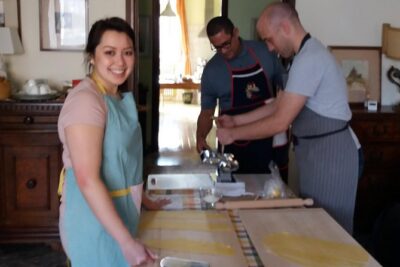
Pastamama, Home Cooking Classes at Grace’s Home
Read our review →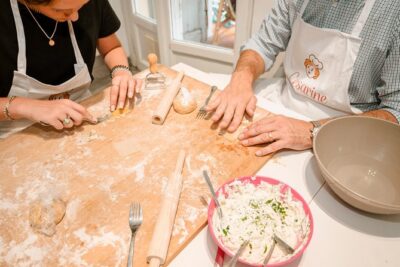
Small Group Pasta and Tiramisu Class at Local’s Home in Venice
Read our review →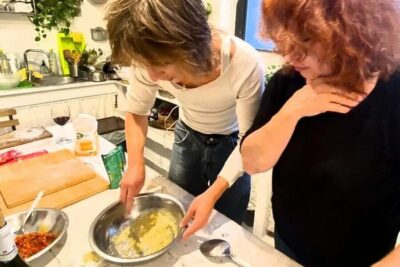
Catania: Pistachio Ravioli, Pasta Home Cooking Class w/ Wine
Read our review →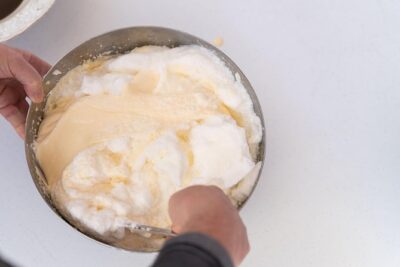
Cesarine: Small group Pasta and Tiramisu class in Varenna
Read our review →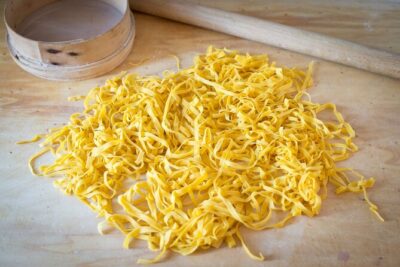
Cesarine: Small group Pasta and Tiramisu with Mamma in Lucca
Read our review →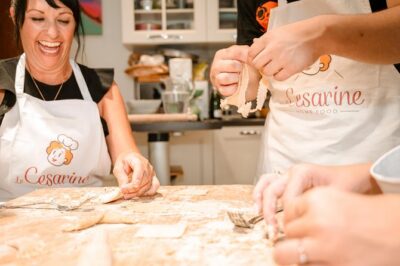
Cesarine: Small group Pasta and Tiramisu class in Bologna
Read our review →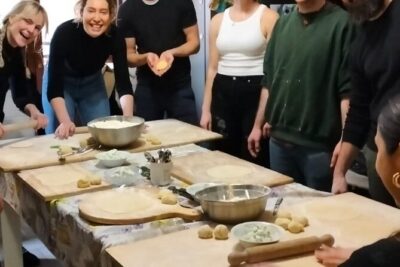
Authentic Bologna Home Cooking Class: Tagliatelle & Tortellini
Read our review →
Alghero Home Cooking Pasta Class at a Farmhouse with Wine
Read our review →Browse the lists this tour appears in