
Review · ITALY
Abruzzo Traditional Pasta Making with 85y old local Grandma
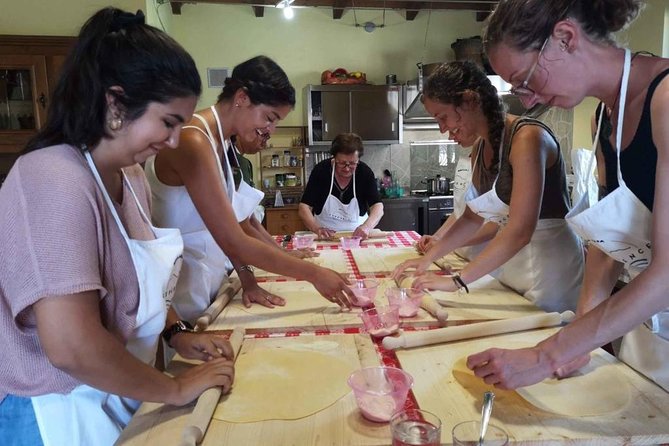
Pasta tastes better when you make it. In Campovalano, near Teramo, Nonna Amina, an 85-year-old local grandmother, teaches the old method for making Abruzzo pasta alla chitarra. I like the hands-on work with the wooden chitarra and the warm family setting. The main drawback is the price: at $360.46 per person, this is a costly half-day outing.
I also like that you prepare the sauce, not just the pasta, using organic farm eggs, vegetables, and olive oil. Marino and Nonna Amina share family recipes, then serve your work as part of a four-course meal with cheese, honey, extra-virgin olive oil, and fresh bread. The meeting point is in Campovalano, not central Pescara, so you need to plan the journey carefully.
Key points to know before booking
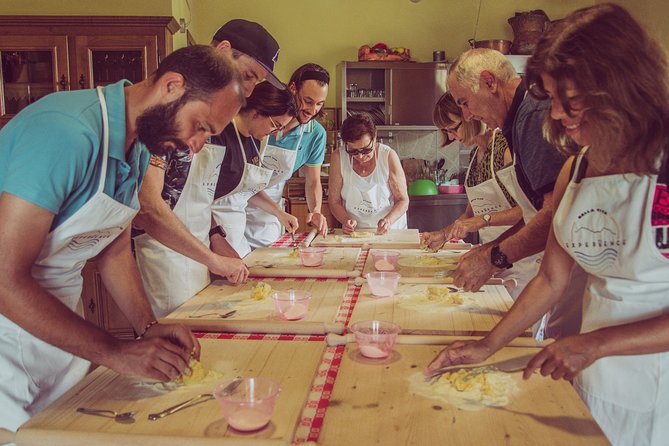
- Learn pasta alla chitarra the old-fashioned way: You use a traditional wooden tool instead of relying on a modern pasta machine.
- Cook with Nonna Amina: The 85-year-old local grandmother brings family recipes and a direct link to Abruzzo’s home cooking.
- Make more than noodles: You also prepare the tomato sauce and learn how to repeat the recipe at home.
- Eat what you prepare: Your pasta becomes part of a four-course meal served with regional products.
- Expect a small group: The maximum is 10 people, which suits a personal cooking lesson better than a large demonstration.
- Plan for Campovalano: The activity starts and ends at Frazione Campovalano Sp, 16, 64012 Campli TE, Italy.
Why pasta alla chitarra matters in Abruzzo
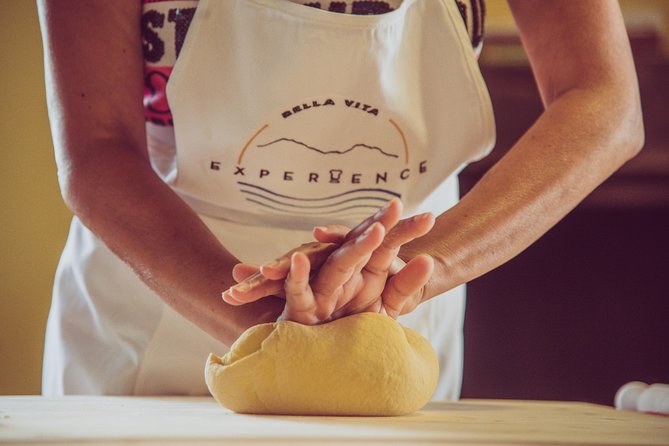
This is not a standard pasta class where you quickly roll dough through a machine and call it lunch. The central lesson is pasta alla chitarra, a traditional Teramo pasta made with a wooden tool called a chitarra.
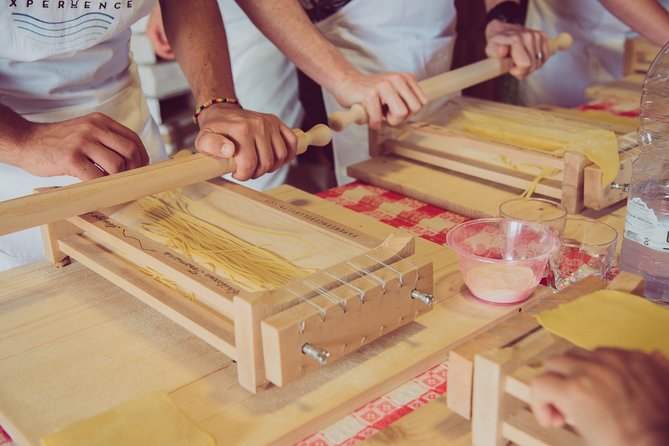
The chitarra has parallel cutting wires. When you press the sheet of dough across it, the wires cut the pasta into square-edged strands. The shape is different from the smooth, rounded noodles produced by many pasta machines. You can see and feel the difference as you work.
That old method is the reason this class has more value than a basic cooking demonstration. You are not simply watching someone prepare a local dish. You are learning a technique that has largely been replaced by machines in restaurants and homes.
I like the practical purpose behind the lesson. You are shown why hand-making the pasta matters and how to prepare it at home. The point is not to turn you into a professional cook in five hours. It is to give you a skill and a recipe you can repeat after returning home.
More Fresh Pasta Workshops in Italy:
- Rome: Pasta Making Class with Wine, Limoncello, and Dessert
★ 4.9 · 3,177 reviews - Pastamania – Florence Pasta Making Class
★ 5.0 · 3,050 reviews - Enjoy Spritz and Pasta Making in Piazza Navona
★ 5.0 · 1,681 reviews
Campovalano, near Teramo, is the setting
The activity takes place at Frazione Campovalano, 16, in Campli, in the province of Teramo. Although the tour is marketed for people visiting Pescara, the actual meeting point is in Campovalano, so do not assume you can walk to it from Pescara’s center.
The supplied information does not include transportation to the meeting point. I would check your route before paying, especially if you are not renting a car or already staying nearby. Since the activity begins and ends at the same address, you will not need to arrange a separate return point after the meal.
The location matters because this is presented as a family cooking day, not a restaurant class in a busy city center. The setting allows the food, family, and traditions to take the lead. You should expect a slower pace and a more personal format than a large commercial food tour.
Meeting Nonna Amina and Marino
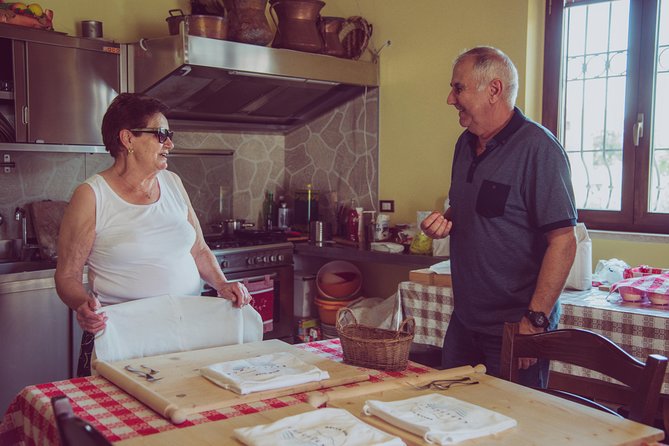
Nonna Amina is the heart of the lesson. At 85, she represents the generation that learned to cook by hand and repeat family recipes without depending on written instructions or machines.
Marino joins her and helps explain the methods and family stories. Together, they share recipes that have been kept within their family for generations. This pairing is useful: Nonna Amina brings the traditional cooking practice, while Marino helps communicate the process in English and connect it to your own kitchen.
The class is offered in English, which makes the instructions accessible to English-speaking participants. Still, cooking is a physical lesson. You will learn by handling the dough, watching the technique, and following the sequence as much as by listening to explanations.
The maximum group size is 10 people. That is small enough for a more direct lesson, though the exact feel will depend on how many people book that day. A group of 10 can be lively, but it should remain manageable for a hands-on activity.
Making the dough from scratch
The main cooking task is preparing pasta alla chitarra from scratch. The emphasis is on handwork, not speed.
You use organic farm eggs, vegetables, and olive oil during the cooking session. The eggs are especially important to the pasta dough, while the vegetables and oil help build the sauce and the wider meal. These ingredients also show the difference between a local family kitchen and a generic pasta workshop built around supermarket basics.
You should expect flour, dough, shaping, and cutting to take time. That is part of the appeal. The process gives you a better sense of how much work traditionally went into a plate of pasta.
The wooden chitarra is the key moment. You place the pasta sheet on the tool and press it across the wires to cut the strands. It looks simple, but getting the dough to the right thickness and handling it cleanly takes some care. The lesson lets you see why many modern cooks choose a pasta machine instead.
I like that the class does not treat the old method as a museum piece. You are shown how to use it and why the result is different. That makes the tradition useful rather than merely decorative.
A few more classes around Italy worth a look
- Florence: Pasta Cooking Class with Unlimited Wine
★ 4.9 · 10,285 reviews - 3 in 1 Cooking Class near Navona: Fettuccine, Ravioli & Tiramisu
★ 5.0 · 7,376 reviews - Florence Pizza or Pasta Class with Gelato Making at a Tuscan Farm
★ 5.0 · 6,801 reviews - Florence: Pasta & Tiramisu Cooking Class with Unlimited Wine
★ 4.9 · 6,708 reviews
Preparing the tomato sauce
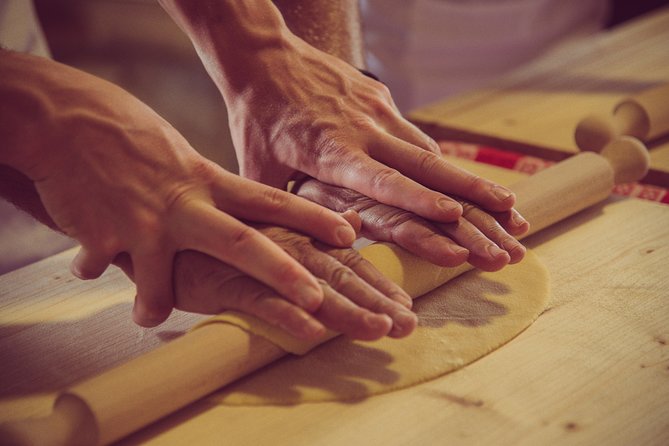
Marino and Nonna Amina also teach the secrets behind their tomato sauce. The supplied details do not give a full ingredient list or exact cooking sequence, so you should not expect a printed formula with precise measurements unless the hosts provide one during the class.
The value here is learning the family approach. You can ask questions as the sauce comes together and pay attention to how the hosts balance the ingredients. The stated goal is to let you take a piece of Abruzzo home and prepare the dish for friends and family.
That makes this a good choice for cooks who want more than a photo and a meal. You leave with a method you can try again, even if your first homemade chitarra is not perfectly even.
Local foods before the main meal
The meal includes more than the pasta you prepare. You will taste local cheese, honey, extra-virgin olive oil, and freshly baked bread.
These items help turn the lesson into a broader introduction to Abruzzo food. Cheese and honey offer a simple pairing, while the bread and olive oil give you a chance to taste the quality of basic ingredients on their own. This part is also useful if you want to learn which regional products to look for during the rest of your trip.
The experience may suit curious eaters better than people who only want to make pasta and leave. You are given a wider picture of the local table, with several products to taste alongside the main dish.
Marino may also have some local products available for purchase and to take home. I would ask about current availability during the visit, since the details and selection are not specified.
A four-course lunch with the family
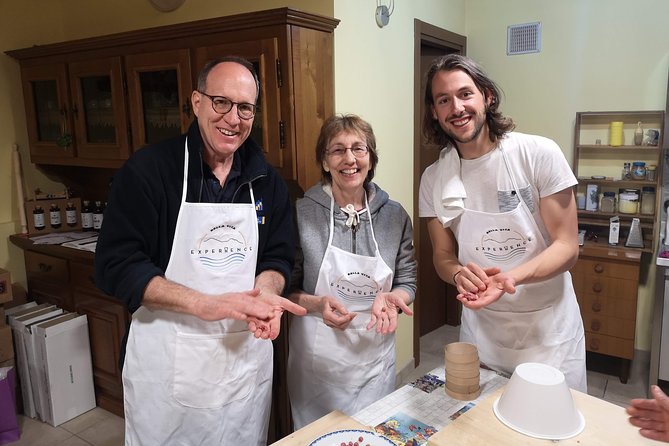
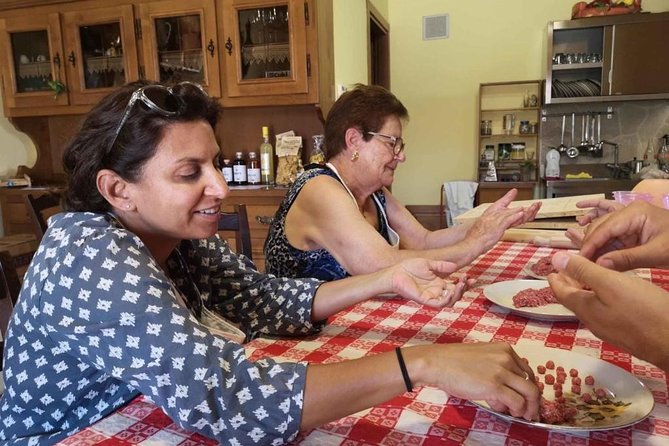
After the cooking lesson, you eat a four-course meal featuring what you helped prepare. The main dish is described through the family experience, and the featured local specialty is chitarra con pallottine.
Pallottine are small meatballs traditionally served with this pasta, and they make the finished dish more substantial than a simple bowl of noodles and sauce. The important point is that your work moves directly from the preparation table to the meal.
The family setting adds much of the experience’s character. During the meal, Marino’s mother and father may join the gathering, creating the feeling of eating with family friends rather than sitting through a formal class and leaving immediately afterward.
That personal element is one of the strongest reasons to consider booking. You are not only learning a recipe. You are sharing a typical day of an Abruzzo family, with food prepared together and served at the same table.
Of course, a family meal can feel less structured than a restaurant lunch. If you prefer a tightly timed class with a professional kitchen and a quick departure, this may seem informal. If you enjoy conversation and a slower meal, the relaxed format is likely to be a plus.
How much value do you get for $360.46?
At $360.46 per person, this is expensive for a five-hour cooking activity. The price makes the most sense for people who place high value on personal contact, traditional technique, and a full meal rather than simply learning a pasta recipe.
You are paying for several parts at once:
- A hands-on lesson with an 85-year-old local grandmother
- Instruction in a rare, traditional pasta method
- Preparation of pasta and tomato sauce
- Tastings of cheese, honey, olive oil, and bread
- A four-course meal
- A small group capped at 10 people
- An English-language format
The meal helps justify the cost, but it does not make the activity a bargain. You should compare it with your own priorities. A short pasta class in a city may cost much less. It will probably not include the same family setting, local products, or connection to an old Teramo technique.
Group discounts are available, so this can make more sense for friends or families booking together. The supplied information does not give the discount amount, so you need to check the final price before booking.
Who will enjoy this most?
I would recommend this activity to people who care about food traditions and want to learn by doing. It is especially suitable for:
- Couples or friends who enjoy shared meals
- Families looking for a hands-on activity
- Home cooks who want a pasta method they can repeat
- Visitors interested in Abruzzo rather than only major tourist sights
- People who appreciate small groups and personal contact
- Anyone curious about the difference between hand-cut pasta and machine-made pasta
Families with children can also enjoy it, though the supplied information does not specify a minimum age or special child pricing. If you are booking with young children, ask Experience BellaVita about age suitability and participation before confirming.
This is less suitable if you dislike group cooking, want a short activity, or are looking for a low-cost way to eat pasta. It is also not the right pick if you need a city-center meeting point in Pescara.
Practical details that can affect your day
The activity lasts about five hours. That is long enough for a full cooking lesson and meal, so do not schedule a rushed museum visit or train connection immediately afterward.
The tour starts and ends at Frazione Campovalano Sp, 16, 64012 Campli TE, Italy. Since the information does not include hotel pickup or transport, you are responsible for reaching the meeting point unless the operator tells you otherwise.
A mobile ticket is accepted, and the activity is offered in English. Confirmation arrives within 48 hours of booking, subject to availability. Service animals are allowed.
The cancellation terms are strict: the experience is non-refundable and cannot be changed for any reason. I would confirm your date, meeting point, and transport plan before booking rather than treating this as a flexible last-minute activity.
What makes this different from a normal pasta class?
The wooden chitarra is the clearest difference. Many classes teach tagliatelle, ravioli, or pasta made with a machine. Here, you learn a local Teramo specialty with a traditional tool that few people still use.
The second difference is the family meal. You do not simply finish the dough, take a quick taste, and leave. Your pasta is part of a four-course meal, with regional products served before and alongside it.
The third difference is the age and role of Nonna Amina. She is not presented as a hired chef performing a standard lesson. She is the family grandmother whose recipes have been passed down over generations. That gives the class a strong personal link to home cooking.
The experience also has a clear sense of place. It connects the dish to Abruzzo, Teramo, and Campovalano rather than presenting pasta as an all-purpose Italian souvenir.
Should you book this Abruzzo cooking day?
Book it if you want a slow, personal food experience and the price fits your budget. The strongest reasons are the traditional chitarra method, Nonna Amina’s direct involvement, the family meal, and the chance to taste several local products in one sitting.
Think twice if you want a cheap cooking class, need easy access from central Pescara, or prefer a strict schedule. The meeting point is outside Pescara, the activity takes about five hours, and the booking cannot be refunded or changed.
For the right person, this is not just a lesson in making noodles. It is a chance to handle an old Abruzzo technique, eat the result with the people who taught you, and bring a practical family recipe home.
FAQ
Where does the pasta-making experience take place?
It takes place at Frazione Campovalano Sp, 16, 64012 Campli TE, Italy. The activity ends back at the same meeting point.
How long does the experience last?
The experience lasts approximately five hours.
Is the activity offered in English?
Yes. The experience is offered in English.
What type of pasta will I make?
You will make pasta alla chitarra, a traditional pasta from the Teramo area, using an old wooden tool called a chitarra.
How many people can join the activity?
The maximum group size is 10 people.
Can I cancel or change my booking?
No. The experience is non-refundable and cannot be changed for any reason.
Just added around Italy
- Verona: Tortellini Cooking Class and Lunch with Mamma Ivana★ 5.0 · 20 reviews
- Volterra: Fresh Pasta Cooking Class at a Tuscan Farmhouse★ 5.0 · 33 reviews
- Vicenza: Pasta & Tiramisu Cooking Class at a Local’s Home★ 5.0 · 5 reviews
- Verona: Pasta & Tiramisu Cooking Class at a Local’s Home★ 5.0 · 16 reviews
- Verona: Pasta Cooking Class with Wine Tasting★ 5.0 · 4 reviews
- Verona: Prosecco and Pasta Making Class at a Local’s Home★ 5.0 · 10 reviews
- Verona: My Granny’s secrets making gnocchi★ 5.0 · 7 reviews
- Venice: Share Your Pasta Love in a Local’s Home★ 4.8 · 20 reviews
Fresh Pasta Workshops, compared.
Pasta Making Class with Wine, Limoncello, and Dessert
Read our review →
Enjoy Spritz and Pasta Making in Piazza Navona
Read our review →
Pasta Making & Wine Tasting with Dinner in Frascati from Rome
Read our review →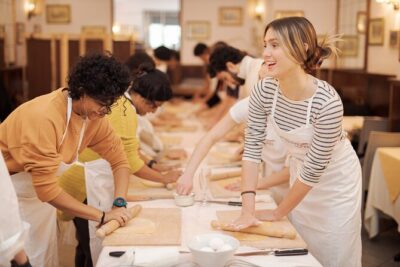
The Secrets to Learn Fresh Pasta and Tiramisù in a Glam Home
Read our review →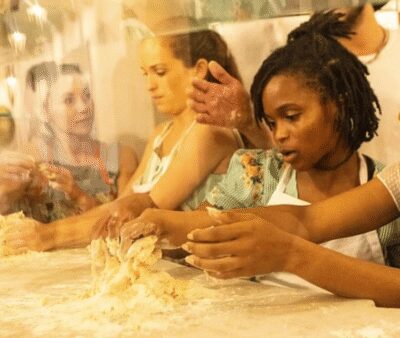
Pasta Making with Wine Tasting and Dinner in Frascati
Read our review →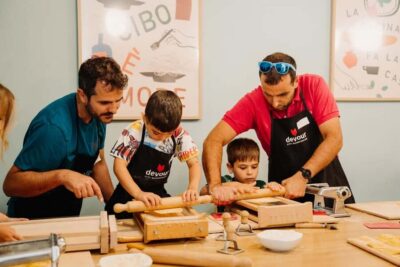
Browse the lists this tour appears in