
Review · ITALY
Assisi: Pasta Making Class with Mamma
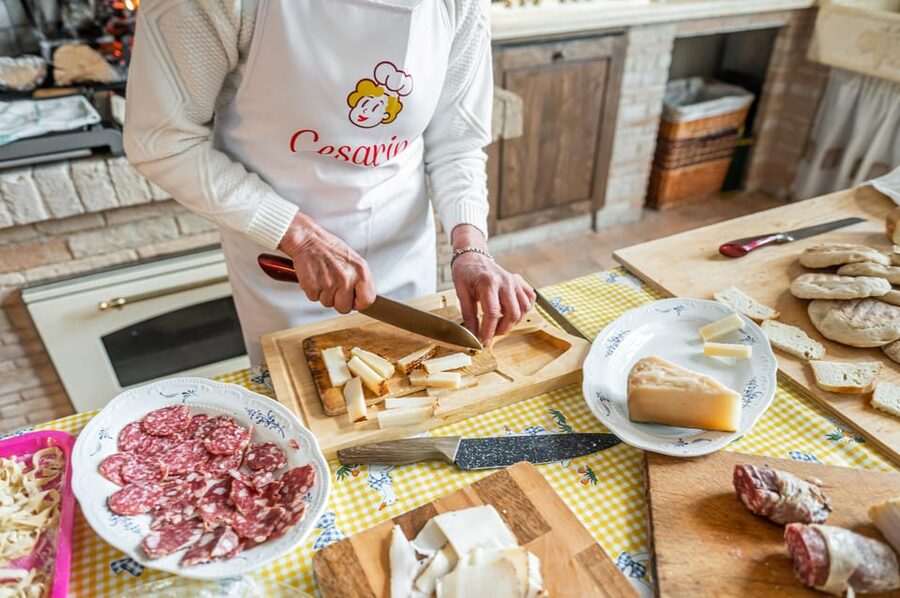
Pasta tastes better when you make it yourself. This two-hour class brings you into an Italian family home near Assisi, where you learn three regional pasta recipes, work at your own station, and eat what you prepare. I especially like the small family setting and the chance to learn recipes you can repeat at home. The included wine, prosecco, nibbles, water, and coffee also make the $159 price easier to understand.
The main caution is that the amount of hands-on cooking may vary. One session included a wine tasting before class, which took up a large part of the allotted time, and the food preparation felt limited to that participant. If you want a long, technical cooking course, this may feel short. If you want a friendly Italian meal with practical pasta lessons, it is a better fit.
Key points to know before booking
- Three pasta recipes in two hours: You learn three iconic regional preparations rather than focusing on just one shape.
- A real home setting: The class takes place in a local’s home, with the full address sent only after booking for privacy.
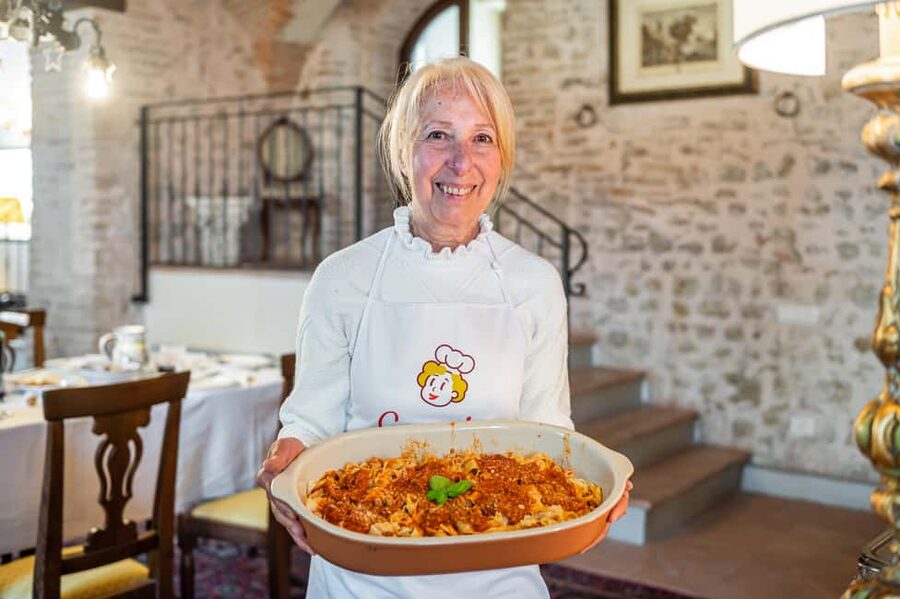
- Mamma Eleonora may be your host: Her patience, kindness, and love of teaching receive especially strong praise.
- Your class ends at the table: You taste the pasta you prepare, paired with local red and white wines.
- Aperitivo is part of the welcome: Prosecco and small nibbles are included before or around the lesson.
- A short class with flexible booking: The experience lasts two hours, costs $159 per person, and allows cancellation up to 24 hours before the start for a full refund.
Entering an Italian family kitchen near Assisi
The setting is the heart of this activity. Rather than meeting in a formal culinary school, you visit a local home and cook with an Italian host. That changes the mood right away. You are not only learning a method. You are hearing the family stories and habits connected to each pasta shape.
Your host welcomes you as part of the family and shares cooking practices passed through generations. That promise matters in Umbria, where food is closely tied to place, household routine, and the use of good local ingredients. You get a glimpse of how pasta is taught at home, not just how it is demonstrated for an audience.
Privacy rules mean you do not receive the complete address until after booking. This is sensible for a private home, but it also means you should not expect a clearly marked public restaurant or cooking studio as your meeting point. Check your booking information carefully before setting out.
The class is shared, so you will cook alongside other participants when there are additional bookings. That can make the lesson more social, though the precise group size is not stated. If your priority is a private lesson, you will need to confirm that directly before booking.
More Fresh Pasta Workshops in Italy:
- Rome: Pasta Making Class with Wine, Limoncello, and Dessert
★ 4.9 · 3,177 reviews - Pastamania – Florence Pasta Making Class
★ 5.0 · 3,050 reviews - Enjoy Spritz and Pasta Making in Piazza Navona
★ 5.0 · 1,681 reviews
Starting with prosecco, nibbles, and local conversation
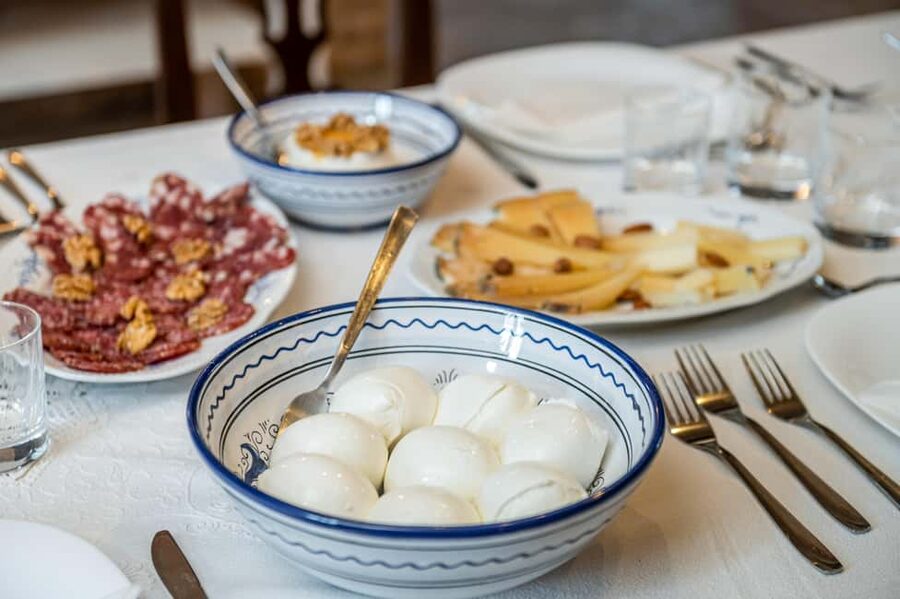
The welcome begins with an Italian aperitivo of prosecco and nibbles. This is more than a small snack. In Italy, an aperitivo gives people time to meet, settle in, and begin a meal at an easy pace.
Some participants have also begun with a stop at a wine shop across the street for wine and food tastings while the host prepared for class. That sounds pleasant when it remains brief, and it adds a local food connection before the pasta work begins. But it is worth asking about the schedule if your main reason for booking is hands-on cooking. One participant felt that this tasting used up about an hour of the two-hour class.
You should also keep the wine-shop stop separate from the value of the lesson. The included beverages are part of the activity, but an attempt to sell additional products can change the tone. If you are not interested in buying wine or food products, a simple polite no should be enough. The best version of this opening is a short welcome drink, not an extended sales presentation.
Learning three Umbrian pasta recipes
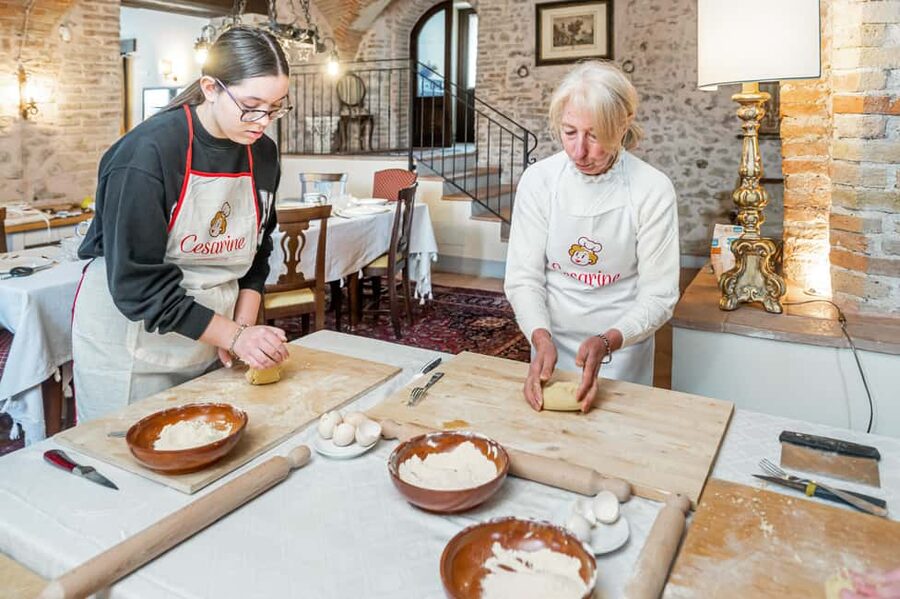
After the welcome, you receive a workstation with utensils and ingredients. This matters because you are not simply watching Mamma Eleonora prepare dough on a counter. You get to put your hands into the process and test your own technique.
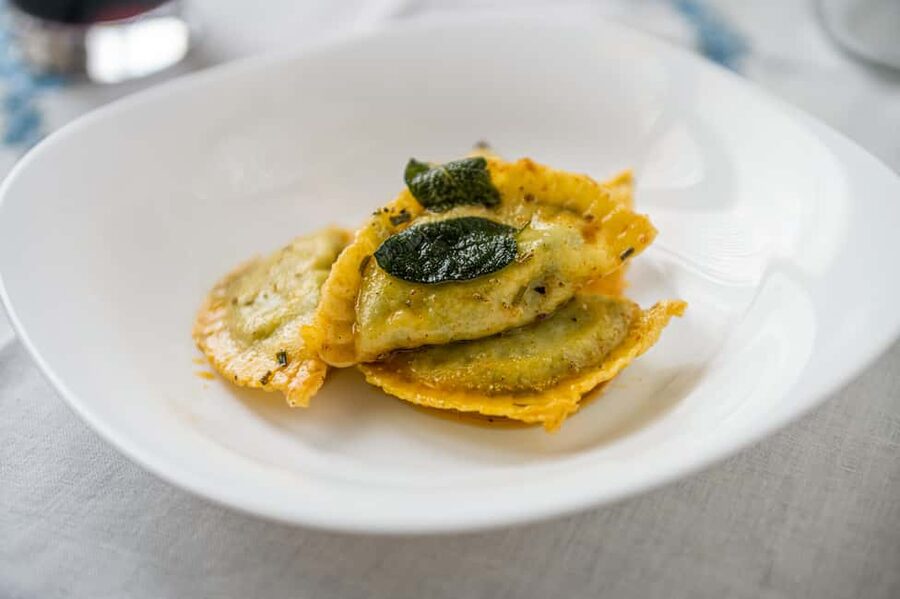
The class covers three authentic regional recipes and three iconic pasta types. The exact recipes can vary, and no fixed menu is provided in the available details. One participant specifically described making fettuccine and ravioli, so those shapes may appear in some sessions, but you should not assume they are guaranteed.
The lesson focuses on the secrets behind the dishes. That may include the shape of the pasta, the way it is formed, and the family habits that make each recipe work. The supplied information does not promise a full lesson on sauces, fillings, or ingredient substitutions, so you should think of this as a compact introduction rather than professional culinary training.
I like the way the class connects shape to story. Pasta is not treated as a generic flour-and-water project. Each form has an older tradition and a personal meaning for the host. That gives the lesson a sense of place, especially if you plan to cook the recipes again after returning home.
The strongest practical benefit is repeatability. You are shown recipes that you can try with family and friends, rather than learning a dish that requires special restaurant equipment. One participant said she felt ready to recreate the meal at home, and that is a useful test for a short class.
Why the host matters more than the recipe list
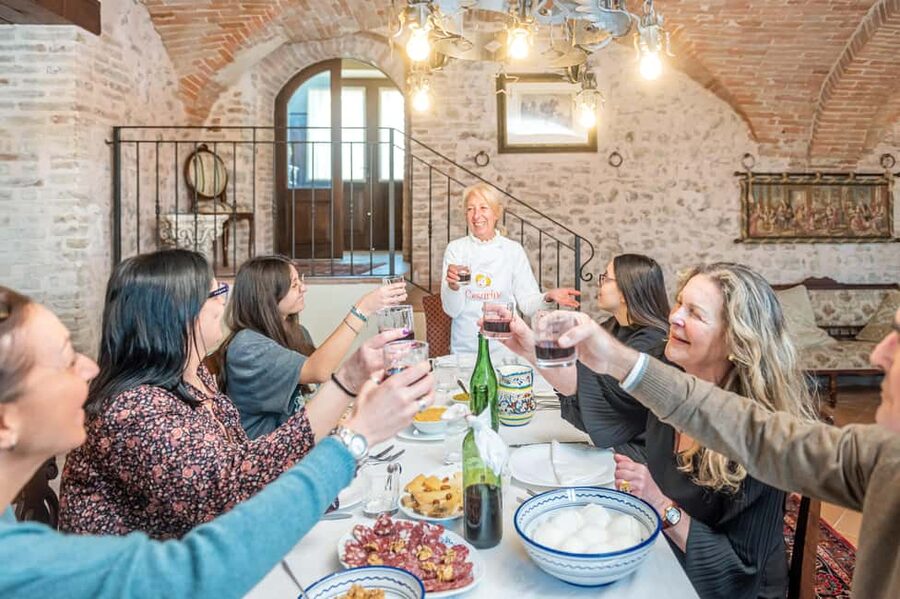
A pasta class can succeed or fail based on the instructor. Here, the most praised quality is the host’s patience. Mamma Eleonora is described as kind, relaxed, and generous with her teaching. Another participant said her passion for cooking was clear throughout the class.
That personal approach is important for beginners. Hand-shaped pasta can look simple until you try it. A patient teacher can show you where the dough needs more work, how to handle a shape, and how to correct a mistake without making the class feel like an exam.
The atmosphere also suits people who enjoy conversation. You are encouraged to talk with a welcoming local and learn about genuine produce from Assisi. The class is not presented as a silent demonstration followed by a quick plate of food.
Still, the personal-home format brings some uncertainty. A home cook may teach with warmth and experience, but the structure may be less tightly timed than in a professional school. If the aperitivo or wine tasting runs long, the actual pasta work can become compressed. I would ask at the start how much time is planned for shaping, cooking, and eating.
A few more classes around Italy worth a look
- Florence: Pasta Cooking Class with Unlimited Wine
★ 4.9 · 10,285 reviews - 3 in 1 Cooking Class near Navona: Fettuccine, Ravioli & Tiramisu
★ 5.0 · 7,376 reviews - Florence Pizza or Pasta Class with Gelato Making at a Tuscan Farm
★ 5.0 · 6,801 reviews - Florence: Pasta & Tiramisu Cooking Class with Unlimited Wine
★ 4.9 · 6,708 reviews
From flour and dough to fettuccine and ravioli
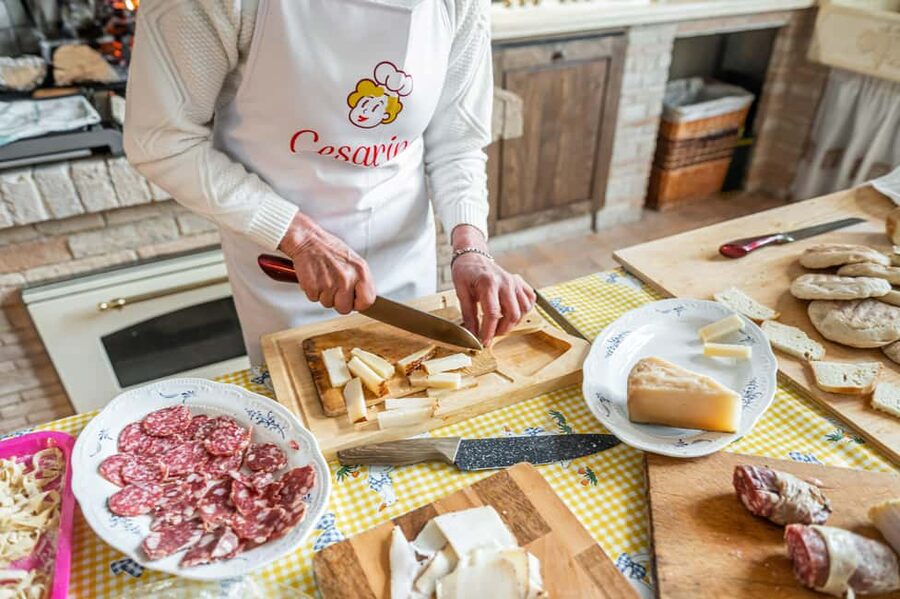
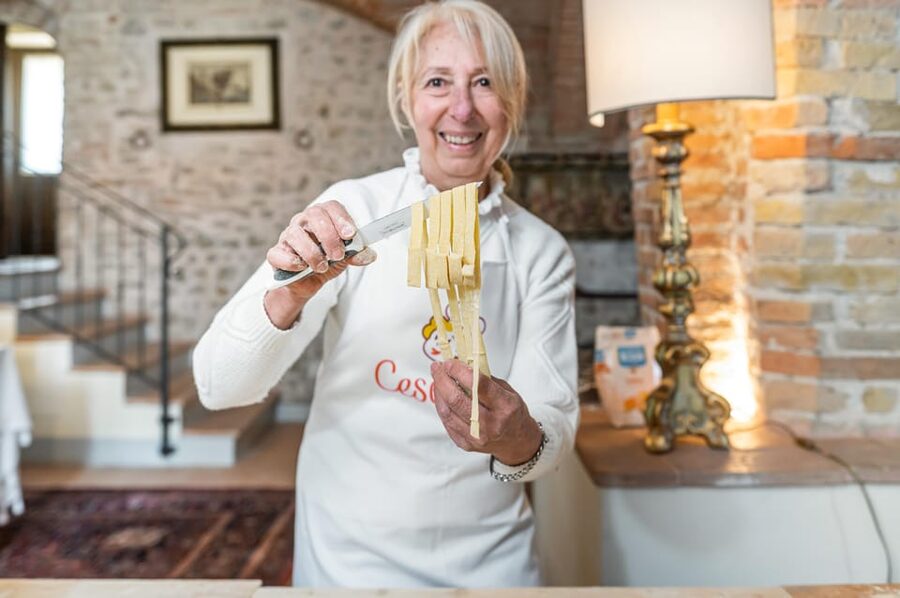
The most satisfying part is the point when the dough changes from a work surface project into recognizable pasta. Fettuccine offers a clear introduction to cutting and handling long noodles. Ravioli gives you a different task, with filling and sealing to consider.
Making more than one shape helps you understand that pasta is not one skill. Long ribbons, filled pasta, and other regional forms each call for different movements. In a two-hour session, you will not master every Italian shape, but you can see how the method changes from one type to another.
The class is also designed around tasting. You prepare the dishes during the lesson, then eat them over lunch or dinner. That final meal gives the work a purpose. You can see how the texture turns out, compare the shapes, and enjoy the food while it is fresh.
Do not expect a large restaurant-style menu. The meal is built around the pasta you make, with the host cooking and serving the prepared dishes as needed. One unhappy participant felt that the host cooked some of the pasta and served it as dinner, rather than having the group prepare every part of the meal. If you want complete control from dough to plate, ask exactly which steps you will perform yourself.
Local wine, coffee, and the value of the meal
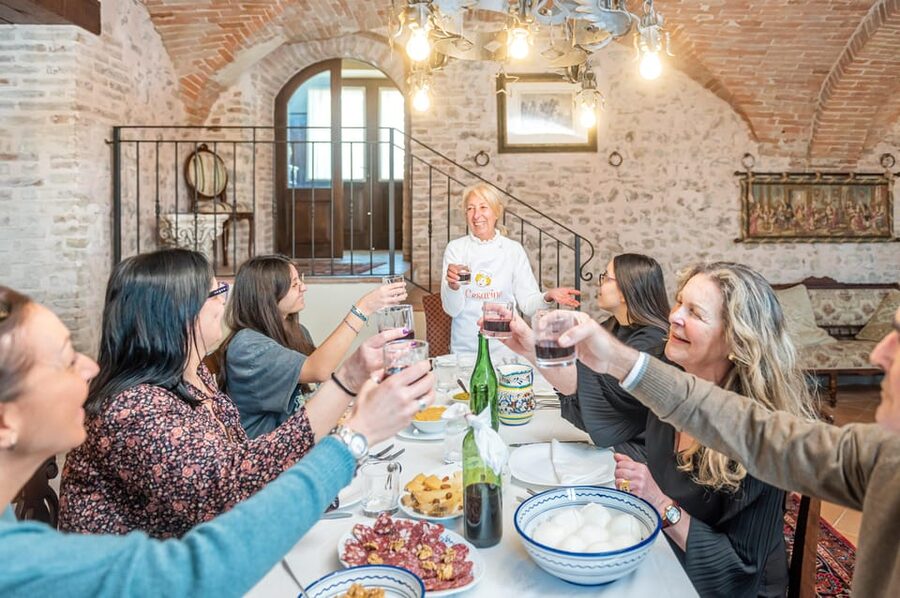
Water, local red and white wines, and coffee are included. Prosecco and nibbles are also part of the aperitivo. Those extras make this more than a basic cooking demonstration, especially if you value the social side of food.
The wine pairing gives you a simple way to connect the pasta with Umbrian table customs. You are not just eating your finished work at a counter. You are sitting down for a shared meal, with drinks that help turn the lesson into a relaxed afternoon or evening.
At $159 per person, this is not a bargain cooking class. The price covers two hours, ingredients, utensils, three pasta preparations, the meal, wine, coffee, aperitivo, and the host’s time in a private home. It can be fair value if you want a personal cultural activity and expect to use the recipes again.
The value weakens if you mainly want dinner. A restaurant meal in Italy will usually cost less, and a short online video can show you basic pasta shapes for free. You are paying for contact with an Italian host, the chance to make the food yourself, and the setting. That is what needs to matter to you.
I would book it as a special activity for a couple, a parent and adult child, or a small group of friends. A mother and daughter described the class as a lasting shared memory, and that is exactly the kind of occasion this suits.
A two-hour schedule that needs sensible expectations
Two hours sounds generous until you include the aperitivo, introductions, three pasta types, cooking, eating, and coffee. The pace may feel easy and social, but it will not allow long discussions of every regional technique.
A likely flow looks like this:
- You arrive at the private home and begin with prosecco and small snacks.
- The host introduces the recipes, ingredients, utensils, and pasta shapes.
- You work at your own station and prepare the dough and shapes.
- The host cooks the pasta, or helps cook portions as the lesson progresses.
- You sit down to taste the dishes with local wine.
- Coffee closes the meal.
The order may vary. A wine tasting across the street has also been part of at least one session, so confirm whether that is included in your particular schedule and how long it will last.
I suggest treating the class as a food-centered cultural meeting, not as a timed culinary qualification. You will learn useful techniques, but the biggest reward is the mix of cooking, conversation, and eating in a local home.
Who will enjoy this class most
This class is a strong choice for you if you want:
- A friendly introduction to handmade Italian pasta
- A personal meeting with a local host
- Recipes you can try again at home
- A relaxed meal with wine after the lesson
- An activity that works well for couples, families, and food-loving friends
- A break from museums and churches during an Assisi visit
It may not suit you if you want:
- A private class with guaranteed one-to-one instruction
- A long, technical course covering dough science and sauce preparation
- Full control over every part of the final meal
- A low-cost way to get dinner
- A tightly timed professional cooking-school format
The language of instruction is Italian and English. That makes the class accessible to English speakers, while still giving you the pleasure of hearing the host teach in her native language.
Practical details that affect your decision
The experience lasts two hours and costs $159 per person. Starting times vary, so check availability for your date rather than assuming a fixed morning or evening schedule.
The activity includes local taxes, ingredients, equipment, the three pasta recipes, the tasting meal, water, local red and white wine, coffee, prosecco, and nibbles. Those inclusions are useful when comparing it with a cheaper class that charges extra for drinks or the meal.
Cancellation is flexible. You can cancel up to 24 hours before the activity for a full refund, and you can reserve now while paying later. That helps if your Assisi plans are still shifting.
The complete host address arrives only after you book. Since the class is held in a local home, allow enough time to read the meeting instructions carefully. The available information does not specify transport, parking, or walking time, so do not assume the home is directly beside Assisi’s main sights.
Should you book the Assisi pasta class?
I would book this class if you value the human side of Italian food. The patient teaching, home setting, three pasta shapes, and shared meal offer more than a plate of noodles. Mamma Eleonora’s warm style appears to be the main reason the class works so well for many people.
I would hesitate if your top goal is maximum cooking time. The two-hour schedule is short, and a wine tasting or aperitivo can reduce the time spent shaping pasta. Before paying $159, ask how much of the session will be hands-on and whether the wine-shop visit is part of your booking.
For a special food memory in Umbria, I think it is a good choice. Go in expecting a welcoming family lesson with dinner, not a full culinary course. Bring curiosity, ask questions early, and save room for the pasta you make yourself.
FAQ
How long does the Assisi pasta-making class last?
The class lasts two hours.
How much does the experience cost?
The price is $159 per person.
Where does the class take place?
The class takes place in a local’s home near Assisi. For privacy, the complete address is provided after booking.
Which languages are available?
The class is offered in Italian and English.
What food and drinks are included?
You make three iconic pasta types and taste the dishes prepared during the lesson. Water, local red and white wines, coffee, prosecco, and aperitivo nibbles are included.
Can I cancel the booking?
Yes. You can cancel up to 24 hours in advance for a full refund. You can also reserve now and pay later.
Just added around Italy
- Verona: Tortellini Cooking Class and Lunch with Mamma Ivana★ 5.0 · 20 reviews
- Volterra: Fresh Pasta Cooking Class at a Tuscan Farmhouse★ 5.0 · 33 reviews
- Vicenza: Pasta & Tiramisu Cooking Class at a Local’s Home★ 5.0 · 5 reviews
- Verona: Pasta & Tiramisu Cooking Class at a Local’s Home★ 5.0 · 16 reviews
- Verona: Pasta Cooking Class with Wine Tasting★ 5.0 · 4 reviews
- Venice: Share Your Pasta Love in a Local’s Home★ 4.8 · 20 reviews
- Verona: Prosecco and Pasta Making Class at a Local’s Home★ 5.0 · 10 reviews
- Verona: My Granny’s secrets making gnocchi★ 5.0 · 7 reviews
Fresh Pasta Workshops, compared.
Pasta Making Class with Wine, Limoncello, and Dessert
Read our review →
Enjoy Spritz and Pasta Making in Piazza Navona
Read our review →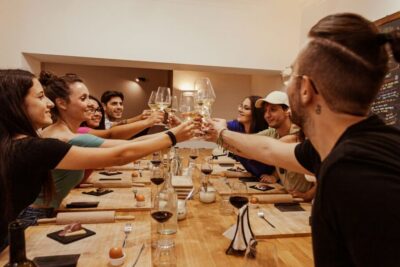
Pasta Making & Wine Tasting with Dinner in Frascati from Rome
Read our review →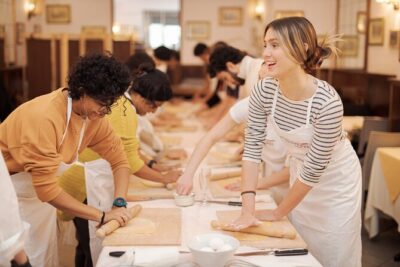
The Secrets to Learn Fresh Pasta and Tiramisù in a Glam Home
Read our review →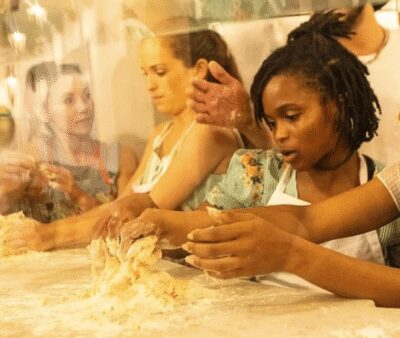
Pasta Making with Wine Tasting and Dinner in Frascati
Read our review →
Browse the lists this tour appears in