
Review · BOLOGNA
Bologna Local Pasta Cooking Class, Ragu, Spritz, Wine & Gelato
Fresh pasta is Bologna’s best souvenir. This three-hour class gives you a practical taste of local food culture, from hand-rolled tagliatelle to Pignoletto, Casoni spritz, San Giovese, coffee, amaro, and gelato. I especially like the hands-on pasta work and the relaxed shared meal that follows. The main consideration is that the ragù is prepared ahead of time, so you learn to make the pasta but not the sauce itself.
I also like the social setup. You cook at the same table, share drinks, and meet people from different places, with instructors such as Sonia, Stella, Stefania, Claudia, Roberta, and Valentina praised for making beginners feel at ease. The class is advertised as a small-group experience, though the formal maximum is 13 people, so the exact feel may vary.
Key points to know before booking
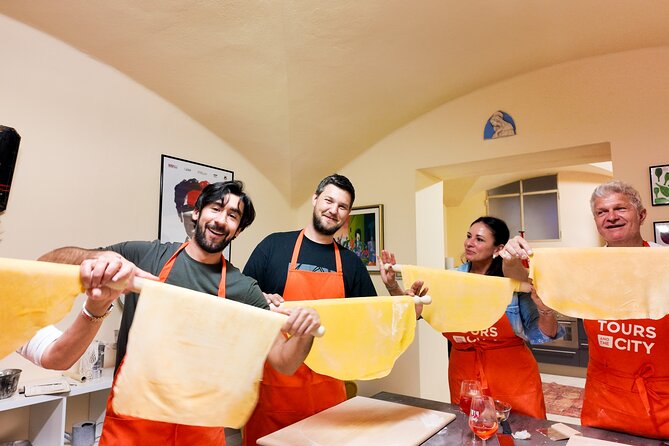
- Handmade tagliatelle: Mix eggs and flour, roll the dough by hand, and cut it into pasta ribbons without using a machine.
- Local drinks included: Taste Pignoletto, prepare a Casoni spritz, drink San Giovese with the meal, and finish with coffee and amaro.
- Ragù is homemade but prepared ahead: You eat the classic sauce, but limited class time means you do not cook it from start to finish.
- Three hours in central Bologna: The class begins and ends at Piazza Galileo Galilei, near public transportation.
- Good for beginners: The instructors guide each step, and recipes can be sent as PDF files so you can repeat the meal at home.
- Strong value at $59.26: The price includes food, several drinks, instruction, dessert, and a social meal rather than a quick demonstration.
Why Bologna is the right place for a pasta class
Bologna is often called Italy’s food capital, and that reputation is not based only on restaurant menus. The city sits in Emilia-Romagna, a region known for handmade egg pasta, Parmigiano Reggiano, balsamic vinegar, cured meats, and serious home cooking.
That makes this class a better fit for Bologna than a generic pizza workshop would be. You are working with the local combination of fresh tagliatelle and ragù, then eating it with regional cheese and wine. The goal is not a fancy plated dish. It is a Bolognese meal you can understand and repeat.
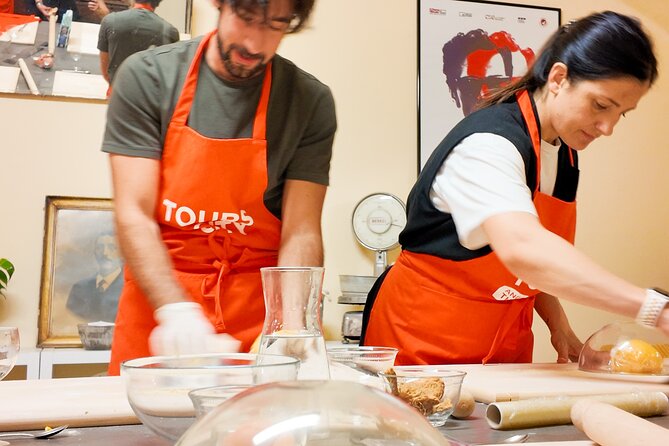
The class also avoids one common problem with cooking activities: watching someone else do everything. Here, you mix flour and eggs, work the dough, roll it with a pin, cut the tagliatelle, and cook the pasta. You do not need prior experience. The teachers break the process into manageable steps, which is useful when your first dough looks more like a flour accident than dinner.
More Pasta Classes with Wine in Bologna
- Bologna Food & Market Tour with 6 Tastings, Pasta, Wines & More
★ 5.0 · 1,328 reviews - Bologna: Pasta Cooking Class, Ragu, Spritz, Wine & Gelato
★ 4.9 · 775 reviews - Bologna: Pasta and Tiramisu Small Group Cooking Class with Wine
★ 5.0 · 409 reviews
Meeting at Piazza Galileo Galilei
The experience starts at Piazza Galileo Galilei in Bologna’s old town and returns to the same meeting point. The location is near public transportation, which makes it practical to fit into a day of sightseeing.
Allow enough time to find Piazza Galileo Galilei without rushing. A cooking class is not the place to arrive breathless with a map open on your phone and flour already waiting. The mobile ticket is convenient, and confirmation arrives when you book.
Since the class lasts about three hours, check the start time against your lunch or dinner plans. The food is substantial enough to function as a full meal, with starter, pasta, wine, dessert, coffee, and amaro. You probably do not need to schedule another major meal right afterward.
Starting with Pignoletto, mortadella, and crescenta
The opening aperitif sets a friendly tone. You begin with local white wine, Pignoletto, along with mortadella and crescenta or piadina. These are simple foods, but they give you a useful introduction to the region before you start cooking.
Mortadella is Bologna’s famous cured meat, and tasting it in its home city adds context. Crescenta and piadina provide the bread element, turning the welcome drink into a small local snack rather than a formal lecture.
This first stage also helps solo participants and couples settle into the room. You are not immediately expected to produce perfect pasta. You have time to meet the other people at your table, ask questions, and get comfortable with the instructors.
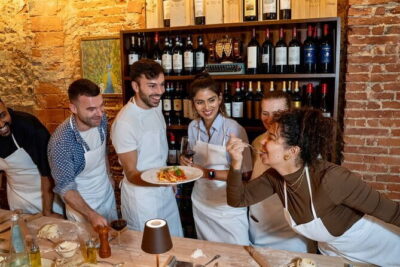
The social side is one of the strongest parts of the experience. The setting is designed for cooking and eating together, not standing silently at separate stations. If you like food classes with conversation, this should suit you. If you prefer a private lesson with constant individual attention, a group format may feel less tailored.
Making a Casoni spritz with local character
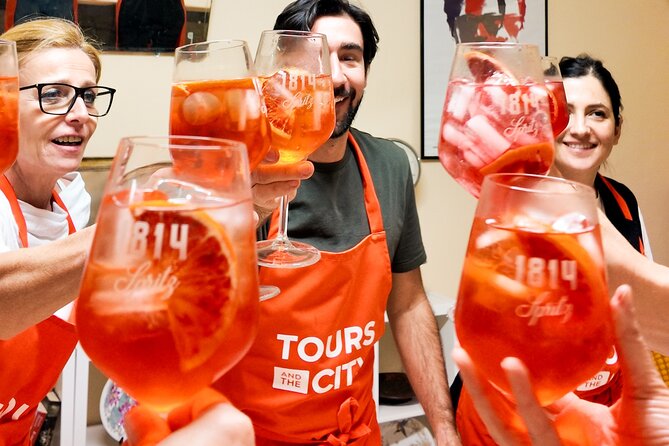
Next comes the Casoni spritz. This is not simply a standard international aperitif poured over ice. Casoni is associated with Emilia-Romagna, and the class presents the drink as a local recipe made with regional herbs and flavors.
You also get a chance to compare spritz styles. One account of the class included tasting the difference between Campari and Aperol versions while the pasta work continued. That is a small but useful lesson because it shows how changing one bitter aperitif can alter the drink’s color, taste, and weight.
The spritz is part of the cooking rhythm rather than a separate cocktail demonstration. You prepare it while working on the pasta, which keeps the class informal. The drinks are generous enough that you should pace yourself, especially if you are attending earlier in the day and still have sightseeing planned.
More Gelato Making Classes in Bologna:
- Bologna: Original Lasagna & Gelato Class at a Cooking School
★ 4.9 · 59 reviews - Bologna Original Lasagna and Gelato Class with Aperitif
★ 5.0 · 18 reviews - Florence Pizza or Pasta Class with Gelato Making at a Tuscan Farm
★ 5.0 · 6,801 reviews - Florence: Pizza or Pasta Class with Gelato at a Tuscan Farm
★ 4.9 · 1,181 reviews
Turning two basic ingredients into tagliatelle
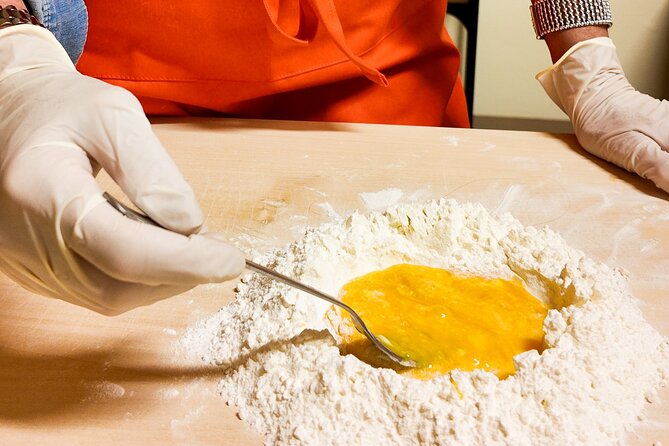
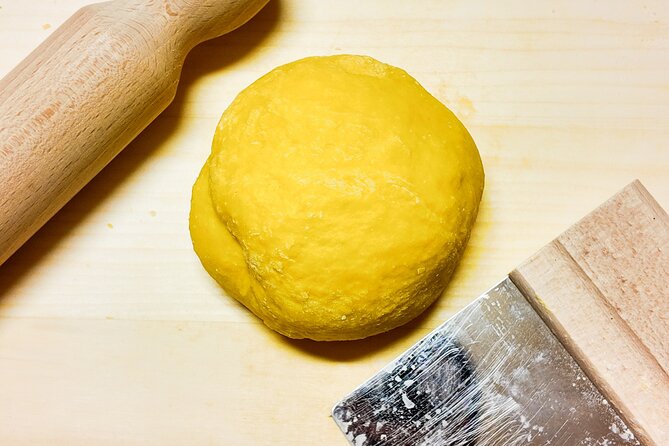
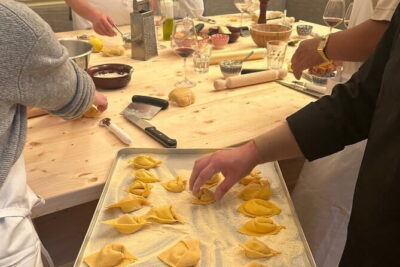
The main lesson uses eggs and flour. That sounds simple, but fresh pasta depends on texture, pressure, timing, and feel. You mix the dough by hand, then work it until it becomes smooth enough to roll.
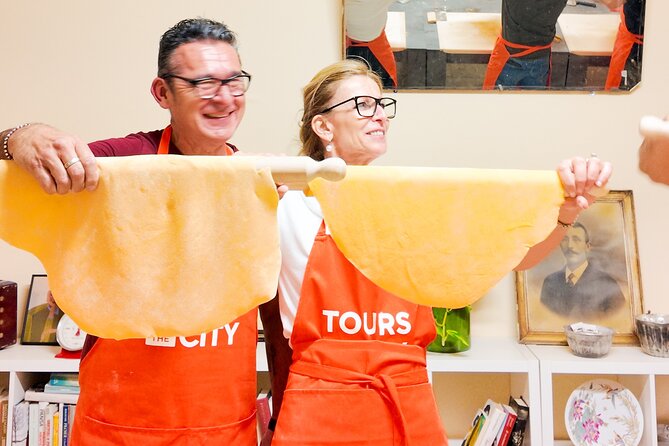
There are no pasta machines for this activity. Your rolling pin provides the effort, so you become the engine of the process. That hands-on approach is useful because it teaches you what the dough should feel like instead of asking you to follow a machine setting.
The instructors demonstrate the method step by step. Names associated with different sessions include Roberta, Lucrezia, Sonia, Stella, Stefania, Claudia, Valentina, Beatrice, Anna, and Clare. The teaching team can vary, but the pattern is clear: the teachers work alongside the group, correct rough patches, and encourage beginners.
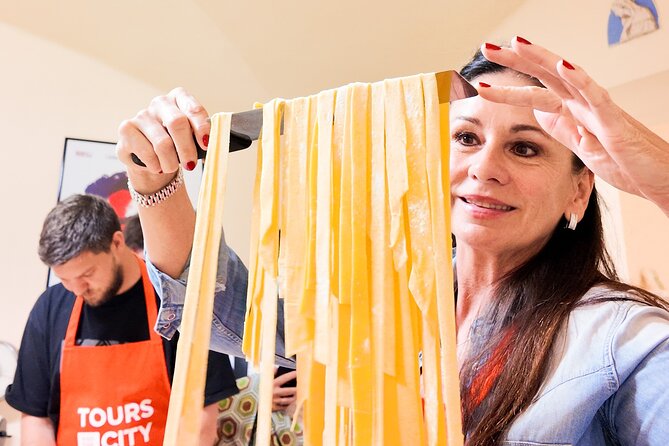
You then roll the dough thin and cut it into tagliatelle. This is the point where the class becomes practical rather than decorative. Your pasta may not be perfectly uniform, but you learn how to judge thickness and how wide the ribbons should be.
The reviews of the class repeatedly praise the teachers for making pasta seem manageable. That matters for two reasons. First, beginners can take part without feeling behind. Second, experienced home cooks may still pick up useful details about dough, rolling, and cutting.
Ragù is homemade, but already simmering
Here is the key limitation to understand before booking: you do not prepare the ragù from scratch during the class. The sauce is 100 percent homemade, but it is already being prepared because three hours is not enough time to make a full ragù and also teach pasta making, drinks, dining, and dessert.
That is a fair trade for this format. Traditional ragù needs time to cook, while fresh pasta can be made and eaten during the session. You still learn how tagliatelle pairs with the sauce, but this is not a complete sauce-making course.
If learning ragù is your main purpose, you may want to ask for more information before booking. If your priority is making fresh pasta and enjoying a regional meal, the prepared sauce keeps the class moving and gives you more time at the table.
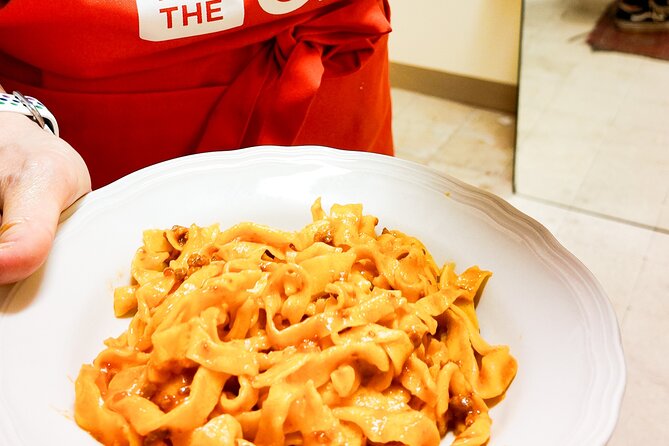
The finished tagliatelle is served with the house ragù and 24-month-aged Parmigiano Reggiano. The cheese is not a minor garnish here. It adds salt, nuttiness, and body to the sauce, showing why Emilia-Romagna’s best-known ingredients work so well together.
Sitting down with San Giovese and fresh pasta
Once the pasta is cut and dried, the group cooks it together. Fresh tagliatelle cooks far more quickly than dried supermarket pasta, so the transition from worktable to meal is part of the lesson.
The pasta is served with ragù, Parmigiano Reggiano, and local San Giovese wine. This is the point of the class: not just learning a technique, but eating what you made with other people around the same table.
The portions are described as generous, with food and drinks continuing through the session. Some people have left with extra pasta to cook at home, though you should not assume leftovers are guaranteed every time. The important value is that the meal is included rather than being an extra charge after the lesson.
I also like that the menu is rooted in the region. You are not making a theatrical restaurant dish designed for photographs. You are making a familiar Bolognese combination and learning why it works.
Coffee, amaro, and mystery gelato
The meal ends with local coffee, amaro, and a mystery gelato. The surprise flavor keeps the finish playful, but it is still tied to Italian dining customs.
One particularly memorable variation includes gelato with a drizzle of aged balsamic vinegar from Modena. That detail may not appear at every session, so treat it as a possible extra rather than a guaranteed part of the menu. Still, it captures the region’s habit of pairing sweet foods with sharp, aged flavors.
Coffee and amaro also make the ending feel like a proper Italian meal. The class does not rush you out after the pasta is served. You have time to sit, talk, and finish the evening at the table.
The value of $59.26 for three hours
At $59.26 per person, this is a solid value for Bologna, provided you want a social cooking experience rather than a private lesson. The price covers instruction, handmade pasta, ragù, cheese, starter foods, multiple drinks, dessert, coffee, and amaro.
The value improves if you count the teaching. You are not only paying for lunch or dinner. You leave with a technique that uses ingredients you can find in many places, plus recipes available by email in PDF format upon request.
The drinks also add to the total. Pignoletto, Casoni spritz, San Giovese, and amaro create a fuller regional tasting than a basic pasta class. You should still judge the price against your own habits. If you do not drink alcohol, much of the menu has less value, though food and instruction remain central.
The activity is booked about 27 days ahead on average, so popular dates may fill early. That is especially relevant if your Bologna visit is short and you have only one open afternoon or evening.
Who will enjoy this class most
This experience suits couples, families with older children, solo participants, and friends who like meeting people over food. It also works well for mixed-skill groups. One person can be an experienced amateur pasta maker while another is trying it for the first time.
Children are welcome, but the menu and teaching style are designed for adult participation. Parents should consider whether their children will enjoy a three-hour meal and cooking session rather than assume this is a child-focused activity.
You should also book it if you want a useful souvenir. A keychain from Bologna takes up less suitcase space, but it cannot feed you at home. The recipes and pasta method can become part of your regular kitchen routine.
This may not suit you if you need a private class, cannot drink alcohol, or have severe allergies. Gluten-free pasta and vegetarian sauces can be accommodated, but strict dietary requirements may not be suitable for the shared menu. Tell the provider about dietary restrictions before booking so you can confirm what is possible.
Practical details that matter
The experience is offered in English and accepts mobile tickets. It begins and ends at Piazza Galileo Galilei, and the meeting point is near public transportation.
The advertised small-group format helps create the friendly atmosphere that makes this class work. The stated maximum is 13 people, so do not expect a private kitchen lesson. Exact class size can affect how much individual help you receive.
Free cancellation is available up to 24 hours before the start time for a full refund. Changes or cancellations within 24 hours are not accepted for a refund, and cut-off times use Bologna’s local time.
Should you book the Bologna pasta class?
I would book this if you want to make fresh tagliatelle, eat a full Bolognese meal, and spend three hours with an easygoing group. The strongest reasons are the hands-on rolling and cutting, the local drinks, and the instructors’ patient approach with first-time pasta makers.
I would skip it only if your main goal is to learn ragù from start to finish, or if you need a private and highly customized class. For most people, $59.26 buys a useful skill, a substantial meal, and a pleasant introduction to Emilia-Romagna’s food traditions. That is a good deal in Bologna, especially on a rainy day when flour, wine, and warm pasta sound better than another museum.
FAQ
How long does the Bologna pasta class last?
The experience lasts approximately three hours.
What pasta will I make?
You will make tagliatelle by hand using eggs and flour.
Is a pasta machine used?
No. The pasta is rolled by hand with a rolling pin.
Is the ragù made during the class?
No. The ragù is homemade but prepared ahead of time because of the limited class time.
What drinks are included?
The menu includes Pignoletto, a Casoni spritz, San Giovese red wine, coffee, and amaro.
What food is served before the pasta?
The opening aperitivo includes mortadella, crescenta or piadina, and local wine.
What is served with the tagliatelle?
The tagliatelle is served with homemade ragù and 24-month-aged Parmigiano Reggiano.
Is dessert included?
Yes. The experience ends with mystery gelato, along with coffee and amaro.
Can gluten-free or vegetarian options be provided?
Gluten-free pasta and vegetarian sauces can be accommodated, but the class may not suit people with severe allergies or strict dietary requirements. Tell the provider in advance.
Where does the class start and end?
It starts at Piazza Galileo Galilei in Bologna and ends back at the same meeting point.
More Wine Tours in Bologna
- Bologna: Pasta Tagliatelle al Ragu Cooking Class with Wine
★ 4.7 · 225 reviews - Bologna: 3 Pastas, Tiramisu and Unlimited Wine Tasting
★ 4.6 · 186 reviews - Bologna: Pasta Cooking Class, Ragu & Wine with Local Host
★ 4.9 · 113 reviews - Bologna: Tagliatelle & Ragù Home Cooking Class with wine
★ 4.5 · 55 reviews
Just added around Bologna
- Colorful Pasta Workshop in Bologna with meal★ 5.0 · 2 reviews
- 3 hour Lasagna Bolognese cooking class★ 5.0 · 6 reviews
- Cesarine: Small group Tortellini Class at Local’s Home in Bologna★ 5.0 · 18 reviews
- Pasta Making Class: Tagliatelle & Bolognese Sauce★ 5.0 · 15 reviews
- Tortelloni and Tagliatelle Cooking Class in Bologna + Wine★ 3.0 · 2 reviews
- Cesarine: Pasta & Tiramisu Class at a Local’s Home in Bologna★ 5.0 · 29 reviews
- Pasta Class in Bologna in a 15th-Century Estate Home with Chiara★ 5.0 · 25 reviews
- Pasta and Tiramisu Masterclass with organic wines★ 3.5 · 3 reviews
Pasta Classes with Wine, compared.
Pasta & Tiramisu Cooking Class with Unlimited Wine
Read our review →
Pasta & Tiramisu Class with Fine Wine by the Vatican
Read our review →
Pasta Making Class with Wine, Limoncello, and Dessert
Read our review →
Rome Cooking Class: Make Pasta and 3 Spritz Cocktails
Read our review →
Learn to Make Pasta & Tiramisu with Wine and Limoncello Included
Read our review →
Cooking Class Pasta & Tiramisu Making Unlimited Wine
Read our review →Browse the lists this tour appears in