
Review · BOLOGNA
Bologna: Pasta Cooking Class, Ragu, Spritz, Wine & Gelato
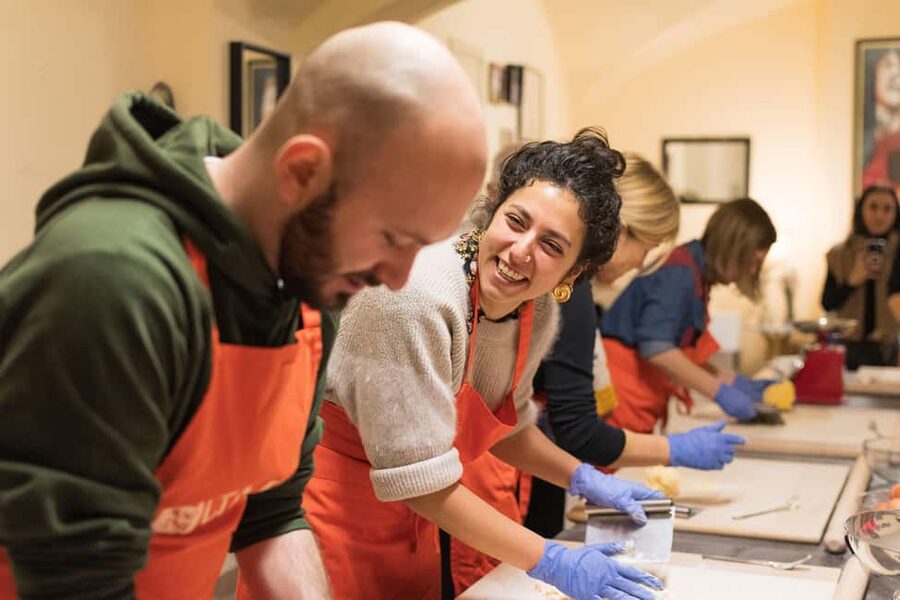
Pasta tastes better when you make it yourself. This three-hour Bologna class combines hands-on tagliatelle making with a local aperitivo, Casoni spritz, regional wine, coffee, amaro, and gelato. I like the old-fashioned pasta work with flour, eggs, and a rolling pin, and I like how the meal keeps unfolding long after the dough is finished. The main drawback is that the ragù is prepared in advance, so you learn the pasta but not the sauce.
You meet the English-speaking guides outside the city-center building, where they wear orange aprons. I especially like the social setup: the opening piadina, Mortadella, and Pignoletto help strangers start talking, while small games during the dough’s resting time keep the room from going quiet. The class is not suitable for vegans, vegetarians, or people with gluten intolerance, and a large flight of stairs makes it unsuitable for some visitors with mobility needs.
Key points at a glance
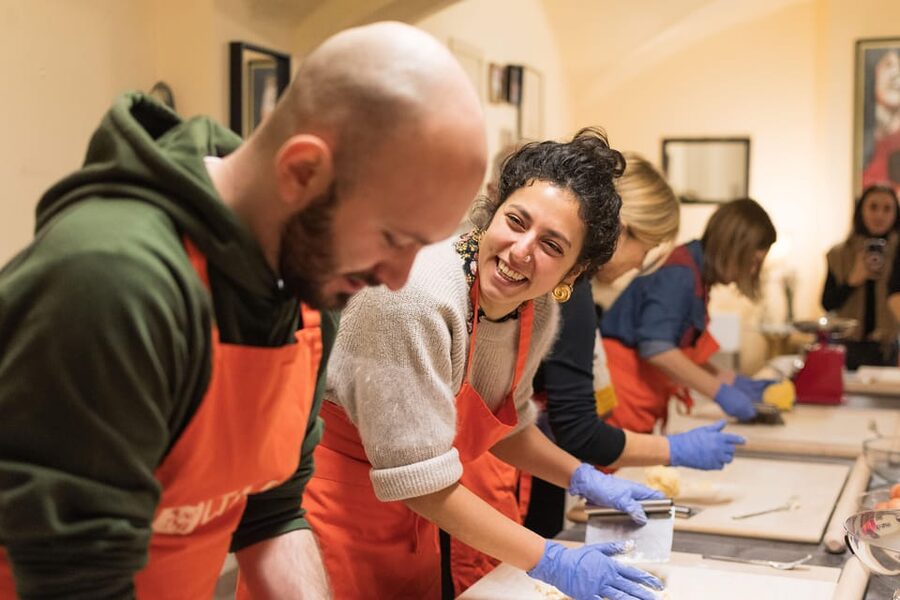
- Handmade tagliatelle with a rolling pin: You mix, knead, roll, fold, slice, and cook the pasta without a machine.
- A full Bolognese food-and-drink sequence: The class includes piadina, Mortadella, Pignoletto, Casoni spritz, Sangiovese, Parmigiano Reggiano, coffee, amaro, and gelato.
- Ragù is made before class: You eat traditional house-made sauce, but preparing it is not part of the workshop.
- A social class with patient teachers: Guides such as Stella, Steffi, Valentina, Roberta, Beatrice, and Luca have been praised for clear instructions and friendly hosting.
- Good value at $79: You receive a meal, several drinks, a lesson, leftovers to take away, and recipes by email.
- Local ingredients and community ties: Flour and eggs come from the Bologna area, while cheese, coffee, and spirits come from nearby producers.
Arriving in central Bologna with an appetite
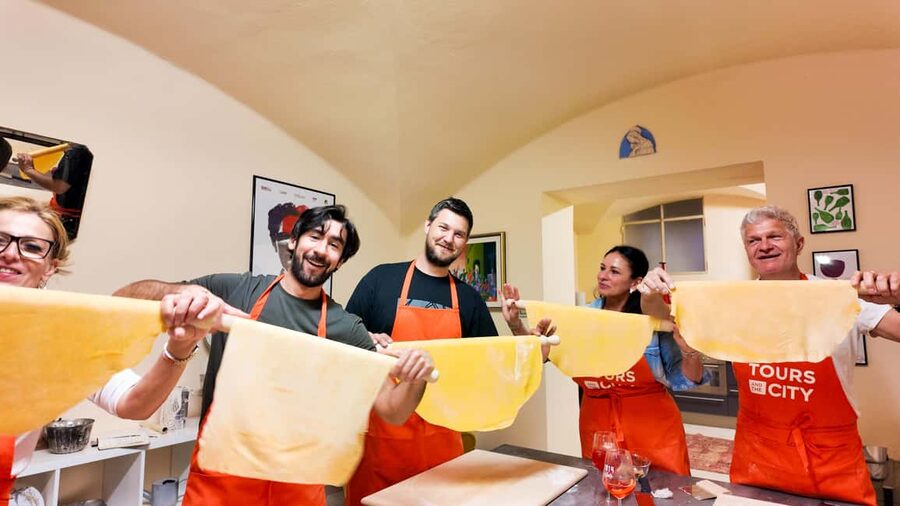
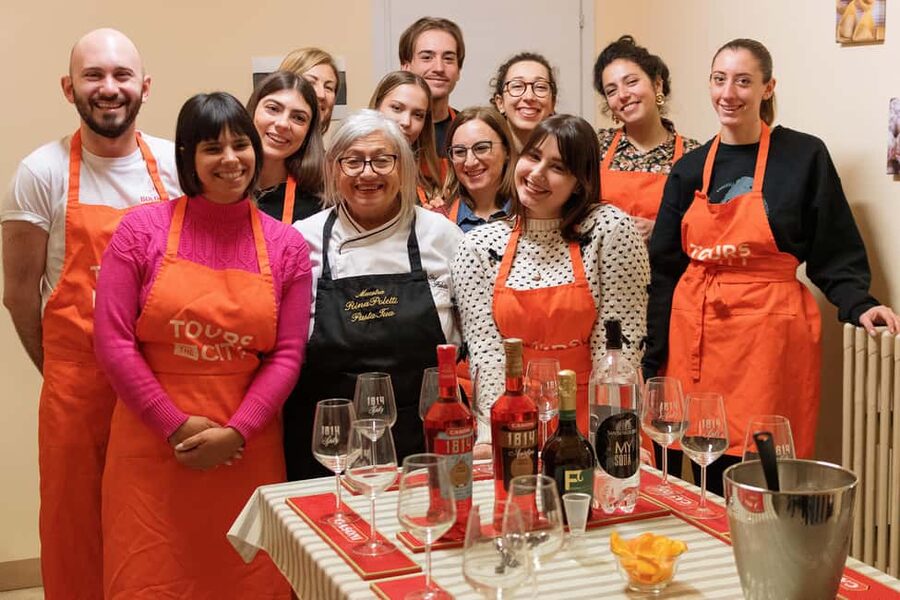
This experience takes place in a traditional kitchen in the city center. The meeting arrangement is simple: arrive at the exact booking time and look for the guide in an orange apron outside the building. You are escorted inside, so you do not need to solve a complicated entrance puzzle.
Wear comfortable clothes and shoes. Pasta making is not strenuous, but you will be standing, leaning over a work surface, and handling dough for much of the class. Since there is a large flight of stairs, contact the provider in advance if stairs or mobility are a concern. The activity is not recommended for anyone using a wheelchair or crutches.
The class lasts three hours, which gives it a relaxed rhythm. You are not rushed through the pasta and sent away after a quick bite. Instead, food and drinks arrive in stages, and the social side is treated as part of the experience rather than a distraction.
More Pasta Classes with Wine in Bologna
- Bologna Food & Market Tour with 6 Tastings, Pasta, Wines & More
★ 5.0 · 1,328 reviews - Bologna Local Pasta Cooking Class, Ragu, Spritz, Wine & Gelato
★ 5.0 · 527 reviews - Bologna: Pasta and Tiramisu Small Group Cooking Class with Wine
★ 5.0 · 409 reviews
Piadina, Mortadella, and Pignoletto break the ice
The first course is a traditional aperitivo of piadina, Mortadella, and Pignoletto sparkling white wine. Piadina is a soft, thin flatbread from Emilia-Romagna, while Mortadella is Bologna’s famous delicately seasoned pork sausage. Together, they offer a quick introduction to the region before you touch the flour.
This opening matters because the class is designed around shared tables and teamwork. You may arrive with a partner, family, or no one at all, then find yourself talking with people from several countries over a glass of wine. Guides have used short icebreaker games during pauses, and that small touch helps solo participants and quieter groups join in.
The welcome food is also a useful warning about the class. This is not a light demonstration with a token taste at the end. You will be eating from the beginning, so a very large meal immediately beforehand is probably unnecessary.
Mixing dough the Bolognese way
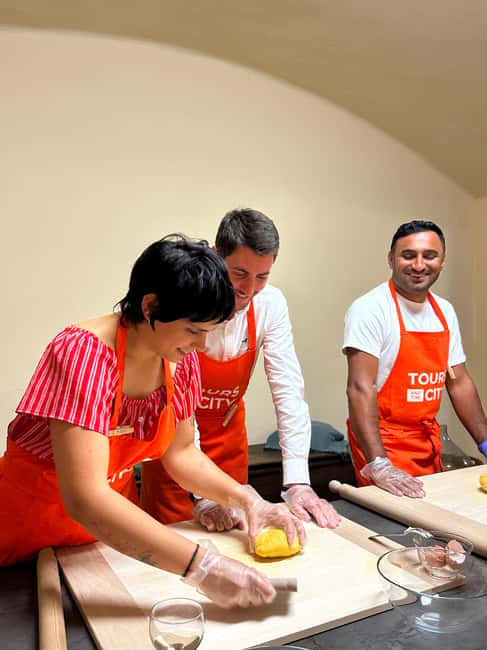
The central lesson is handmade tagliatelle. You work with local flour and fresh eggs, using your hands rather than a pasta machine. The process includes mixing the dough, kneading it, allowing it to rest, rolling it thin with a pin, folding it, and slicing it into ribbons.
For me, the rolling pin is the part that gives this class its character. A machine can produce neat sheets quickly, but using your hands lets you feel how the dough changes. You also learn why patience matters. The dough needs time to settle, and the pause gives the instructors a chance to answer questions and help with problem areas.
This is beginner-friendly. First-time pasta makers have found the instructions clear and manageable, while experienced cooks can pick up practical tips about texture and cutting. The teachers circulate to troubleshoot uneven sheets or dough that needs more work. That personal help is important because the first batch rarely looks perfect.
Do not expect every strand to be identical. Handmade pasta has small variations, and that is part of the point. You are learning a skill you can repeat at home, not producing factory-perfect noodles for a photograph.
Making a Casoni spritz between pasta steps
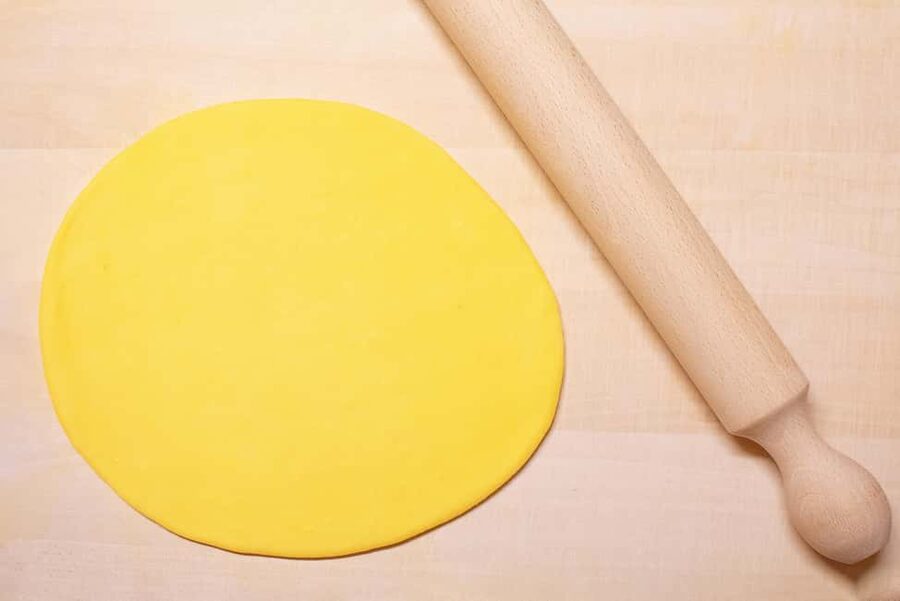
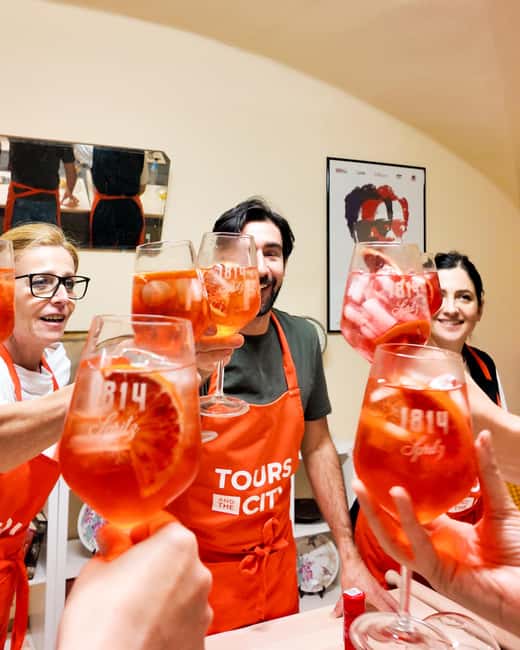
At some point during the class, you prepare a Casoni spritz. This local cocktail uses a herb-infused spirit made according to an older Emilia-Romagna recipe, giving it a different character from the familiar international spritz brands.
The drink provides a welcome change of pace while the dough rests or the cooking area is prepared. You make and sip your own drink rather than simply receiving one at the table. That makes the beverage part of the lesson, though the class is not a dedicated cocktail course.
The guides also share background about the drink and local food traditions. Several teachers, including Stella, Martina, Luca, Valentina, and Steffi, have been praised for keeping explanations clear while adding local and historical details. Staffing can vary, but the repeated strength of the class is the warmth and patience of the instructors.
If you do not drink alcohol, unlimited water and soft drinks are included. Still, the food and drink menu is built around wine and spirits, so this may not be the best match if you want a strictly nonalcoholic cooking activity.
More Gelato Making Classes in Bologna:
- Bologna: Original Lasagna & Gelato Class at a Cooking School
★ 4.9 · 59 reviews - Bologna Original Lasagna and Gelato Class with Aperitif
★ 5.0 · 18 reviews - Florence Pizza or Pasta Class with Gelato Making at a Tuscan Farm
★ 5.0 · 6,801 reviews - Florence: Pizza or Pasta Class with Gelato at a Tuscan Farm
★ 4.9 · 1,181 reviews
What the prepared ragù adds, and what it leaves out
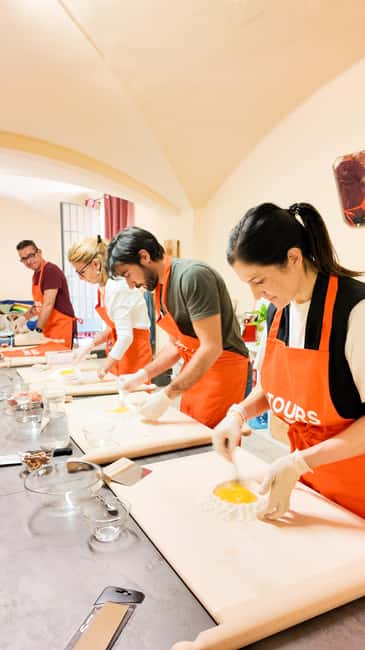
Your sliced tagliatelle is cooked and served with house-made ragù. The sauce is prepared each week according to a family tradition, using time and care before the class begins. It is paired with 24-month-aged Parmigiano Reggiano from a local dairy.
The finished dish is the payoff for the work at the table. Fresh pasta has a softer, more delicate texture than dried pasta, and the ragù gives you the classic Bolognese combination you came to Bologna to taste. You can eat the meal with local Sangiovese red wine, creating a proper Emilia-Romagna lunch or dinner rather than a small cooking-school sample.
The limitation is worth stating plainly: you do not make the ragù yourself. Time is reserved for pasta, drinks, and the shared meal, so the sauce arrives ready. If your main goal is to learn a complete ragù recipe from start to finish, choose a class that lists sauce preparation as part of the lesson. If you mainly want to learn fresh pasta and taste a traditional sauce, this setup works well.
Leftovers can be taken away. That is a practical benefit, especially after several courses and drinks. You also receive the recipes by email in PDF format on request, giving you a way to recreate the pasta at home.
The local ingredients behind the meal
The class puts real emphasis on nearby suppliers. The flour and free-range eggs come from the Bologna province. Parmigiano Reggiano comes from a local dairy, coffee is sourced from a Modena roastery, and the spirits are produced in Emilia-Romagna.
That sourcing does not turn the class into a market tour, but it gives useful context to what you are eating. Bologna’s food culture is not just about a famous dish name. It is also about flour, eggs, aged cheese, cured pork, local wine, and the habit of gathering around a table.
There is also a community-minded element. Extra pasta has been donated to a nearby church, which gives the activity a modest local connection beyond the paying participants. It is not the main reason to book, but it adds substance to an already generous meal.
Coffee, Montenegro, and the unusual gelato finish
After the pasta and wine, the class continues with Moka coffee and a bitter digestif. The listing identifies Montenegro as part of the finish, along with a mystery dessert and gelato served with balsamic vinegar.
The gelato is the most memorable final detail. Balsamic vinegar may sound strange with ice cream, but Emilia-Romagna is famous for its balsamic tradition, and the sweet-tart contrast makes this more than a standard scoop. The exact dessert is presented as a local surprise, so do not expect a fixed dessert menu.
This long finish helps explain the three-hour duration. You are not only learning a recipe; you are being shown how a meal progresses in Italy, from aperitivo to pasta, wine, coffee, digestif, and something sweet. If you prefer a short, tightly timed workshop, the pauses may feel slow. If you enjoy meals as social events, they are part of the charm.
The instructors make the difference
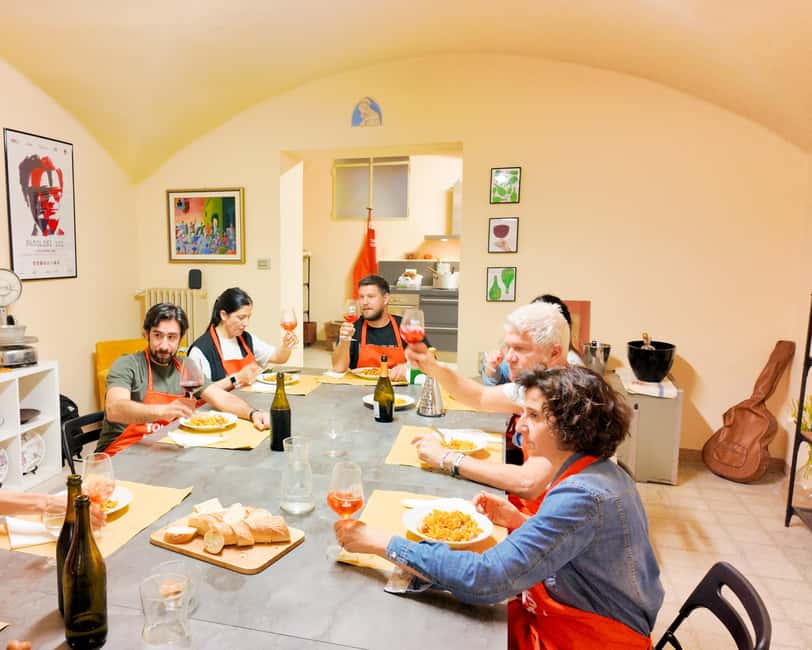
The teacher changes by date, but several names appear repeatedly in the class: Stella, Steffi, Valentina, Roberta, Beatrice, Luca, Martina, Claire, Claudia, Lucilla, and Giuseppe. The most frequently praised traits are patience, clear explanations, friendliness, and the ability to get a mixed group talking.
That matters more than a polished kitchen or a long recipe handout. Fresh pasta can be intimidating when dough sticks, tears, or refuses to roll thin. A calm instructor who can show you the adjustment without taking over makes the lesson useful.
The class also works for solo visitors. You share the food, drinks, and table conversation with the group, and the icebreaker games help you meet people without having to force small talk. Families have enjoyed it too, including groups with children, though you should judge your child’s comfort with a three-hour food activity and standing at a work surface.
Is $79 a fair price?
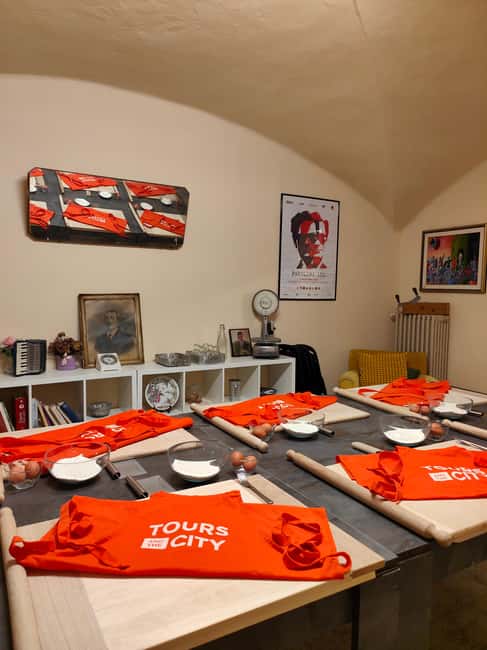
At $79 per person, the price is fair if you value the entire three-hour package. You receive the pasta workshop, an instructor, the welcome aperitivo, Pignoletto, a Casoni spritz, Sangiovese, the tagliatelle meal with ragù and aged Parmigiano, water or soft drinks, coffee, amaro, gelato, leftovers, and recipes by email.
A restaurant meal alone would not teach you how to make pasta or provide this much guided food and drink. On the other hand, part of the price pays for the social hosting and the drinks, so someone seeking only a technical pasta lesson may find the package more elaborate than needed.
The value is strongest for a first visit to Bologna, a couple looking for an evening activity, a solo visitor wanting an easy social setting, or a family that wants a shared project. The class has earned a 4.9 rating from 775 bookings, and the steady praise centers on exactly these strengths: fun teaching, a welcoming group atmosphere, tasty food, and generous extras.
Who should book this Bologna class?
Book it if you want to learn traditional tagliatelle by hand and enjoy the results in the same sitting. It is especially good if you like meeting people, trying regional drinks, and getting a broad taste of Bolognese food culture in one well-organized activity.
I would also recommend it for a short stay. In three hours, you learn a practical kitchen skill, eat several local specialties, and gain a social evening without giving up a full day of sightseeing.
Think twice if you are vegan, vegetarian, gluten intolerant, or unable to manage the stairs. Also think twice if you want to prepare ragù yourself. The sauce is deliciously central to the meal, but the class teaches the pasta rather than the complete pasta-and-sauce process.
Practical details before you reserve
The class is conducted in English. Tell the provider about dietary requirements before booking, especially serious allergies, since some allergies may mean the kitchen cannot safely host you.
Cancellation is free up to 24 hours before the activity, and you can reserve now and pay later. Check the available start times when choosing your date, since the exact schedule is not fixed in the information provided.
Arrive at the stated meeting time, look for the orange apron, and wear comfortable shoes. You may leave with leftovers, a full stomach, and a recipe PDF that gives the class a useful life beyond your stay in Bologna.
FAQ
How long does the Bologna pasta class last?
The experience lasts three hours.
What pasta do you make?
You make fresh tagliatelle by hand with flour, eggs, and a rolling pin.
Is the ragù made during the class?
No. The ragù is prepared in advance according to a family tradition, then served with your cooked tagliatelle.
What drinks are included?
The class includes Pignoletto sparkling white wine, a Casoni spritz, Sangiovese red wine, unlimited water or soft drinks, Moka coffee, and a bitter digestif.
Is food included in the price?
Yes. The package includes a welcome aperitivo of piadina and Mortadella, tagliatelle with ragù and Parmigiano Reggiano, and gelato with balsamic vinegar.
Is the class suitable for vegetarians or vegans?
No. The experience is not suitable for vegans or vegetarians.
Can people with gluten intolerance attend?
No. The activity is not suitable for people with gluten intolerance.
What should I wear and bring?
Wear comfortable clothes and comfortable shoes. Guides meet you outside the building at the exact booking time and wear orange aprons.
Should you book it?
Yes, if you want a friendly, food-filled introduction to Bologna rather than a narrowly technical cooking lesson. The strongest reasons are the hands-on rolling-pin pasta work, the patient English-speaking instructors, the generous meal and drinks, and the chance to leave with a recipe you can use at home.
Just keep two limits in mind: the ragù is ready-made, and the stairs rule out some visitors with mobility needs. For everyone else, $79 buys a satisfying three hours of cooking, conversation, local flavors, and the pleasant surprise of gelato with balsamic vinegar.
More Wine Tours in Bologna
- Bologna: Pasta Tagliatelle al Ragu Cooking Class with Wine
★ 4.7 · 225 reviews - Bologna: 3 Pastas, Tiramisu and Unlimited Wine Tasting
★ 4.6 · 186 reviews - Bologna: Pasta Cooking Class, Ragu & Wine with Local Host
★ 4.9 · 113 reviews - Bologna: Tagliatelle & Ragù Home Cooking Class with wine
★ 4.5 · 55 reviews
Just added around Bologna
- Colorful Pasta Workshop in Bologna with meal★ 5.0 · 2 reviews
- 3 hour Lasagna Bolognese cooking class★ 5.0 · 6 reviews
- Cesarine: Small group Tortellini Class at Local’s Home in Bologna★ 5.0 · 18 reviews
- Pasta Making Class: Tagliatelle & Bolognese Sauce★ 5.0 · 15 reviews
- Tortelloni and Tagliatelle Cooking Class in Bologna + Wine★ 3.0 · 2 reviews
- Cesarine: Pasta & Tiramisu Class at a Local’s Home in Bologna★ 5.0 · 29 reviews
- Pasta Class in Bologna in a 15th-Century Estate Home with Chiara★ 5.0 · 25 reviews
- Pasta and Tiramisu Masterclass with organic wines★ 3.5 · 3 reviews
Pasta Classes with Wine, compared.
Pasta & Tiramisu Cooking Class with Unlimited Wine
Read our review →
Pasta & Tiramisu Class with Fine Wine by the Vatican
Read our review →
Pasta Making Class with Wine, Limoncello, and Dessert
Read our review →
Rome Cooking Class: Make Pasta and 3 Spritz Cocktails
Read our review →
Learn to Make Pasta & Tiramisu with Wine and Limoncello Included
Read our review →
Cooking Class Pasta & Tiramisu Making Unlimited Wine
Read our review →Browse the lists this tour appears in