
Review · ITALY
Cagliari: Workshop di pasta fresca tradizionale sarda
Fresh pasta tells Sardinia’s story. This three-hour cooking class brings you into the courtyard of a traditional Sardinian home, where you learn to make culurgiones from dough to the final wheat-ear fold called a sa spighitta. I like the small group of up to eight people, and I like that the food lesson ends with a full tasting rather than a token sample. The main drawback is clear: this is not suitable for anyone with gluten or lactose intolerance.
Carlotta and Matteo add a personal touch to the experience. Their warm hospitality and care for Sardinian food help turn a pasta lesson into a look at local home life. You will also take away your own handmade creations, which is a useful souvenir with considerably more character than another fridge magnet.
Key points at a glance
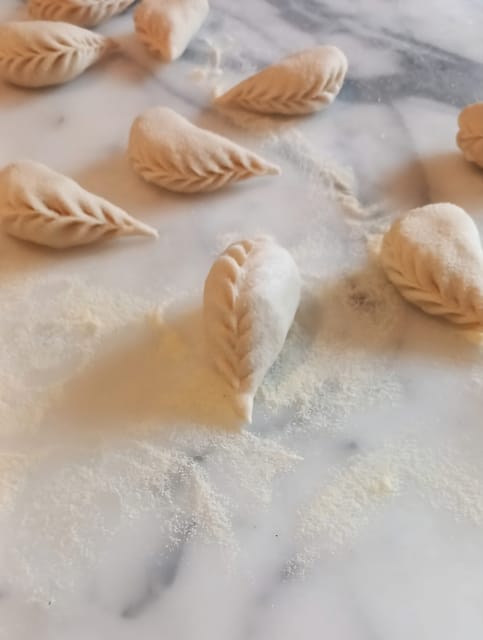
- Learn the culurgiones fold: Practice the delicate a sa spighitta closure, shaped like a wheat ear.
- Cook in a traditional home: The class takes place in an internal courtyard rather than a formal restaurant kitchen.
- Taste a broad Sardinian spread: Expect culurgiones, cheeses, meats, breads, wines, panadas, pratzidas, and other local specialties.
- Keep your own creations: All materials are supplied, and each participant can take home the pasta made during the class.
- Small and personal: The group is limited to eight, with instruction in Italian and English.
- Good value for food lovers: At $101.96 per person, the price covers the lesson, food, drinks, and a substantial tasting.
Making Culurgiones in a Sardinian Courtyard
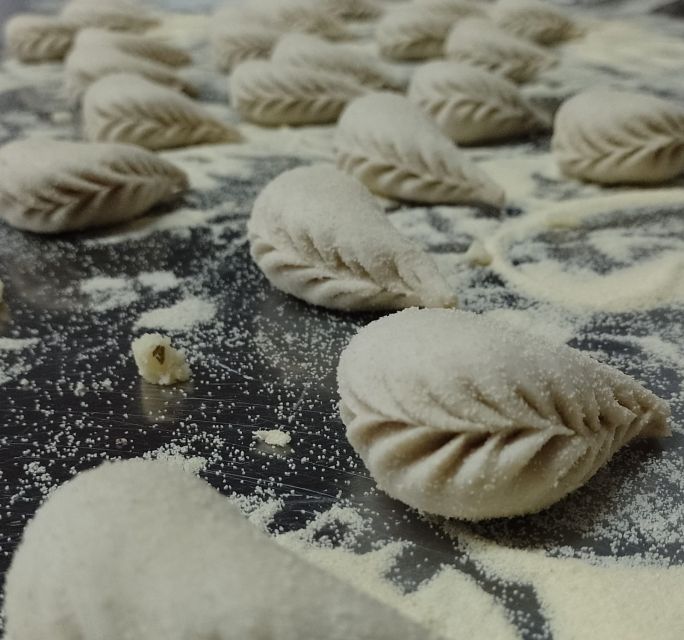
The appeal of this experience begins with the setting. Instead of sitting at a table while someone else cooks, you work in the internal courtyard of a traditional Sardinian house. That setting gives the class a domestic feel and helps you connect the food with the way it is prepared at home.
The focus is culurgiones, one of Sardinia’s best-known filled pastas. The class takes you through the full process, beginning with the filling and moving on to the dough. You then bring the two parts together and practice the signature closure.
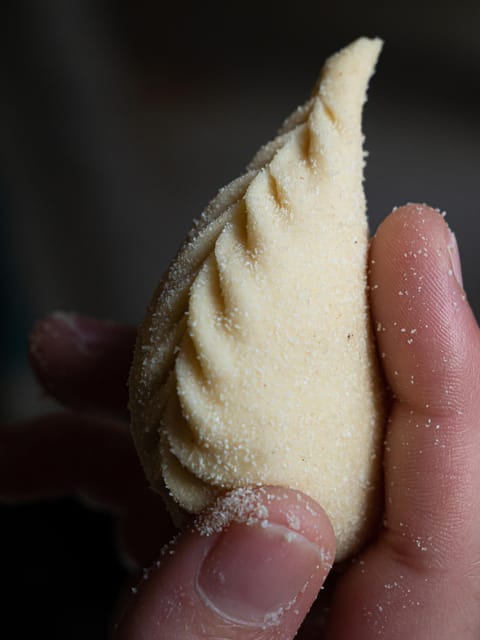
This final step is the tricky one. The a sa spighitta fold resembles a wheat ear, and it takes more than simply pinching the edges shut. You will likely need patience and a bit of hand control. That is part of the fun. The pasta does not need to look perfect to taste good, and learning the shape gives you a skill you can try again at home.
Carlotta is described as passionate about traditional Sardinian cooking, while Carlotta and Matteo are praised for their warmth and care. That matters in a hands-on lesson. A patient instructor can show you where the dough should be thinner, how to manage the filling, and how to close the pasta without losing its shape.
Instruction is available in Italian and English. The small group limit of eight makes it easier to follow the demonstration and ask for help. This is a better format for learning than a large class where you may spend half the time trying to see over someone’s shoulder.
More Fresh Pasta Workshops in Italy:
- Rome: Pasta Making Class with Wine, Limoncello, and Dessert
★ 4.9 · 3,177 reviews - Pastamania – Florence Pasta Making Class
★ 5.0 · 3,050 reviews - Enjoy Spritz and Pasta Making in Piazza Navona
★ 5.0 · 1,681 reviews
What You Make, From Filling to Dough
The cooking section is organized around the culurgiones themselves. You learn about the filling, prepare the dough, and shape the pasta by hand. The supplied information identifies a filling of potatoes, cheese, and mint, a combination that gives the dish a soft texture and a fresh herbal note.
The work is practical rather than theatrical. You are not simply watching a local cook prepare a plate. You handle the ingredients and repeat the folding motion yourself. That makes the class useful after your trip, although you should expect the first few pieces to be less tidy than the ones made by an experienced Sardinian cook.
The lesson also gives you a better sense of why handmade pasta takes time. The dough must be worked carefully, the filling must be portioned, and each piece must be closed by hand. The result is a dish with a clear connection to family cooking and local tradition, not just a generic pasta demonstration.
All materials are provided. You do not need to arrive with special equipment or ingredients. At the end, you can take away your own typical Sardinian creations, which gives the class a second benefit: you can share a small part of the activity after you leave.
The A Sa Spighitta Fold Is the Real Skill Test
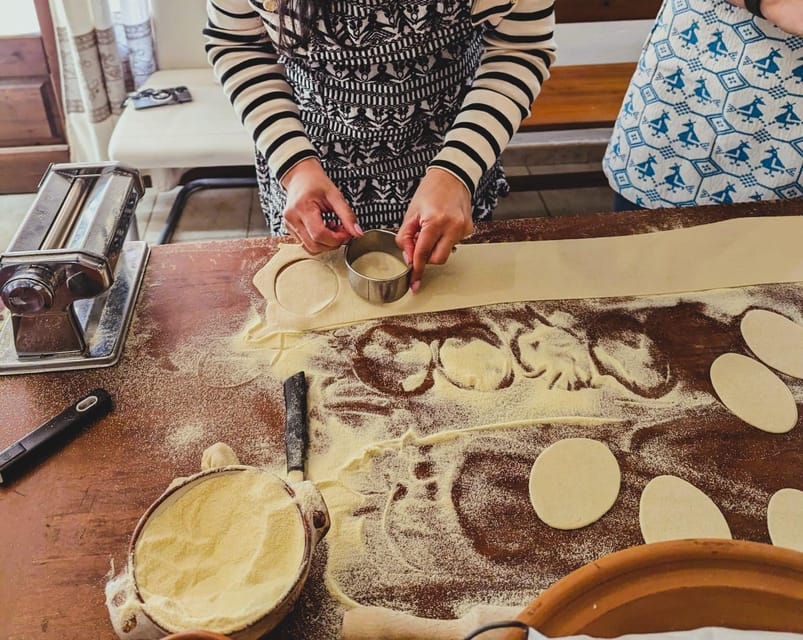
Many cooking classes are easy to follow but hard to remember. Here, the culurgiones closure gives the lesson a clear challenge. The wheat-ear pattern is distinctive, and making it by hand helps you understand the care behind the finished dish.
You should not expect to master the fold immediately. The shape depends on small, repeated pinches, and each person’s hands work differently. That is not a weakness in the experience. It gives you something specific to practice, rather than a lesson where every step feels automatic.
I would pay close attention during the demonstration, then make a few pieces slowly before trying to speed up. Ask for help if the filling starts to escape or the dough becomes difficult to handle. With a group of eight or fewer, there should be a reasonable chance to receive individual guidance.
The handmade pieces are also a useful reminder that local food traditions are often built on ordinary domestic skills. Sardinian pasta is not presented as a museum object. You learn to make it, eat it, and carry a little of the technique home.
A Full Tasting of Sardinian Specialties
After the pasta lesson, the experience shifts from making food to enjoying it. The tasting includes the culurgiones you helped prepare, along with a generous selection of Sardinian products.
You can expect local cheeses, meats, homemade bread, spreads, and local wine and water. The menu also includes traditional foods such as panadas, pratzidas, and coccoi prena. The supplied details and tasting notes also mention perdulas and seadas with cheese, giving you a chance to try several kinds of Sardinian cooking in one sitting.
This is where the $101.96 price begins to make sense. You are paying for a three-hour activity, but the value is not limited to the cooking instruction. Food and drinks are included, and the tasting covers enough ground to function as a small introduction to Sardinian cuisine.
The meal also gives you time to enjoy the food at a slower pace. While participants sit down, the hosts prepare the culurgiones for eating. You then get to taste the results of the work, alongside products that you did not prepare yourself.
I like this structure because it avoids a common problem with cooking classes: you spend the entire session working and leave hungry. Here, the hands-on lesson leads into a proper social meal. The only caution is that the food is central to the experience, so dietary restrictions are a serious concern, not a minor inconvenience.
A few more classes around Italy worth a look
- Florence: Pasta Cooking Class with Unlimited Wine
★ 4.9 · 10,285 reviews - 3 in 1 Cooking Class near Navona: Fettuccine, Ravioli & Tiramisu
★ 5.0 · 7,376 reviews - Florence Pizza or Pasta Class with Gelato Making at a Tuscan Farm
★ 5.0 · 6,801 reviews - Florence: Pasta & Tiramisu Cooking Class with Unlimited Wine
★ 4.9 · 6,708 reviews
Why the Traditional Home Setting Matters
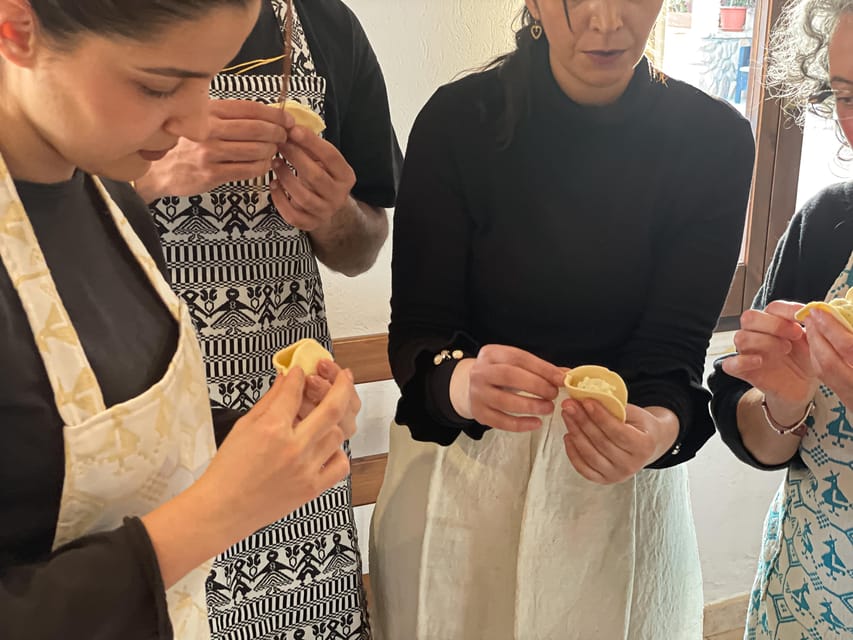
The courtyard is more than a pleasant backdrop. It changes the tone of the class. A traditional Sardinian home offers a glimpse of domestic space and local hospitality that you do not get from a standard restaurant or cooking school.
The setting also suits the subject. Culurgiones, panadas, breads, and filled pastries are foods with strong links to household preparation. Learning them in a home courtyard feels more connected to their roots than seeing them produced behind a commercial kitchen counter.
You should come expecting a social experience. The hosts are part of the appeal, and the shared meal creates time for conversation. The class is especially well suited to people who enjoy meeting local cooks, learning through their hands, and sitting down for a long tasting after the practical work is finished.
At the same time, the home setting may not suit someone looking for a polished, formal culinary school. The attraction here is warmth and local character, not restaurant-style presentation. That is a fair trade if you value personal contact more than technical showmanship.
Three Hours Well Spent in Cagliari
The class lasts three hours, with starting times available according to the date you choose. That makes it a manageable addition to a Cagliari itinerary. You will need to check the available start time when booking, since the schedule is not fixed in the supplied details.
Because the experience includes both instruction and a meal, allow the full three hours rather than planning something immediately afterward. Cooking by hand can take longer than expected, and the tasting deserves time of its own.
The group is limited to eight participants. That is small enough to keep the lesson personal without making the activity feel like a private class. Instruction is offered in Italian and English, so you should be able to follow the main steps in either language.
No transportation details are provided, so you should confirm the exact meeting point and plan your route separately. The setting is described as a traditional Sardinian house in the Cagliari area, but the available information does not specify a transfer service.
Who Will Enjoy This Class Most
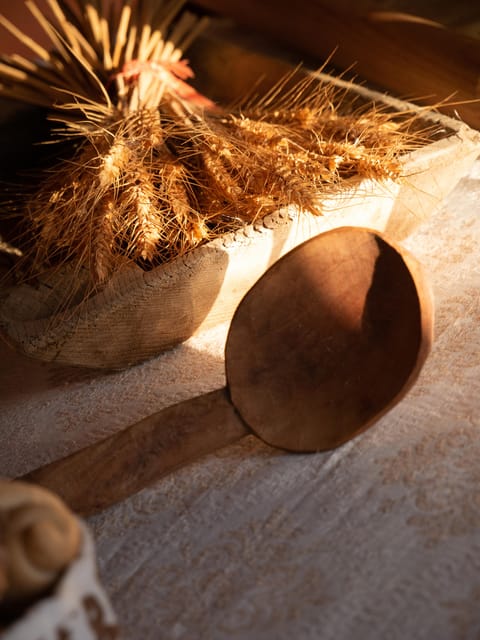
I would recommend this experience to anyone who sees food as a way to understand a place. It suits couples, families, friends, and solo visitors who are comfortable joining a small group and working with their hands.
It is also a good choice for people who want more than a restaurant meal. You will learn the process behind culurgiones, taste several regional specialties, and leave with pasta you made yourself. That combination gives the activity more lasting value than a simple tasting.
The class should appeal to pasta lovers, but you do not need advanced cooking skills. The lesson is designed around a traditional preparation, and the instructors guide you through the stages. The challenging fold may take practice, but that is exactly what makes it memorable.
I would not recommend it to anyone with gluten intolerance or lactose intolerance. Fresh pasta, cheese, and the wider tasting menu make those restrictions difficult to work around. The food is the heart of the activity, so book only if you can comfortably eat the dishes included.
Is $101.96 a Fair Price?
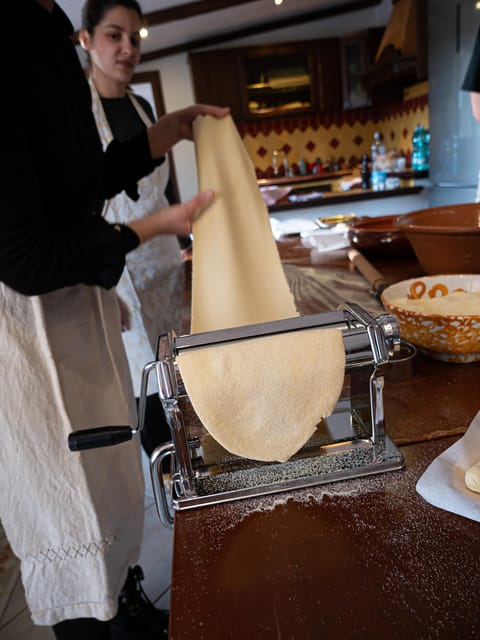
At $101.96 per person, this is not the cheapest way to eat in Sardinia. It is also more than the cost of ordering a plate of culurgiones in a restaurant. The comparison is not quite fair, though, because the price includes a three-hour lesson, food, drinks, instruction, and a substantial selection of local products.
The small group adds value. You are not paying for a large demonstration where your role is limited to watching. You take part in the preparation and receive the materials needed to make your own creations.
The food selection is another strong point. Alongside culurgiones, you sample cheeses, meats, breads, spreads, panadas, pratzidas, coccoi prena, and local wines. The exact serving quantities are not specified, but the range is broad enough to give you a useful taste of Sardinia beyond a single dish.
For me, the experience is worth considering if you want a cultural activity that also covers lunch or dinner. If you only want to learn one pasta technique and do not care about the meal or home setting, the price may feel high. If you value personal instruction and regional food, it is easier to justify.
You can also reserve now and pay later, which keeps your plans flexible. Free cancellation is available up to 24 hours in advance for a full refund. Those terms are useful when your Cagliari schedule is still taking shape.
Should You Book the Culurgiones Workshop?
I would book this class if you want a friendly, food-centered introduction to Sardinia. The strongest reasons are the traditional home setting, the small group, the patient instruction from Carlotta and Matteo, and the chance to eat the food you helped prepare.
The experience is especially appealing if you enjoy regional dishes in their everyday setting. You will practice the distinctive a sa spighitta fold, taste a broad group of Sardinian specialties, and take home your own handmade creations.
Skip it if gluten or lactose are problems, or if you prefer a fast sightseeing stop with little participation. For everyone else, this is a thoughtful choice in Cagliari, with enough practical cooking and local hospitality to make the afternoon memorable.
FAQ
How long does the Sardinian pasta workshop last?
The workshop lasts three hours. Starting times vary, so you should check availability for the date you want.
What pasta will I learn to make?
You will learn to prepare culurgiones, including the filling, fresh pasta dough, and the traditional a sa spighitta closure, shaped like a wheat ear.
Where does the cooking class take place?
The class takes place in the internal courtyard of a traditional Sardinian house.
Is food and drink included?
Yes. The experience includes the preparation of fresh pasta, food, and drinks. The tasting includes culurgiones, local cheeses, traditional panadas and pratzidas, coccoi prena, homemade bread, and local wines.
Can I take food home after the class?
Yes. All materials are provided, and each participant can take away their own typical Sardinian creations.
Is the workshop suitable for gluten or lactose intolerance?
No. The activity is listed as unsuitable for people with gluten intolerance and lactose intolerance.
Just added around Italy
- Verona: Tortellini Cooking Class and Lunch with Mamma Ivana★ 5.0 · 20 reviews
- Volterra: Fresh Pasta Cooking Class at a Tuscan Farmhouse★ 5.0 · 33 reviews
- Vicenza: Pasta & Tiramisu Cooking Class at a Local’s Home★ 5.0 · 5 reviews
- Verona: Pasta & Tiramisu Cooking Class at a Local’s Home★ 5.0 · 16 reviews
- Verona: Pasta Cooking Class with Wine Tasting★ 5.0 · 4 reviews
- Verona: My Granny’s secrets making gnocchi★ 5.0 · 7 reviews
- Venice: Share Your Pasta Love in a Local’s Home★ 4.8 · 20 reviews
- Verona: Prosecco and Pasta Making Class at a Local’s Home★ 5.0 · 10 reviews
Fresh Pasta Workshops, compared.
Pasta Making Class with Wine, Limoncello, and Dessert
Read our review →
Enjoy Spritz and Pasta Making in Piazza Navona
Read our review →
Pasta Making & Wine Tasting with Dinner in Frascati from Rome
Read our review →
The Secrets to Learn Fresh Pasta and Tiramisù in a Glam Home
Read our review →
Pasta Making with Wine Tasting and Dinner in Frascati
Read our review →
Browse the lists this tour appears in