
Review · LECCE
Lecce: Pasta Making Class in 1400s-Era Courtyard with Wine
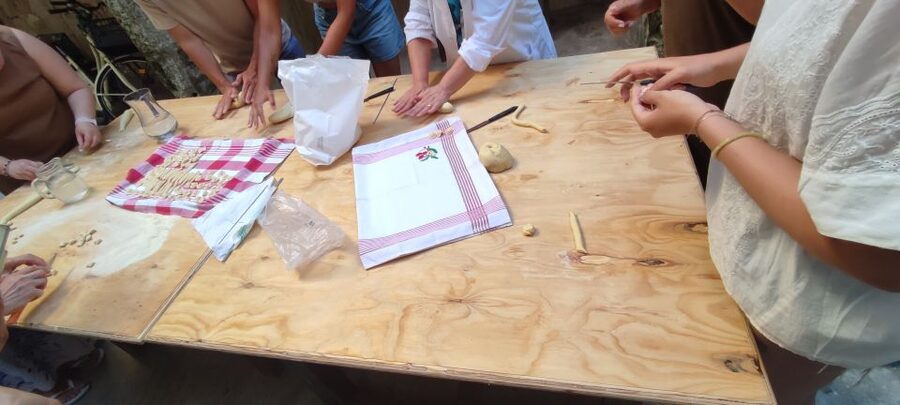
Pasta tastes better when you make it. This Lecce cooking class combines hands-on pasta making with an atmospheric courtyard at the Faggiano Archaeological Museum, right in the old town. You work with local cooks, shape traditional Apulian pasta, then sit down to eat what you made with wine.
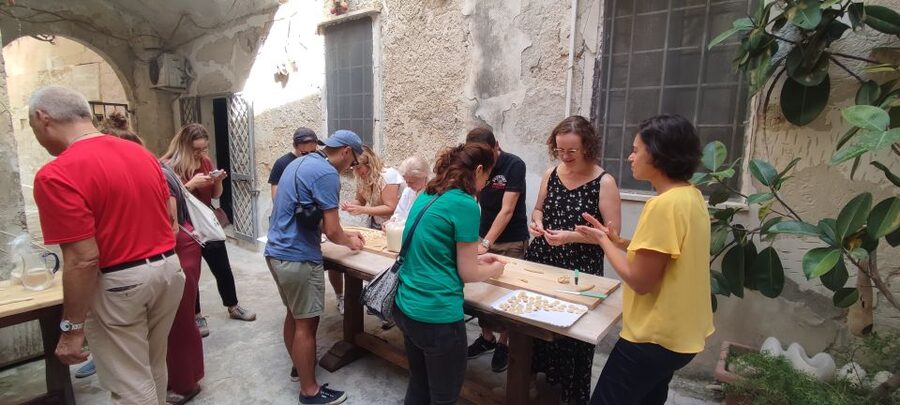
I like the setting most of all. Making pasta in a courtyard dating to the 1400s gives the evening a sense of place that a modern cooking studio cannot match. I also like the social format: you work around shared tables, meet people from several countries, and eat together afterward. The main drawback is group size. Classes can reach about 20 people, so the room may feel crowded, and the personal attention can vary.
The $68 price is fair for a 2.5-hour activity that includes instruction, equipment, pasta, wine, snacks, and a meal. Just remember that this is a group class, not a quiet private lesson. The pasta shapes look simple, but making them neatly takes more skill than many first-timers expect.
Key points at a glance
- A 1400s setting: The class takes place in a courtyard at the Faggiano Archaeological Museum on Via Ascanio Grandi 58.
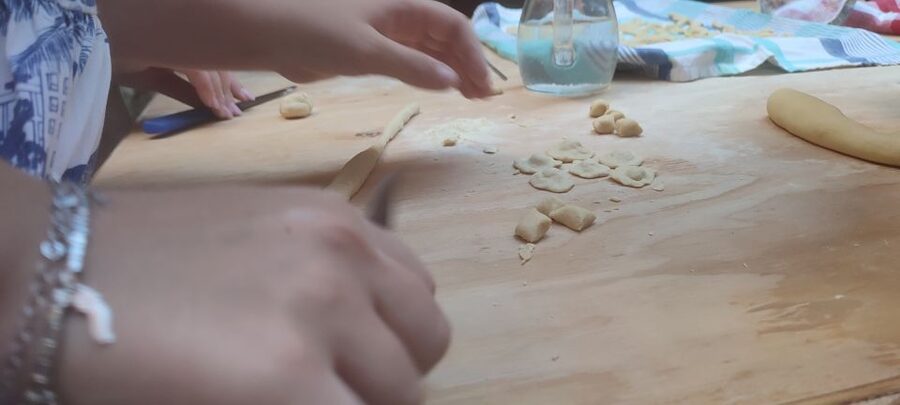
- Two traditional shapes: You learn to make orecchiette and sagne, with some participants also describing the second pasta as maccheroni.
- Local instruction: Italian cooks lead the practical work, with language support available in Italian, English, and French.
- Dinner is part of the lesson: After shaping the dough, you eat the pasta with wine and share the meal with the group.
- A social evening: The class is as much about conversation and meeting people as it is about technique.
- Good value at $68: Equipment, the professional cook, food, and wine are included. Transport is not.
Why this pasta class fits Lecce so well
Lecce is known for its pale stone buildings, Baroque churches, and lively old-town streets. Yet food gives you another way to understand Salento, the southern part of Puglia. Orecchiette is one of the region’s best-known pasta shapes, and it is made by hand from a simple mix of flour and water.
That simplicity is part of the lesson. You are not handed a complicated recipe with a long ingredient list. Instead, you learn how flour, water, pressure, and a small tool can become a familiar local pasta. It is a useful reminder that Apulian cooking is often built around a few basic ingredients and careful technique.
I like this kind of activity because you do not only eat a regional dish. You see how it is made, try the process yourself, and then taste the result while the method is still fresh in your mind.
The setting adds another layer. The class is held inside the Faggiano Archaeological Museum, where the courtyard dates from the 1400s. The museum itself is part of the Faggiano family story, and the location gives the evening a more personal feel than a standard commercial kitchen. You are cooking in a working historic space in the centre of Lecce, not being taken out to an anonymous venue on the edge of town.
More Fresh Pasta Workshops in Italy:
- Rome: Pasta Making Class with Wine, Limoncello, and Dessert
★ 4.9 · 3,177 reviews - Pastamania – Florence Pasta Making Class
★ 5.0 · 3,050 reviews - Enjoy Spritz and Pasta Making in Piazza Navona
★ 5.0 · 1,681 reviews
Arriving at Via Ascanio Grandi 58
The meeting point is directly at the Faggiano Archaeological Museum, at Via Ascanio Grandi 58. You need to arrange your own way there because transport is not included. Since the museum is in central Lecce, this works best as an evening activity added to a day spent exploring the old town.
Bring your passport or identity card. The class runs rain or shine, so the weather does not change the basic plan. Since the cooking takes place in a historic courtyard, conditions may feel different from a purpose-built culinary school, particularly on a cool or wet evening.
Starting times vary, so check the available schedule when booking. The total duration is 2.5 hours, which gives the session enough time for instruction, shaping, cooking, and eating without taking over your entire evening.
Meeting the cooks and learning the dough
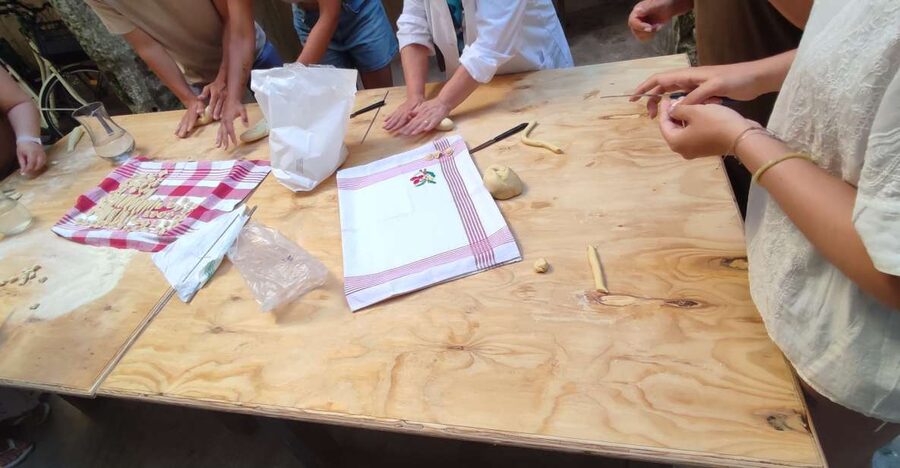
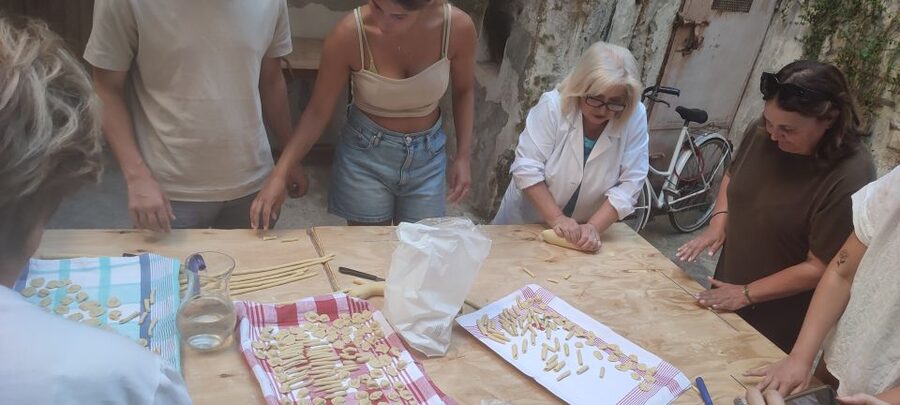
The class begins with a local cook showing you how to combine water and flour. You then follow along at your own place, using the supplied equipment. This is not a demonstration where you sit back and watch someone else do all the work. Your hands are involved from the start.
The instructors explain how to handle the dough and use the tools of the trade. Several instructors have been described as patient and willing to repeat the steps, while some also have a firm, old-fashioned approach. That can be useful. Pasta making is harder than it appears, and a cook who corrects your technique may help you produce a better result.
The class has featured cooks and guides such as Nonna Teresa, Luciana, Therese, and Enrica, though the exact teaching team may vary. Luciana has been praised for speaking several languages and for keeping the evening welcoming and clear for an international group. English, Italian, and French are supported.
Do not expect to make perfect pasta on your first attempt. Orecchiette requires you to shape a small piece of dough with the right pressure, then turn it into the characteristic ear-like form. The cooks make it look easy because they have done it many times. Your first pieces may be uneven, thick, or not quite the right shape. That is normal, and part of the fun is seeing your technique improve.
Making orecchiette and sagne by hand
Orecchiette is the main attraction. Its name refers to its small ear-like shape, and the finished pasta should have a shallow centre that can hold sauce. The class teaches the traditional hand movement rather than relying on a machine.
You also learn a second Apulian pasta. The activity describes it as sagne, while several people who took the class refer to the second shape as maccheroni. The important point is that you learn two different hand-forming techniques, not just one repeated exercise.
This section is where the activity earns its keep. A quick cooking demonstration might give you a nice photo, but working the dough teaches you why handmade pasta varies from one region to another. Small changes in pressure and shape affect the texture and the way sauce clings to it.
The instructors appear to keep an eye on quality while still making room for mistakes. Some people need a demonstration repeated. Others need a cook to adjust their hand position. If you want a polished private lesson, a group class may feel too loose. If you enjoy learning through practice and laughter, the format works well.
More Pasta Classes with Wine in Italy:
- Florence: Pasta Cooking Class with Unlimited Wine
★ 4.9 · 10,285 reviews - Florence: Pasta & Tiramisu Cooking Class with Unlimited Wine
★ 4.9 · 6,708 reviews - Florence: Pasta Cooking Class with Unlimited Wine
★ 5.0 · 6,413 reviews - Rome: Pasta & Tiramisu Class with Fine Wine by the Vatican
★ 4.9 · 4,852 reviews
From worktable to shared dinner
After the pasta is shaped, you do not simply leave with uncooked dough. The pasta is cooked and served to the group, usually with wine and light snacks while you wait. The meal is the reward for the work, but it also completes the lesson.
The food is generally served in a simple local style. One account describes the pasta with tomato and basil sauce, along with wine, dessert, and an appetiser. The emphasis is not on a formal restaurant menu. It is on eating fresh pasta you helped prepare, in the same place where you made it.
I like the shared meal because it turns a lesson into a social evening. You may arrive knowing only the people in your own booking, then end up talking with participants from several countries. The table format encourages conversation, and the wine helps the evening loosen up.
That said, the meal is part of a group event rather than an intimate dinner. If you want a slow, private meal with lots of space, this may not be the right choice. If you like meeting new people and do not mind sharing a table, the communal format is one of the strongest parts of the experience.
The atmosphere: warm, social, and sometimes crowded
The class has earned a 4.7 rating from 369 reviews, and the strongest pattern is clear: people value the friendly instructors, the beautiful setting, the hands-on work, and the meal afterward. The hosts are often described as warm, funny, and generous with their time.
A few details make the evening feel more personal. One session included local music while the pasta cooked. Another was described as feeling almost like visiting an Italian neighbour while family and friends came and went. You should not assume every class will include music or the same family members, but the setting can offer more character than a standard tourist workshop.
The tradeoff is space. Groups of around 20 have been reported, and some people felt a smaller class would allow more room and attention. Others found the larger group added to the mood and still felt well supported.
If you are shy about cooking in front of strangers, this may take a little adjustment. The good news is that nobody begins as an expert. The instructors are used to helping beginners, and the shared mistakes become part of the entertainment.
Is $68 good value?
At $68 per person, this is not the cheapest way to eat pasta in Lecce. You could have a restaurant meal for less, depending on the restaurant and what you order. But that comparison misses the main point.
The price includes a professional cook, the historic museum setting, cooking equipment, instruction, the pasta you make, wine, and the meal afterward. You are paying for an activity that occupies 2.5 hours, not just a plate of food.
I consider the price good value for first-time pasta makers, families, couples, and solo visitors who want an easy social evening. It is also useful for people who have already eaten plenty of pasta in Italy and want to understand the work behind it.
The value is weaker if you already make fresh pasta confidently or if you dislike group activities. In that case, much of the class may feel slow, and the crowd may limit how much one-to-one help you receive.
Who should book this Lecce experience?
This class suits you best if you want:
- A food activity in central Lecce
- A practical introduction to Apulian pasta
- A chance to meet people from different countries
- An evening with wine and a shared meal
- A historic setting with more atmosphere than a modern classroom
- An activity that works in rain or shine
Families can enjoy it too. A 2024 session included children aged 10 and 14 who liked the activity, though younger children may need help with the dough and shaping. The class is wheelchair accessible, which makes it a practical option for many visitors, though the historic setting may still call for checking personal access needs before arrival.
It is less suitable if you want a private lesson, a small chef-led workshop, or a quiet dinner. The group atmosphere is central to the experience, not a minor detail.
Booking advice and small practical details
You can cancel up to 24 hours before the activity for a full refund. The reserve-now, pay-later option lets you hold a place without paying immediately, which is useful when your Lecce schedule is still changing.
The class may be cancelled if the minimum number of participants is not reached. In that case, you are notified and refunded. That policy protects you from turning up for an activity that cannot run, but it is worth keeping in mind if you have only one free night in Lecce.
Wear something comfortable for working with flour and dough. The supplied information only requires a passport or identity card, but a relaxed outfit makes more sense than anything delicate or formal. Most important, arrive ready to work with your hands. The pasta does not shape itself.
Should you book the Lecce pasta class?
I would book this if you want a friendly, food-focused evening with real local character. The 1400s courtyard, the local cooks, the two pasta shapes, and the meal with wine make it feel like more than a standard cooking demonstration.
Book with realistic expectations. You may share the room with about 20 people, your first orecchiette may look odd, and the instruction may have a lively, sometimes stern Italian style. For many people, those small imperfections are exactly what make the night memorable.
If your ideal activity is hands-on, social, and connected to local food, $68 is a reasonable price. If you prefer privacy and polished restaurant service, choose dinner elsewhere and visit the museum on its own.
FAQ
Where does the pasta class take place?
The class takes place at the Faggiano Archaeological Museum at Via Ascanio Grandi 58 in central Lecce.
How long does the activity last?
The pasta-making experience lasts 2.5 hours.
How much does the class cost?
The listed price is $68 per person.
Which types of pasta will I learn to make?
You learn to make orecchiette and sagne. Some descriptions of the experience also refer to the second pasta as maccheroni.
Is food included after the lesson?
Yes. You eat the pasta made during the class after it is cooked, with wine. Snacks and, in some sessions, dessert are also part of the meal.
Are cooking equipment and ingredients included?
Cooking equipment is included in the package, along with instruction from a professional cook.
Which languages are available?
The instructors and guides support Italian, English, and French.
Is the class wheelchair accessible?
Yes, the activity is listed as wheelchair accessible. You should still consider your own access needs because the class takes place in a historic museum courtyard.
What should I bring?
Bring your passport or identity card.
What happens if the weather is bad?
The class takes place rain or shine.
Can I cancel the booking?
You can cancel up to 24 hours in advance for a full refund. The reserve-now, pay-later option is also available.
What happens if there are not enough participants?
If the minimum number of people is not reached, the course may be cancelled. You will be notified and refunded.
More Wine Tours in Italy
- Learn to Make Pasta & Tiramisu with Wine and Limoncello Included
★ 5.0 · 2,345 reviews - Florence: Cooking Class Pasta & Tiramisu Making Unlimited Wine
★ 5.0 · 2,234 reviews - Fettuccine & Tiramisù: Cooking Class with Wine & Limoncello
★ 4.9 · 2,103 reviews - Bologna Food & Market Tour with 6 Tastings, Pasta, Wines & More
★ 5.0 · 1,328 reviews
Just added around Italy
- Verona: Tortellini Cooking Class and Lunch with Mamma Ivana★ 5.0 · 20 reviews
- Volterra: Fresh Pasta Cooking Class at a Tuscan Farmhouse★ 5.0 · 33 reviews
- Vicenza: Pasta & Tiramisu Cooking Class at a Local’s Home★ 5.0 · 5 reviews
- Verona: Pasta & Tiramisu Cooking Class at a Local’s Home★ 5.0 · 16 reviews
- Verona: Pasta Cooking Class with Wine Tasting★ 5.0 · 4 reviews
- Venice: Share Your Pasta Love in a Local’s Home★ 4.8 · 20 reviews
- Verona: Prosecco and Pasta Making Class at a Local’s Home★ 5.0 · 10 reviews
- Verona: My Granny’s secrets making gnocchi★ 5.0 · 7 reviews
Pasta Classes with Wine, compared.
Pasta & Tiramisu Cooking Class with Unlimited Wine
Read our review →
Pasta & Tiramisu Class with Fine Wine by the Vatican
Read our review →
Pasta Making Class with Wine, Limoncello, and Dessert
Read our review →
Rome Cooking Class: Make Pasta and 3 Spritz Cocktails
Read our review →
Learn to Make Pasta & Tiramisu with Wine and Limoncello Included
Read our review →
Cooking Class Pasta & Tiramisu Making Unlimited Wine
Read our review →Browse the lists this tour appears in