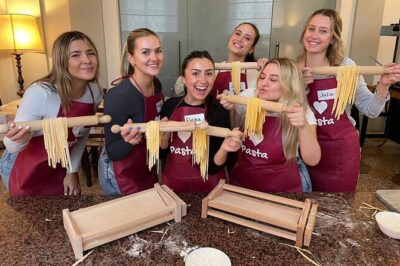
Review · ITALY
Matera: Pasta Cooking Class Old Farmer Style in a Sassi Cellar
Fresh pasta tastes better underground. In Matera, this three-hour private class takes place inside a Sassi cellar, where you learn to make Strascinate al tegamino, a traditional farmer-style dish. I like the hands-on pasta shaping and the chance to hear local stories from Cosimo and Lorenzo. The main consideration is that the meeting point can be difficult to find, so arrive early.
I also like the small group size, capped at eight people, and the use of local ingredients. The class feels more like a shared family meal than a fast cooking demonstration, with bruschetta and other dishes served alongside the pasta. Still, the experience is not suitable for people with celiac disease, and one reported missed start shows why confirming the meeting details matters.
Key points to know before you book
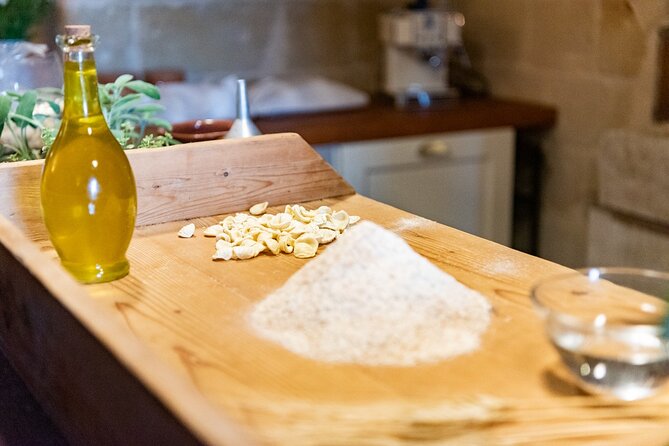
- Pasta shaped by hand: You learn to knead dough and form the ear-like pieces used for Strascinate al tegamino.
- A real Sassi setting: The class takes place in an ancient stone cellar at Recinto Santa Maria, 8.
- Local hosts with personal stories: Cosimo and Lorenzo connect the food to Matera, family life, and regional customs.
- More than one dish: Expect bruschetta and pasta, with some sessions also including pumpkin and bread stew.
- Private, small-group format: The maximum is eight people, which gives you room to ask questions and work at the table.
- Plan your arrival: The class starts at 10:30 am, and signage around the Sassi can be poor.
Cooking pasta inside Matera’s stone caves
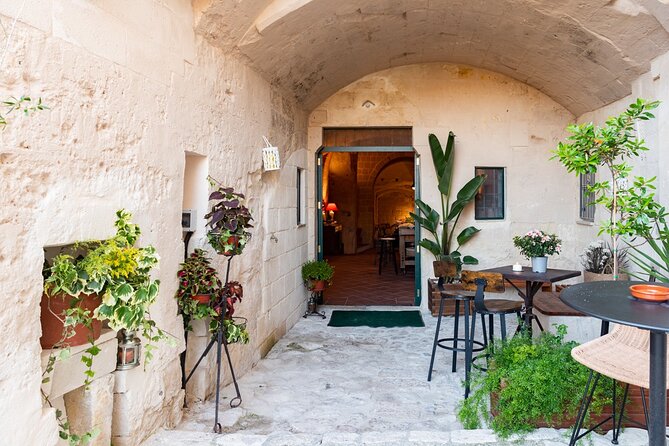
Matera is famous for its Sassi, a maze of homes, churches, lanes, and carved rooms cut into pale stone. This class uses that setting well. You are not simply cooking in a standard restaurant kitchen, then leaving with a recipe card. You are making food in a space tied to the old life of the city.
That setting gives the morning its real appeal. The cellar adds atmosphere, but it also gives the lesson a sense of place. Food traditions make more sense when you see the sort of homes and workspaces where families once prepared simple meals from local ingredients.
The class is offered in English and lasts about three hours, though the pace can stretch toward four hours when the group is enjoying lunch and conversation. That is useful to know if you have an afternoon train, guided tour, or timed museum visit. I would leave a generous gap afterward rather than treating the end time as exact.
The format is private, with no more than eight people. That matters here. Pasta making works best when you can see the chef’s hands, copy the movement, and ask for help when your first shapes look less like little ears and more like floury commas.
A few more classes around Italy worth a look
- Florence: Pasta Cooking Class with Unlimited Wine
★ 4.9 · 10,285 reviews - 3 in 1 Cooking Class near Navona: Fettuccine, Ravioli & Tiramisu
★ 5.0 · 7,376 reviews - Florence Pizza or Pasta Class with Gelato Making at a Tuscan Farm
★ 5.0 · 6,801 reviews
Meeting Cosimo and Lorenzo in the Sassi
Cosimo and Lorenzo are a major part of the experience. Their role goes beyond showing you how to mix flour and water. They talk about Matera, Southern Italian food, their own lives, and the history of the cave where the class takes place.
Their warm, informal style is one of the strongest reasons to choose this class. The atmosphere is described as relaxed rather than stiff, with plenty of conversation and laughter. For you, that means the morning can feel like a visit with local hosts instead of a formal lesson where everyone watches the clock.
The personal stories also help explain why certain foods matter. Southern Italian cooking often centers on modest ingredients, careful preparation, and dishes that feed a family. You hear that idea through the way the meal is presented, not just through a list of facts.
Families should find the format appealing. A 12-year-old enjoyed the experience, and younger cooks can take part in shaping pasta with help. The class has enough structure to keep children involved, but enough conversation to make it more than a short activity designed only for tourists.
The 10:30 am start at Recinto Santa Maria, 8
The meeting point is Recinto Santa Maria, 8, 75100 Matera MT, Italy. The activity begins at 10:30 am and returns to the same meeting point.
Give yourself extra time to locate the address. The Sassi has winding lanes, stone stairways, and uneven routes, and the signage has been described as poor. One unfortunate booking ended with the chef failing to appear and the group losing the morning, although the operator later apologized. That appears to be an exception rather than the usual pattern, but it is still sensible to save the meeting details and confirm them before setting out.
The area is near public transportation, which helps if you are not staying inside the Sassi. Even so, the final approach may take longer than expected. I would not arrive at 10:29 and hope to spot the entrance at once.
Service animals are allowed. The activity is not advised for people with celiac disease, so you should take that warning seriously rather than assuming substitutions will be available.
Bruschetta and the farmer-style table
The listed menu begins with bruschetta, a simple starter that puts the quality of the ingredients in view. Fresh bread, tomatoes, and good seasoning do not need much decoration. In a class focused on local cooking, that simplicity is part of the point.
The meal can include more than the basic menu suggests. The food served during one longer session included pumpkin and bread stew, along with hand-shaped pasta and tomato sauce. Another session featured fresh bread prepared in a regional way before moving on to bruschetta and the main course.
You should come hungry. The class is not only a lesson followed by one small tasting portion. It can become a long, generous meal, with the hosts cooking some courses and the group preparing others. If you prefer a quick demonstration and a single plate of pasta, this may feel slow. If you enjoy sitting down over several dishes, the extra time is part of the value.
The meal also gives you a better sense of everyday cooking in the region. You are not being shown a restaurant dish that requires rare equipment or hard-to-find products. The emphasis is on local produce, traditional methods, and food made for sharing.
Same kitchen, a different thing to make:
- Florence: Pasta & Tiramisu Cooking Class with Unlimited Wine
★ 4.9 · 6,708 reviews - Florence: Pasta Cooking Class with Unlimited Wine
★ 5.0 · 6,413 reviews - Rome: Pasta & Tiramisu Class with Fine Wine by the Vatican
★ 4.9 · 4,852 reviews - Rome: Pasta Making Class with Wine, Limoncello, and Dessert
★ 4.9 · 3,177 reviews
Making Strascinate al tegamino by hand
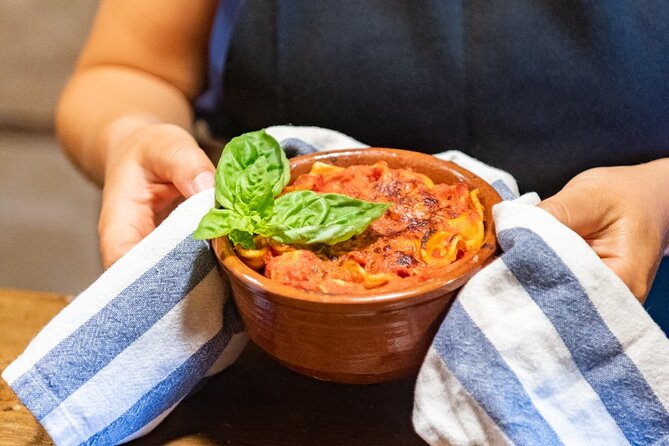
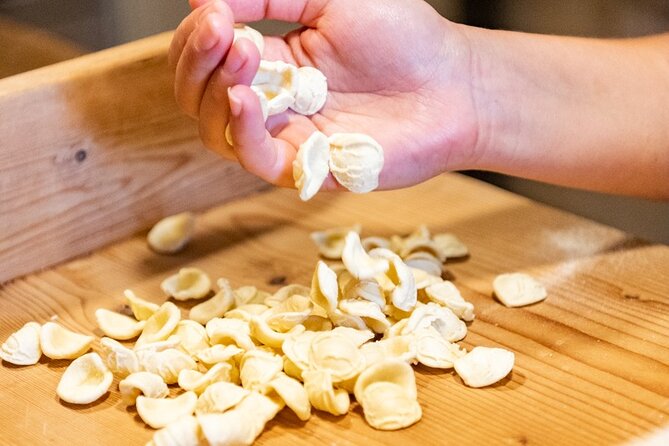
The central lesson is the preparation of Strascinate al tegamino, a traditional Matera dish associated with farmer and family cooking. The name refers to a pasta shape formed by hand, with a small ear-like appearance.
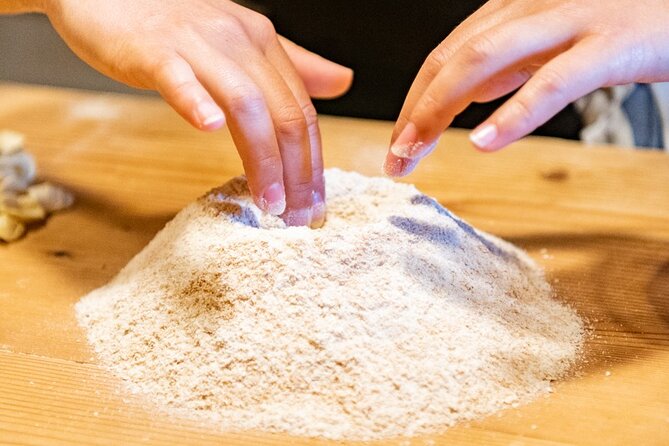
You begin with the dough. The chef shows you how to knead it, then how to portion and shape it. This is where the class becomes properly hands-on. You are not just watching a professional turn out perfect pasta. You get flour on your hands, try the movement yourself, and improve as you go.
The shape may look easy when the chef does it. Your first attempts may be uneven, which is normal and part of the fun. The small group helps because you can compare your progress with the people at your table and ask for another demonstration.
The pasta is served with tomato sauce in the traditional dish. The cooking process connects directly to the meal, so you can taste the result soon after making it. That gives the lesson a satisfying finish and helps you understand why the shape matters. Handmade pasta holds sauce differently from a smooth dried shape, and the final plate feels tied to the work you just did.
The chef also explains techniques passed down through generations. You learn not only what to do, but why a local family might prepare the dish this way. That distinction makes the class more useful than a generic pasta workshop.
Why the cave setting adds real value
Plenty of cooking classes take place in attractive rooms. This one uses the Sassi itself as part of the lesson. The ancient stone walls create a strong sense of place, and the cave is linked to a home and bed-and-breakfast, giving the space a lived-in quality rather than a staged restaurant feel.
The setting also connects the meal to Matera’s past. You can talk about the cave’s history while eating food rooted in farming and family life. The class does not turn into a full historical tour, but food and place are discussed together.
I would choose this experience for the cultural setting as much as for the pasta. If you only want to learn a technically precise recipe, a cooking school with a professional kitchen may be a better match. If you want to understand Matera through its food, the cave makes the morning more memorable.
The stone room may not offer the same polished comfort as a modern cooking studio. That is not necessarily a flaw, but it is worth keeping in mind. The appeal lies in authenticity and atmosphere, not sleek equipment or a fast, highly choreographed class.
What the $132.32 price includes in practical terms
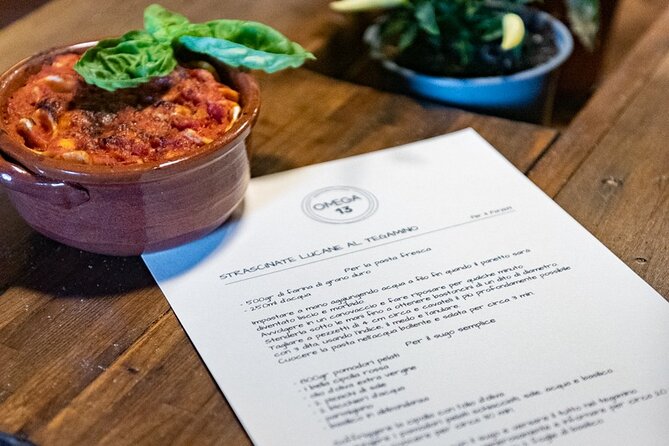
At $132.32 per person, this is not a cheap meal. You are paying for more than the ingredients, though. The price covers roughly three hours of instruction, a private group format, hands-on preparation, several food courses, and time with local hosts in a distinctive Sassi cellar.
The value is strongest if you treat it as a combined cooking class, lunch, and cultural visit. You get to eat bruschetta and handmade pasta, and the meal may include additional regional dishes. You also receive personal instruction rather than standing at the back of a large demonstration.
The price is less attractive if you are mainly looking for a quick plate of pasta. Matera has restaurants where you can eat for less, and a regular meal will take far less time. This experience earns its cost through the setting, personal contact, and chance to make the food yourself.
The group limit of eight helps justify the price. A crowded class can turn pasta shaping into a spectator activity. Here, you have a better chance to work directly with the dough and speak with the chef.
The experience has a 4.6 rating from 14 reviews, with 93 percent recommending it. That is a small sample, so I would not treat the number as a guarantee. Still, the repeated praise focuses on the same useful qualities: warm hosts, good food, local stories, and a relaxed pace.
Who will enjoy this class most
I would recommend it most strongly to:
- Couples who want a shared food activity with plenty of conversation
- Families with children interested in working with their hands
- Anyone who wants a local meal tied to Matera’s culture
- Pasta fans who enjoy learning traditional shapes
- Small groups looking for a private experience
- Visitors who value atmosphere more than a polished cooking studio
It may not suit you if you have celiac disease, need a tightly timed morning, or dislike informal meals that can run longer than planned. It is also less suitable if you want advanced culinary training. The focus is on tradition, participation, and hospitality rather than professional certification or complex restaurant technique.
The class works particularly well near the start of a Matera stay. What you learn about bread, pasta, caves, farming, and family meals can give you a better lens for the rest of the city. You may notice local foods differently after making one yourself.
Booking advice and cancellation terms
Confirmation is provided when you book, and the ticket is mobile, so you do not need a printed voucher. I would still keep the address and start time easy to access on your phone.
Free cancellation is available up to 24 hours before the 10:30 am start time. Canceling or changing the booking less than 24 hours ahead does not qualify for a refund, and the cut-off follows Matera local time.
Because the meeting point can be hard to locate, plan to arrive early. If you have trouble finding the entrance, contact the operator before the start rather than waiting until the class time has passed.
Should you book this Matera pasta class?
Book it if you want a slow, personal food experience in a setting that belongs to Matera. The strongest parts are the cave, the local hosts, the handmade pasta, and the stories that connect the meal to Southern Italian life.
I would skip it if you need a short, predictable activity or have strict dietary restrictions. For everyone else, the price is fair when you count the meal, the instruction, the small group, and the unusual setting. Just allow extra time to find Recinto Santa Maria and keep your afternoon schedule loose.
FAQ
Where does the pasta class take place?
The class takes place in a Sassi cellar in Matera. The meeting address is Recinto Santa Maria, 8, 75100 Matera MT, Italy.
What time does the experience start?
The class starts at 10:30 am.
How long does the class last?
The stated duration is about three hours. Some sessions can last closer to four hours when the meal and conversation continue at a relaxed pace.
What pasta will I learn to make?
You will learn to make Strascinate al tegamino, a traditional hand-shaped pasta with an ear-like form.
What food is served?
The sample menu includes bruschetta and Strascinate al tegamino. Additional dishes served during some sessions have included pumpkin and bread stew, fresh regional bread, and tomato sauce.
Is the class taught in English?
Yes. The experience is offered in English.
How many people can join?
The maximum group size is eight people. The experience is presented as a private class.
Is the class suitable for people with celiac disease?
No. The activity is specifically advised against for people with celiac disease.
Can I cancel for a full refund?
Yes. You can cancel at least 24 hours before the start time for a full refund. Cancellations or changes made less than 24 hours before the start are not refunded.
Just added around Italy
- Verona: Tortellini Cooking Class and Lunch with Mamma Ivana★ 5.0 · 20 reviews
- Volterra: Fresh Pasta Cooking Class at a Tuscan Farmhouse★ 5.0 · 33 reviews
- Vicenza: Pasta & Tiramisu Cooking Class at a Local’s Home★ 5.0 · 5 reviews
- Verona: Pasta Cooking Class with Wine Tasting★ 5.0 · 4 reviews
- Verona: Pasta & Tiramisu Cooking Class at a Local’s Home★ 5.0 · 16 reviews
- Venice: Share Your Pasta Love in a Local’s Home★ 4.8 · 20 reviews
- Verona: Prosecco and Pasta Making Class at a Local’s Home★ 5.0 · 10 reviews
- Verona: My Granny’s secrets making gnocchi★ 5.0 · 7 reviews
Italy Pasta Classes, compared.
3 in 1 Cooking Class near Navona: Fettuccine, Ravioli & Tiramisu
Read our review →
Florence Pizza or Pasta Class with Gelato Making at a Tuscan Farm
Read our review →
Pasta & Tiramisu Cooking Class with Unlimited Wine
Read our review →
Pasta & Tiramisu Class with Fine Wine by the Vatican
Read our review →
Pasta Making Class with Wine, Limoncello, and Dessert
Read our review →