
Review · ITALY
Monopoli: Parco Rurale Guided Tour with Pasta-Making Lab
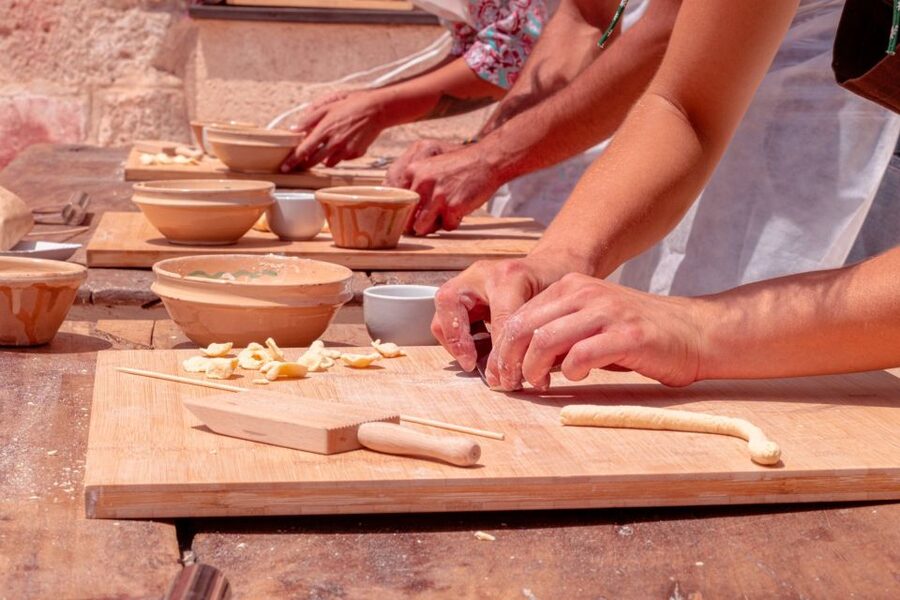
Pasta tastes better with a story. This 2.5-hour visit to Masseria Spina in Monopoli combines a guided walk through a fortified rural estate with a hands-on lesson in traditional Apulian pasta shapes. I like the mix of archaeology, architecture, food, and local customs. I also like the small group limit of 10, which gives you a better chance to follow the pasta lesson closely and ask questions. One point to note: the pasta is not normally cooked and eaten during the class, so this is a making workshop rather than a full meal.
The setting does much of the work. You move from a rupestrian settlement and necropolis to an underground olive press, citrus grove, fortified tower, and the red facade of Masseria Spina Grande. Guide Elaina has been praised for her clear explanations, while the pasta session has earned special praise for teaching three different shapes. At $71 per person, the price is fair if you value a guided cultural visit and practical cooking activity, but less attractive if you mainly want lunch.
Key points to know before booking
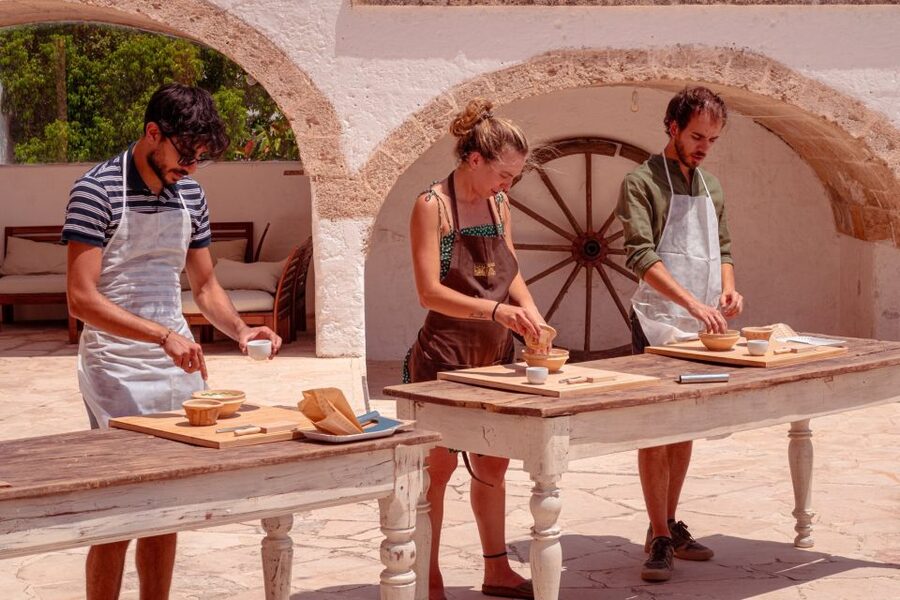
- Three kinds of Apulian pasta: The workshop teaches you how to shape typical local pasta from scratch, with ingredients supplied.
- A rare underground olive press: The walking tour includes an ancient oil-making space carved below ground.
- A striking red farmhouse: Masseria Spina Grande is the main architectural highlight, with a distinctive red exterior.
- More than a cooking class: You also see a necropolis, rupestrian settlement, church, tower, citrus grove, and dye works.
- Small-group format: The group is limited to 10 people, and tours are offered in English or Italian.
- Plan for a snack later: Food and drinks are not included, and the pasta is not generally cooked for immediate tasting.
Starting at Masseria Spina in Monopoli
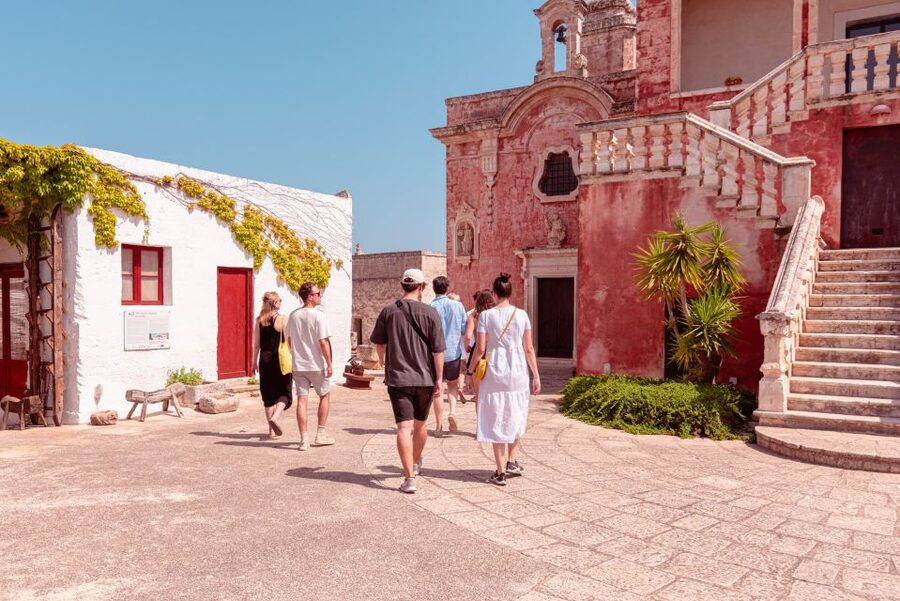
You meet your guide at Masseria Spina Resort in the Parco Rurale, a historical park used for tours, tastings, and other experiences. Hotel pickup and drop-off are not included, so you need to arrange your own way to the meeting point.
The first advantage here is focus. You are not being rushed through a large city attraction with a long list of dates and names. Instead, the guide leads you through one rural estate and explains how its religious, agricultural, defensive, and domestic parts fit together.
The tour lasts about 2.5 hours. That is long enough to make the visit feel substantial, but short enough to fit into a day exploring Monopoli and the nearby coast. Since the walking portion comes before the pasta lab, wear shoes that feel comfortable for a historical site rather than treating this as a restaurant appointment.
The small group size matters most during the cooking section. With no more than 10 participants, you should have room to watch the demonstration, copy the hand movements, and ask for help when your pasta starts looking less like a traditional shape and more like a tiny edible accident.
More Fresh Pasta Workshops in Italy:
- Rome: Pasta Making Class with Wine, Limoncello, and Dessert
★ 4.9 · 3,177 reviews - Pastamania – Florence Pasta Making Class
★ 5.0 · 3,050 reviews - Enjoy Spritz and Pasta Making in Piazza Navona
★ 5.0 · 1,681 reviews
Walking through the rupestrian settlement and necropolis
The historical walk begins with the rupestrian settlement. This kind of site gives you a different picture of Apulia from the grand churches and whitewashed towns usually featured in the region. The stone-cut spaces point to practical rural life and older forms of settlement.
The nearby necropolis adds another layer. It helps place the area in a much longer timeline, before the fortified farm buildings and later religious structures you see elsewhere on the route. The value of having a guide here is context. Without explanation, old stone remains can blur into one another. With a good guide, you get a clearer sense of how people used the area over time.
The Minor Church is another stop along the route. It is not presented as a separate grand attraction, and that is part of the appeal. The visit is about seeing the estate as a working collection of religious, agricultural, defensive, and residential spaces rather than ticking off one isolated monument.
The historical sections are best suited to you if you enjoy places that show daily life as well as formal architecture. If you want a long archaeological lecture or a major museum collection, this will feel lighter. The focus stays on the site itself and on the way local food traditions grew from this kind of rural setting.
Spina Piccola Tower and the defensive side of the estate
The Spina Piccola Fortified Tower is described as the first fortified structure on the property. It gives the walk a defensive angle, showing that Masseria Spina was not only a farm or country residence.
You can picture the logic of the place through its buildings. Agriculture provided the working base, while towers and fortified elements offered protection. Churches served local religious needs, and the larger farmhouse brought the estate’s functions together.
The tower is not treated as a standalone castle visit. Instead, it forms part of the route through the rural park. That makes it a good stop for visitors who want a sense of how Apulian estates developed over time, but it may feel modest if you are expecting a fully furnished fortress with a large interior tour.
The guide’s role is especially useful here. One past participant singled out Elaina for her explanations of the area’s history. The tour is offered in English and Italian, so you can choose the language that lets you follow the historical details without working too hard.
Citrus trees, dye works, and the old olive press
The internal citrus grove is one of the more pleasant parts of the walk. It adds a living agricultural element to the stone buildings and historic remains. This is not simply a route from one monument to another. You also see the plants and working spaces that helped make a rural estate productive.
The old dye works show another side of the property. They remind you that estates like this supported more than olive cultivation and food production. Processing, craft, and household work were all part of the local economy.
The underground olive press is likely to be one of the most memorable stops. Olive oil is central to Apulian cooking, and seeing the place where olives were processed connects the food on your plate to the older methods behind it. The underground setting also changes the mood of the walk. You leave the open grove and courtyards and enter a space built for practical work.
The tour does not promise an olive oil tasting as part of the standard inclusions, so you should not book this specifically for food sampling. What you do get is a closer look at the physical work behind one of Apulia’s defining ingredients.
More Guided Tours in Italy:
- From Taormina: Private/Guided Godfather with appetizer and Pasta
★ 5.0 · 233 reviews - Olbia: Traditional Pasta-Making Guided Workshop
★ 4.5 · 73 reviews - People of Bari unusual guided tour with pasta making at Grandma house
★ 5.0 · 54 reviews - Olbia: Sardinian Pasta-Making Guided Workshop
★ 5.0 · 51 reviews
Masseria Spina Grande and the Baroque church
The external facade of Masseria Spina Grande is a major visual stop. Its red color gives the main structure a strong identity, and the architecture provides the clearest image of the estate as a fortified farmhouse rather than an ordinary country house.
The tour focuses on the exterior facade, so keep your expectations in line with that. You are seeing the building as part of the wider historical park, not necessarily taking a room-by-room tour of the main structure.
The Baroque Church of the Immaculate Conception brings a later artistic period into the route. Its presence helps show how the estate changed and grew rather than remaining a single-period monument. The church, tower, farmhouse, and agricultural spaces work together to give you a compact lesson in Apulian rural architecture.
I like this part of the visit because it avoids treating food and history as separate subjects. The farmhouse explains the setting for local production. The church and defensive buildings explain the community around it. The citrus grove and olive press connect the site to ingredients you will handle later.
The pasta lab: shaping Apulia with your hands
After the walk, you move to the guided pasta-making workshop. Ingredients are included, and the guide takes you through the process of making typical Apulian shapes.
This is a practical class rather than a cooking demonstration you watch from a distance. You roll up your sleeves, work the dough, and learn how small changes in pressure and shape affect the result. That hands-on part is what gives the activity its value. You leave with a skill you can try again at home, not just a photograph of someone else preparing food.
One participant particularly enjoyed learning three different pasta shapes from scratch. That detail gives you a useful idea of the class: it is not limited to a single simple form. The exact shapes may vary with the lesson, but the goal is to introduce you to the local pasta tradition through several characteristic designs.
The guide and chef are important here. A good pasta class needs more than ingredients. You need someone who can show the motion slowly, correct your technique, and explain why the shape matters. The small group helps, since the instructor can give more direct attention than in a large workshop.
The pasta-making session is also a good choice for families, couples, and anyone who prefers doing something active. It is less suited to you if your main goal is a sit-down meal or a formal culinary tasting.
What happens to the pasta afterward?
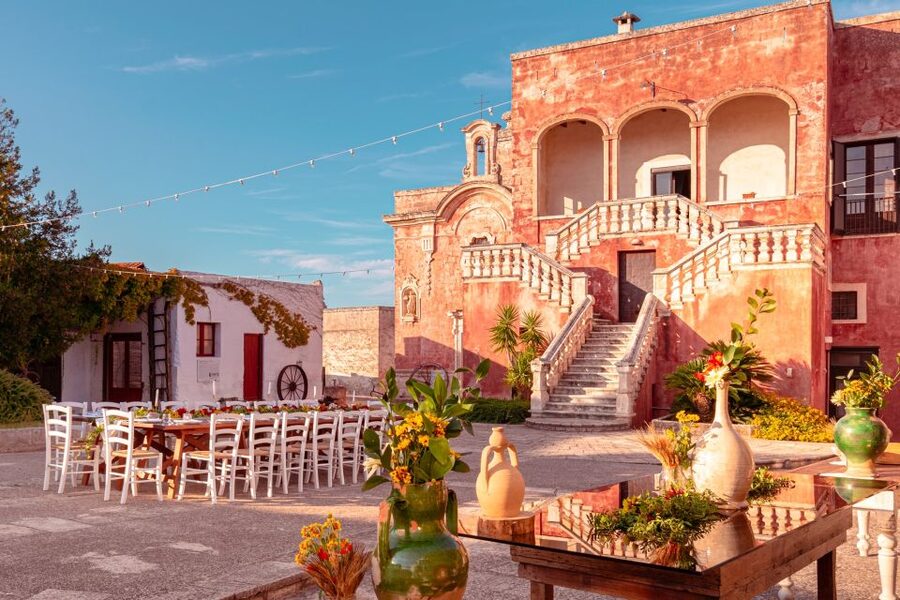
This is the main point to understand before paying. The experience includes a pasta lab, but food and drinks are not included, and the pasta is not generally cooked and served for you at the end.
A past participant was pleased to take the finished pasta shapes home to taste the next day. That can be a nice bonus, especially if you have access to a kitchen during your stay. But you should not assume that you will eat the pasta immediately at Masseria Spina.
The difference matters when you compare the $71 price with a restaurant-based cooking class. Some classes include a shared meal, wine, or a tasting menu. This one puts more weight on the historical walk and the practical lesson. If you want a meal, plan one separately after the tour.
Another participant noted that not being able to cook and eat the pasta was the only real disappointment in an otherwise well-organized visit. I would treat that as a clear planning tip rather than a flaw that ruins the activity. Go for the process, the setting, and the pasta you can potentially take away, not for lunch.
Is $71 a fair price?
At $71 per person, the cost covers the historical park entry, a guided walking tour, ingredients, and the guided pasta lab. You are paying for two connected activities, not just a short cooking lesson.
The value is strongest if you would otherwise pay separately for a site visit and a food workshop. The setting adds something that a standard kitchen classroom cannot provide, while the guide ties the estate’s agriculture and architecture to the food you prepare.
The value is weaker if you already have a full day of historic sites planned or if you mainly want a generous meal. Food and drinks are extra, and the tour does not replace dinner.
The 4.9 rating from 13 reviews suggests strong satisfaction, though the sample is small. The praise focuses on the beautiful grounds, the clear guiding, the well-run pasta lesson, and the chance to learn several shapes. One participant called the experience good value for the time and professional instruction, while another simply found the setting and activity enjoyable from start to finish.
Who should book this Monopoli experience?
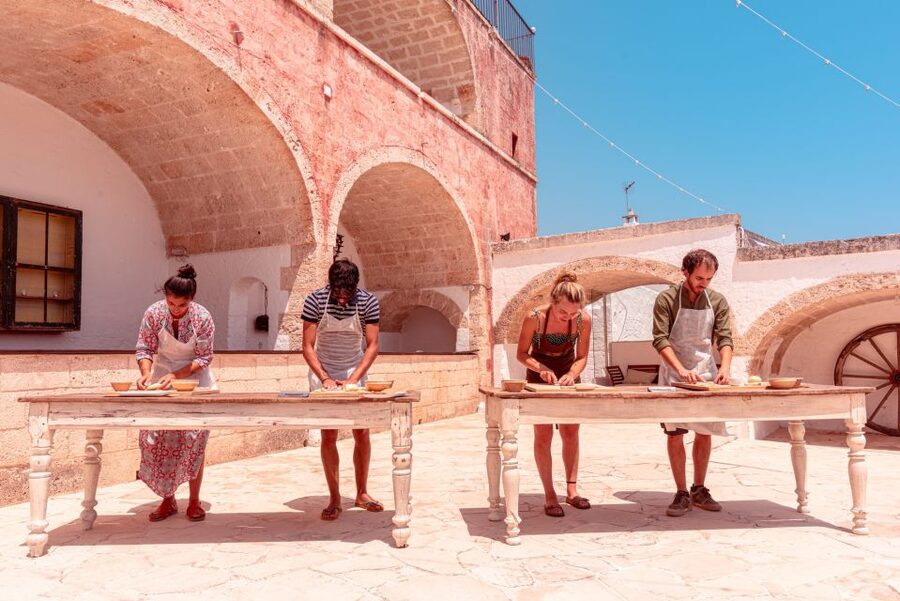
I would recommend this tour to you if you want a relaxed way to connect Apulian food with the place where it developed. It suits curious first-time visitors, couples, families, and small groups who enjoy a little history before lunch or dinner.
It is also a good choice if you prefer a small group. The limit of 10 participants should make the class easier to follow, and the English or Italian guide gives you a clear route through the site.
You may want to skip it if you have limited time in Monopoli and want only the town center, or if your priority is eating freshly cooked pasta during the activity. You should also budget for your own transport to Masseria Spina and for food afterward.
The best approach is to treat the tour as a half-day cultural activity. Take in the rupestrian remains, tower, citrus grove, olive press, red farmhouse, and church. Then enjoy the satisfaction of making your own pasta, even if the final cooking happens later.
Practical details for a smooth visit
The experience includes admission to Parco Rurale’s historical park, so you do not need to arrange a separate entry ticket. You meet at Masseria Spina Resort, and hotel transportation is not provided.
Starting times vary, so check availability for your chosen date. You can cancel up to 24 hours in advance for a full refund, and the reserve-now, pay-later option gives you some flexibility while arranging your Apulia itinerary.
The tour is offered in English and Italian. Since the group is capped at 10 people, I would choose this over a much larger food class if you care about personal instruction.
Bring an appetite for the lesson, not necessarily for a meal. Since the pasta is not normally cooked and served, you may want to plan a restaurant stop afterward.
Should you book the Masseria Spina pasta tour?
Yes, if you want more than a cooking class. The strongest part of this experience is the combination of place and food: you see the rural estate, learn how its buildings worked, and then handle one of the region’s best-known traditions yourself.
Book it with realistic expectations. You are not buying a full lunch, an olive oil tasting, or an extensive museum visit. You are buying a focused walk through Masseria Spina and a friendly, practical introduction to Apulian pasta.
For $71, that is a solid deal for anyone who values local history, small groups, and hands-on activities. If you can arrange your own transport and do not mind cooking the pasta later, this is an easy addition to a Monopoli itinerary.
FAQ
How long does the Masseria Spina tour last?
The experience lasts 2.5 hours, including the historical walking tour and the guided pasta-making lab.
Where is the meeting point?
You meet your guide at Masseria Spina Resort in Parco Rurale, Historical Tour, Tasting & Experiences.
Is hotel pickup included?
No. Hotel pickup and drop-off are not included.
What languages are available?
The live tour guide is available in English and Italian.
Is food included in the price?
No. The price includes the pasta lab ingredients and guided instruction, but food and drinks are not included.
Will I cook and eat the pasta during the class?
The tour data does not include cooking and eating the pasta as part of the activity. Some participants have taken their pasta shapes home to taste later, so you should plan on the workshop being a preparation lesson rather than a meal.
Just added around Italy
- Verona: Tortellini Cooking Class and Lunch with Mamma Ivana★ 5.0 · 20 reviews
- Volterra: Fresh Pasta Cooking Class at a Tuscan Farmhouse★ 5.0 · 33 reviews
- Vicenza: Pasta & Tiramisu Cooking Class at a Local’s Home★ 5.0 · 5 reviews
- Verona: Pasta & Tiramisu Cooking Class at a Local’s Home★ 5.0 · 16 reviews
- Verona: Pasta Cooking Class with Wine Tasting★ 5.0 · 4 reviews
- Venice: Share Your Pasta Love in a Local’s Home★ 4.8 · 20 reviews
- Verona: Prosecco and Pasta Making Class at a Local’s Home★ 5.0 · 10 reviews
- Verona: My Granny’s secrets making gnocchi★ 5.0 · 7 reviews
Fresh Pasta Workshops, compared.
Pasta Making Class with Wine, Limoncello, and Dessert
Read our review →
Enjoy Spritz and Pasta Making in Piazza Navona
Read our review →
Pasta Making & Wine Tasting with Dinner in Frascati from Rome
Read our review →
The Secrets to Learn Fresh Pasta and Tiramisù in a Glam Home
Read our review →
Pasta Making with Wine Tasting and Dinner in Frascati
Read our review →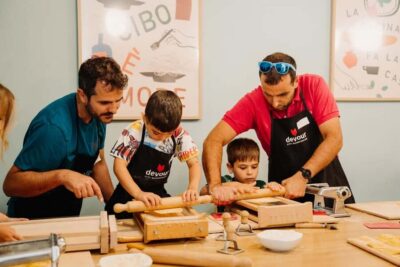
Browse the lists this tour appears in