
Review · ROME
Pastamania in Rome
Rome tastes better when you make dinner. Pastamania turns a central Rome stop into a hands-on lesson in ravioli, tortelli, and fettuccine, held inside historic Palazzo Grazioli near the Pantheon and Piazza Venezia. I like the practical format: you knead, roll, shape, cook, and eat your own pasta rather than simply watch a chef. I also like the warm social side, with instructors such as Christian, Fabrizio, Giorgio, Luca, and Sofia keeping the room relaxed and cheerful.
The main consideration is group size. The experience is advertised for a maximum of 10 people, yet some individual accounts describe classes of 12 or even larger groups. That may not ruin the fun, but it can affect how much one-to-one help you receive. The class also requires hands-on work and is not suitable for people with limited mobility.
Key points at a glance
- Three pasta shapes in one class: Prepare ravioli, tortelli, and fettuccine from flour and eggs.
- Central Rome setting: Meet at Palazzo Grazioli on Via della Gatta, a short walk from the Pantheon and Piazza Venezia.
- A meal is included: Eat the pasta you make with tomato, butter, sage, and truffle oil flavors, followed by chocolate salami.
- Friendly teaching style: Christian, Fabrizio, Giorgio, Luca, Ricardo, Sofia, and other instructors are praised for patience, humor, and clear demonstrations.
- Good for mixed ages: Families, couples, solo participants, friends, students, and work groups can all take part.
- Plan for a full three hours: This is a relaxed activity with cooking, eating, conversation, and drinks, not a quick demonstration.
Making pasta inside Palazzo Grazioli
The class begins at Palazzo Grazioli, Via della Gatta 14, in central Rome. You are only a few minutes from major sights, so it fits neatly into a day spent around the Pantheon, Piazza Venezia, or the historic center.
The setting matters. You are not being sent out to a distant cooking school on the edge of town. You can pair the class with a morning at the Roman Forum, an afternoon around the Pantheon, or an evening walk through the old center. Since the activity ends where it starts, you do not need to arrange a second pickup point or find your way across town after a filling meal.
Inside, the mood is meant to feel more like a shared Italian kitchen than a formal culinary academy. You receive an introduction to pasta-making, then get to work. The point is not just to hear how fresh pasta works. You handle the dough yourself, learn how it changes under your hands, and see how different shapes come from the same basic ingredients.
That makes this a good choice if you want an activity that gives you something to take home besides photographs. Several people say they left feeling able to make pasta in their own kitchens. The instructor also shares practical advice on preparing and storing pasta, which adds value beyond the meal itself.
Other pasta classes people book in Rome:
- 3 in 1 Cooking Class near Navona: Fettuccine, Ravioli & Tiramisu
★ 5.0 · 7,376 reviews - Rome: Pasta & Tiramisu Class with Fine Wine by the Vatican
★ 4.9 · 4,852 reviews - Rome: Pasta Making Class with Wine, Limoncello, and Dessert
★ 4.9 · 3,177 reviews
Three pasta shapes, three useful lessons
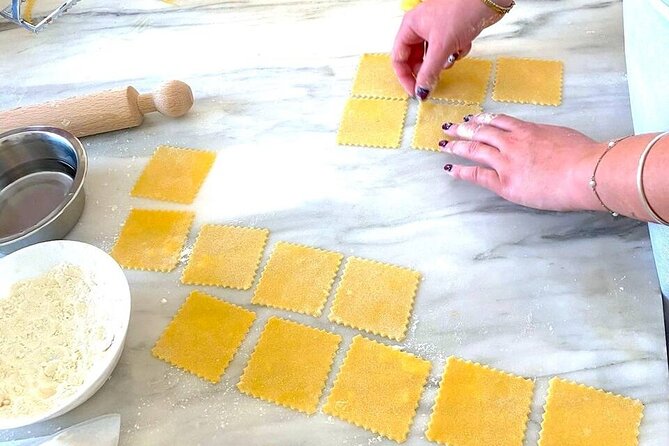
The first major part of the class focuses on making the dough. You begin with flour and eggs, then knead until the mixture becomes workable. This is the part where the instructor’s patience helps, especially for children or first-time cooks. The dough may look simple, but the feel matters, and a live demonstration is more useful than a recipe alone.
Next comes rolling and shaping. You work on three types of pasta:
- Ravioli
- Tortelli
- Fettuccine
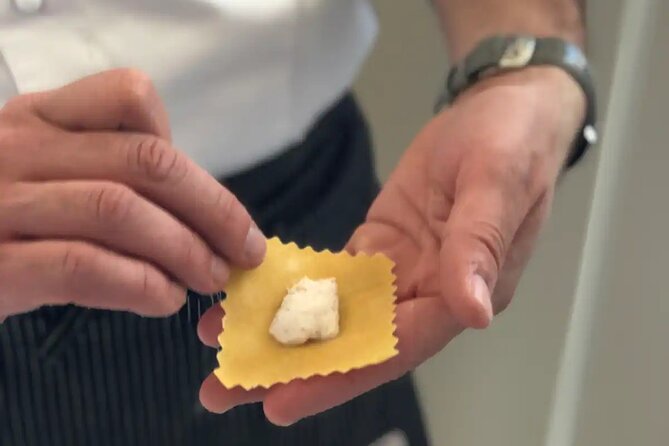
Ravioli and tortelli teach you how to fill, seal, and cut stuffed pasta without letting the filling escape. Fettuccine gives you a different task, turning the sheet into long ribbons. Making all three gives the lesson variety and keeps the class from becoming repetitive.
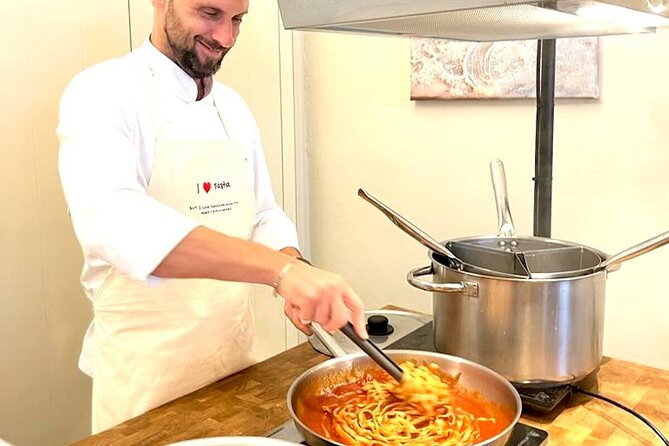
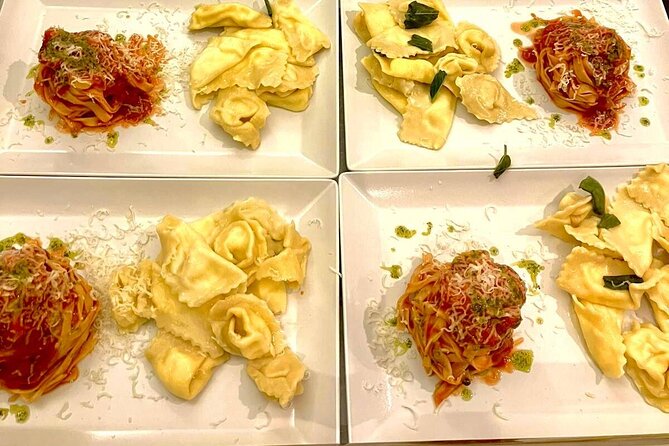
The fillings and sauces also show how a few ingredients can make a satisfying meal. One sample menu includes ravioli with Parmigiano and ricotta, truffle oil, and butter with sage. The tortelli uses Parmigiano, ricotta, and nutmeg, again served with butter and sage. Fettuccine comes with tomato sauce.
You should not expect to prepare every part of the meal from scratch. The real focus is the fresh pasta, while the instructor handles or demonstrates the sauces. That is sensible in a three-hour class. Otherwise, you could spend the whole session waiting for ingredients to cook rather than learning the skills that make the experience special.
The meal at the long communal table
After the cooking, everyone sits down to eat. This is more than a quick taste at the counter. The experience ends with a shared meal, conversation, and the chance to try all three pasta preparations.
The food receives unusually strong praise. The handmade pasta is served in generous portions, and several people describe it as among the best pasta they ate in Rome. That is a useful distinction. Some cooking classes give you a small plate that feels like a sample. Here, you should plan for a proper meal and arrive hungry.
Wine and soft drinks are included in some class arrangements described by participants, along with limoncello and dessert. Chocolate salami is listed as the dessert, and biscuits may also be served. The exact extras can vary, so I would treat the pasta, dessert, and social meal as the core offering rather than count on every additional item.
The shared table is a large part of the appeal. You may be seated with couples, families, solo participants, local Romans, or people from other countries. That can make the evening feel easy and social, especially if you are traveling alone. It also means this is not the best pick if you want a private dinner or a quiet lesson with no interaction.
Instructors who make the difference
The teaching style is one of the strongest parts of Pastamania. Christian is repeatedly praised for energy, humor, and a friendly manner that feels more like learning with an entertaining relative than attending a stiff cooking lecture. He has also handled groups that included grandparents in their 80s, adults, and children.
Fabrizio is praised for being patient, engaging, and clear. He has worked well with families, including a nine-year-old child, and shares useful tips for making pasta at home. Giorgio receives similar praise for easy demonstrations, generous portions, humor, and a relaxed approach.
Other instructors named in the feedback include Luca, Ricardo, Sofia, Martina, and Arianna. Luca is described as welcoming and helpful with families, including a late-arriving participant. Ricardo brings pasta and wine knowledge into the lesson, while Sofia mixes instruction with light humor. Arianna is praised for her gentle teaching and the quality of the food.
You cannot choose your instructor from the details provided, so do not book solely because you hope for one particular name. The broader pattern is more important: the teaching aims to be friendly, patient, and practical. That makes the experience approachable for people who have never rolled pasta before.
Same kitchen, a different thing to make:
- Rome Cooking Class: Make Pasta and 3 Spritz Cocktails
★ 5.0 · 2,937 reviews - Rome: 3-in-1 Fettuccine, Ravioli, and Tiramisu Cooking Class
★ 4.9 · 2,704 reviews - Rome: Fettuccine Pasta Cooking Class in Rome’s City Center
★ 4.8 · 2,414 reviews - Learn to Make Pasta & Tiramisu with Wine and Limoncello Included
★ 5.0 · 2,345 reviews
Is three hours a good use of Rome time?
Three hours is long enough to learn, cook, eat, and meet the people at your table. I see that as a strength, especially if you want more than a staged photo opportunity. You have time to make mistakes, try again, and understand the difference between the pasta shapes.
The tradeoff is obvious: three hours is a significant block in a short Rome visit. If you have only one day in the city and are trying to fit in the Colosseum, Vatican Museums, Pantheon, and Trevi Fountain, this class may feel like a large commitment.
For most people, the best slot is late afternoon or evening. You can spend the day sightseeing, arrive ready for dinner, then walk through central Rome afterward. Since the meal can be filling, avoid eating a large lunch immediately before the class. One participant’s advice is especially practical: come hungry.
The class is offered in English, which makes the instructions accessible to English-speaking visitors. Confirmation arrives at booking, but the minimum number of participants must be met. If that number is not reached, the provider may contact you to reschedule or arrange a full refund. Keep an eye on messages before the activity because times can change.
What $49.58 buys you
At $49.58 per person, the price is fair if you value both the lesson and the meal. You are paying for roughly three hours of instruction, the ingredients, three fresh pasta preparations, sauces, dessert, and the social setting. You also get a central location that saves time and transport costs.
The value is strongest for anyone who would otherwise pay for a central Rome dinner but wants an activity attached to it. You are not simply eating pasta. You are learning a method you can repeat at home, from mixing dough to shaping stuffed pasta.
The price may feel less attractive if you dislike group activities or already cook fresh pasta regularly. In that case, the novelty may wear off before the meal. It is also worth confirming the final group size if personal instruction is important to you, since the advertised maximum of 10 does not match every group size described in individual accounts.
Still, the overall package offers more than a standard restaurant meal. You get dinner, a lesson, and a chance to meet people in a memorable setting. For Rome, that is a sensible use of the money.
Who will enjoy this most?
Pastamania fits a wide range of people. Couples can treat it as a relaxed dinner date, while families get an activity that gives children a role beyond following adults through museums. One nine-year-old participant worked successfully with the instructor, and teenagers have also enjoyed the class.
It works for solo visitors too. The shared table gives you a natural way to talk with other people, without the awkwardness of trying to join a private group. Friends can make an evening of it, and corporate teams or student groups can use the class as a social activity.
This is also a good option for different generations traveling together. The feedback includes a group with grandparents in their 80s, adult children, and a spouse, all enjoying the same lesson. The work is active, but it is not presented as a high-pressure professional course.
You should think twice if you have limited mobility, use crutches, or need an accessible cooking space. The activity is specifically described as unsuitable for people with limited mobility. Service animals are allowed, and the location is near public transportation.
Small practical details that affect your choice
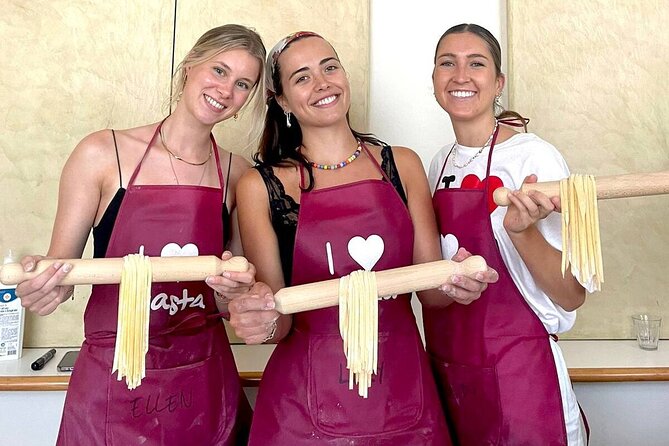
Bring a working appetite, but do not arrive stuffed. You will make three types of pasta and then eat them, so the food is a major part of the three-hour schedule.
Wear clothes you can work comfortably in. The class involves kneading, rolling, and shaping dough, so you should expect to use your hands rather than sit and watch. The activity is offered in English, and the small-group design is intended to allow personal help.
The meeting point is Palazzo Grazioli, Via della Gatta 14, Rome. The activity ends at the same address. Use a map before you leave your hotel because central Rome streets can be confusing, even when the destination is close to a famous sight.
Mobile ticketing keeps the arrival simple. You receive confirmation at the time of booking. If your plans change, cancel at least 24 hours before the start time for a full refund. Within 24 hours, you do not receive a refund, and changes are not accepted.
Should you book Pastamania in Rome?
I would book this class if you want a meal that also teaches you something. The strongest reasons are the hands-on work, the chance to make three pasta shapes, the central location, and the instructors’ friendly approach. Christian, Fabrizio, Giorgio, Luca, and the other teachers are praised for making beginners feel comfortable, and the finished food seems to be a real part of the value rather than an afterthought.
I would skip it if you need a private lesson, have strict mobility needs, or have too little time for a three-hour activity. I would also confirm the expected class size if close instruction matters to you.
For most families, couples, solo visitors, and food-minded friends, this is one of the better ways to spend an evening in Rome. You leave with a full stomach, a few new skills, and a story that is more personal than another restaurant reservation.
FAQ
Where does Pastamania take place?
The experience starts and ends at Palazzo Grazioli, Via della Gatta 14, 00186 Rome, Italy.
How long does the pasta class last?
The activity lasts approximately three hours.
What pasta will I make?
You will prepare ravioli, tortelli, and fettuccine.
What food is served?
The sample menu includes ravioli with Parmigiano, ricotta, and truffle oil, tortelli with Parmigiano, ricotta, and nutmeg, fettuccine with tomato sauce, and chocolate salami for dessert.
Is the meal included?
Yes. After making the pasta, you gather around a communal table and eat the food prepared during the class.
Is the experience offered in English?
Yes. The experience is offered in English.
How many people can join the class?
The listed maximum is 10 participants. A minimum number is also required for the class to operate.
Is the activity accessible to people with limited mobility?
No. The experience is not suitable for people with limited mobility, including people using crutches. Service animals are allowed.
Can I cancel for a refund?
Yes. You can receive a full refund if you cancel at least 24 hours before the local start time. Cancellations within 24 hours are not refunded.
Just added around Rome
- Spritz and Pasta! Spritz, Fettuccine & Tiramisù★ 5.0 · 2 reviews
- Top Class in Fettuccine, Ravioli, and Tiramisu★ 5.0 · 7 reviews
- Rome: Pasta and tiramisu class with wine pairing at Come Na Vorta★ 5.0 · 30 reviews
- Trastevere Food Tour with Pasta-Making Class★ 5.0 · 5 reviews
- The Original Fettuccine Alfredo Experiences in Roma★ 4.5 · 38 reviews
- Traditional Pasta Cooking Class with Tiramisu Small Group★ 5.0 · 7 reviews
- Italian Pasta & Dessert Class in Historic Center (3-Course Meal)★ 5.0 · 2 reviews
- The Pasta Factory Class★ 4.5 · 21 reviews
Rome Pasta Classes, compared.
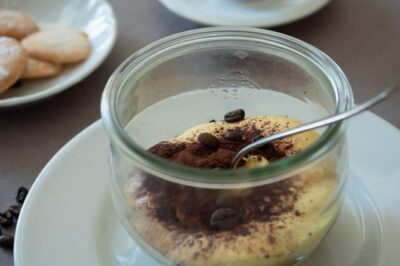
3 in 1 Cooking Class near Navona: Fettuccine, Ravioli & Tiramisu
Read our review →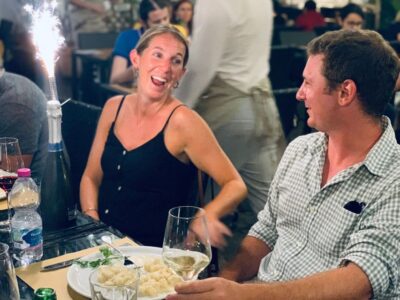
Pasta & Tiramisu Class with Fine Wine by the Vatican
Read our review →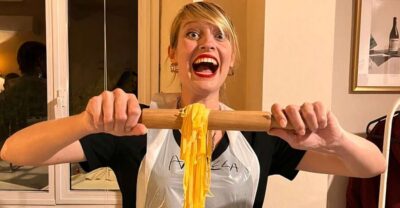
Pasta Making Class with Wine, Limoncello, and Dessert
Read our review →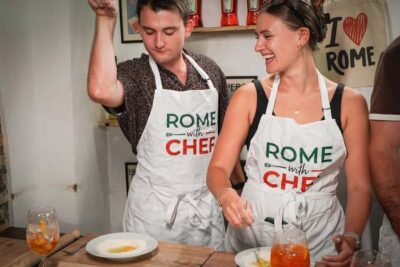
Rome Cooking Class: Make Pasta and 3 Spritz Cocktails
Read our review →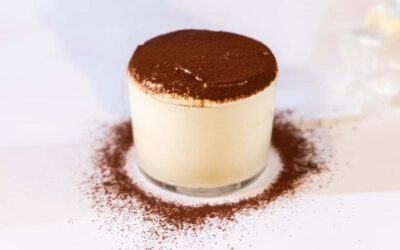
3-in-1 Fettuccine, Ravioli, and Tiramisu Cooking Class
Read our review →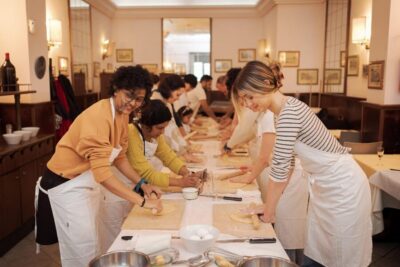
Fettuccine Pasta Cooking Class in Rome’s City Center
Read our review →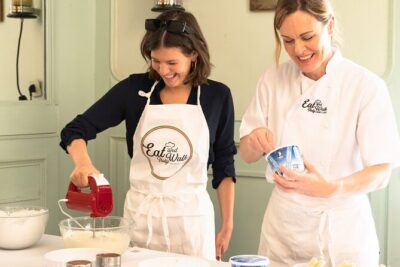
Learn to Make Pasta & Tiramisu with Wine and Limoncello Included
Read our review →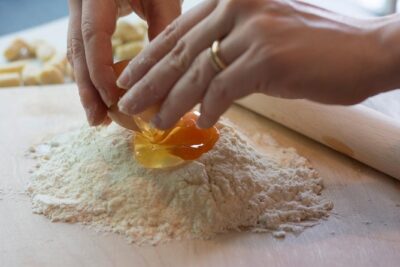
Become a Masterchef in Rome: Pasta, Ravioli and Tiramisù Class
Read our review →Browse the lists this tour appears in