
Review · ROME
Rome: Make Pasta & Mix 3 Italian Spritz Near the Colosseum
Come hungry, leave with recipes. This three-hour class puts you about 10 minutes from the Colosseum, where you make fresh fettuccine, prepare a traditional Roman sauce, and mix three classic Italian spritzes. I especially like the hands-on cooking and the easy social setting, with no more than 14 people. The main drawback is dietary: gluten, dairy, and animal products are part of the experience, so it will not suit vegans or people with gluten or lactose intolerance.
The drinks give the class a relaxed rhythm. You begin with Aperol, cook while enjoying a Hugo, then finish your meal with Limoncello spritz. I also like that you eat what you make and take the recipes home, turning a fun afternoon in Rome into something you can repeat in your own kitchen.
Key points at a glance
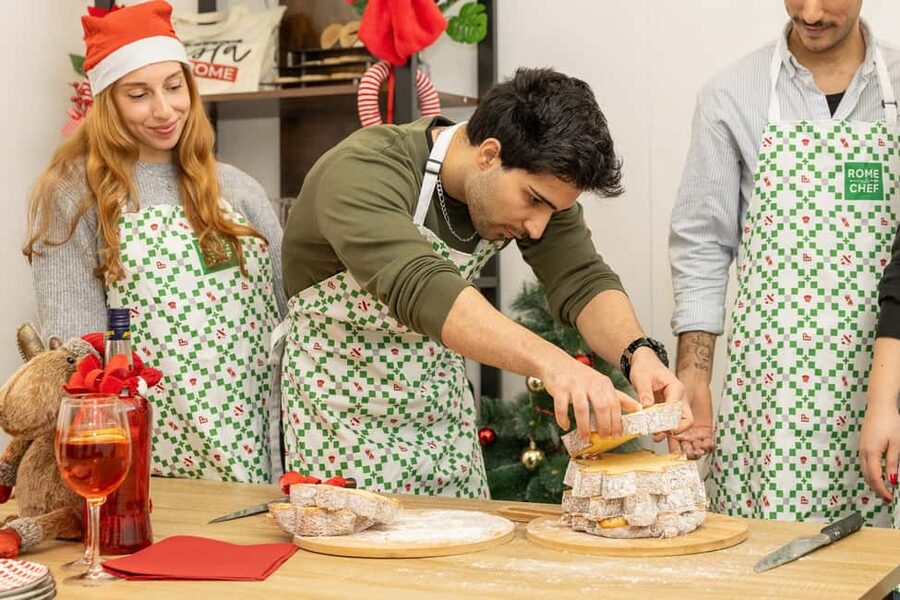
- Three spritzes are built into the class: Aperol, Hugo, and Limoncello, with water and soft drinks also available.
- Roman pasta is the main event: You roll, cut, cook, and eat fresh fettuccine with carbonara or cacio e pepe.
- The class stays small: A maximum of 14 people gives you a better chance to work directly with the chef.
- The location is practical: You are roughly 10 minutes from the Colosseum, useful for fitting this into a sightseeing day.
- The tone is social and upbeat: Chefs such as Sunny, Angela, Marzia, Jem, Laura, and Bart are repeatedly praised for energy, humor, and encouragement.
- Dietary limits are firm: Gluten and dairy are included, and vegan, gluten-free, and dairy-free diets cannot be accommodated.
A cooking class near the Colosseum, not another sightseeing stop
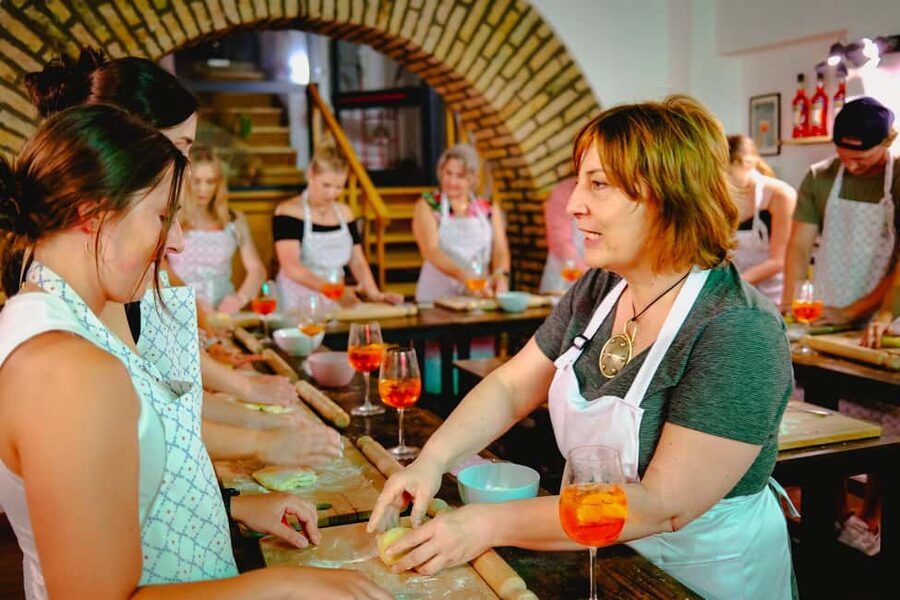
Rome offers endless ancient stones, grand churches, and museum queues. This experience gives you a different way to spend three hours: you sit down, work with food, and meet people from several countries while a local chef guides the class.
The location matters. You can pair the activity with the Colosseum without giving up a whole day to transport. The exact meeting point can vary with the option you book, but both possible locations are within a five-minute walk of each other. You receive the final details in advance, so check them before setting out.
This is not presented as a formal tour of Roman food markets or a history lecture. Its value comes from participation. You are not simply watching a chef make pasta. You roll the dough, cut it, cook it, and prepare the sauce before eating it.
The class is capped at 14 people. That is large enough for a social evening but small enough to feel more personal than a mass cooking demonstration. If you arrive alone, the setup should still work well. One participant described being made to feel included, and the class format naturally gives you people to talk with while the dough rests or the pasta cooks.
More Pasta Classes with Wine in Rome
- Rome: Pasta & Tiramisu Class with Fine Wine by the Vatican
★ 4.9 · 4,852 reviews - Rome: Pasta Making Class with Wine, Limoncello, and Dessert
★ 4.9 · 3,177 reviews - Rome Cooking Class: Make Pasta and 3 Spritz Cocktails
★ 5.0 · 2,937 reviews
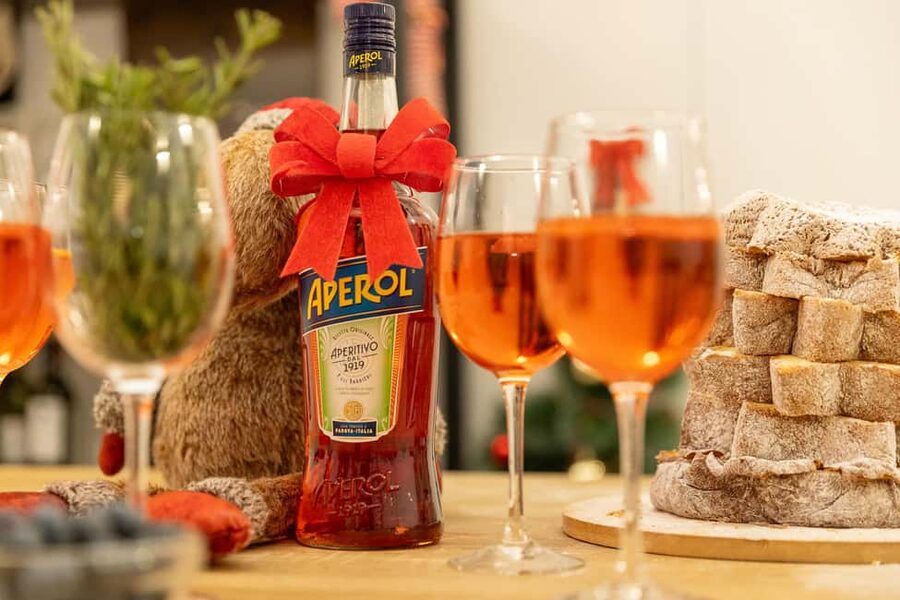
The opening Aperol spritz sets the mood
The first drink is an Aperol spritz. It serves two jobs: it introduces you to the basic drink-making theme, and it gives everyone a low-pressure way to meet the chef and the rest of the group.
The spritz portion is not an afterthought. You learn to make three drinks during the session, so the class has a useful balance between food and drink. The opening Aperol is familiar, bright, and easy to recognize, making it a sensible starting point before you move on to the other recipes.
You should pace yourself. The class includes three alcoholic drinks, and several people found the pours generous or strong. You also receive unlimited water and soft drinks, so use them. The experience is meant to be fun and social, not a test of how quickly you can finish three cocktails.
The alcohol also shapes the audience. Couples and groups of friends will fit comfortably, but solo participants can enjoy it too. It is better suited to adults who want a lively activity than to anyone seeking a quiet, highly formal lesson.
Rolling and cutting fresh fettuccine
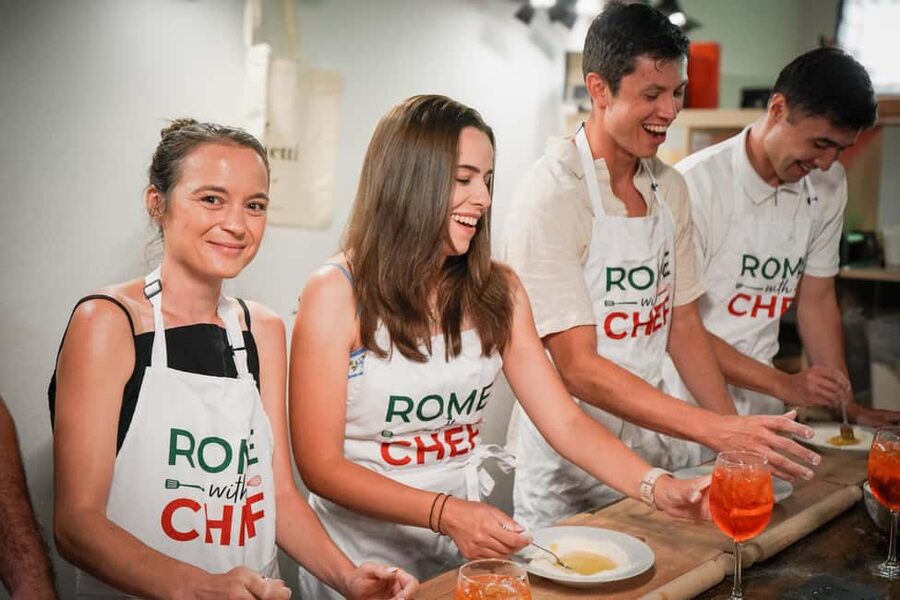
Once introductions are finished, the kitchen work begins. You use fresh, locally sourced ingredients and make the pasta yourself. The process includes rolling and cutting the dough into fettuccine, then cooking it for the meal.
That hands-on part is the strongest reason to book. You get a real technique to take home rather than a vague memory of watching someone else cook. Several people particularly enjoyed being involved in almost every stage, and the class appears designed to keep you working rather than sitting back.
Do not expect restaurant-perfect pasta on your first attempt. That is part of the charm. You may find your strands uneven or your technique a little clumsy, but the chef helps you through the process. The point is to learn the feel of the dough and the basic method, not to produce a dish for a cooking competition.
The recipes you take home add real value. You can make the pasta again after your holiday, which is more useful than a souvenir that sits on a shelf. If you have space in your luggage, a small pasta cutter or rolling tool would pair nicely with the recipes, but no extra equipment is listed as part of the class.
Carbonara or cacio e pepe keeps the food Roman
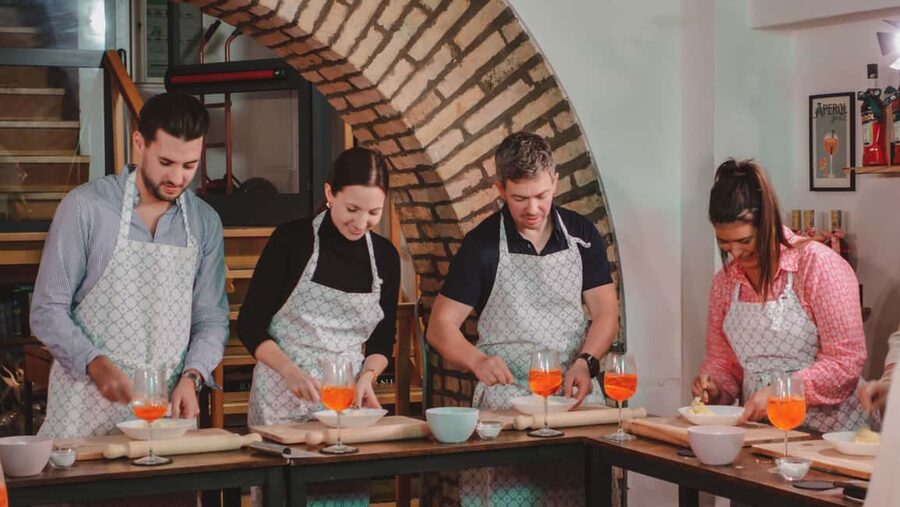
The pasta is paired with a traditional Roman sauce, with carbonara or cacio e pepe named as the main options. These dishes are simple on paper, but technique matters.
Carbonara depends on handling eggs, cheese, and heat without scrambling the sauce. Cacio e pepe depends on creating a smooth sauce from cheese, pepper, and pasta water. A chef-led lesson can help you understand why the texture works, not just which ingredients to put in a bowl.
Vegetarian options are available, but this is not a vegan or dairy-free class. The experience includes gluten and dairy, and it cannot accommodate coeliac disease, gluten intolerance, lactose intolerance, or vegan diets. If you have another dietary need, contact the operator before booking. They may be able to help, but no promise is made.
The meal is the payoff for the work. You eat the pasta you prepared, alongside the people in your class and the chef. That gives the session a natural ending, rather than stopping when the cooking demonstration is over.
The food has earned especially strong praise. One participant felt the homemade carbonara and cacio e pepe were better than versions eaten in Roman restaurants. That is a personal judgment, of course, but it points to the key advantage: pasta tastes different when you have made it fresh and eaten it immediately.
Same kitchen, a different thing to make:
- 3 in 1 Cooking Class near Navona: Fettuccine, Ravioli & Tiramisu
★ 5.0 · 7,376 reviews - Rome: 3-in-1 Fettuccine, Ravioli, and Tiramisu Cooking Class
★ 4.9 · 2,704 reviews - Rome: Fettuccine Pasta Cooking Class in Rome’s City Center
★ 4.8 · 2,414 reviews - Learn to Make Pasta & Tiramisu with Wine and Limoncello Included
★ 5.0 · 2,345 reviews
Hugo spritz, then Limoncello to finish
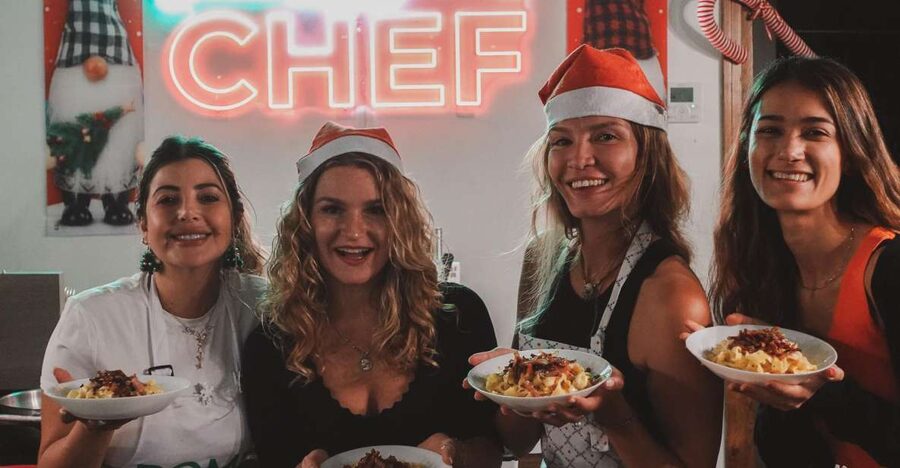
The second drink is a Hugo spritz, served while you are cooking. Its place in the class helps break up the kitchen work and keeps the session from feeling like a long technical lesson.
The final drink is a Limoncello spritz, served with or after the meal. It gives the class a clear finish and adds a sweet, lemony note after the richness of pasta and cheese.
The drinks are included in the $79 price. That cost looks reasonable if you would otherwise pay for a pasta class, a full meal, and several cocktails separately. It is less attractive if you do not drink alcohol or if your main aim is a serious culinary course with advanced technique.
I would treat the drinks as part of the atmosphere, not the entire reason to book. The pasta making, shared meal, and social setting carry the experience. The cocktails make it more playful and help strangers relax, but you should not choose this class if alcohol is a concern.
The chefs make a real difference
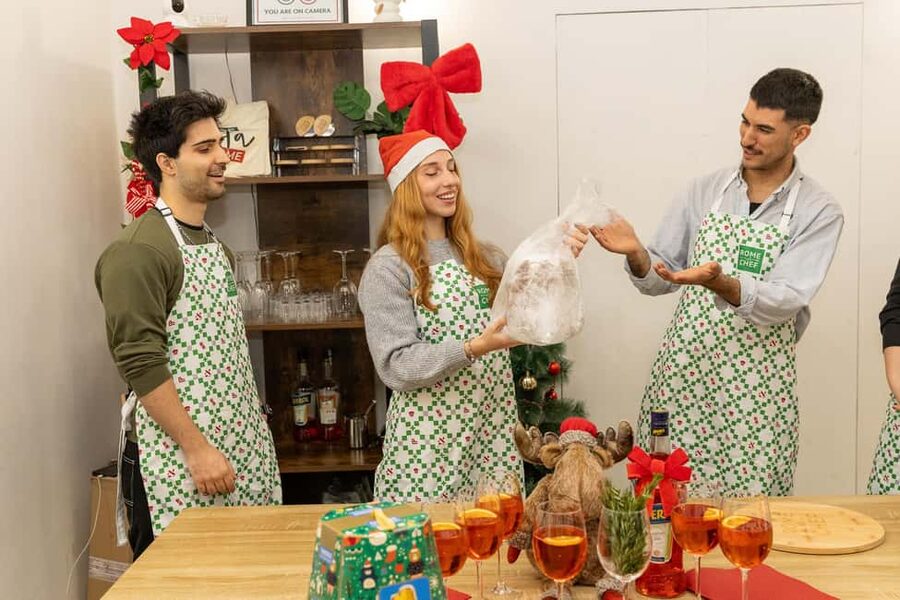
The instructors vary, so your experience will depend partly on who leads your session. Several names receive especially warm praise for being funny, welcoming, and good at bringing people into the activity.
Sunny is repeatedly described as personable, energetic, and fun. Angela is praised for clear instruction and a warm manner. Marzia receives strong marks for explaining each stage, offering cooking tips, and helping people feel like chefs in training.
Jem is another popular name, with praise for keeping people laughing while still guiding the cooking. Bart is described as energetic and entertaining, while Laura is praised for humor and encouragement. Other instructors named in the feedback include Benjamin, Sherry, Tsioh, Gio, Gianna, Ida, Azin, Eleanora, Simy, Kysusha, Ari, Ele, Della, and Niloo.
The repeated pattern is useful. The class is not valued only for the food. People enjoy the instructors’ energy, the welcoming tone, and the way they include beginners. That matters because a cooking class can become awkward if the chef talks over everyone or lets a few confident cooks do all the work.
You should still keep expectations sensible. The specific chef and group affect the tone, and no two sessions will be identical. If you want a quiet, highly structured lesson, this may feel too lively. If you like humor, music, conversation, and a little chaos around the kitchen counter, it should suit you well.
How the three hours are likely to feel
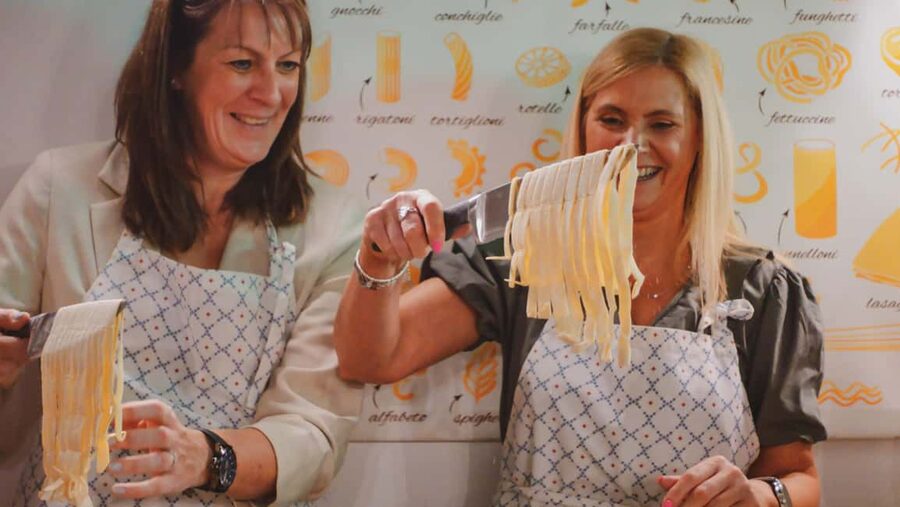
The experience follows a clear sequence:
- You meet the chef and group over an Aperol spritz.
- You begin the pasta preparation, including rolling and cutting fettuccine.
- You learn to make a Roman sauce such as carbonara or cacio e pepe.
- You mix or enjoy a Hugo spritz during the cooking.
- You cook and serve the pasta.
- You eat together and finish with a Limoncello spritz.
- You receive recipes to take home.
Three hours is enough time for a proper meal and a relaxed lesson. It is not a quick stop that you can squeeze between two tightly timed attractions. Give yourself room before and after the class, especially if you are building a Colosseum visit into the same day.
The social element is a major part of the value. People have come from the United Kingdom, United States, Australia, Canada, Spain, Germany, Switzerland, Malaysia, Italy, and elsewhere. You may leave with new acquaintances as well as a recipe for pasta.
Is $79 a fair price?
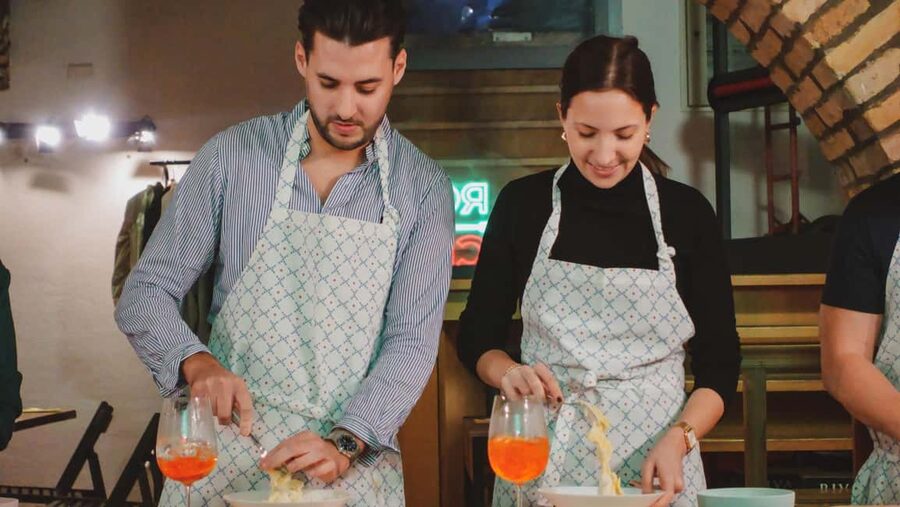
At $79 per person, the price covers a chef-led workshop, fresh ingredients, a handmade pasta meal, three spritzes, water, soft drinks, and recipes. It also includes the social experience and the convenience of a central Rome location near the Colosseum.
I consider that fair for a three-hour activity, especially if you enjoy both cooking and cocktails. A normal Roman restaurant meal would not give you the same practical lesson, and a standard cocktail stop would not include a meal you prepared yourself.
The value drops for people who do not drink or who mainly want a cheap lunch. You are paying for instruction and interaction, not only for a plate of pasta. The price also cannot be judged against a simple bowl of cacio e pepe because the class includes the preparation, chef, ingredients, drinks, and recipes.
Private groups are available, which may make the price more appealing for a birthday, couple’s outing, or gathering of friends. The supplied information does not give a separate private-group price, so check that option before booking.
Free cancellation is available up to 24 hours before the start time, and you can reserve now and pay later. Those terms help if your Rome schedule is still shifting, but the meeting point and starting time should still be checked carefully before the day.
Who should book this Rome cooking class?
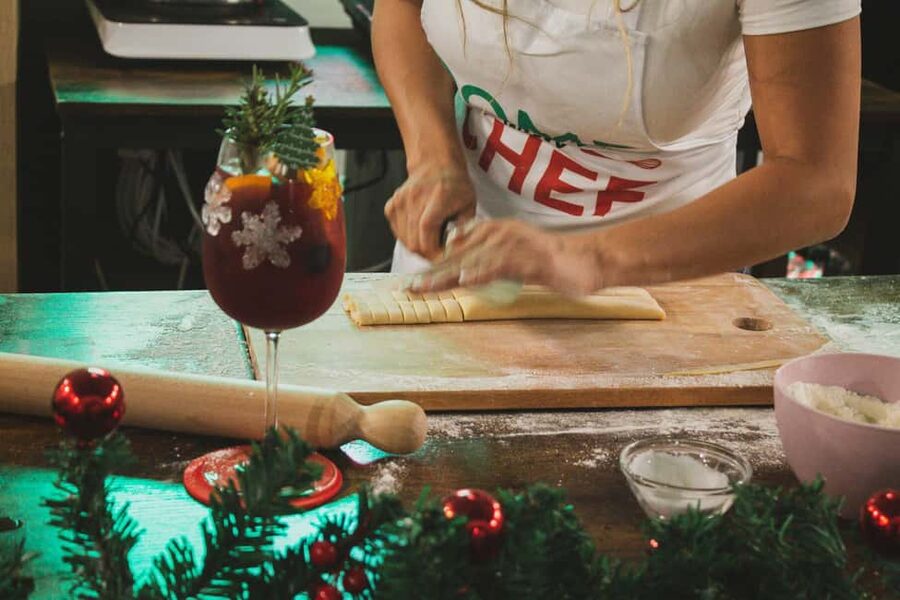
I would recommend it most strongly to:
- Couples who want a shared activity beyond sightseeing
- Friends looking for a social afternoon or evening
- Solo visitors who enjoy meeting people through food
- Beginners who want a friendly introduction to pasta making
- Anyone staying near the Colosseum and seeking an easy nearby activity
- People who want recipes they can use after returning home
It is not a good fit for children under two, since infants have no separate seat or workspace and must remain on an adult’s lap. It also does not suit vegans or people avoiding gluten, lactose, or dairy.
Families with older children should check the booking details directly, since the stated restriction only identifies children under two. The class includes alcohol and an adult social atmosphere, so it may not be the right choice for every family group.
Should you book it?
Book this class if you want to do something in Rome rather than simply look at something. The strongest features are the hands-on pasta work, the three drinks, the small group size, and the chefs’ ability to make beginners feel included.
I would skip it if you need gluten-free, vegan, or dairy-free food, or if you dislike alcohol-centered activities. I would also skip it if your schedule is packed so tightly that three relaxed hours feels like a burden.
For most food-loving adults, $79 is a solid use of an afternoon near the Colosseum. You get a meal, a lesson, a few cocktails, a set of recipes, and a story that lasts longer than another photograph of an ancient ruin.
FAQ
How long does the pasta and spritz class last?
The experience lasts three hours.
Where does the class take place?
It takes place in Rome, about 10 minutes from the Colosseum. The meeting point may vary by booking option, but both possible locations are within a five-minute walk of each other.
How much does the experience cost?
The listed price is $79 per person.
Which spritzes are included?
You make or enjoy one Aperol spritz, one Hugo spritz, and one Limoncello spritz.
What pasta will I make?
You make fresh handmade fettuccine and pair it with a traditional sauce such as carbonara or cacio e pepe.
Do I eat the pasta I prepare?
Yes. The handmade pasta and sauce are included, and you eat what you cook during the class.
Are vegetarian options available?
Yes, vegetarian options are available.
Can the class accommodate vegan or gluten-free diets?
No. The class includes gluten and dairy, and it cannot accommodate vegan, gluten-free, coeliac, gluten-intolerant, lactose-intolerant, or dairy-free diets.
Is the class taught in English?
Yes. The listed instruction language is English.
How many people can join the class?
The small group setting allows a maximum of 14 people. A private group option is also available.
Are water and soft drinks included?
Yes. Unlimited water and soft drinks are included.
Can I take the recipes home?
Yes. Recipes are provided for you to take home.
What is the cancellation policy?
You can cancel up to 24 hours in advance for a full refund.
Can I book without paying immediately?
Yes. The reserve-now, pay-later option lets you book your place without paying today.
Just added around Rome
- Spritz and Pasta! Spritz, Fettuccine & Tiramisù★ 5.0 · 2 reviews
- Rome: Pasta and tiramisu class with wine pairing at Come Na Vorta★ 5.0 · 30 reviews
- Top Class in Fettuccine, Ravioli, and Tiramisu★ 5.0 · 7 reviews
- The Original Fettuccine Alfredo Experiences in Roma★ 4.5 · 38 reviews
- Traditional Pasta Cooking Class with Tiramisu Small Group★ 5.0 · 7 reviews
- Trastevere Food Tour with Pasta-Making Class★ 5.0 · 5 reviews
- Italian Pasta & Dessert Class in Historic Center (3-Course Meal)★ 5.0 · 2 reviews
- The Pasta Factory Class★ 4.5 · 21 reviews
Pasta Classes with Wine, compared.
Pasta & Tiramisu Cooking Class with Unlimited Wine
Read our review →
Pasta & Tiramisu Class with Fine Wine by the Vatican
Read our review →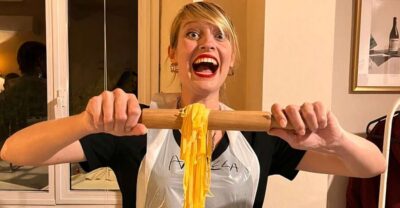
Pasta Making Class with Wine, Limoncello, and Dessert
Read our review →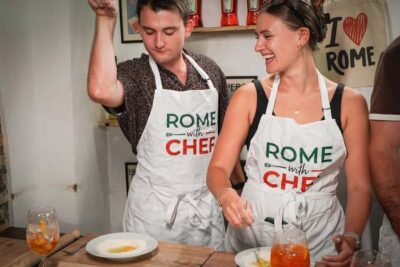
Rome Cooking Class: Make Pasta and 3 Spritz Cocktails
Read our review →
Learn to Make Pasta & Tiramisu with Wine and Limoncello Included
Read our review →
Cooking Class Pasta & Tiramisu Making Unlimited Wine
Read our review →Browse the lists this tour appears in