
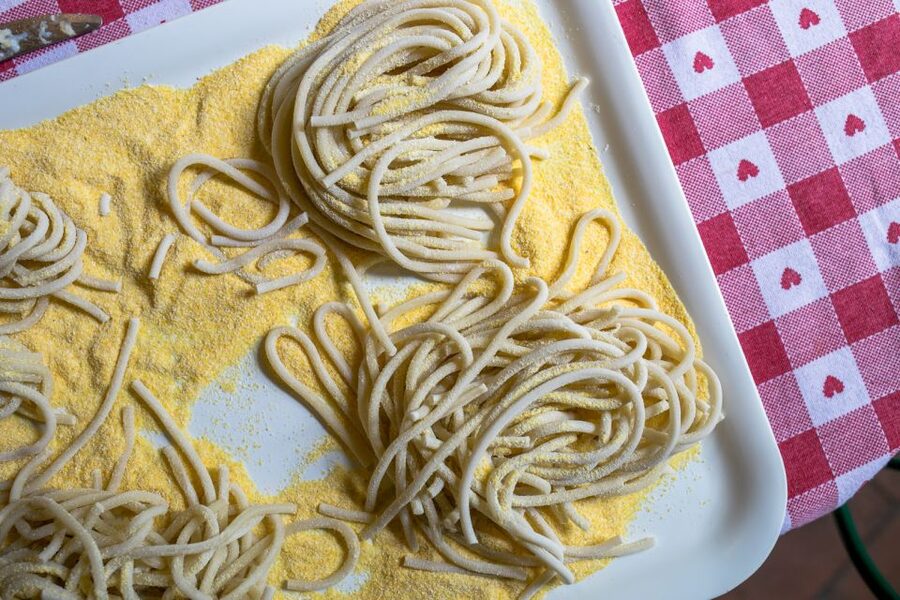
Review · ITALY
Trieste: Private Pasta-Making Class at a Local’s Home
Fresh pasta tastes better when you make it. This three-hour class takes you into a local home in Trieste, where a certified Cesarina host teaches three regional pasta recipes, using family cookbooks and hands-on instruction. I like the private setting and the chance to sit down with your host after cooking, rather than simply eating in a restaurant. I also like that wine, water, and coffee are included.
The main concern is value. At $164.26 per person, this is a costly meal, especially if you judge the experience only by the ingredients on the plate. One sharply negative assessment called the price, listed at about €150 per person, far too high for the food itself. You are paying for instruction, access to a local home, and personal contact, not just pasta.
Key points to know before booking
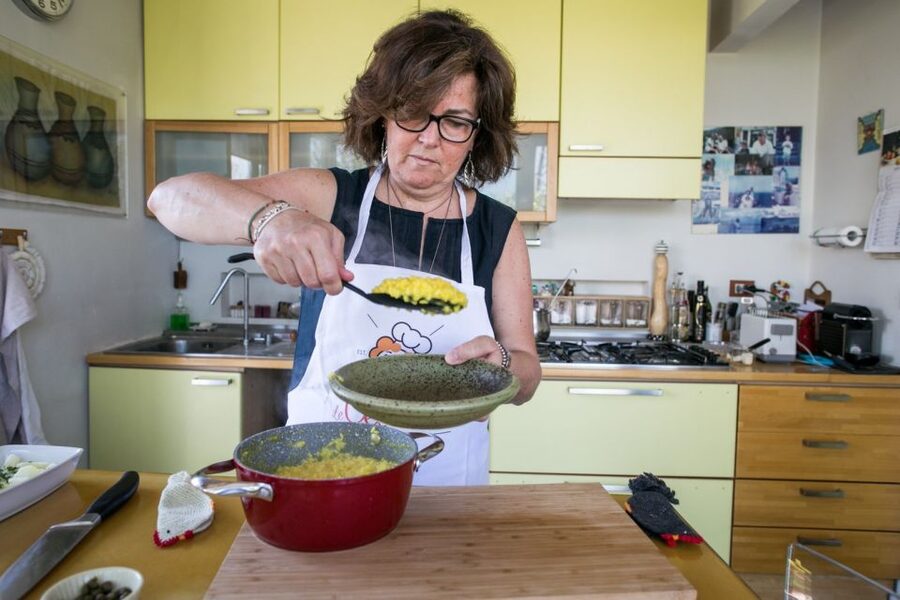
- Three regional pasta recipes: You will prepare three local dishes and eat everything made during the lesson.
- A real home setting: The class takes place at your private Cesarina host’s home in or around Trieste, with the exact address sent after booking.
- Hands-on workstations: Each person receives utensils and ingredients for their own cooking station.
- Wine with the meal: Red and white local wines, water, and coffee are included with the tasting.
- Flexible dietary requests: Vegetarian, vegan, and gluten-free needs can be accommodated if you request them in advance.
- Small private format: The class is for a private group, with instruction available in English or Italian.
Cooking pasta in a Trieste home
The appeal here is simple. You are not watching a chef perform behind a counter. You are working at a kitchen station, listening to a local home cook explain how the dishes are made, and then eating the results at the same table.
Your host, known through the Cesarine network as the Cesarina, is a certified home cook. The exact host is not named in advance in the supplied details, so you should think of the experience as a personal local connection rather than a class led by a famous chef.
That distinction matters. This is built around home cooking and family recipes. The host is expected to show you practical methods and small kitchen tricks, including the sort of adjustments that may not appear in a formal recipe. The recipes come from the region, and the lesson focuses on three authentic pasta dishes rather than one elaborate signature plate.
I like this format for a first or second day in Trieste. It gives you a direct introduction to local food before you spend the rest of your visit ordering from menus. It can also help you understand the difference between fresh pasta prepared at home and dried pasta bought in a shop.
More Fresh Pasta Workshops in Italy:
- Rome: Pasta Making Class with Wine, Limoncello, and Dessert
★ 4.9 · 3,177 reviews - Pastamania – Florence Pasta Making Class
★ 5.0 · 3,050 reviews - Enjoy Spritz and Pasta Making in Piazza Navona
★ 5.0 · 1,681 reviews
What happens during the three-hour class
The class usually begins at 10:00 in the morning or 5:00 in the afternoon. The provider can sometimes adjust the start time to suit your plans, but you need to give that request in advance.
The exact order may vary with the host, but the experience follows a clear rhythm. You arrive at the host’s home, ring the doorbell, and meet the Cesarina. After introductions, you receive a workstation with cooking utensils and the ingredients needed for the lesson.
The practical setup is one of the better features. You are not expected to crowd around a single counter or wait for someone else to finish. Each participant has a place to work, which should make the lesson easier to follow and more useful if you want to repeat the recipes at home.
Your host then introduces three regional pasta recipes. The wording of the experience promises local recipes and family cookbook methods, but it does not name the dishes in advance. That means you should not book this expecting a particular pasta shape or sauce. If you have a strong food preference, ask the provider before committing.
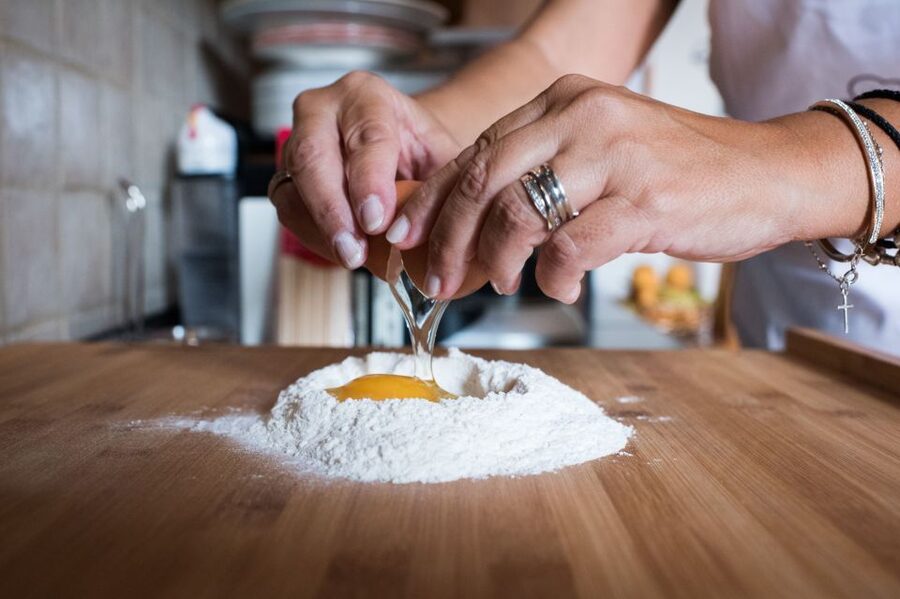
The lesson is designed to be active. You will test your own cooking skills, rather than simply take notes while someone else does the work. You should expect flour, ingredients, utensils, shaping, mixing, and the occasional imperfect piece of pasta. That is part of the fun. Handmade food does not need to look factory-perfect to taste good.
After the preparation, you sit down and taste the three dishes you have made. Local red and white wines accompany the meal, while water and coffee are also included. One of the strongest positive points is the homemade pasta itself. A favorable assessment praised both the welcoming hosts and the taste of the pasta, which is exactly what this class needs to deliver.
Why the home setting matters
Trieste is a city with a distinct regional identity, and food is one of the easiest ways to connect with it. A cooking class at a local home gives you more context than a standard restaurant meal. You can ask how a dish is served, what ingredients matter, and how the recipe fits into family life.
That personal contact is the heart of the experience. You are not only learning how to prepare food. You are sharing a table with the person who taught you to make it. The hosts are described as welcoming, and the private group format allows more room for conversation than a large public class.
Still, keep your expectations realistic. The home setting does not guarantee a luxury dining room, professional restaurant service, or a polished culinary demonstration. You are visiting someone’s home for a hands-on lesson. The setting may feel informal, and the focus is on participation rather than ceremony.
This is best for someone who values a personal exchange. If you want a quiet meal with perfect presentation, you may prefer a restaurant. If you want to knead, shape, taste, and talk, this format is a better match.
Three recipes, not one quick demonstration
A three-hour class offers enough time for more than a short cooking show. The promise of three pasta recipes gives the activity real substance. You can compare different methods and flavors, and you leave with several ideas to try later.
The recipes are described as regional and authentic, but their names are not provided before booking. That lack of detail is worth noting. Ask about the planned menu if you need to avoid a certain ingredient or if you want to know which pasta styles you will prepare.
The host is also expected to share family cookbook recipes. That makes the lesson more personal than a generic international cooking class, though the exact content will depend on the Cesarina assigned to you. One host may focus on a classic family favorite, while another may emphasize a different local preparation.
The best way to approach the class is with curiosity and a willingness to learn the host’s version. Do not expect a fixed restaurant menu. Expect a local cooking lesson whose details can vary from one home to another.
More Private Pasta Classes in Italy:
- Rome: Pasta Making Class with Tiramisu & Wine PRIVATE OPTION
★ 4.8 · 404 reviews - From Taormina: Private/Guided Godfather with appetizer and Pasta
★ 5.0 · 233 reviews - Cesarine: Private Pasta Class & Meal at Local’s Home in Bologna
★ 5.0 · 111 reviews - Cesarine: Private Pasta Class at Local’s Home in Messina
★ 5.0 · 53 reviews
The meal and included drinks
The final tasting is not an optional extra. You eat the dishes you prepared, along with local red and white wines. Water and coffee are included as well.
This turns the class into both an activity and a meal. A morning start at 10:00 can lead naturally into lunch, while a 5:00 start works well before an evening walk or later plans in Trieste. Allow the full three hours. This is not a fast food stop you can squeeze between two timed attractions.
The wine adds to the social side of the meal, but it also affects the value calculation. If you do not drink alcohol, the included red and white wines may not mean much to you. The host still provides water and coffee, but the price remains the same.
The positive assessment of the pasta is important here. If the food is well prepared and the host creates a warm atmosphere, the meal can feel like a worthwhile local experience. If you judge the cost by grocery prices alone, however, the value will look poor. One unhappy customer felt that the ingredients were worth only a small fraction of the total price and would have preferred a Michelin restaurant.
That criticism is fair to consider. You are paying for access, teaching, preparation, hosting, and a private encounter. Those things are difficult to measure. The experience is worthwhile only if you value them.
Price: paying for contact, not cheap pasta
The listed cost is $164.26 per person. That is a serious price for a three-hour cooking class, especially in a city where you may find a pasta meal for much less.
I would not choose this class because it is a budget way to eat. It is not. The ingredients themselves cannot justify the full price. You should book only if the private home visit, instruction, wine, and personal connection are central to your plans.
The price makes more sense for a special occasion, a couple wanting a private activity, or a small group that enjoys food experiences. It is harder to justify for a solo visitor on a tight budget or for someone who mainly wants a filling meal.
The rating information is mixed, with an overall score of 3.8 from four assessments. That tells you to keep your expectations balanced. The favorable experience praised the hosts and homemade pasta. The negative experience focused almost entirely on the price-performance issue. Both points can be true at once: the host may work hard and the food may taste good, while the total cost still feels too high.
Dietary needs and language
Dietary requirements can be handled upon request. Vegetarian, vegan, and gluten-free options are specifically mentioned, but you must tell the provider in advance. Do not wait until you arrive at the door.
The class is offered in English and Italian. That makes it practical for many international visitors, though the exact level of conversation and instruction will depend on the host. If you need detailed explanations of ingredients or techniques, state your language preference when booking.
The provider does not give enough information to promise a fully adapted menu for every allergy or medical condition. If cross-contact is a serious concern, contact the provider before booking and explain exactly what you need.
Timing, meeting point, and planning advice
The host’s full address and mobile number are sent by email after booking. The meeting point is not a public landmark or a standard shopfront. You go directly to the host’s home and ring the doorbell.
That makes it important to check your email before the day of the class. Save the address and phone number, and leave enough time to reach a residential area. Since the exact home varies, the practical travel time cannot be judged from the basic booking details alone.
The class ends back at the same meeting point. There is no separate transport service included, and no transfer is described. Plan your route on your own using the address provided after booking.
The usual start times are 10:00 AM and 5:00 PM. Flexibility may be possible, but it needs to be requested ahead of time. If you are planning around a train, a museum reservation, or a day trip from Trieste, do not assume the host can shift the lesson at the last moment.
Cancellation is flexible enough for careful planning. You can cancel up to 24 hours before the start for a full refund, and you can reserve now while paying later. Those terms help if your Trieste schedule is still changing.
Who will enjoy this class most
I would recommend this experience to you if you enjoy food as a way to meet people. It suits couples, families, and private groups who want to cook together and share a relaxed meal afterward.
It also works well for anyone who wants a break from sightseeing. After several hours of churches, squares, and museums, a kitchen class gives you something physical to do. You use your hands, make mistakes, and sit down with food you helped prepare.
It may also suit a visitor who has already eaten plenty of restaurant pasta and wants more context. The family cookbook angle gives the lesson a personal quality that a standard restaurant cannot provide.
I would be cautious if price matters more than personal contact. I would also hesitate if you dislike group participation, wine-centered meals, or uncertain menus. The experience is private, but it is still a lesson. You are expected to take part.
Should you book the Trieste pasta class?
Book it if you want a private, social cooking lesson and you see the meal as only one part of the value. The welcoming hosts, hands-on workstations, three recipes, local wine, and home setting create a personal experience that a restaurant cannot copy.
Skip it if you mainly want inexpensive pasta. At $164.26 per person, the cost is high, and the strongest criticism focuses on exactly that point. Before booking, ask about the planned recipes, confirm your dietary needs, and make sure the private home visit appeals to you.
My practical verdict: this is a good fit for food-focused visitors who value conversation and participation, but not a bargain. Go for the host and the lesson, not for cheap ingredients.
FAQ
Where does the pasta-making class take place?
The class takes place at the private home of your Cesarina host in the Trieste area. The full address is sent by email after booking.
How long does the experience last?
The cooking class lasts three hours.
What time does the class usually begin?
The class usually begins at 10:00 AM or 5:00 PM. The local provider may be flexible if you request a different time in advance.
How many pasta dishes will I prepare?
You will learn to prepare three local pasta recipes and taste all three dishes afterward.
Is the class private?
Yes. The activity is arranged for a private group.
Which languages are available?
Instruction is available in English and Italian.
Are drinks included?
Yes. Water, local red and white wines, and coffee are included.
Can dietary requirements be accommodated?
Yes. Vegetarian, vegan, and gluten-free requirements can be accommodated upon request. Tell the provider in advance.
Do I need to bring cooking equipment?
No. Each participant receives a workstation equipped with utensils and the ingredients needed for the class.
Can I cancel for a refund?
Yes. You can cancel up to 24 hours in advance for a full refund. You can also reserve now and pay later.
Just added around Italy
- Verona: Tortellini Cooking Class and Lunch with Mamma Ivana★ 5.0 · 20 reviews
- Volterra: Fresh Pasta Cooking Class at a Tuscan Farmhouse★ 5.0 · 33 reviews
- Vicenza: Pasta & Tiramisu Cooking Class at a Local’s Home★ 5.0 · 5 reviews
- Verona: Pasta & Tiramisu Cooking Class at a Local’s Home★ 5.0 · 16 reviews
- Verona: Pasta Cooking Class with Wine Tasting★ 5.0 · 4 reviews
- Venice: Share Your Pasta Love in a Local’s Home★ 4.8 · 20 reviews
- Verona: Prosecco and Pasta Making Class at a Local’s Home★ 5.0 · 10 reviews
- Verona: My Granny’s secrets making gnocchi★ 5.0 · 7 reviews
Fresh Pasta Workshops, compared.
Pasta Making Class with Wine, Limoncello, and Dessert
Read our review →
Enjoy Spritz and Pasta Making in Piazza Navona
Read our review →
Pasta Making & Wine Tasting with Dinner in Frascati from Rome
Read our review →
The Secrets to Learn Fresh Pasta and Tiramisù in a Glam Home
Read our review →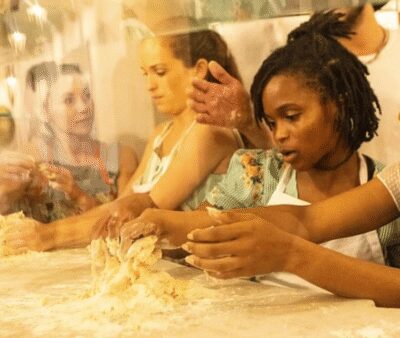
Pasta Making with Wine Tasting and Dinner in Frascati
Read our review →
Browse the lists this tour appears in