
Review · ITALY
Trip Excursion to Mt. Vesuvius – Pompeii + Handmade pasta class with lunch
Pompeii tells the story; pasta brings it home. This full-day private excursion links Pompeii, Herculaneum, and Mount Vesuvius with a hands-on meal in a local home, giving you ancient sites, volcanic views, and a very personal taste of Naples in one long day. I like the private transport and the chance to cook with a host family, and I also like that the guide can explain Pompeii rather than leaving you to puzzle over its streets alone. The main drawback is the schedule: with three major sights, driving time, a climb, and lunch, this is a full and fairly demanding day.
The Pompeii visit covers the Forum, baths, theater, shops, and grand houses, while Herculaneum adds a shorter but valuable look at another Roman town buried by the same eruption. Reviews describe guide and driver Antonino, also called Tony, as careful, informative, and especially helpful with photographs and local information. The tour costs $352.51 per person, so it makes the most sense for a small group that values private service and wants several difficult-to-arrange experiences combined.
Key points at a glance
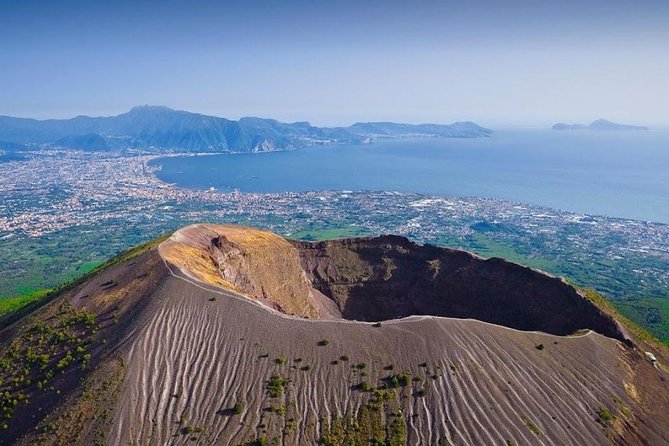
- Three major sights in one day: You visit Pompeii, Herculaneum, and Mount Vesuvius, with transfers between each.
- Private transport: Pickup can be arranged from an accommodation, cruise port, train station, or airport when the road allows.
- A guide brings Pompeii into focus: The two-hour visit includes major public buildings, homes, baths, shops, and the theater.
- The Vesuvius walk takes effort: Plan on about 35 minutes up and 35 minutes back to the car, with the volcano portion lasting about two and a half hours overall.
- Handmade pasta and lunch: The day ends with a cooking class and meal, described as taking place at the host’s home with his wife as instructor.
- Private rather than shared: Only your group participates, with a minimum booking of two people.
Why this day works for curious first-time visitors
This is not a simple Pompeii excursion. It is a broad tour of the Bay of Naples area, combining archaeology, geology, transport, and food. You see the Roman city most people know, add Herculaneum for contrast, climb partway around an active volcano, then sit down to make pasta.
That combination gives the day a strong sense of place. Pompeii shows daily Roman life frozen by the eruption of AD 79. Herculaneum offers another version of that disaster and a shorter visit. Vesuvius explains the force behind both sites. The pasta class then shifts the focus from the ancient world to present-day Campania.
I like this structure because the experiences are different enough to keep the day moving. You are not spending eight hours looking at ruins under the same hot sun. Still, the plan is ambitious. The advertised duration is about eight to nine hours, but the listed visits add up to several hours before you count transfers and lunch. Ask for a clear day-by-day timing plan when you book, especially if you have a train, flight, or cruise departure later.
More Fresh Pasta Workshops in Italy:
- Rome: Pasta Making Class with Wine, Limoncello, and Dessert
★ 4.9 · 3,177 reviews - Pastamania – Florence Pasta Making Class
★ 5.0 · 3,050 reviews - Enjoy Spritz and Pasta Making in Piazza Navona
★ 5.0 · 1,681 reviews
Starting at Pompeii’s western entrance
The tour begins at the Archaeological Park of Pompeii, where you meet the guide at the main gate and purchase tickets unless your selected option includes them. The first major point is Piazza Porta Marina, the western entrance to the city and the most impressive of Pompeii’s seven gates.
This is a useful place to begin because your guide can establish the city’s layout before the ruins become a blur of stone streets and roofless buildings. You get roughly two hours inside Pompeii, enough for a focused route through important public and private spaces, but not enough to see every corner of the enormous site.
Wear sturdy shoes. The streets are ancient, uneven, and often paved with large stones. The tour is not presented as an easy stroll, and Pompeii offers little shade in many open areas. Smart casual clothing is requested, but practical clothing matters more than looking polished.
The Forum, Basilica, and Pompeii’s public center
The Civil Forum was the core of public life. It brought together administration, justice, commerce, markets, and religious activity. Your guide uses this open space to explain how Roman cities worked, rather than treating the ruins as isolated stones.
The nearby Basilica served business and legal purposes. Five entrances, divided by tuff pillars, led into the building from the Forum. The remains can look plain at first, but the guide’s explanation helps you understand how much activity once took place here.
I especially value guided interpretation in Pompeii because the city’s scale can overwhelm you. A guide can point out how public and private life fit together, where people traded, and why certain buildings mattered. Without that framework, you may remember attractive columns but miss the social system they supported.
The scheduled time at each place is short. The Forum receives about ten minutes and the Basilica about five, so this is a highlights route rather than a slow archaeological study. If you already know Pompeii well, or want time for photography, you may find the pace brisk.
Food, wealth, and leisure inside Pompeii
The Thermopolium VI gives you a glimpse of ordinary food service. These small cook-shops sold hot food, offering a useful reminder that many city residents did not prepare every meal in a private kitchen. It is one of the stops that makes Pompeii feel like a lived-in town rather than a collection of monuments.
Casa del Fauno is a much grander setting. It occupied an entire block of about 3,000 square metres and dates in its original layout to the second century BC. The size alone tells you something about the wealth and status of its owners.
Casa dei Vettii adds another layer. This was one of Pompeii’s wealthiest and most famous homes, belonging to the brothers Aulus Vettius Restitutus and Aulus Vettius Conviva, former enslaved people who became prosperous through trade. A painting of Priapus, the god of prosperity, near the entrance symbolized the owners’ economic success.
That detail makes the house particularly worthwhile. You see not only wealth, but also social mobility within the Roman world. The home’s decoration and scale provide a counterpoint to the cook-shop. In a short stretch, Pompeii shows you both everyday eating and elite display.
The Stabian Baths continue the story of daily life. The complex includes a pool and colonnade, with rooms arranged around the Roman bathing sequence: the apodyterium for changing, the frigidarium for cold water, the tepidarium for moderate heat, and the calidarium for hot bathing.
This stop is scheduled for about ten minutes. That is enough for an explanation and a quick look, but not enough to study every room closely. I would listen carefully here, since the order of the rooms helps explain how Roman bathing worked.
More Pasta Classes with Lunch in Italy:
- Sorrento: Pasta and Tiramisu Cooking Class with Lunch and Wine
★ 4.5 · 165 reviews - Chianti: Homemade Pasta Making Class and Lunch
★ 5.0 · 58 reviews - Truffle Hunting in Chianti, pasta class and lunch
★ 5.0 · 39 reviews - Truffle hunting in Chianti with pasta cooking class & lunch
★ 5.0 · 28 reviews
The Grand Theatre and the end of the Pompeii visit
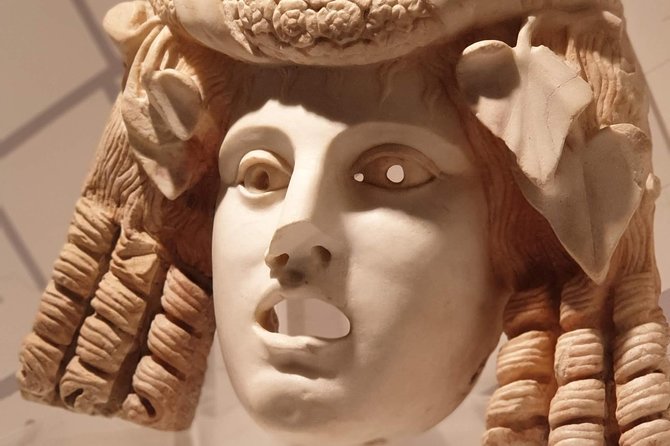
The Teatro Grande used the natural slope of the hill to form its auditorium. Its seating was divided into sections and connected by corridors, with a barrel-vaulted passage supporting the design.
The theater is a good final Pompeii stop because it shifts your attention from homes and shops to public entertainment. It also gives the guide a chance to explain how architecture, social rank, and crowd movement shaped Roman events.
Pompeii is the longest archaeological visit, but two hours still requires discipline. You will see major highlights rather than wander freely. That trade-off is reasonable if you want to add Herculaneum and Vesuvius on the same day. If Pompeii is your main reason for coming to the area, a longer dedicated visit would give you more freedom.
Herculaneum gives you a different Roman view
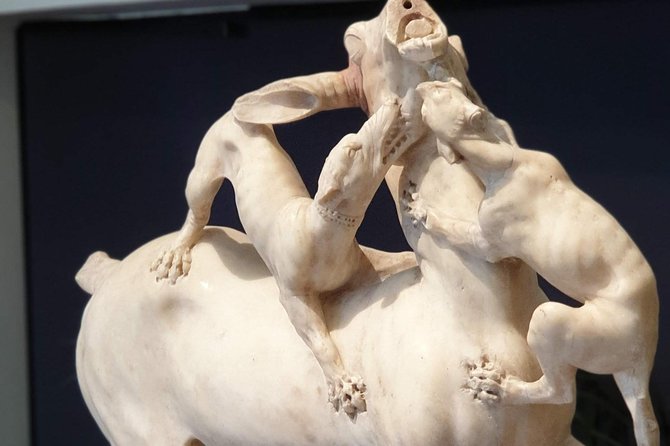
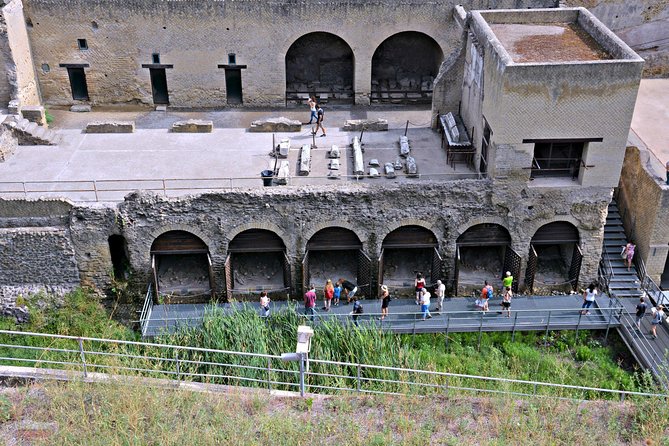
After Pompeii, your driver takes you to the Archaeological Park of Herculaneum. You meet another licensed guide at the main gate and purchase admission unless your selected package includes the ticket. The visit lasts about one hour and 40 minutes.
Herculaneum is not simply a smaller Pompeii. It gives you another way to understand Roman life and the eruption. The shorter visit can work well after Pompeii because you are already familiar with the period, but the site still deserves serious attention.
The transport between the two parks is one of the useful features of a private excursion. You do not need to work out the local connections while carrying bags, checking schedules, or trying to reach a volcano afterward. The driver can take you onward, and pickup may be arranged from your accommodation, a Naples-area cruise port, Salerno, the Amalfi coast, Sorrento, a train station, or an airport when road access allows.
The exact order may vary with traffic, weather, and the selected arrangement. Confirm the plan if you are arriving by cruise ship. The provider requires your ship name, docking time, disembarkation time, and re-boarding time at booking.
Climbing Mount Vesuvius after the ruins
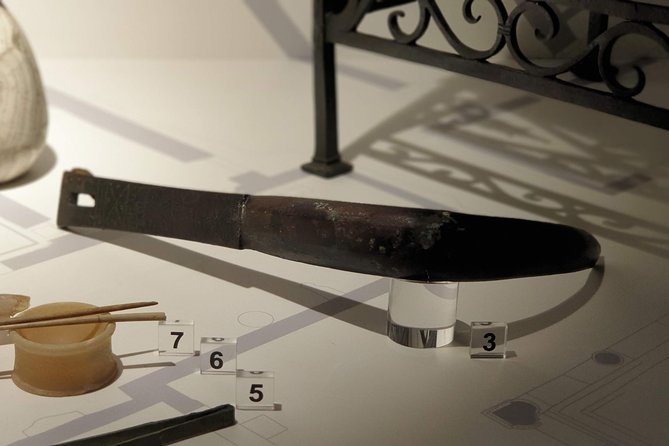
The Vesuvius portion requires the most physical effort. The drive from the highway to the point closest to the trail takes about 40 minutes. From the trail area, the walk to the top takes approximately 35 minutes, followed by about 35 minutes back down to the car. The full Vesuvius visit is listed at about two hours and 30 minutes, including the drives.
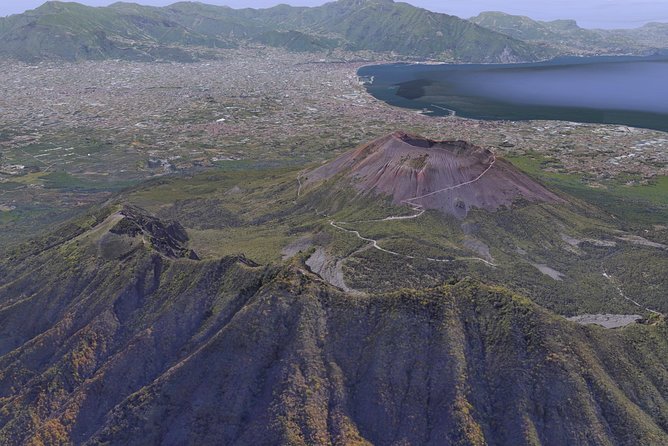
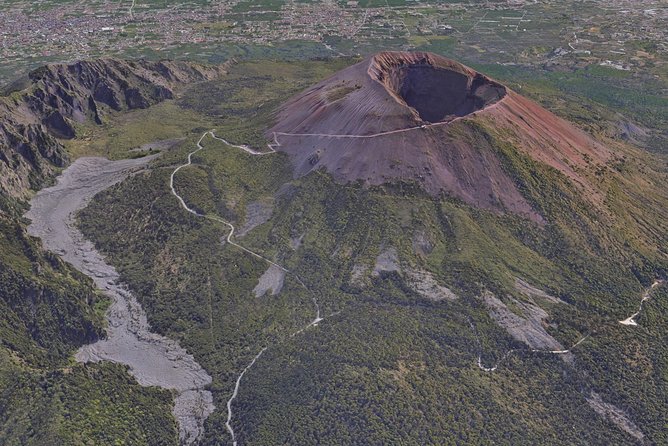
The nature trail called Il Gran Cono begins at a square roughly 1,000 metres above sea level in the municipality of Herculaneum. There is a parking area, an information point, and the option to buy a map. Before climbing, you can look toward Mount Somma, the older volcanic structure, including Punta Nasone at 1,132 metres.
The view changes as you walk upward, and the route lets you see the volcanic setting that shaped Pompeii and Herculaneum. You should not treat this as a casual photo stop. The climb is short by mountain standards, but it is uphill, and the surface may feel tiring after several hours on archaeological paths.
Admission to Mount Vesuvius is not included. This is an important price detail. Pompeii and Herculaneum tickets may be included depending on the option you select, but Vesuvius tickets are separate. Ask exactly which admissions are covered before paying so the final cost does not surprise you.
The volcano also depends on good weather. If poor conditions force cancellation, you are offered another date or a full refund under the stated policy. That flexibility matters because the summit experience depends heavily on safe access and visibility.
The pasta class is the day’s personal touch
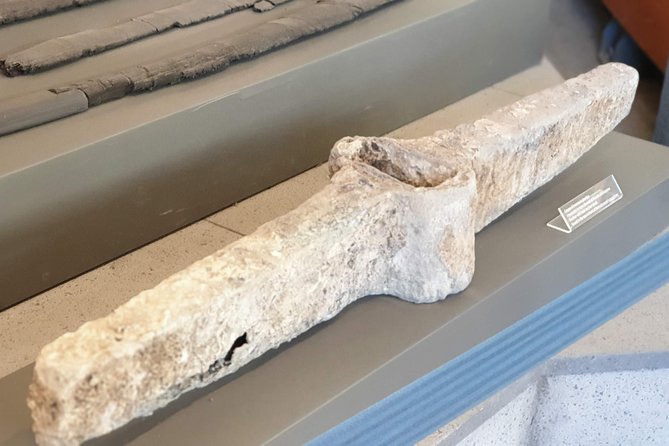
The cooking class and lunch give this excursion its most unusual feature. Instead of finishing with another monument, you sit down to make handmade pasta and eat the result. The cooking fee and lunch fee are included.
The strongest praise for the experience centers on this part of the day. Antonino’s wife is described as patient and welcoming, and the cooking is presented as easy to follow, fun, and delicious. The meal takes place on the terrace of Antonino’s private residence, with views toward the port of Naples. That setting makes the class feel more personal than a standard restaurant meal.
The supplied details do not specify the pasta shape, menu, class length, or dietary arrangements. If you have allergies or restrictions, ask before booking. The same applies if you need the meal to fit a strict departure time.
This is also where the private format matters most. Only your own group participates, so the pace can be more relaxed than in a large cooking school. Antonino has also been praised for taking and sending photographs and videos, a small service that can help preserve the day without making you manage your phone constantly.
What the private vehicle adds
The driver is more than a way to get from one stop to another. The excursion covers Pompeii, Herculaneum, Vesuvius, and a meal in or around Naples, so private transport removes several complicated connections.
Antonino’s van has been described as immaculate, and his driving as smooth. The same feedback highlights his knowledge of the wider peninsula, which can be useful during the long transfers. You are not locked into a large coach route, and the return can be made to the pickup point or another requested drop-off in the excursion area.
There is a practical limit. A private vehicle cannot erase traffic, and the roads around Naples, Pompeii, Herculaneum, and Vesuvius can make timing unpredictable. Keep the rest of your day flexible. The excursion ends back at the meeting point unless you arrange another local drop-off.
Is $352.51 per person good value?
At $352.51 per person, this is expensive compared with a basic Pompeii entry ticket or a shared transfer. But the price covers a private full-day service with a driver, bottled water, guided visits when selected, cooking class fees, and lunch. Depending on the booking option, Pompeii tickets are also included.
The value improves for two or more people who would otherwise pay separately for transport, guides, and a cooking experience. You also save the effort of arranging three separate outings. The price is harder to justify if you only want Pompeii, do not care about cooking, or prefer to move slowly through one archaeological park.
Group discounts are offered, and the minimum booking is two people. The private format is especially useful for families, couples, or friends who want a set route without sharing a vehicle with strangers.
Who should book this experience?
I would recommend it to someone visiting Naples or the surrounding coast for a short stay who wants several major experiences handled in one day. It suits people who value a private driver, appreciate a guide at archaeological sites, and want a meal that feels connected to local life.
It is also a good fit for cruise passengers, provided the ship schedule leaves enough room and all docking details are supplied in advance. Pickup can be arranged from cruise ports in the Naples, Salerno, Amalfi coast, and Sorrento areas, subject to road access.
I would hesitate to recommend it to anyone with limited mobility or low tolerance for a packed schedule. The day involves uneven archaeological surfaces, a volcano climb, multiple transfers, and several hours outside. Service animals are allowed, and most people can participate, but the physical demands still deserve attention.
Free cancellation is available up to 24 hours before the start time. Changes or cancellations inside that window are not refunded, and the experience may be rescheduled or refunded if poor weather or insufficient bookings force cancellation.
My booking verdict
Book this excursion if you want breadth, private transport, and a memorable meal more than a slow visit to one site. The best parts are the clear archaeological route, the convenience of a private driver, the Vesuvius climb, and the warm home cooking experience associated with Antonino and his wife.
Skip it if your priority is an unhurried Pompeii visit or a lower-cost day. The schedule is packed, some admissions are extra, and the volcano walk takes real effort. For the right small group, though, it brings together the ancient world, the volcano that buried it, and the food culture of Naples in a way that feels varied and genuinely local.
FAQ
How long does the excursion last?
The experience lasts approximately eight to nine hours. The listed visits include Pompeii, Herculaneum, Mount Vesuvius, and the cooking class with lunch, plus driving time.
Is pickup included?
Pickup and drop-off can be arranged from accommodations, ports, train stations, and airports when the streets allow vehicle access. If a vehicle cannot reach your accommodation, pickup is made at the nearest accessible point.
Are Pompeii and Herculaneum tickets included?
Pompeii tickets are included only if you select an option that includes them. Herculaneum admission is listed separately as not included. Confirm the exact ticket arrangement when booking.
Are Mount Vesuvius tickets included?
No. Tickets to Mount Vesuvius are not included in the tour price.
How much walking is required at Mount Vesuvius?
The walk to the top takes approximately 35 minutes, followed by about 35 minutes back to the car. The total Vesuvius portion lasts about two hours and 30 minutes when driving time is included.
Is this a private tour?
Yes. Only your group participates, and a minimum of two people per booking is required.
What happens if bad weather cancels the tour?
If poor weather causes cancellation, you are offered a different date or a full refund. The same applies if the minimum number of participants is not met.
More Tours with Lunch in Italy
- Lunch at Masseria Pasta Making Experience
★ 5.0 · 26 reviews - Homemade Pasta Class and Lunch in the Heart of Chianti
★ 5.0 · 21 reviews - Verona: Tortellini Cooking Class and Lunch with Mamma Ivana
★ 5.0 · 20 reviews - Chianti -Fresh Pasta Making Class and Sauces with Lunch or Dinner
★ 5.0 · 19 reviews
Just added around Italy
- Verona: Tortellini Cooking Class and Lunch with Mamma Ivana★ 5.0 · 20 reviews
- Volterra: Fresh Pasta Cooking Class at a Tuscan Farmhouse★ 5.0 · 33 reviews
- Vicenza: Pasta & Tiramisu Cooking Class at a Local’s Home★ 5.0 · 5 reviews
- Verona: Pasta & Tiramisu Cooking Class at a Local’s Home★ 5.0 · 16 reviews
- Verona: Pasta Cooking Class with Wine Tasting★ 5.0 · 4 reviews
- Verona: Prosecco and Pasta Making Class at a Local’s Home★ 5.0 · 10 reviews
- Verona: My Granny’s secrets making gnocchi★ 5.0 · 7 reviews
- Venice: Share Your Pasta Love in a Local’s Home★ 4.8 · 20 reviews
Fresh Pasta Workshops, compared.
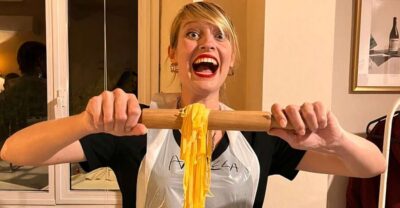
Pasta Making Class with Wine, Limoncello, and Dessert
Read our review →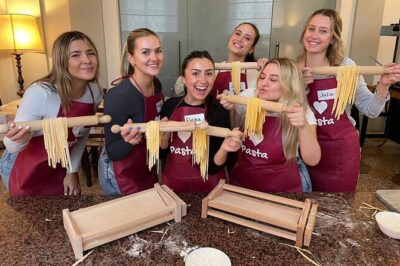
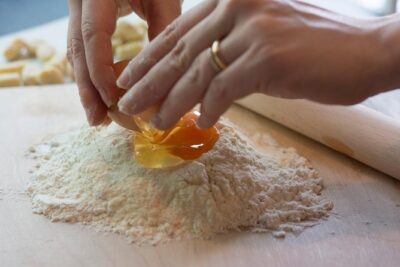
Enjoy Spritz and Pasta Making in Piazza Navona
Read our review →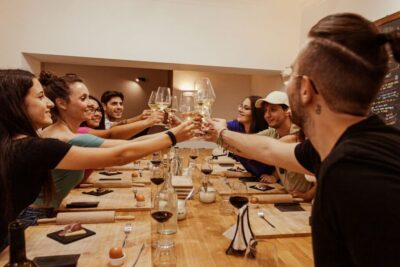
Pasta Making & Wine Tasting with Dinner in Frascati from Rome
Read our review →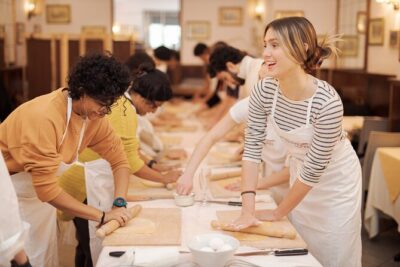
The Secrets to Learn Fresh Pasta and Tiramisù in a Glam Home
Read our review →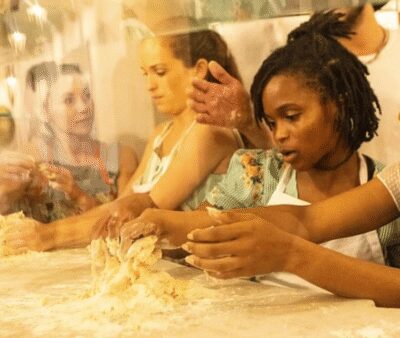
Pasta Making with Wine Tasting and Dinner in Frascati
Read our review →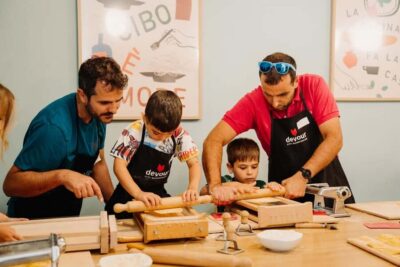
Browse the lists this tour appears in