
Review · SARDINIA
Cagliari Cooking Class: Sardinian Ravioli, Wine & Local Flavors
Make pasta, then eat the whole lesson. This three-hour Sardinian cooking class gives you hands-on practice with culurgiones and fresh tagliatelle, followed by a generous home-cooked meal. I like the small maximum of six people and the warm, patient teaching style of Giulia. I also like that you receive digital recipes, so the class can continue in your own kitchen. The main consideration is the meeting address in Sestu, rather than central Cagliari, so check your route before booking.
You will learn to make culurgiones with potato and mint filling, shape fresh tagliatelle, and sit down to eat both pastas with regional wine. The menu also includes Sardinian cheeses, cured meats, honey, dessert, and homemade Mirto. It is a friendly, food-first outing, but it may not suit you if you want a sightseeing tour or a large, highly structured cooking school.
Key points to know before booking
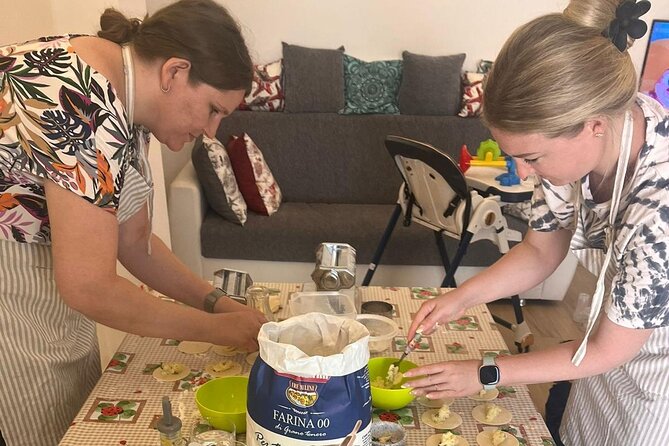
- Two Sardinian pastas in one class: You make both culurgiones and tagliatelle, not just one basic pasta shape.
- A very small group: The class accepts a maximum of six people, allowing plenty of individual help.
- A full meal is included: Antipasti, the pasta you prepare, dessert, regional wine, water, and homemade Mirto are part of the experience.
- Giulia is central to the experience: Her patient, cheerful teaching style receives repeated praise, especially for beginners.
- Meeting point in Sestu: The listed address is Via G.Matteotti, 34, 09028 Sestu, which matters if you are staying in central Cagliari.
- Good value at $94.82: You receive a three-hour class, a meal, drinks, and recipes for less than many stand-alone restaurant meals plus a separate class.
Making culurgiones in a Sardinian home kitchen
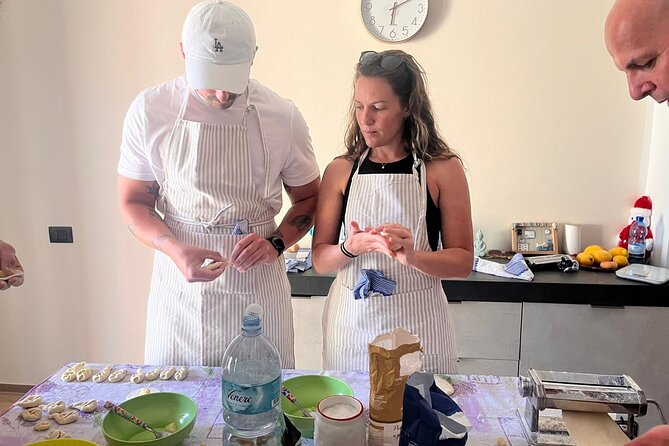
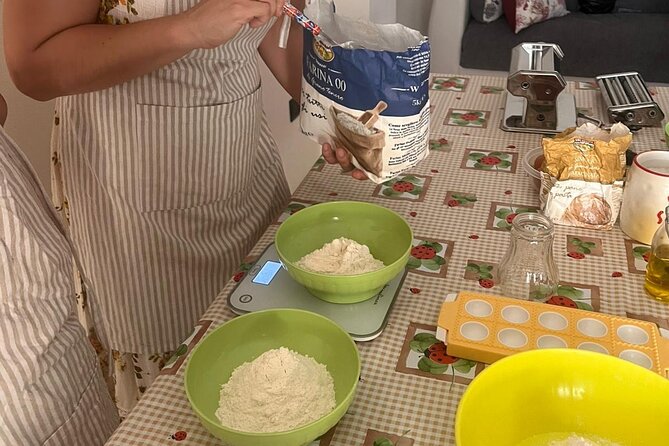
The appeal here begins with the setting. You are not simply watching a chef work behind a counter. You step into a real Sardinian kitchen and take part in the preparation from the first handful of flour to the final plate.
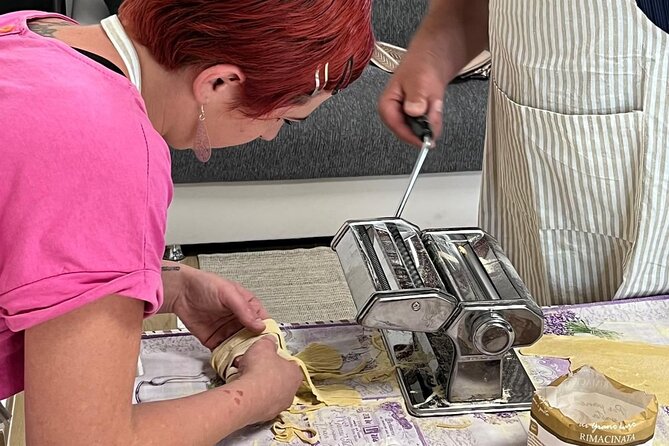
That setting gives the class a personal feel. A maximum of six people means Giulia can watch how you mix, roll, fill, and shape the dough. If you have never made fresh pasta, that matters. You can ask for help before a small mistake becomes a pasta disaster.
The focus is culurgiones, Sardinia’s distinctive ravioli. The filling uses potato and mint, a combination that gives the pasta a soft center with a fresh herbal note. Culurgiones are especially interesting because the shape is part of the tradition. You are not merely cutting squares and pressing the edges together. You are learning a recognizable Sardinian form by hand.
The class includes a step-by-step demonstration before you begin. That approach is useful for beginners because you can first see the movement, then copy it with your own dough. The goal is not perfect restaurant presentation. It is to understand how the pasta is made and gain enough confidence to try it again at home.
Giulia’s teaching is one of the strongest reasons to choose this class. The feedback consistently describes her as patient, skilled, cheerful, and easy to spend time with. That combination is important in a small cooking class. A technically gifted chef who rushes you can make the lesson stressful. Here, the emphasis appears to be on helping you learn while keeping the mood light.
More Ravioli and Gnocchi Classes in Italy:
- 3 in 1 Cooking Class near Navona: Fettuccine, Ravioli & Tiramisu
★ 5.0 · 7,376 reviews - Rome: 3-in-1 Fettuccine, Ravioli, and Tiramisu Cooking Class
★ 4.9 · 2,704 reviews - Rome: Fettuccine Pasta Cooking Class in Rome’s City Center
★ 4.8 · 2,414 reviews
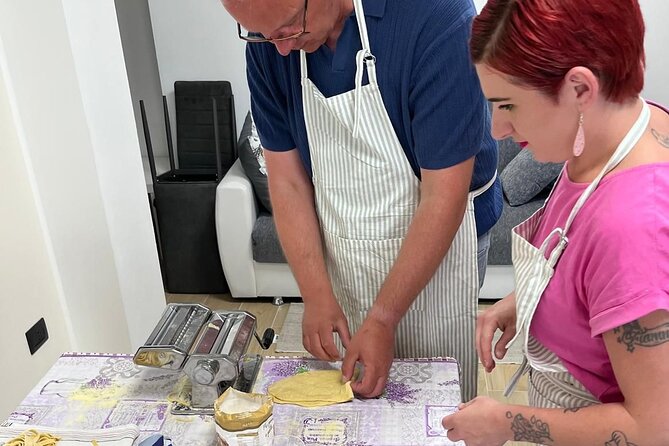
Rolling dough for fresh tagliatelle
The second pasta gives the lesson a useful contrast. Tagliatelle is familiar to many people, but making it from scratch still teaches you plenty about dough, thickness, and cutting.
You work with local flours and simple methods passed down through generations. The class does not require previous cooking experience, so you should not feel out of place if your homemade pasta has a few irregular edges. Those imperfections are part of the fun, and they also show you what to improve when you repeat the recipe later.
Making two kinds of pasta gives the class more value than a single-recipe workshop. Culurgiones introduces you to filling and shaping. Tagliatelle focuses more on rolling and cutting. You leave with two different techniques rather than one dish you may never make again.
The pace is also helped by the three-hour format. That is long enough for instruction, preparation, cooking, and a sit-down meal without turning the day into an all-day food school. Still, you should allow some flexibility around the stated duration. Handmade pasta involves several stages, and the meal is meant to be enjoyed rather than rushed.
The antipasti course starts the Sardinian meal
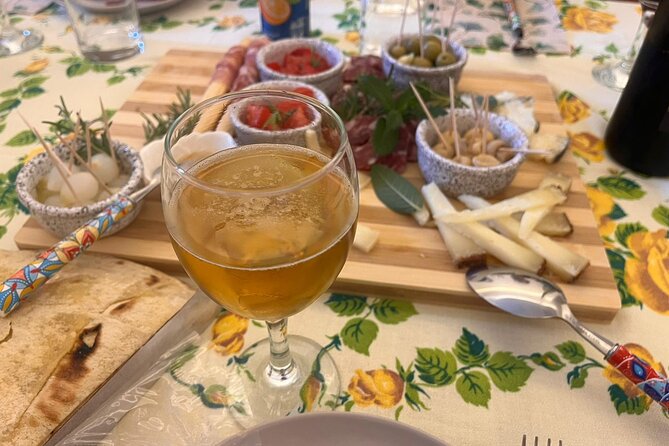
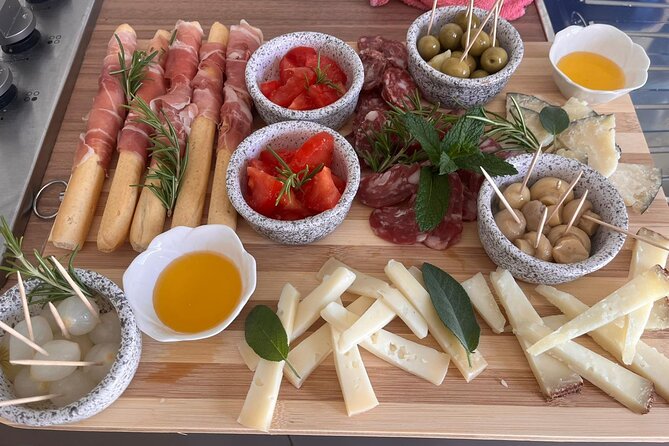
Once the cooking is finished, the class changes from lesson to shared meal. The first course is a traditional Sardinian antipasto spread with cheeses, cured meats, and honey.
This is more than a plate of snacks. It gives you a quick introduction to the island’s everyday food culture before the pasta arrives. Sardinian cheese brings a strong local character, while cured meats add salt and richness. Honey supplies a sweet counterpoint, and pairing the items together lets you notice how simple ingredients can work as a complete course.
Regional wine is served during the meal. Wine makes the sit-down portion feel less like an add-on and more like a proper Sardinian lunch or dinner. Water is also included, which is a small but useful detail.
The meal is one of the most praised parts of the class. The combination of the home setting, food prepared during the lesson, and relaxed conversation creates the feeling of being welcomed to someone’s table. If you prefer to eat quickly and move on to the next attraction, this slower meal may feel lengthy. If you enjoy food as a way to meet local culture, it is likely to be one of the best parts.
Eating your own culurgiones and tagliatelle
The main course includes the fresh pasta you have prepared. That makes the meal more satisfying than a standard cooking demonstration where the chef does the work and you simply taste the result.
You will taste the culurgiones and tagliatelle with traditional sauces. The exact sauces are not specified, so do not book this expecting a particular named recipe beyond the two pastas themselves. The important point is that your work becomes the meal.
This also gives the class a natural reward structure. First, you learn the technique. Then you see how the pasta cooks. Finally, you eat it at the table. The process connects the lesson to the dish in front of you, and that makes the recipes easier to remember.
The small group helps here, too. With no more than six people, the shared table should feel intimate rather than crowded. The class is suited to couples, friends, solo visitors who enjoy meeting people, and small family groups. It also works well for anyone looking for an activity built around conversation rather than sightseeing.
Several people describe leaving both full and happy. That is worth taking seriously when judging the price. This is not a short sample tasting. It is a cooking lesson followed by a substantial three-course meal.
More Pasta Classes with Wine in Italy:
- Florence: Pasta Cooking Class with Unlimited Wine
★ 4.9 · 10,285 reviews - Florence: Pasta & Tiramisu Cooking Class with Unlimited Wine
★ 4.9 · 6,708 reviews - Florence: Pasta Cooking Class with Unlimited Wine
★ 5.0 · 6,413 reviews - Rome: Pasta & Tiramisu Class with Fine Wine by the Vatican
★ 4.9 · 4,852 reviews
Dessert and homemade Mirto finish the afternoon
The final course is a traditional Sardinian dessert, followed by homemade Mirto liqueur. Mirto is made from myrtle, a plant closely associated with Sardinia, and it is commonly served as a digestif after a meal.
The homemade detail gives the ending a personal touch. It also adds something you may not get from a standard restaurant meal, where the liqueur might be a commercial bottle. If you do not drink alcohol, keep in mind that the listed meal includes regional wine and Mirto. You should mention any dietary or drink-related concerns when arranging the class, although the provided information specifically asks you to report food allergies.
The dessert and liqueur bring the menu to three courses, but the overall meal has more variety than that simple count suggests. You receive antipasti, two pasta preparations, dessert, wine, water, and Mirto. For a food-focused activity, that is a generous amount of eating.
What $94.82 gets you
At $94.82 per person, the price makes sense if you want both instruction and a meal. You are paying for roughly three hours, personal guidance, two handmade pasta recipes, a full Sardinian menu, drinks, and digital recipes to use later.
A cheaper pasta class might teach one dish and finish with a small tasting. A less expensive meal might give you the food but none of the practical skill. This class combines both. I consider that a fair price, particularly with a six-person maximum.
The value depends on how you use the class. If you are mainly looking for a quick lunch, the price is higher than an ordinary local meal. If you want an activity, a cultural introduction, and a meal in one booking, it becomes much more attractive.
The recipes are important for long-term value. A cooking class can fade into a pleasant memory once you leave Italy. Digital recipes give you a way to recreate the culurgiones and tagliatelle at home, even if your first attempt is less tidy than Giulia’s.
Getting to the meeting point in Sestu
The listed starting point is Via G.Matteotti, 34, 09028 Sestu CA, Italy. The activity ends at the same meeting point.
The description places the kitchen in the Cagliari area, but the exact address is in Sestu. Do not assume that a Cagliari hotel means a short walk to the class. Check the route and allow enough time to arrive without rushing your dough-making lesson.
The meeting point is near public transportation, and one detailed description notes easy parking on a quiet street. That may make the class practical if you are renting a car. Parking information is not guaranteed as a formal inclusion, so confirm your own transport plan before setting out.
The activity is offered in English. Confirmation arrives at booking, and service animals are allowed. The group limit of six is worth checking when you book, especially if you want a private-feeling class for a small party.
The class is booked an average of 21 days ahead. That does not mean every date sells out, but it is a useful warning for a short Sardinia visit. If the class is important to your plans, reserve before you arrive rather than waiting for a free afternoon.
Who will enjoy this Sardinian cooking class
I would choose this experience for food lovers who want to do more than sample local dishes. It suits beginners because the instruction is personal and no previous cooking experience is required.
It is also a good choice for anyone curious about a less familiar Sardinian dish. Tagliatelle may be familiar, but culurgiones gives you a specific island specialty to learn. You can tell friends back home that you made a Sardinian pasta shape, not just another plate of generic Italian noodles.
The class also suits people who value a welcoming host. Giulia’s patience and humor receive repeated praise, and those qualities can make the difference between a fun lesson and a tense one.
I would think twice if you have a strict schedule, dislike group meals, or want a central Cagliari walking tour. The class is about cooking and eating, not monuments, markets, or city history. The Sestu meeting point also deserves attention if you are staying in the historic center.
Tell the host about food allergies before the class. The menu includes dairy, cured meats, honey, wine, and other regional products, so clear communication is sensible.
Cancellation and planning details
You can cancel up to 24 hours before the start time for a full refund. Cancellations or changes made less than 24 hours before the activity are not accepted for a refund, and the cut-off follows local time.
The experience is offered in English and receives a 4.8 rating from 20 reviews, with 100 percent recommending it. Those figures fit the practical details: a tiny group, direct instruction, a generous meal, and a host who is praised for warmth and patience.
You should still read the menu carefully if you have allergies or dietary restrictions. The supplied details confirm that allergies should be reported, but they do not promise substitutions or a special menu.
Should you book the pasta class in Cagliari?
Book it if you want an active, personal food experience with enough time to learn and eat properly. The two-pasta format is the main advantage, and the meal makes the $94.82 price easier to justify.
I especially like the combination of culurgiones, tagliatelle, regional wine, and homemade Mirto. You get a taste of Sardinia, a practical skill, and recipes to take home. Giulia’s patient approach is another strong reason to choose it, especially if you are new to fresh pasta.
Skip it if your schedule cannot handle the trip to Sestu, if you prefer a central Cagliari activity, or if you want only a quick tasting. For everyone else, this is a well-sized class with a generous table at the end, and a good way to meet Sardinia through its food.
FAQ
Where does the Sardinian cooking class start?
The class starts at Via G.Matteotti, 34, 09028 Sestu CA, Italy.
Where does the activity end?
The activity ends back at the meeting point in Sestu.
How long does the cooking class last?
The class lasts approximately three hours.
What language is the class offered in?
The class is offered in English.
How many people can join the class?
The activity has a maximum of six travelers.
What pasta will I learn to make?
You will learn to make culurgiones, Sardinian ravioli filled with potato and mint, and fresh tagliatelle.
Is previous cooking experience required?
No. The class is designed for people without previous cooking experience and includes one-on-one guidance.
What food and drinks are included?
The meal includes Sardinian antipasti with cheeses, cured meats, and honey, the fresh pasta you prepare, a traditional dessert, regional wine, water, and homemade Mirto liqueur.
Are recipes provided after the class?
Yes. Digital recipes are included so you can prepare the dishes at home.
Can I cancel for a full refund?
Yes. You can cancel at least 24 hours before the start time for a full refund. Cancellations made less than 24 hours before the start time are not refunded.
More Wine Tours in Italy
- Rome: Pasta Making Class with Wine, Limoncello, and Dessert
★ 4.9 · 3,177 reviews - Learn to Make Pasta & Tiramisu with Wine and Limoncello Included
★ 5.0 · 2,345 reviews - Florence: Cooking Class Pasta & Tiramisu Making Unlimited Wine
★ 5.0 · 2,234 reviews - Fettuccine & Tiramisù: Cooking Class with Wine & Limoncello
★ 4.9 · 2,103 reviews
Just added around Italy
- Verona: Tortellini Cooking Class and Lunch with Mamma Ivana★ 5.0 · 20 reviews
- Volterra: Fresh Pasta Cooking Class at a Tuscan Farmhouse★ 5.0 · 33 reviews
- Vicenza: Pasta & Tiramisu Cooking Class at a Local’s Home★ 5.0 · 5 reviews
- Verona: Pasta & Tiramisu Cooking Class at a Local’s Home★ 5.0 · 16 reviews
- Verona: Pasta Cooking Class with Wine Tasting★ 5.0 · 4 reviews
- Venice: Share Your Pasta Love in a Local’s Home★ 4.8 · 20 reviews
- Verona: Prosecco and Pasta Making Class at a Local’s Home★ 5.0 · 10 reviews
- Verona: My Granny’s secrets making gnocchi★ 5.0 · 7 reviews
Pasta Classes with Wine, compared.
Pasta & Tiramisu Cooking Class with Unlimited Wine
Read our review →
Pasta & Tiramisu Class with Fine Wine by the Vatican
Read our review →
Pasta Making Class with Wine, Limoncello, and Dessert
Read our review →
Rome Cooking Class: Make Pasta and 3 Spritz Cocktails
Read our review →
Learn to Make Pasta & Tiramisu with Wine and Limoncello Included
Read our review →
Cooking Class Pasta & Tiramisu Making Unlimited Wine
Read our review →Browse the lists this tour appears in