
Review · BARI
Cesarine: Small group Pasta and Tiramisu class in Bari
Make pasta, then eat it in a Bari home. This three-hour class brings you into a local kitchen, where you make two pasta dishes and tiramisu from scratch. I like the hands-on cooking and the chance to share the finished meal at the host’s table, rather than simply watching a chef work.
I also like the personal touch. Hosts such as Juanita, Christiana, Fernanda, Anna, and Anita have been praised for their patience, warmth, and family recipes. The main drawback is that the exact host, home, and menu details may vary, and one booking caused confusion about the home’s distance from central Bari.
Key points to know before booking
- You cook two pasta recipes from scratch, with techniques for shaping pasta, preparing fillings, and pairing sauces.
- Tiramisu is part of the lesson, not just a dessert served at the end.
- The meal begins with an aperitivo, and some hosts add antipasti, vegetables, bread, wine, or extra family dishes.
- The setting is a private Bari home, which gives the class a personal feel but means the kitchen setup can vary.
- Groups can reach 12 people, though some sessions are much smaller and may include just one or two other couples.
- The $119.48 price includes a three-hour cooking and dining experience, with free cancellation up to 24 hours before the start time.
Walking into a Bari kitchen
The class starts in Bari and ends back at the meeting point. Your confirmation provides the meeting details, but read them closely. One participant expected a home in Bari and later faced a costly transport issue, while the provider stated that the host’s home was a 15-minute walk from central Bari. That mixed account makes one thing clear: confirm the exact address before setting out.
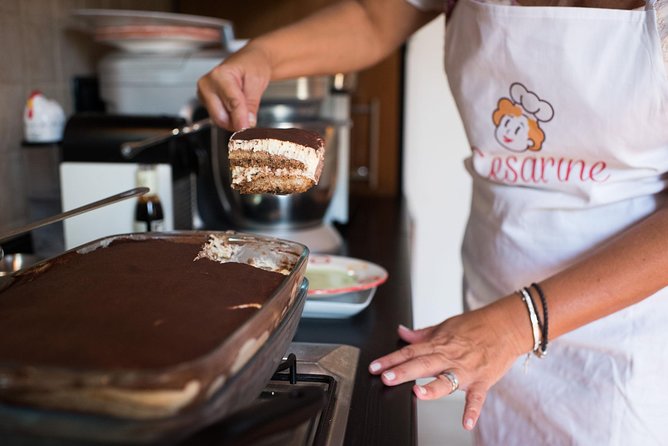
Once you arrive, the format is friendly and direct. You meet your Cesarina, the local home cook who leads the session, and enter her kitchen. This is not a restaurant demonstration with a chef behind a counter. You work with the ingredients, ask questions, shape the pasta, and sit down for the meal afterward.
That home setting is the heart of the class. You get a look at how a Bari family approaches food, hospitality, and a long meal. Hosts may include relatives in the lesson, too. Christiana was joined by her mother, while Fernanda and Sara taught together with Franco. Another class included a grandmother, called Nona by the participants.
The host names can change, so do not book expecting one particular cook unless your confirmation names her. The repeated praise for Juanita, Christiana, Fernanda, Anna, and others suggests a strong group of hosts, but each home will have its own pace and personality.
More Tiramisu Classes in Bari:
- Bari: Pasta and Tiramisu Cooking Class with Wine
★ 5.0 · 273 reviews - Bari: Pasta & Tiramisu Cooking Class at a Local’s Home
★ 5.0 · 33 reviews - Cooking class of Tagliatelle and Tiramisu in Altamura
★ 5.0 · 7 reviews
The aperitivo starts the evening
Before the pasta work begins, you can expect an aperitivo. This opening drink and snack is an important part of Italian social life. It gives you time to settle in, meet the host, and learn about the meal ahead.
The exact spread is not fixed in the advertised menu. Several sessions included meats, cheeses, fresh bread, bruschetta, cooked peppers, vegetable dishes, or zucchini frittata. Wine also appeared in many accounts. Treat these extras as a likely part of the welcome, not a guaranteed list of dishes for every date.
I like this opening because it keeps the class from feeling rushed. You are not pushed straight into measuring flour. You begin around a table, with food already in front of you, then move into the practical work when everyone is ready.
It is also where the cultural side begins. You may learn why a certain pasta shape is common in Puglia, how a family serves vegetables, or which sauce belongs with a particular shape. The class is about technique, but the conversation around the food gives it meaning.
Making two pasta dishes by hand
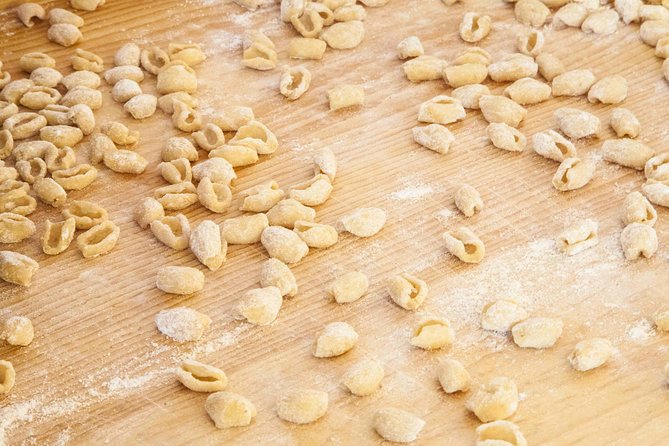
The central lesson covers two pasta recipes and their traditional sauces. The examples described by participants include orecchiette, ravioli, and other hand-shaped pasta. In one session, the group made orecchiette with seasonal vegetables. In another, the class prepared ravioli filling along with orecchiette.
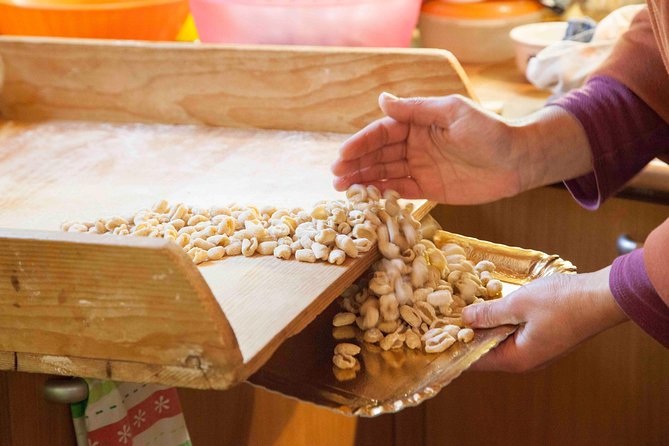
Orecchiette is especially fitting for a Bari class. Its name means little ears, and shaping each piece takes practice. You roll or cut portions of dough, then form the characteristic cup by hand. The shape is simple in appearance but harder to make consistently than it first seems. One participant noted that producing three different pasta shapes would take years of practice.
That is useful advice. You should arrive ready to learn, not expecting perfect pasta on your first attempt. The point is to pick up the hand movements, see the correct dough texture, and understand how the pieces should look before cooking.
Ravioli adds a different skill set. You prepare or work with a filling, place it between sheets of pasta, seal the edges, and cook it carefully. The lesson gives you a chance to compare filled pasta with a simpler shape such as orecchiette.
Hosts are praised for being patient, which matters here. The dough can resist you. Pieces can be uneven. You may need several tries to shape a neat ear or seal ravioli without trapping too much air. A patient teacher turns those small failures into the most useful part of the class.
The sauces are made in the traditional local spirit, and some hosts prepare more than one sauce for the meal. You may work with seasonal vegetables or watch the host finish a sauce while you shape pasta. Since the standard description lists pasta and tiramisu rather than exact recipes, the dishes can change with the host and available ingredients.
Learning the tiramisu method
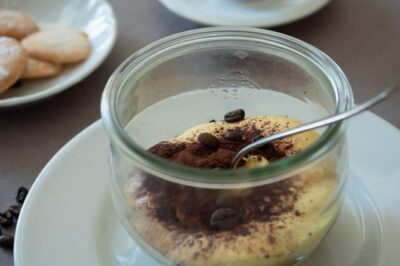
Tiramisu is the second major lesson. You do not simply receive a prepared dessert. You learn how to assemble a traditional version, with the host explaining the order and technique.
The details of each recipe are not fixed, but the class focuses on producing a smooth, balanced dessert rather than rushing through a quick assembly. Several participants described the finished tiramisu as delicious, and one specifically praised the chance to take the recipe home.
This is a useful part of the class for home cooks. Pasta shaping takes repeated practice, while tiramisu gives you a recipe you can try soon after returning home. You can use the lesson as a base and adjust it later to suit your own kitchen.
Making dessert during the class also creates a natural pause. You prepare it before the meal, then let the finished dish be ready for the final course. That gives the evening a proper meal structure: aperitivo, cooking, pasta, and dessert.
More Home Cooking Classes in Bari:
- Cesarine: Private Pasta Class & Meal at Local’s Home in Bari
★ 5.0 · 4 reviews - Cesarine: Pasta & Tiramisu Class at Local’s Home in Bari
★ 5.0 · 2 reviews - Pastamama, Home Cooking Classes at Grace’s Home
★ 5.0 · 521 reviews - Small Group Pasta and Tiramisu Class at Local’s Home in Venice
★ 4.5 · 236 reviews
Sitting down to eat what you made
The final meal is one of the strongest parts of the experience. You sit at the host’s dining table and eat the pasta you prepared. That simple change, from standing at a work surface to sharing food around a set table, makes the class feel like a visit rather than a lesson.
The advertised menu is pasta and tiramisu, but many hosts serve extra dishes. You might receive an antipasto platter, cheeses, cured meats, fresh bread, bruschetta, cooked peppers, vegetables, or frittata. Some accounts describe two sauces and a larger meal than expected.
Do not assume every session will include every extra. The official menu lists only pasta and tiramisu. Still, the repeated pattern of generous hospitality suggests that the meal can be more substantial than the short menu implies.
The shared table also helps if you are visiting Bari alone or as a couple. Some sessions bring together just one other couple, while the maximum group size is 12. A smaller group gives you more time with the host and makes it easier to ask questions. A full group may feel more social, but each person could receive less individual attention.
The food matters, but so does the conversation. You share the meal with the host and the other participants, talk about family cooking, and compare your pasta results. One of the most appealing parts of the format is that you are not sent away as soon as the cooking ends.
What the $119.48 price really buys
At $119.48 per person, this is not a cheap meal. You can find pasta dishes in Bari for far less, and a restaurant meal will not require three hours of your holiday.
The value comes from the combination of instruction, food, drinks, and access to a private home. You receive a cooking lesson, two pasta preparations, a tiramisu lesson, an aperitivo, and a sit-down meal. You also leave with methods you can use at home, and some hosts provide recipes.
I see the price as fair for someone who values a personal activity more than a simple meal. It is less convincing if you only want to eat traditional food or if your schedule is packed with sightseeing. The class takes around three hours, and the social meal can make it run at a relaxed pace.
The value improves for families and food-focused couples. One family described the class as a highlight for both adults and a teenager, which is not always easy to achieve on a cooking holiday. The hands-on work gives younger participants something to do, while the shared meal keeps the event from feeling like a formal school lesson.
Who will enjoy this class most
I would choose this for you if you want to:
- Learn practical pasta and tiramisu techniques.
- Meet a local cook in a private home.
- Spend a relaxed evening around food rather than rushing between sights.
- Eat a meal that includes your own work.
- Share the class with a small group.
- Take recipes and ideas home.
It suits beginners because the hosts explain and guide the process. It also suits experienced cooks. One participant who already cooked regularly still picked up useful skills and methods.
Families can enjoy it, especially if children or teenagers like working with dough. Couples get a social evening with a built-in activity. Solo visitors may find the shared table helpful, since the format naturally creates conversation.
This is less suited to anyone who dislikes group activities, has a very restricted diet that was not discussed in advance, or wants a guaranteed list of dishes. The available information names pasta and tiramisu, but the precise pasta shapes, sauces, extra courses, and host vary.
Timing, group size, and practical details
The class lasts about three hours and is offered in English. It uses a mobile ticket, and the meeting point is in Bari. Public transportation is nearby, though you should check the home address and directions in the confirmation before leaving your accommodation.
The experience is generally booked well ahead, about 45 days in advance on average. If your Bari dates are fixed, booking early makes sense, especially if you want an evening slot or are traveling with several people.
The maximum group size is 12. That is still much smaller than a large commercial cooking school, but the actual feel depends on the number booked for your date. If personal instruction matters to you, ask about the expected group size before booking if that information is available.
The hosts take sanitary precautions and provide basic supplies such as paper towels and hand sanitizer. The information also asks participants to keep distance where possible and use masks and gloves when needed. These instructions may change with current local guidance, so check the latest details before your class.
Cancellation is flexible up to 24 hours before the start time, when you can receive a full refund. Changes or cancellations inside that 24-hour window are not accepted for a refund. The class also requires a minimum number of participants, so if the provider cancels for that reason, you are offered another date or a full refund.
The main drawback: confirm the home address
The location issue deserves attention because it can affect both cost and timing. The experience is sold as a Bari activity, but a private home may not sit right beside your hotel or the old town.
One account described a home 36 minutes away by car and an unexpected transport charge. The provider later clarified that the host’s home was a 15-minute walk from central Bari and that full directions were included in the confirmation. The conflicting details suggest a simple precaution: check the exact meeting point immediately after booking.
Do not wait until the day of the class to work out transport. If the address is unclear, contact the provider. That small step can prevent an unnecessary taxi bill and keep the three-hour schedule from becoming stressful.
Should you book the Bari pasta and tiramisu class?
I would book it if you want a personal food experience, not just another restaurant meal. The strongest reasons are the hands-on pasta work, the chance to make tiramisu, and the generous home setting. Hosts such as Juanita, Christiana, Fernanda, Anna, and Anita have been praised for patience, hospitality, and strong teaching.
The $119.48 price is worthwhile when you count the aperitivo, meal, wine or extras that may be served, and the recipes you can take home. Just remember that the exact menu and host can vary, and confirm the address before you go.
Skip it if you need a tightly fixed schedule or a guaranteed list of dishes. For everyone else, this is a warm, practical way to spend an evening in Bari, with flour on your hands and a proper meal waiting at the end.
FAQ
Where does the cooking class take place?
The class starts in Bari, in the home of a local Cesarina host. The activity ends back at the meeting point. Check your confirmation for the exact home address and directions.
How long does the experience last?
The class lasts approximately three hours.
What food will I make?
The standard menu includes two pasta recipes with traditional sauces and tiramisu. The exact pasta shapes and additional dishes can vary by host.
Is the class offered in English?
Yes. The experience is offered in English.
How many people can join?
The maximum group size is 12 participants.
Is transportation available nearby?
The homes are near public transportation. You should still check the exact address in your booking confirmation before attending.
Can I cancel for a refund?
Yes. You can cancel at least 24 hours before the start time for a full refund. Cancellations or changes made less than 24 hours before the start time are not accepted for a refund.
More Small Group Pasta Classes in Bari
- Milan: Pasta and Tiramisu Small Group Cooking Class with Wine
★ 5.0 · 660 reviews - Florence Small-Group Pasta Class with Seasonal Ingredients
★ 5.0 · 532 reviews - Bologna: Pasta and Tiramisu Small Group Cooking Class with Wine
★ 5.0 · 409 reviews - Palermo: Pasta and Tiramisu Small Group Cooking Class with Wine
★ 5.0 · 348 reviews
Just added around Bari
- Cesarine: Pasta & Tiramisu Class at Local’s Home in Bari★ 5.0 · 2 reviews
- Premium Cooking Class in Bari: Pasta & Tiramisu, free wine bottle★ 5.0 · 2 reviews
- Fresh pasta and dinner in my biogarden★ 5.0 · 8 reviews
- Artisanal ice cream pasta course in Castellana caves★ 5.0 · 6 reviews
- Cesarine: Private Pasta Class & Meal at Local’s Home in Bari★ 5.0 · 4 reviews
- Bari Pasta Experience by Rickshaw★ 4.5 · 31 reviews
- Cooking class of Tagliatelle and Tiramisu in Altamura★ 5.0 · 7 reviews
- Gioia del Colle: Premium E-Bike & Private Pasta Experience★ 5.0 · 4 reviews
Tiramisu Classes, compared.
3 in 1 Cooking Class near Navona: Fettuccine, Ravioli & Tiramisu
Read our review →
Pasta & Tiramisu Cooking Class with Unlimited Wine
Read our review →
Pasta & Tiramisu Class with Fine Wine by the Vatican
Read our review →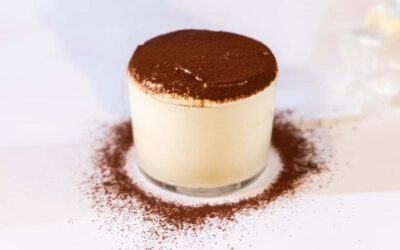
3-in-1 Fettuccine, Ravioli, and Tiramisu Cooking Class
Read our review →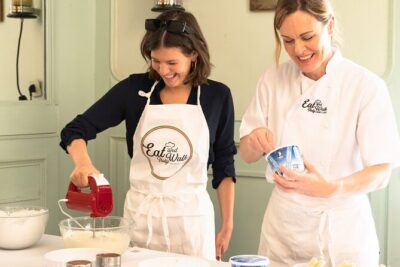
Learn to Make Pasta & Tiramisu with Wine and Limoncello Included
Read our review →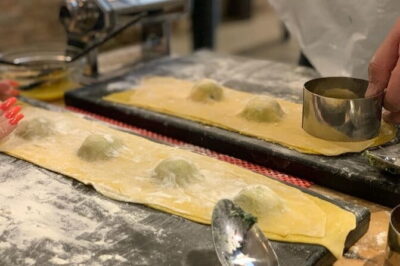
Cooking Class Pasta & Tiramisu Making Unlimited Wine
Read our review →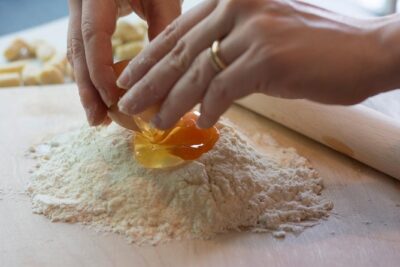
Become a Masterchef in Rome: Pasta, Ravioli and Tiramisù Class
Read our review →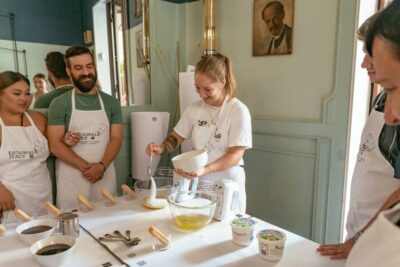
Fettuccine & Tiramisù: Cooking Class with Wine & Limoncello
Read our review →Browse the lists this tour appears in