
Review · FLORENCE
VIP Cooking Class with Carbonara, Pesto Making, Lasagna & Cannoli
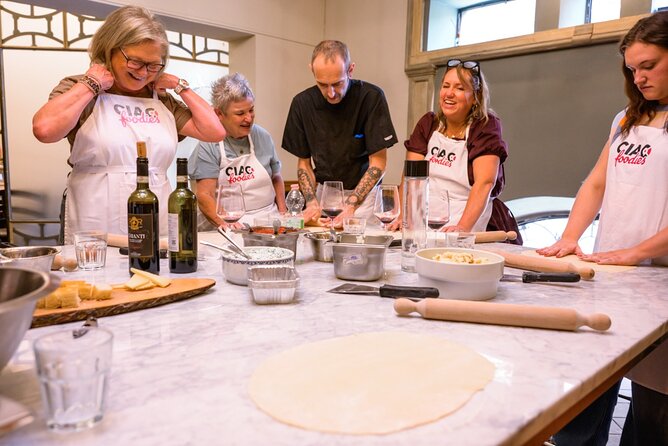
Fresh pasta tastes better in Florence. This five-hour class combines a guided stop at Sant’Ambrogio Market with hands-on cooking, so you learn how to choose ingredients before turning them into carbonara, lasagna, pesto, and cannoli. I especially like the market-to-table format and the traditional mortar-and-pestle pesto session. The main drawback is that the market visit is limited to morning departures and is not offered on Sundays or bank holidays.
I also like the small maximum of eight people, which gives the chef room to correct your technique and answer questions. Past sessions have been praised for warm, engaging instruction from chefs including Alain, Ghi, Giulia, Stefano, and Aloun. You should know that the food is prepared upstairs and cooked downstairs, so you may not watch every dish as it reaches the stove.
Key points at a glance
- Sant’Ambrogio Market first: Morning participants shop for ingredients with the chef at one of Florence’s best-loved food markets.
- Four Italian classics: You prepare lasagna with ragù and béchamel, carbonara, gnocchi with fresh pesto, and Sicilian cannoli.
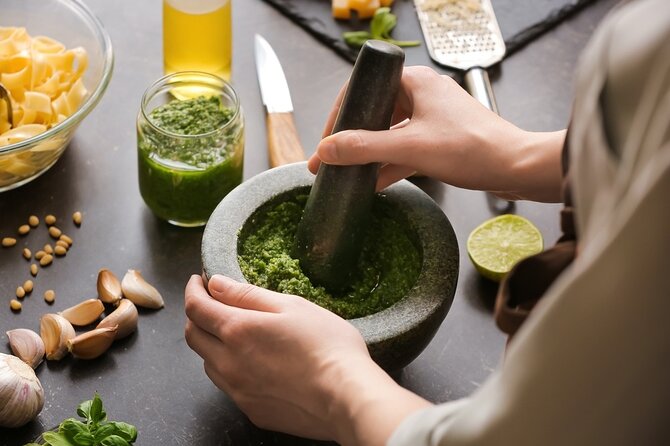
- Real pesto-making: You crush basil, pine nuts, and garlic by hand in a traditional mortar.
- Small English-speaking group: The class is capped at eight people and taught only in English.
- Wine and a full meal: Your cooking becomes lunch or dinner, with unlimited wine and water included.
- Take-home help: A digital recipe booklet and graduation diploma are included.
Starting at Sant’Ambrogio Market in Florence
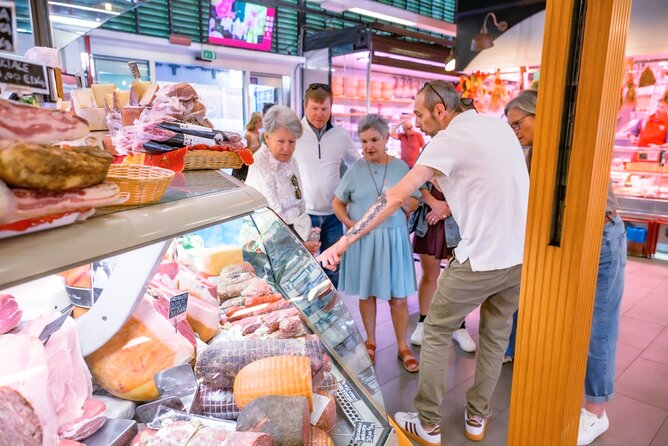
The morning version begins at Mercato di Sant’Ambrogio, with the chef helping you choose the ingredients for the class. This is more useful than a quick walk through food stalls. You learn what quality looks like before you start cooking, and the market gives the meal a local setting rather than making the class feel like a cooking school anywhere in the world.
The market visit is also the most time-sensitive part of the day. It is included only with the morning departure, and it does not operate as part of the experience on Sundays or Italian bank holidays. If browsing the market matters to you, check the departure carefully before paying. An afternoon class still includes the cooking and meal, but not this shopping stop.
You should also keep expectations sensible. The market visit has been described as interesting but brief, so it is best viewed as an introduction to Italian ingredients, not a long food tour. The value comes from connecting the market purchases to the dishes you prepare afterward.
More Ravioli and Gnocchi Classes in Florence
- Francy’s Pasta & Gnocchi on Top of Florence Hills
★ 5.0 · 457 reviews - Florence: Lasagna and Spaghetti-Making Class
★ 4.9 · 245 reviews - 3- Cooking Making Spaghetti & Lasagna
★ 5.0 · 39 reviews
Four dishes, four different lessons
The menu gives you a broad tour of Italian cooking rather than focusing on one type of pasta. That makes the class useful for a first cooking lesson in Italy, especially if you want recipes you can repeat at home.
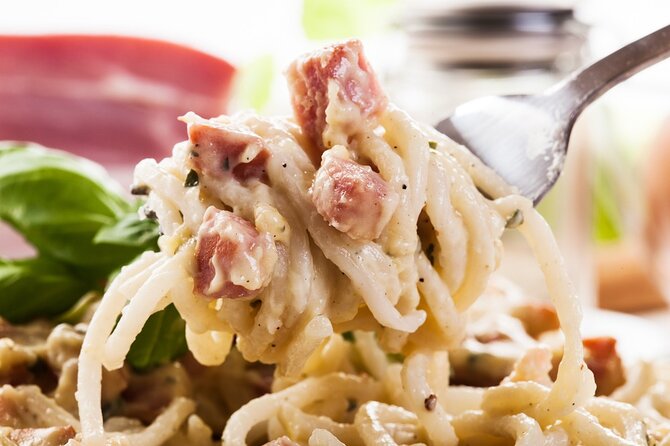
Carbonara with eggs and bacon
Carbonara is listed as fettuccine alla carbonara, made with pasta, eggs, and bacon. The important lesson here is the sauce. It depends on handling eggs carefully so they become creamy rather than scrambled.
I like this choice because carbonara is familiar enough to recognize, but technique-sensitive enough to make the lesson worthwhile. A chef can show you how the ingredients come together and explain why timing matters. The class describes the sauce as an egg-based creamy preparation topped with bacon, so you should not expect a cream-heavy restaurant version.
Lasagna with ragù and béchamel
The lasagna uses a Bolognese-style meat sauce made with beef and pork, along with béchamel. This gives you practice with a dish built in stages: sauce, white sauce, pasta, and assembly.
Lasagna is also the most substantial item on the menu. You are not simply shaping one portion of pasta and sitting down. You are working with several elements that must come together in the finished bake. If you enjoy cooking with a group, this is likely one of the most satisfying parts of the class.
The menu can change slightly with the season and ingredient supply. That means the exact preparation may not be identical on every date, but the central Italian dishes remain the focus.
More Pesto Making Classes in Florence:
- Cooking Class with Carbonara, Pesto Making, Lasagna, Cannoli
★ 5.0 · 12 reviews - Homemade Pasta and Pesto Class with a Local Chef in Genoa
★ 5.0 · 305 reviews - Genova: Homemade Pasta & Pesto Local Chef Class with Wine
★ 5.0 · 217 reviews - Pasta, Pesto and Tiramisu class Riomaggiore, Cinque Terre
★ 5.0 · 57 reviews
Gnocchi with mortar-made pesto
This is the most hands-on and playful part of the menu. You make pesto with basil, pine nuts, and garlic, crushing the ingredients yourself in a traditional mortaio, or mortar.
That detail matters. A blender can produce pesto quickly, but using a mortar makes you pay attention to texture, order, and pressure. It also gives the class a clear connection to traditional home cooking. You do not simply watch the chef make the sauce and then taste it.
Gnocchi adds a second skill. The experience combines the soft potato pasta with Ligurian-style pesto, so you get a taste of how Italian regional traditions can meet on one plate.
Sicilian cannoli
Dessert is a Sicilian cannolo that you fill with your choice of toppings. Options listed include ricotta, chocolate, pistachio, and chopped hazelnuts.
This gives the class a welcome change of pace after the pasta and sauces. It is also a good ending because you can make a dessert that feels distinctly Italian without requiring complicated decoration. The topping choice lets you adjust the final bite to your taste.
The dish list describes four main preparations, though the exact menu may vary. Some sessions have included additional courses, so your class may feel larger than the core four-dish outline. The safe expectation is carbonara, lasagna, pesto with gnocchi, and cannoli.
How the cooking lesson works
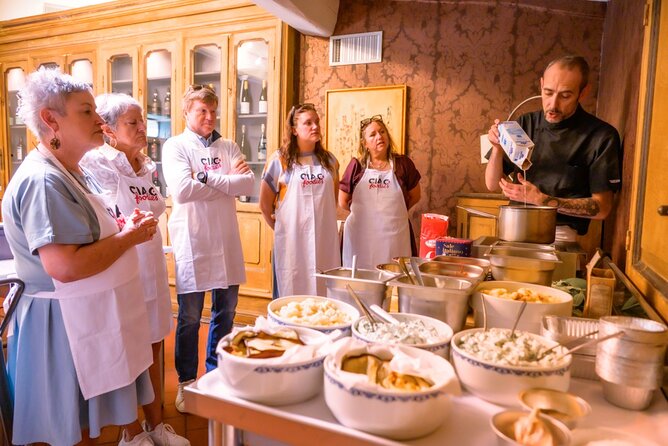
The chef leads you through the recipes step by step. You prepare the ingredients, work through the techniques, and then eat the results together at the same meeting point.
The teaching style is a major part of the value. Alain has been praised for entertaining stories and practical instruction, while Stefano has been described as patient and clear. Giulia was especially personable, and Aloun was praised for making the class both fun and accommodating. Since the staff can vary, the exact personality of the day will not be guaranteed, but the instruction is designed to be friendly and participatory.
This class is not aimed only at confident cooks. One participant who described being an inexperienced cook still found the chef encouraging and easy to follow. That is useful to know if you worry about slowing down the group or making a mistake. You will have a chef nearby rather than being left to figure out pasta dough or pesto on your own.
At the same time, this is a cooking class, not a demonstration with a chef doing everything for you. You should be ready to roll up your sleeves, handle ingredients, and participate throughout the session.
There is one practical limitation. The food is prepared upstairs and cooked downstairs, so you may not see every cooking step in the kitchen itself. If your main goal is to watch a professional chef manage pans at the stove, this setup may feel incomplete. If your goal is to learn preparation and then eat what you made, it is less of a concern.
A small group makes a real difference
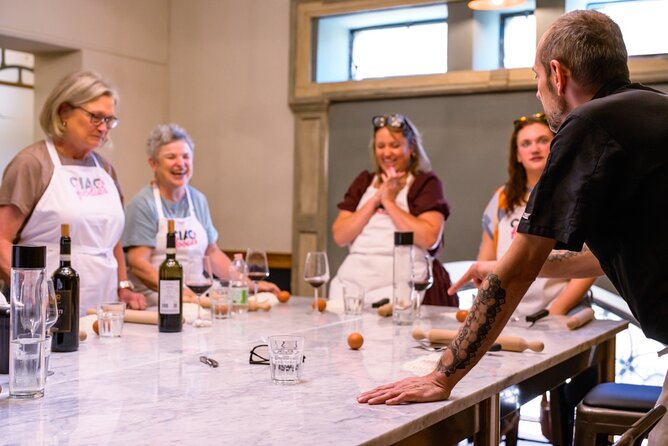
The maximum group size is eight people. That is small enough for the chef to keep an eye on your work, answer questions, and offer corrections without turning the class into a crowded production line.
A small group also affects the social side. You eat with the other participants and share wine during the meal, so the atmosphere can be as important as the recipes. The class has been described as friendly and conversational, with plenty of time for questions.
The only language offered is English. That keeps the instruction consistent, and it is helpful if you want to understand the explanations rather than rely on gestures. Vegetarian options are available, but you should mention dietary needs, allergies, or intolerances in advance.
This experience is not recommended for children under six or people with celiac disease. The ingredients and kitchen procedures may not be suitable for someone who must avoid gluten entirely. Ask ahead about other food concerns instead of waiting until the class begins.
Lunch or dinner with Tuscan wine
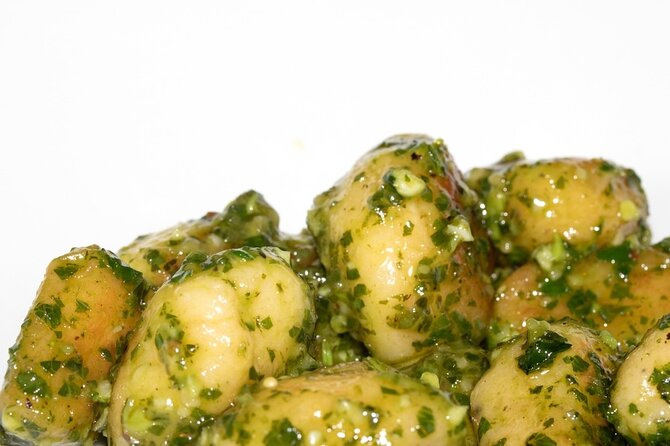
After the preparation, you sit down to eat what the group has made. The booking includes lunch or dinner, depending on the departure time, along with unlimited wine and water.
The wine is a strong part of the value. A cooking class can become expensive if drinks are added separately, but here wine is included for the meal and the class period. You should still drink at your own pace, especially because the session lasts about five hours and begins with active cooking.
The meal also gives you a chance to judge the recipes as finished dishes. You are not leaving with a box of ingredients or a quick sample. The point is to eat a substantial Italian meal made by the group.
Some people have had enough food to take leftovers home. That will depend on the menu, portions, and how much the group prepares, so I would not book it expecting a guaranteed takeaway. Still, the class is clearly designed as a full meal rather than a light tasting.
Is $119.21 a fair price?
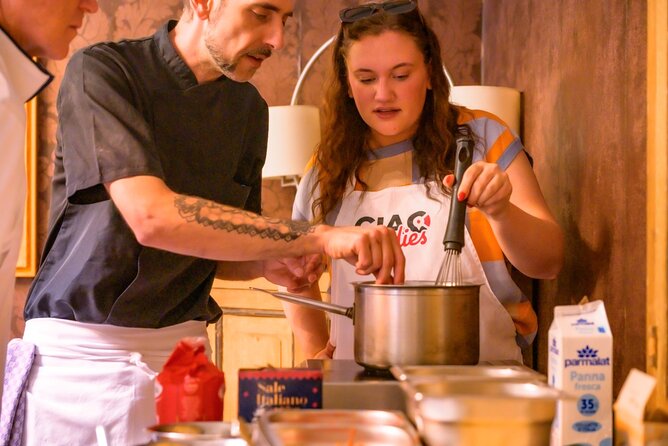
At $119.21 per person, this is not a budget cooking lesson. The price makes more sense when you count the parts: a chef-led market visit on eligible morning departures, hands-on preparation of four classic dishes, ingredients, lunch or dinner, unlimited wine, water, a digital recipe booklet, and a graduation diploma.
The small group is important here. You are paying for more than a seat in a large demonstration. With no more than eight people, the chef can offer direct guidance, and the experience has a more personal feel.
The market visit adds the most distinctive value, but only if you choose a morning departure on a day when it operates. For an afternoon, Sunday, or bank holiday booking, compare the price with what you want from the day. You still receive the cooking class, food, wine, recipes, and diploma, but you lose the ingredient-shopping portion.
I would consider the price reasonable for someone who wants a meal plus a practical activity. It is less compelling if you only want to taste Italian food or if you already cook these dishes regularly and do not care about instruction.
Timing, meeting point, and planning tips
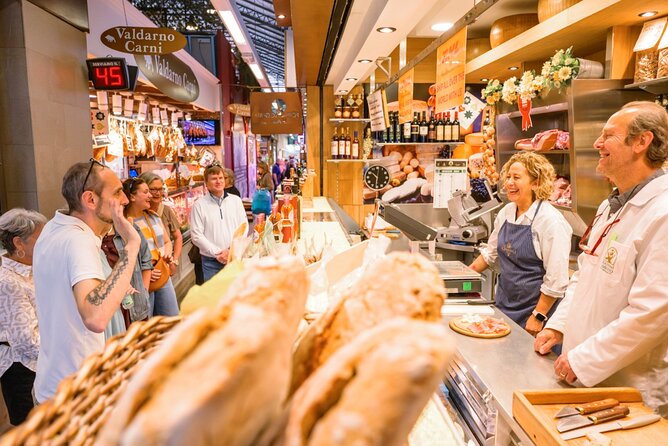
The class begins and ends at Cucineria La Mattonaia, Via della Mattonaia 19R, 50121 Florence. It lasts about five hours, so leave room in your day for the entire activity rather than scheduling a museum or train immediately afterward.
The location is near public transportation. Your confirmation arrives at booking, so read it carefully for the exact departure time and any final instructions.
I would book early if your Florence dates are fixed. The experience is often reserved about 95 days ahead, and the eight-person limit keeps capacity low. The cancellation policy is flexible up to 24 hours before the start time, with a full refund available if you cancel by then. Cancellations or changes inside 24 hours are not accepted for a refund.
Wear something comfortable for standing and cooking, though no special clothing requirement is listed. Most important, tell the operator about allergies or food intolerances in advance. The menu can shift with seasonality and availability, so flexibility helps.
Who will enjoy this Florence cooking class?
I would choose this for you if you want to do more than look at Florence’s food. It suits first-time cooks, couples, solo visitors who like social activities, and anyone who wants recipes to repeat at home.
It is especially good for people who enjoy learning through their hands. You crush pesto in a mortar, help build lasagna, prepare carbonara, and finish with cannoli. The digital recipe booklet means the class can continue in your own kitchen after the trip.
Families with very young children should choose another activity because children under six are not recommended. People with celiac disease should also avoid this experience for safety reasons.
You may want to skip it if you dislike group meals, have a very restricted diet, or want a quiet restaurant lunch. The five-hour schedule is a commitment, and the cooking area may not let you watch every step at the stove.
Should you book it?
Book this class if you want a hands-on Florence food experience with a small group, a market connection, and enough food to count as a proper meal. The strongest features are the friendly chef-led teaching, mortar-made pesto, unlimited wine, and recipes you can use at home.
Choose a morning weekday or Saturday departure if the Sant’Ambrogio Market matters to you. Choose the afternoon only if the cooking itself is your main goal. At $119.21, I see it as a good value for an active half-day with food, instruction, drinks, and take-home recipes, but not as the cheapest way to eat Italian cooking.
FAQ
Where does the cooking class begin and end?
It begins and ends at Cucineria La Mattonaia, Via della Mattonaia 19R, 50121 Florence, Italy.
How long does the experience last?
The class lasts approximately five hours.
Is the Sant’Ambrogio Market visit included with every departure?
No. The market visit is included only with morning departures, and it is not available on Sundays or bank holidays.
What dishes will I prepare?
The core menu includes fettuccine carbonara, lasagna with beef and pork ragù plus béchamel, gnocchi with homemade pesto, and Sicilian cannoli.
Will I make the pesto myself?
Yes. You crush basil, pine nuts, and garlic by hand with a traditional mortar.
Is wine included?
Yes. Unlimited wine and water are included with the experience.
Is the class taught in English?
Yes. The experience is offered only in English.
How many people can join the class?
The maximum group size is eight participants.
Can the class accommodate dietary restrictions?
Vegetarian options are available. You should report allergies or food intolerances in advance so the operator can try to accommodate them. The experience is not recommended for people with celiac disease or children under six.
Just added around Florence
- Cooking class and home made pasta in Florence with LA VIVANDIERA!★ 5.0 · 5 reviews
- The Art of Pasta and Wine Tasting with Local Sommelier★ 5.0 · 16 reviews
- Vegan Cooking Class in Florence: Pasta Making & Wine!★ 5.0 · 2 reviews
- MaMa Florence: The Art of Corzetti – Hands-On Pasta Class★ 5.0 · 15 reviews
- Tuscan Pasta Masterclass Small-Group Cooking Experience★ 5.0 · 17 reviews
- Hands on Deluxe Traditional 4-course dinner with fresh pasta★ 5.0 · 15 reviews
- Share Your Pasta Love in a Local’s Home in Florence★ 4.5 · 16 reviews
- Gluten free pasta and dessert class 6 guests max★ 5.0 · 2 reviews
Ravioli and Gnocchi Classes, compared.
3 in 1 Cooking Class near Navona: Fettuccine, Ravioli & Tiramisu
Read our review →
3-in-1 Fettuccine, Ravioli, and Tiramisu Cooking Class
Read our review →
Fettuccine Pasta Cooking Class in Rome’s City Center
Read our review →
Become a Masterchef in Rome: Pasta, Ravioli and Tiramisù Class
Read our review →
Fettuccine & Tiramisù: Cooking Class with Wine & Limoncello
Read our review →
Rome Pasta and Tiramisu Class: Ravioli, Fettuccine & Fine Wine 5*
Read our review →
Pasta Cooking Class in Rome – Fettuccine Class in Piazza Navona
Read our review →
Browse the lists this tour appears in