
Review · GENOA
Genova: Homemade Pasta & Pesto Local Chef Class with Wine
Pesto starts with a mortar, not a machine. This three-hour class in central Genoa gives you a hands-on taste of Ligurian cooking, with Chef Alberto guiding you through fresh pasta, traditional basil pesto, and the stories behind both. I especially like the small group of eight and the chance to eat what you make, rather than watching a cooking demonstration from the sidelines.
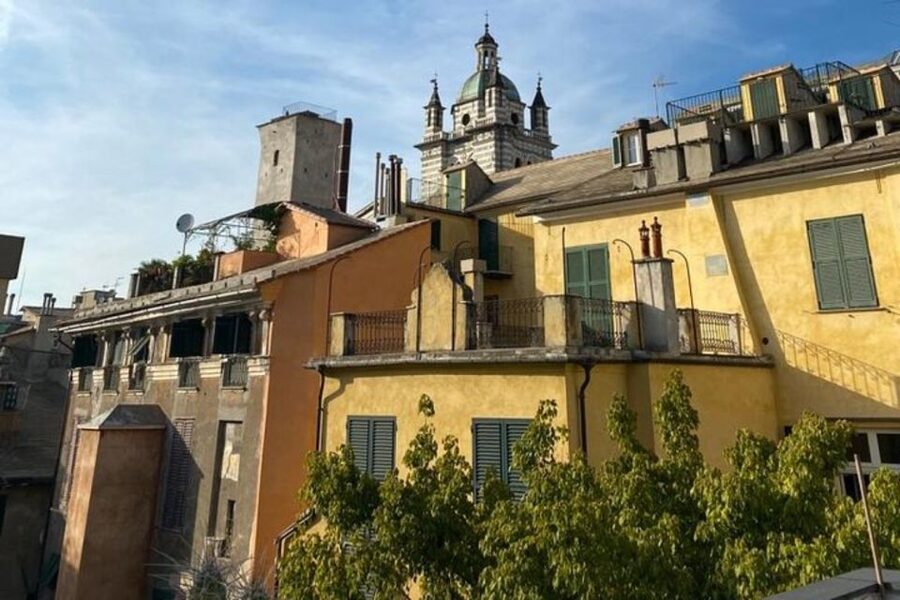
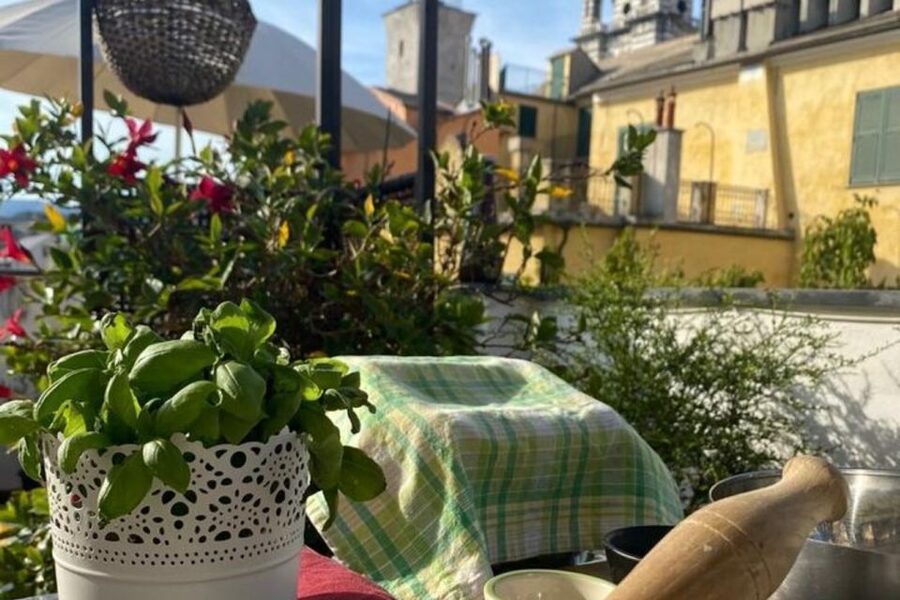
I also like the setting: a private home in a historic palazzo, with a terrace overlooking the city. Alberto’s warm teaching style, clear English, and generous spread of focaccia, appetizers, wine, dessert, and liqueur make this feel closer to being invited into a Genoese home than attending a standard class.
The main drawback is practical: the apartment is on the fifth floor with no elevator, and the meeting point in the old center can take a little patience to find. This is not suitable for wheelchair users, and you should allow time to locate the entrance.
Key Points to Know Before You Book
- Make pesto the traditional way: Crush basil, garlic, pine nuts, salt, cheese, and olive oil with a mortar and pestle.
- Learn a local pasta shape: The class includes Genoese fresh pasta, with some participants making the playful shape known as crazy napkin pasta.
- Cook in a real home: The class takes place in Alberto’s apartment inside a historic palazzo, with a rooftop-style terrace and city views.
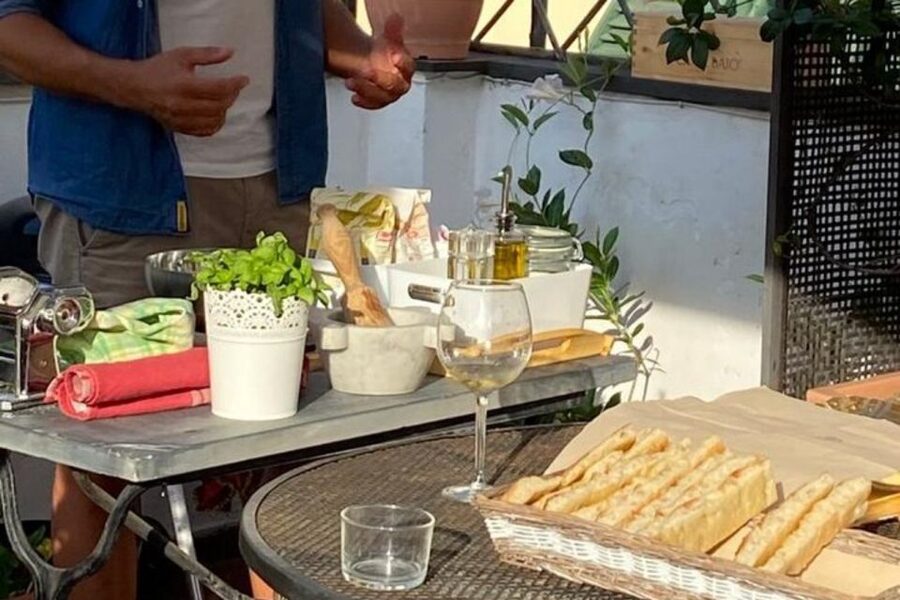
- Expect more than pasta: Focaccia, appetizers, regional wine, a Genoese dessert, and a local liqueur are part of the meal.
- Keep the group personal: The maximum is eight people, so Alberto can watch your dough, answer questions, and correct your technique.
- Bring the recipes home: Recipes are sent after the class, giving you a useful chance to repeat the dishes in your own kitchen.
A Home Kitchen in Genoa’s Old Center
The class begins at Vico inferiore Valoria, in the heart of Genoa’s old center. You enter through a small gate marked Granara, number 11, near Cucina Valoria Restaurant. This is a tucked-away corner of the historic center, so the directions matter.
The meeting point is not a large cooking school with a bright sign out front. You are looking for an old residential entrance and then apartment 11. If you have trouble, the restaurant is the best landmark to use. The final approach may involve walking through narrow old streets, depending on where you arrive.
Once inside, you climb to the fifth floor. There is no elevator, so pack light and consider your mobility before booking. The climb is part of the practical reality of using a historic Genoese building, but it will not work for everyone.
At the top, Alberto welcomes you into his home. The setting gives the class its character. You are not in a staged restaurant kitchen, but in a personal space where the lesson, meal, conversation, and view all blend together.
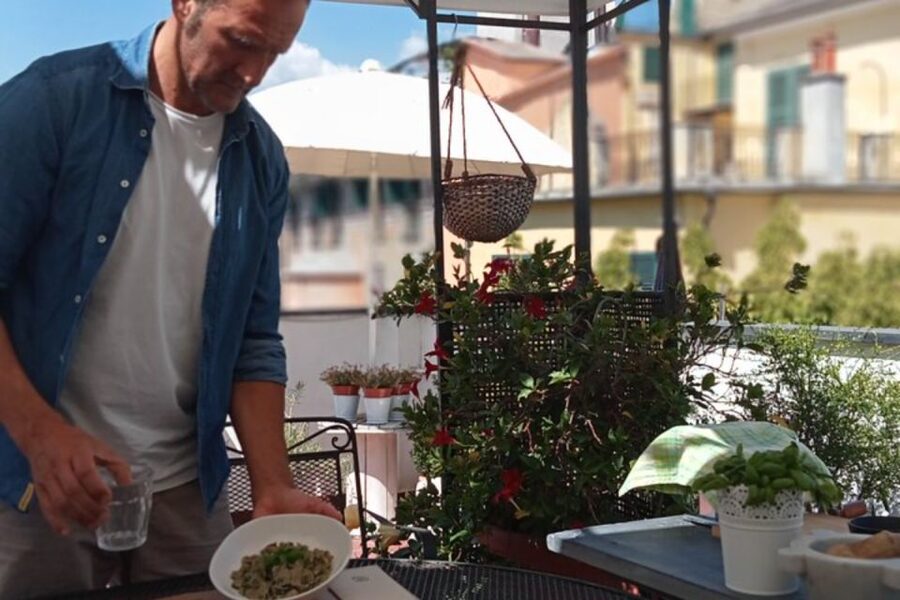
On clear days, the terrace is a major pleasure. You can work with the city around you, then sit down to eat with a view over Genoa. In bad weather, the class moves indoors. The food and teaching continue, but the terrace is naturally less useful when rain or poor conditions keep you inside.
More Pesto Making Classes in Italy:
- Homemade Pasta and Pesto Class with a Local Chef in Genoa
★ 5.0 · 305 reviews - Pasta, Pesto and Tiramisu class Riomaggiore, Cinque Terre
★ 5.0 · 57 reviews - Levanto, Cinque terre: Fresh Pasta and Pesto cooking class
★ 5.0 · 46 reviews
The Welcome: Focaccia, Drinks, and Local Flavor
The cooking does not begin with a stern list of instructions. Alberto has been praised for starting with a friendly welcome and small tastes of Ligurian food. Depending on the session, you might receive espresso, orange juice, warm focaccia, or other regional snacks before preparing the main dishes.
That opening matters because it sets the pace. You are given time to settle in, meet the other participants, and begin learning about Genoa through food. Focaccia is especially fitting here. It is one of Liguria’s best-known foods, and tasting it before making pasta gives you a quick sense of the region’s simple but carefully handled cooking.
The extra food is also useful if you arrive hungry. This is not a class where the final bowl of pasta is the only thing you eat. Appetizers, focaccia, quiche or similar savory items, dessert, and drinks may appear along the way. The exact selection can vary, but the experience is designed as a full meal rather than a single recipe lesson.
You will also have wine with the meal. Some sessions include wine from Liguria, including a bottle from the Cinque Terre area. The alcohol is part of the social side of the class, so tell the host if you do not drink and avoid treating the wine as the main reason to book.
Making Pesto with a Mortar and Pestle
Pesto is the natural first lesson in Genoa. The sauce comes from Liguria, and the class uses the traditional ingredients: basil, garlic, European pine nuts, coarse salt, hard cheese such as Parmigiano-Reggiano, and olive oil.
The important part is not simply learning a list of ingredients. Alberto explains how they work together and why handling them properly affects the final flavor. Using a mortar and pestle also changes the experience. It takes more effort than pressing a button, but it connects the sauce to the older home method and helps you understand its texture.
You will crush and blend the ingredients rather than treating pesto as a generic green sauce. The lesson gives you a better feel for the balance between basil, garlic, nuts, cheese, salt, and oil. That is useful when you make it later at home, especially if your supermarket pesto has made you forget how fresh the real thing can taste.
This part suits beginners because you do not need advanced kitchen skills. You work under Alberto’s direction, and the small group gives him time to check what you are doing. If you are already a confident cook, you may still appreciate the regional context and the traditional method.
Mixing, Rolling, and Shaping Fresh Pasta
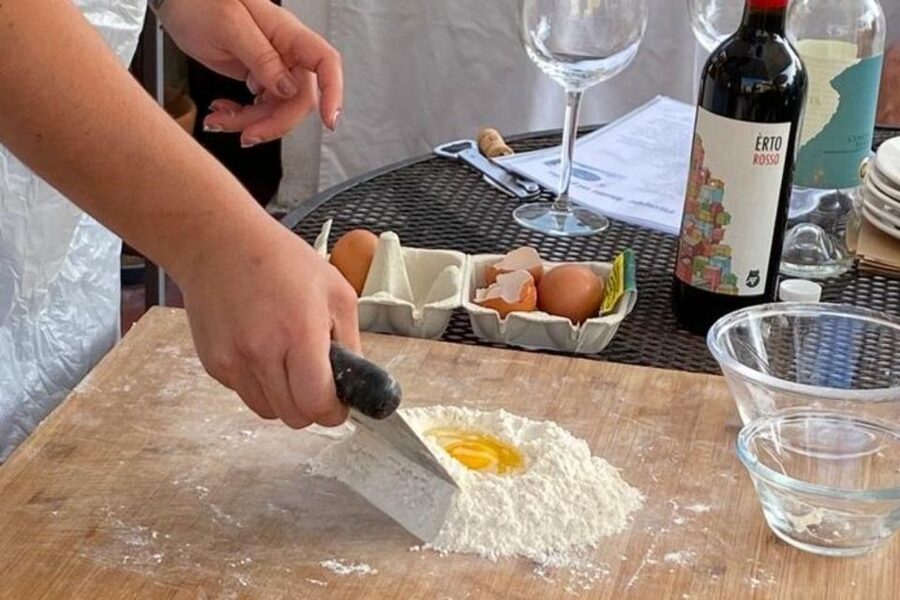
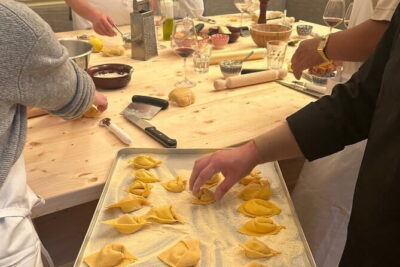
Next comes pasta fresca, or fresh pasta. You combine the basic ingredients, including flour, water, eggs, and flavorings, then work the mixture into dough. Alberto focuses on the feel of the dough, not just the measurements.
That is one of the better reasons to take a class instead of following a recipe online. Dough changes with handling, and a written recipe cannot always tell you whether it needs more moisture, more flour, or more kneading. Alberto’s tips help you notice those changes for yourself.
You roll the dough, then shape it. The class has included a Genoese form sometimes described as crazy napkin pasta, a memorable name for a playful local shape. This is not only about making something look pretty. Shaping pasta gives you a practical skill you can repeat with family or friends at home.
The lesson is hands-on from start to finish. You do not simply watch Alberto prepare the food while you take photographs. You mix, roll, shape, and contribute to the finished meal. That makes the class a good choice if you want an activity with something to show for your time besides a few pictures.
Families with teenagers can also find this format appealing. One family with two teenagers described the class as a trip highlight, and another participant noted that the clear instructions helped young people feel confident making pasta and pesto themselves. The class is not restricted to couples or serious cooks.
More Fresh Pasta Workshops in Italy:
- Rome: Pasta Making Class with Wine, Limoncello, and Dessert
★ 4.9 · 3,177 reviews - Pastamania – Florence Pasta Making Class
★ 5.0 · 3,050 reviews - Enjoy Spritz and Pasta Making in Piazza Navona
★ 5.0 · 1,681 reviews - Pasta Making & Wine Tasting with Dinner in Frascati from Rome
★ 5.0 · 1,326 reviews
Food Stories Alongside the Cooking
Alberto teaches more than technique. He talks about Genoese and Ligurian food traditions, the source and purpose of ingredients, and the place of pasta and pesto in local culture.
I like this part because it gives the dishes a setting. Pesto is not just a sauce you happen to prepare in Italy. It is closely tied to Genoa and Liguria, and the class explains what makes the local version distinct. You also learn about the traditions behind the pasta shape and the role of family recipes.
Alberto’s English is described as clear, and the class is offered in English and Italian. That matters when instructions involve texture, timing, and hand movements. You can ask questions while working rather than trying to decode a fast demonstration.
The teaching style is patient and conversational. Alberto is also described as a good storyteller, so you can expect the lesson to include local history and food culture alongside the practical steps. If you prefer a silent, tightly timed professional kitchen, this may feel relaxed. If you like conversation and cultural background, that relaxed pace is part of the appeal.
Sitting Down to Eat What You Made
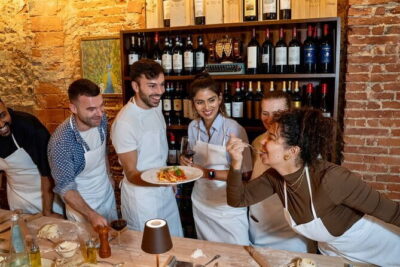
After the work is finished, the class shifts into a shared meal. Your pasta and pesto are prepared and served, and you sit with the group to taste the result.
This is where the $105 price makes more sense. You are paying for a three-hour experience that combines instruction, ingredients, a meal, wine, appetizers, dessert, and a personal setting. You also receive the chance to ask questions and learn recipes you can use later.
The meal is not limited to your pasta. Alberto has served starters such as focaccia and other local specialties, followed by a traditional Genoese dessert or tiramisu. A typical Genoese liqueur may finish the meal. The exact menu can change, but the class consistently presents itself as a generous food experience rather than a bare-bones lesson.
The social setting is another part of the value. You share the table with a small international group, which can make the evening as memorable as the cooking. Solo visitors, couples, families, and small groups can all fit comfortably into the format. A participant traveling alone also found the setting welcoming and respectful.
Still, keep your expectations sensible. This is not a formal chef certification course, and you should not expect to prepare a long restaurant menu. The focus is narrow and useful: one local pasta, pesto, and a convivial meal around them.
How the Three Hours Usually Feel
The advertised duration is three hours. That gives Alberto enough room to teach, let you work, and serve the meal without forcing every step into a rush.
The session generally breaks into four natural phases:
- Welcome drinks, focaccia, and appetizers
- Pesto preparation and a lesson about Ligurian ingredients
- Fresh pasta dough, rolling, and shaping
- Shared meal with wine, dessert, and a local digestif
The pace is leisurely rather than hurried. That suits the home setting, but you should not book it if you need to leave at a precise minute. Cooking, questions, and the meal all take time, and the social part is not an afterthought.
Starting times vary, so check the available session when booking. The class is offered in English and Italian, and the group is limited to eight people. That small number is important because cooking lessons become less useful when you cannot see the demonstration or get help with your dough.
Who Will Enjoy This Class Most
I would choose this class if you want to connect Genoa with something you can taste and make. It is especially well suited to:
- Couples looking for a shared evening activity
- Solo visitors who enjoy meeting people over food
- Families with older children or teenagers
- Beginners who want patient, practical instruction
- Pasta lovers interested in regional recipes
- Visitors who prefer a private home setting to a commercial school
You do not need to be an experienced cook. The class is built around clear instructions and direct help. You should, however, be comfortable climbing five flights of stairs and working in a home rather than a fully accessible public venue.
The experience also suits people who like a slow meal. If your ideal afternoon involves sitting down with wine, talking about ingredients, and learning a few local stories, you will likely value the format. If you want to cover several dishes quickly or spend the whole time actively cooking, the appetizers and meal may feel like a slower use of your time.
Price, Practicalities, and the Real Value
At $105 per person, this is not the cheapest way to eat pasta in Genoa. It is also not simply lunch. The price includes the class, ingredients, food, wine, dessert, and the chance to learn recipes from a local chef in his home.
For me, the strongest value comes from the combination of instruction and hospitality. You get a meal you helped create, not just a plate served to you. You also get practical methods you can repeat, including traditional pesto made with a mortar and pestle and fresh pasta shaped by hand.
The location adds atmosphere but also requires preparation. Use Cucina Valoria Restaurant as a reference point, then look for the entrance to Vico inferiore Valoria and the small gate marked Granara, number 11. Do not assume a large sign will guide you.
Cancellation is flexible up to 24 hours before the activity for a full refund, and you can reserve while paying later. Those options help if your Genoa plans are still shifting, but the more immediate concerns are the stairs, the old-center meeting point, and the three-hour time commitment.
Should You Book the Genoa Pasta and Pesto Class?
Book it if you want an authentic, social food experience with a real local host, not just a demonstration. Chef Alberto’s strengths are his warmth, clear teaching, stories about Genoa, and willingness to make the class feel personal. The terrace, homemade food, wine, and recipes sent afterward add real value.
Think twice if you use a wheelchair, dislike stairs, need a tightly fixed schedule, or want advanced culinary training. For most other visitors, especially couples, solo visitors, and families with teenagers, this offers a satisfying way to spend an afternoon or evening in Genoa. You leave with a full meal in you, a few useful techniques in your hands, and a better sense of why Liguria takes its pasta and pesto seriously.
FAQ
How long is the pasta and pesto class?
The experience lasts three hours. Starting times vary, so check availability when choosing your session.
What will I make during the class?
You will prepare fresh pasta and traditional basil pesto. The pasta may include the Genoese shape sometimes called crazy napkin pasta.
Is food and wine included?
Yes. The class includes cooking, food, drinks, and wine. The meal may also include focaccia, appetizers, a Genoese dessert, and a typical local liqueur.
Where does the class take place?
It takes place in Alberto’s apartment at Vico inferiore Valoria, Building 1, Apartment 11, marked Granara. The apartment is in a historic palace in Genoa’s old center.
Is there an elevator?
No. The apartment is on the fifth floor of a historic palace and does not have an elevator.
Is the class available in English?
Yes. The instructor teaches in English and Italian.
How many people are in the group?
The class is limited to eight participants, allowing for personal help from the chef.
Can I cancel for a refund?
Yes. You can cancel up to 24 hours in advance for a full refund. You can also reserve now and pay later.
More Pasta Classes with Wine in Italy
- Florence: Pasta Cooking Class with Unlimited Wine
★ 4.9 · 10,285 reviews - Florence: Pasta & Tiramisu Cooking Class with Unlimited Wine
★ 4.9 · 6,708 reviews - Florence: Pasta Cooking Class with Unlimited Wine
★ 5.0 · 6,413 reviews - Rome: Pasta & Tiramisu Class with Fine Wine by the Vatican
★ 4.9 · 4,852 reviews
More Chef-Led Pasta Classes in Italy
- Rome Cooking Class: Make Pasta, Dine & Drink Wine With Local Chef
★ 5.0 · 1,263 reviews - 2-in-1 Pasta and Tiramisu Cooking Masterclass in Rome
★ 5.0 · 832 reviews - Pasta Fettuccine, Ravioli and Tiramisu MasterClass
★ 5.0 · 391 reviews - Pasta and Pizza Master Class with Pick Up in Sorrento
★ 5.0 · 380 reviews
Just added around Italy
- Verona: Tortellini Cooking Class and Lunch with Mamma Ivana★ 5.0 · 20 reviews
- Volterra: Fresh Pasta Cooking Class at a Tuscan Farmhouse★ 5.0 · 33 reviews
- Vicenza: Pasta & Tiramisu Cooking Class at a Local’s Home★ 5.0 · 5 reviews
- Verona: Pasta & Tiramisu Cooking Class at a Local’s Home★ 5.0 · 16 reviews
- Verona: Pasta Cooking Class with Wine Tasting★ 5.0 · 4 reviews
- Venice: Share Your Pasta Love in a Local’s Home★ 4.8 · 20 reviews
- Verona: Prosecco and Pasta Making Class at a Local’s Home★ 5.0 · 10 reviews
- Verona: My Granny’s secrets making gnocchi★ 5.0 · 7 reviews
Pasta Classes with Wine, compared.
Pasta & Tiramisu Cooking Class with Unlimited Wine
Read our review →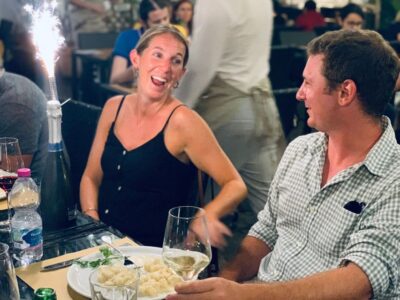
Pasta & Tiramisu Class with Fine Wine by the Vatican
Read our review →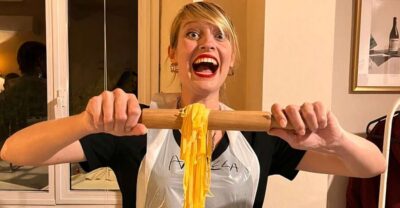
Pasta Making Class with Wine, Limoncello, and Dessert
Read our review →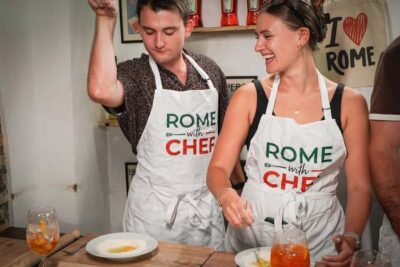
Rome Cooking Class: Make Pasta and 3 Spritz Cocktails
Read our review →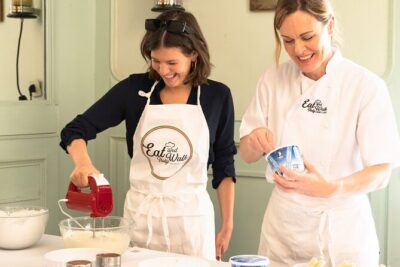
Learn to Make Pasta & Tiramisu with Wine and Limoncello Included
Read our review →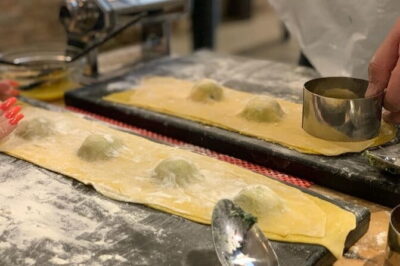
Cooking Class Pasta & Tiramisu Making Unlimited Wine
Read our review →Browse the lists this tour appears in