
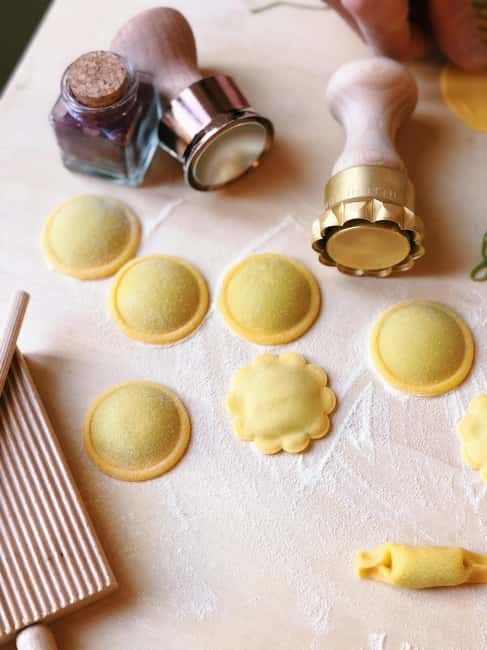
Review · GENOA
Genoa: Fresh Pasta mastserclass Michelin Stars
Pasta is better when you make it yourself. In a kitchen in central Genoa, you learn more than ten types of fresh pasta, including tagliatelle, ravioli, and Ligurian specialties, then sit down to eat what you made. I like the small group of eight because it gives the chefs room to help each person. I also like the warm finish: three pasta courses with sauces and a glass of wine, rather than a quick taste at the counter. The main consideration is timing. Two hours moves quickly when you are learning several shapes, so this is a lively workshop rather than a slow, deeply technical cooking school.
The class costs $82 per person, which is fair if you value both instruction and a proper meal. The chefs bring experience from Michelin-starred restaurants and cooking work in Europe and Australia, and Andrea has earned particular praise for his clear teaching and pasta knowledge. You should expect flour on your hands, plenty of repetition, and a shared table at the end.
Five things to know before booking
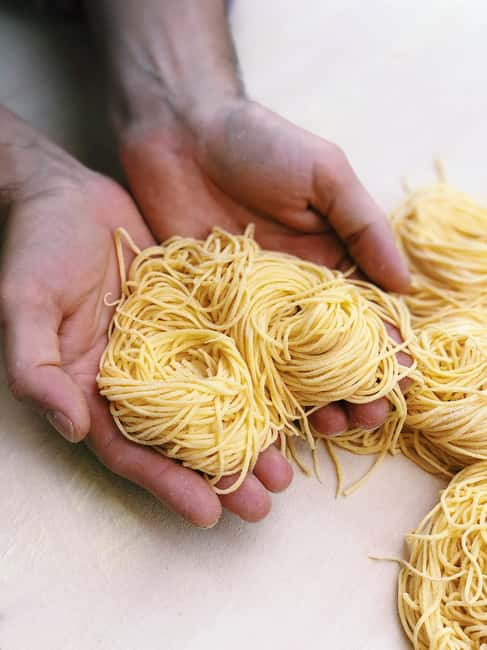
- More than ten pasta types: You work through classic forms such as tagliatelle and ravioli, along with pasta connected to Ligurian cooking.
- A real meal follows the class: Your work is served in three pasta courses with sauces, plus one glass of wine.
- Eight people is the maximum: The small format allows for direct help while you roll, shape, and fill the pasta.
- Michelin experience informs the lesson: The chefs share methods and stories drawn from professional kitchens in several countries.
- Four languages are available: You can take the class in English, Italian, Spanish, or Portuguese.
- The pace is active: Two hours is enough for a satisfying introduction, but not for an exhaustive study of every pasta tradition in Italy.
Starting in Genoa with a chef-led welcome
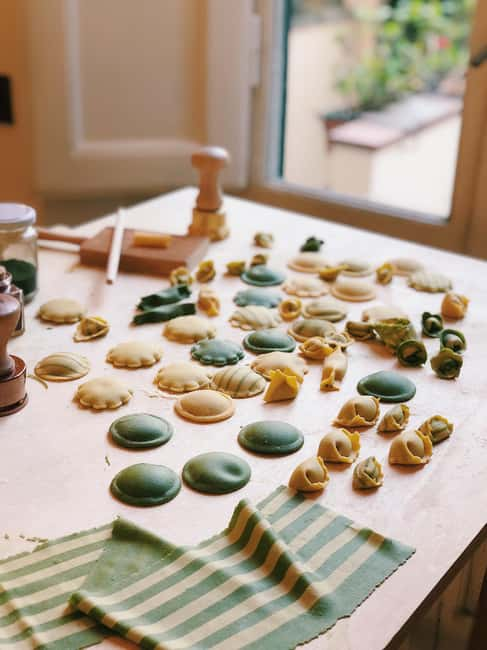
The class begins with a welcome and a short introduction to the chefs. Their background matters here, not as a badge to admire from a distance, but because it shapes the way they teach. They have worked in Michelin-starred restaurants and cooked across Europe and Australia before creating their own project, Dinoidue.
That mix should give you a useful balance. You get professional standards, but the setting is built around sharing food and stories rather than watching a formal demonstration from the back of a large room. The chefs explain what they are doing, then put the work in your hands.
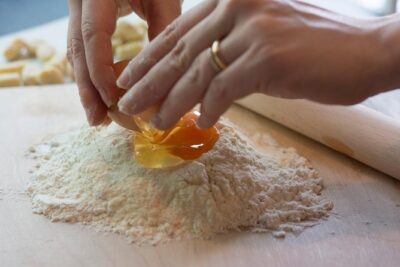
I prefer this format to a class where the instructor does all the difficult parts. Fresh pasta has a simple ingredient list, usually centered on flour and eggs, but the feel of the dough changes with pressure, moisture, and handling. You learn by seeing the correct texture and then testing your own.
The group limit of eight is one of the strongest practical features. With more people, a pasta class can turn into a queue for a pasta machine or a quick glance at the instructor’s hands. Here, you have a better chance of receiving help while rolling dough, cutting strips, or shaping filled pasta.
More Fresh Pasta Workshops in Italy:
- Rome: Pasta Making Class with Wine, Limoncello, and Dessert
★ 4.9 · 3,177 reviews - Pastamania – Florence Pasta Making Class
★ 5.0 · 3,050 reviews - Enjoy Spritz and Pasta Making in Piazza Navona
★ 5.0 · 1,681 reviews
Working through more than ten pasta shapes
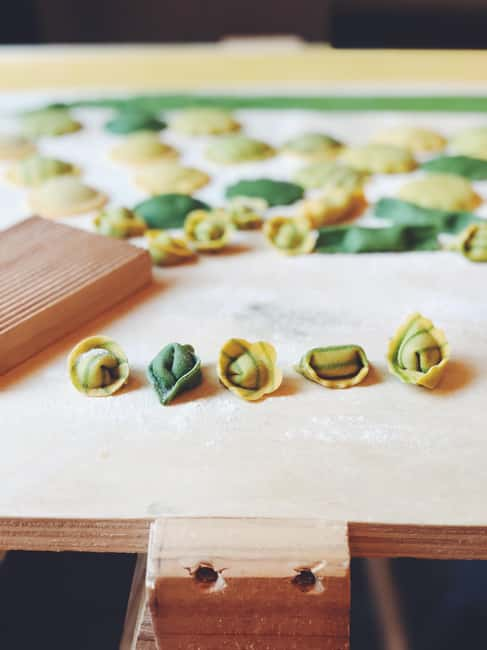
The hands-on section is the heart of the experience. You receive the ingredients and use professional cooking tools in the kitchen. The chefs guide you step by step through the basic techniques needed for fresh pasta, then build on those skills with a series of traditional shapes.
Tagliatelle is a useful starting point because it teaches control. You need to roll the dough evenly and cut it into strips that cook at roughly the same rate. The shape looks familiar, but making it by hand shows you why thickness and width matter.
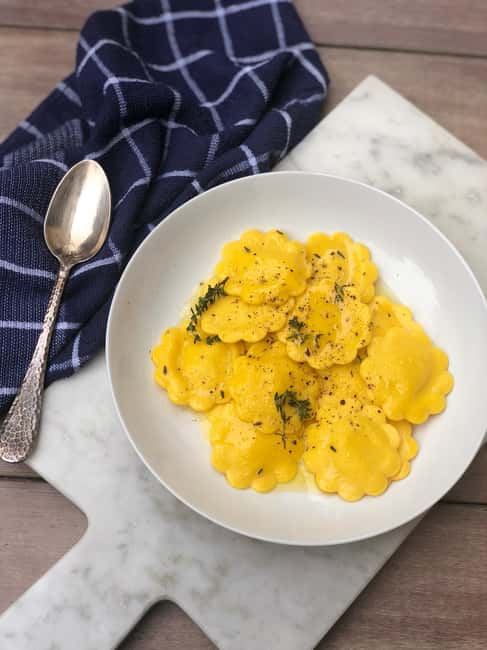
Ravioli adds another layer of work. You handle filling, seal the pasta, and pay attention to air pockets and edges. The process is more exact than cutting noodles, yet it is also one of the most rewarding forms to make. A well-sealed raviolo feels like a small piece of craft work.
The class also includes Ligurian specialties. That regional focus gives the workshop a stronger sense of place than a general Italian pasta lesson. Genoa is not simply a convenient room in which to make generic pasta. You get an introduction to the food traditions connected to Liguria, even though the session also covers familiar Italian forms.
The promise of more than ten types gives you variety, but it also explains the brisk pace. You are not likely to spend an hour perfecting one shape. Instead, you sample a wide range of techniques and leave with a working knowledge of several forms.
That is a good trade for most people visiting Genoa. You can practice the details at home later, using the information and tips provided at the end. If you want a highly specialized lesson focused only on filled pasta, regional dough ratios, or advanced shaping, this class may feel broad rather than exacting.
What Michelin experience adds to the lesson
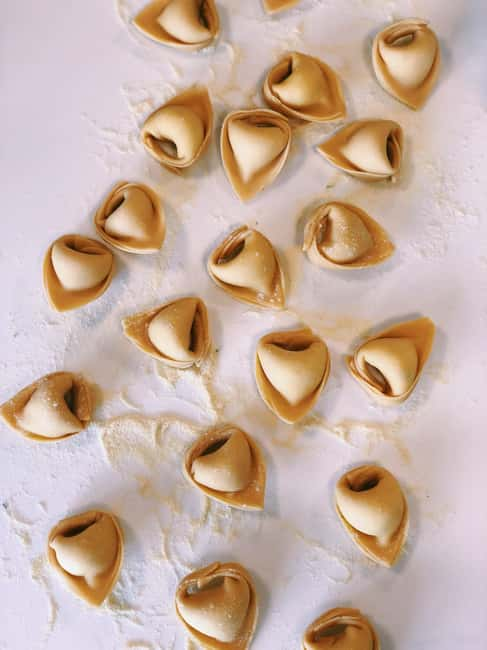
The reference to Michelin-starred kitchens should be understood in the right way. You are not booking a formal fine-dining meal or a restaurant tasting menu. You are joining a practical class taught by chefs whose professional experience includes Michelin-level kitchens.
That background can show up in small but useful ways. The chefs explain technique rather than only giving you a recipe. They share stories about their work, discuss the reasons behind their methods, and help connect the pasta to the finished dish.
For you, the value is the chance to ask questions in a relaxed setting. The class is available in English, Italian, Spanish, and Portuguese, so language should not be a barrier for many international visitors. Andrea has been praised as an excellent teacher, and the comments about professionalism and the way he talks about pasta suggest that the explanation is a major part of the experience.
I would pay attention during this section rather than rushing to the eating portion. The meal is enjoyable, but the useful souvenir is the technique. Take note of how the dough feels, how thin it should become, and how the shapes are sealed. Those are the details that make home practice less frustrating.
Sitting down for three pasta courses and wine
Once the pasta is ready, you sit down and eat the dishes you helped prepare. The meal is served as three pasta courses with sauces, according to the detailed experience description and the feedback from the class. That makes the $82 price easier to assess: you are paying for instruction, ingredients, kitchen access, equipment, and a meal rather than a short demonstration followed by a single bite.
The food is paired with one glass of wine. It is a modest inclusion, but it fits the social character of the workshop. You can share the table with the other participants, compare the shapes you made, and talk through the experience while eating.
This is also where the festive side of the class comes through. One note describes the final lunch as the special part of the day. Another highlights the pasta with sauces, the wine, and the pleasant company. Those details suggest that the meal is not treated as an afterthought.
Still, keep your expectations in proportion. The published price includes a glass of wine, not an open-ended drinks service. The focus is fresh pasta, not a long restaurant evening. If you want a quiet, private meal, a small group class may not suit you. If you enjoy eating with new people after working side by side, the shared table is part of the appeal.
The meal also gives you a practical test of what you learned. You can taste the difference between shapes and sauces, notice the texture of fresh pasta, and see how the pieces hold together after cooking. That connection between preparation and eating is more useful than making pasta only to watch someone else serve it.
More Chef-Led Pasta Classes in Italy:
- Rome Cooking Class: Make Pasta, Dine & Drink Wine With Local Chef
★ 5.0 · 1,263 reviews - 2-in-1 Pasta and Tiramisu Cooking Masterclass in Rome
★ 5.0 · 832 reviews - Pasta Fettuccine, Ravioli and Tiramisu MasterClass
★ 5.0 · 391 reviews - Pasta and Pizza Master Class with Pick Up in Sorrento
★ 5.0 · 380 reviews
Why the two-hour format works, and where it feels tight
Two hours is a sensible length for a cooking activity during a city visit. It fits into a morning or afternoon without taking over your day, and it leaves room for other time in Genoa. You get a focused introduction without committing to a half-day school.
The drawback is that two hours leaves little room for wandering off topic. The welcome, demonstrations, hands-on work, meal, and recap all need to fit into the same session. If you want long conversations about regional history, several rounds of dough testing, or a detailed look at pasta drying and storage, the class will probably feel short.
I see the pace as part of the design. The chefs want you to make many shapes, not master one technique through endless repetition. You should arrive ready to follow directions and keep moving. This is not the place to linger over every ravioli like a tiny work of art.
The small group helps offset the time limit. Eight participants means the instructor can watch the room and correct problems before they grow. You may still need to work efficiently, but you are not lost in a crowd.
Because starting times vary, check the available session before you commit other plans. The two-hour duration is fixed, but your schedule in Genoa may depend on the exact start time. Allow enough breathing room around the class so you are not watching the clock while trying to seal ravioli.
The value of $82 in Genoa
At $82 per person, this class is not the cheapest way to eat pasta in Genoa. You could order a plate for much less. The comparison is not quite fair, though, because the price includes instruction, ingredients, equipment, kitchen access, more than ten pasta preparations, a three-course pasta meal, wine, and take-home guidance.
I consider it good value for someone who wants an activity as well as lunch. The class gives you a skill you can repeat at home, and the professional setting makes the lesson more memorable than a meal alone. The value is weaker if you are mainly looking for a large meal or the lowest possible food cost.
The small group also matters when judging the price. Personal attention is part of what you are buying. A cheaper class with a large group may offer less help when your dough is too thick or your ravioli will not close.
The four language choices add practical value for international visitors. English, Italian, Spanish, and Portuguese are available, which lets you choose the language in which you are most comfortable asking questions.
You can also reserve now and pay later, and cancellation is free up to 24 hours before the activity for a full refund. Those policies make it easier to fit the class into a changing Genoa itinerary. They are useful details, but they do not replace checking the actual start time and leaving enough space in your day.
Who will enjoy this class most
I would recommend this workshop to couples, solo visitors, families with an interest in cooking, and friends who want an active meal. You do not need to arrive as an accomplished cook. The instruction is designed around basic pasta-making techniques, with chefs guiding you through each stage.
It is especially good for anyone who wants a direct connection to Ligurian food. You are not just eating local cuisine. You are handling the dough, shaping the pasta, and then tasting the result.
The class also suits people who like social activities. You share the kitchen and later eat together, so the mood is communal. If you prefer a private lesson or a silent demonstration, you may find the format too outgoing.
Families should check the practical fit for their own children, since no minimum age is provided. The available information supports calling it hands-on and small group, but it does not specify child policies or special arrangements.
Pasta experts may want more depth. The workshop covers many types in a short period, so it favors range over specialization. You will pick up methods and ideas, but you should not expect a professional certification or advanced culinary training.
What you take home besides a full stomach
The most useful take-home item is not a souvenir. It is the ability to repeat the process. You receive informational materials and tips designed to help you recreate the recipes at home.
The recap at the end gives the class a practical finish. The chefs review the techniques, which helps pull together the many shapes you have made. Pay attention to this part, especially if you plan to cook soon after returning home.
I would also write down the shapes you liked best while the lesson is fresh in your mind. More than ten types is a lot to remember in one sitting. A short personal note about the dough, shaping method, and sauce pairing could save you from trying to reconstruct everything later.
The best memory may be the contrast between your first attempts and the final meal. Handmade pasta looks simple on a plate, but the class shows you the small decisions behind it. That is why the experience has value beyond lunch.
Should you book the Genoa pasta masterclass?
Book it if you want a hands-on food experience, a small group, and a meal that grows directly from the work you do in the kitchen. The combination of Michelin-experienced chefs, Ligurian specialties, more than ten pasta forms, three courses, and wine makes the $82 price reasonable for an activity-led afternoon or morning.
Skip it if you want a long, specialized cooking course, a private setting, or the cheapest possible plate of pasta. The two-hour schedule is active, and the broad selection of shapes means you will learn many techniques without perfecting every one.
For most food-focused visitors to Genoa, I would book it. Choose a session that leaves you enough time to enjoy the meal without rushing, arrive ready to work with your hands, and treat the class as both lunch and a practical lesson in Ligurian cooking.
FAQ
How long does the pasta masterclass last?
The experience lasts two hours. Starting times vary, so check availability when choosing a session.
How much does the experience cost?
The listed price is $82 per person.
How many people are in the group?
The class is limited to eight participants.
Which languages are available?
The guided experience is available in English, Italian, Spanish, and Portuguese.
What food and drink are included?
You prepare more than ten types of pasta and eat the dishes made during the workshop. The meal includes three pasta courses with sauces and one glass of wine.
Can I cancel the booking?
Yes. You can cancel up to 24 hours in advance for a full refund. You can also reserve now and pay later.
Just added around Italy
- Volterra: Fresh Pasta Cooking Class at a Tuscan Farmhouse★ 5.0 · 33 reviews
- Vicenza: Pasta & Tiramisu Cooking Class at a Local’s Home★ 5.0 · 5 reviews
- Verona: Tortellini Cooking Class and Lunch with Mamma Ivana★ 5.0 · 20 reviews
- Verona: Pasta & Tiramisu Cooking Class at a Local’s Home★ 5.0 · 16 reviews
- Verona: Pasta Cooking Class with Wine Tasting★ 5.0 · 4 reviews
- Venice: Share Your Pasta Love in a Local’s Home★ 4.8 · 20 reviews
- Verona: Prosecco and Pasta Making Class at a Local’s Home★ 5.0 · 10 reviews
- Verona: My Granny’s secrets making gnocchi★ 5.0 · 7 reviews
Fresh Pasta Workshops, compared.
Pasta Making Class with Wine, Limoncello, and Dessert
Read our review →
Enjoy Spritz and Pasta Making in Piazza Navona
Read our review →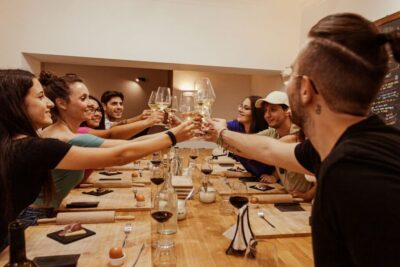
Pasta Making & Wine Tasting with Dinner in Frascati from Rome
Read our review →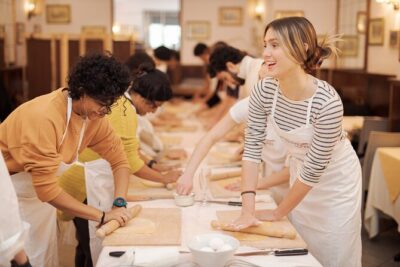
The Secrets to Learn Fresh Pasta and Tiramisù in a Glam Home
Read our review →
Pasta Making with Wine Tasting and Dinner in Frascati
Read our review →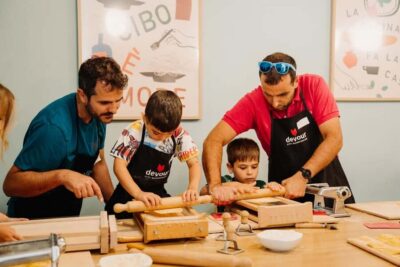
Browse the lists this tour appears in