
Review · ROME
Small Group Cooking Class in Rome: Handmade Pasta
Roll up your sleeves in Rome. This 2.5-hour class takes you from flour and ingredients to handmade ravioli and cavatelli in a restaurant kitchen near the center of Rome. I like the small group of no more than 10 people, which should give you room to ask questions, and I like that the meal, dessert, wine, apron, and cooking equipment are included. The main drawback is the price: at $225.01 per person, this is a costly lunch unless you place real value on learning the recipes.
The class also gets high marks for its friendly teaching style. Roy is praised for making the process easy to understand, entertaining the group, and answering plenty of questions. You should arrive ready to work with your hands, though, because the invitation to get messy is part of the point.
Key Things to Know Before You Book
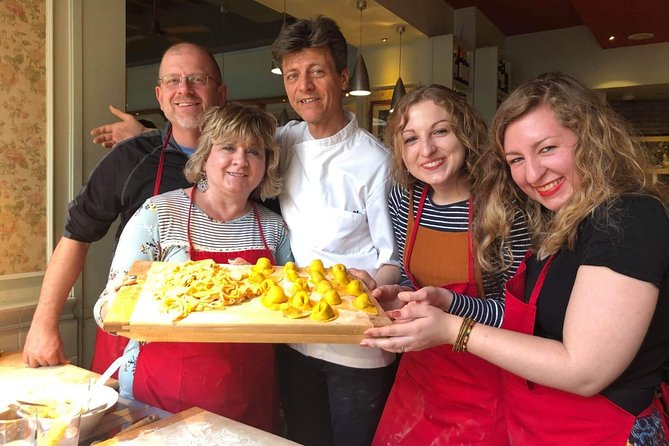
- Two classic pasta shapes: You make both handmade ravioli and cavatelli, giving you two different styles of dough work in one class.
- A restaurant kitchen in central Rome: The setting adds practical value because you learn with proper cooking equipment rather than a bare demonstration.
- Roy’s clear teaching style: The instructor is praised for simplifying the process and welcoming questions.
- A full meal is included: You eat the pasta you prepare, followed by dessert and Italian wine.
- A true small-group format: The class accepts no more than 10 people, creating a more personal setting than a large cooking demonstration.
- No transport is provided: You must make your own way to Vicolo della Scalaccia, 8, for the noon start.
What the Two-and-a-Half-Hour Class Is Really Like
The class begins at noon at a restaurant in the heart of Rome. The meeting point is Vicolo della Scalaccia, 8, 00153 Roma RM, Italy, and the activity finishes at the same location. The venue is near public transportation, but private transportation is not included, so you will need to plan your route before leaving your hotel or sightseeing stop.
The timing works well for a late lunch. You do not have to give up an entire day of sightseeing, yet the class is long enough to include instruction, hands-on preparation, cooking, and eating. The pace should feel more relaxed than a quick pasta demonstration because you are making two types of pasta from scratch.
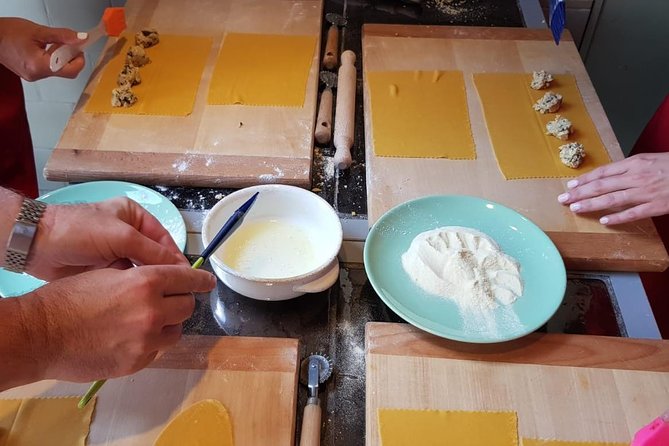
Once you arrive, the practical setup is already handled. You receive an apron, ingredients, and cooking equipment. That matters more than it may sound. You do not need to carry special tools through Rome, buy ingredients, or wonder if you are using the wrong type of flour or pasta cutter.
The class takes place in a working restaurant kitchen. You learn in a setting designed for food preparation, rather than standing beside a table while someone else does all the work. That makes the lesson more useful if you want to repeat the recipes at home.
More Fresh Pasta Workshops in Rome
- Rome: Pasta Making Class with Wine, Limoncello, and Dessert
★ 4.9 · 3,177 reviews - Enjoy Spritz and Pasta Making in Piazza Navona
★ 5.0 · 1,681 reviews - Pasta Making & Wine Tasting with Dinner in Frascati from Rome
★ 5.0 · 1,326 reviews
Starting From Scratch With Handmade Ravioli
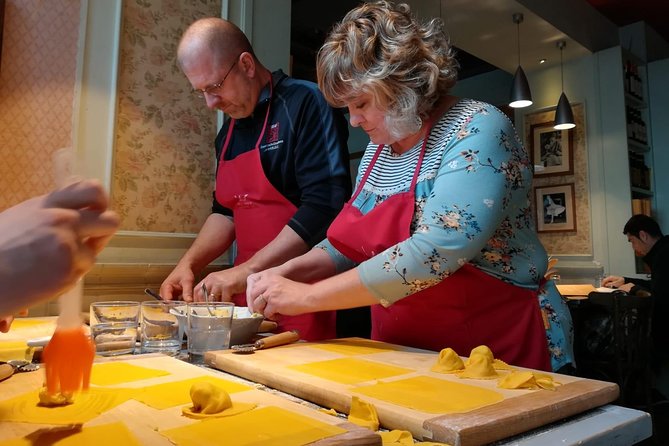
The first major part of the class focuses on handmade pasta from the beginning. You work with the ingredients provided and learn how the dough comes together before moving on to shaping and cooking. The supplied information does not specify every technique or recipe measurement, so you should think of this as a practical lesson rather than a printed cooking course.
Ravioli gives the class a familiar starting point. These filled pasta parcels require more than simply cutting dough into strips. You need to work with the filling, portion it, fold the dough, and seal the edges. That gives you a useful lesson in handling pasta carefully and avoiding waste.
I like that the class does not stop with one basic shape. Ravioli is recognizable and satisfying, but it can also feel like a special-occasion dish. Learning it in Rome gives the meal a festive touch, especially when you later eat the pasta you made yourself.
The small group should help here. With a maximum of 10 people, you have a better chance to see the demonstration and ask for help when the dough behaves badly. Pasta can be forgiving, but it can also be sticky, dry, or uneven. Clear answers matter more than a long speech, and Roy is specifically praised for simplifying the cooking process.
Making Cavatelli by Hand
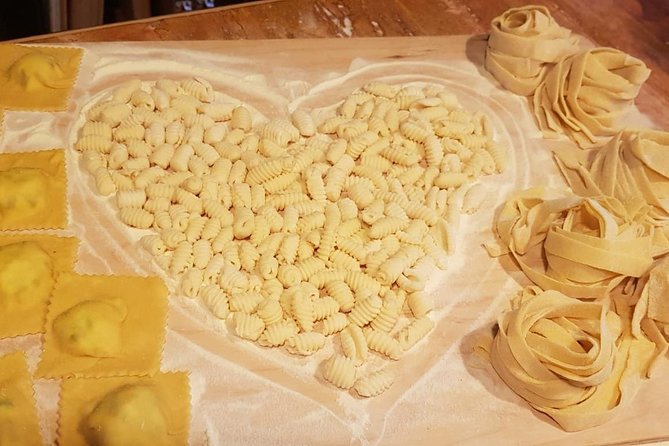
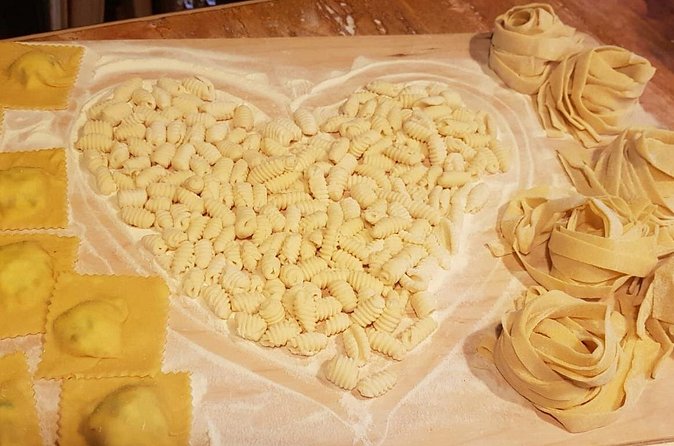
The second pasta shape is cavatelli. This gives you a different kind of hands-on task from ravioli. Instead of making filled pasta parcels, you work with a smaller, shaped pasta that has its own texture and form.
Making two types of pasta is one of the strongest reasons to choose this class. You are not spending the whole session repeating one technique. Ravioli shows you how to make filled pasta, while cavatelli gives you another way to shape dough and think about texture.
The class description does not promise a detailed regional lecture or a long discussion of pasta history. That is not a problem if your priority is doing the work. You are paying for an active lesson with food at the end, not for a museum talk with a cooking sample.
The ability to ask questions seems especially useful here. The two class comments emphasize that Roy answers questions and makes the process easier to follow. If you are unsure how much pressure to use or how your pasta should look, this is the point to speak up rather than quietly copy the person beside you.
Eating the Pasta You Made
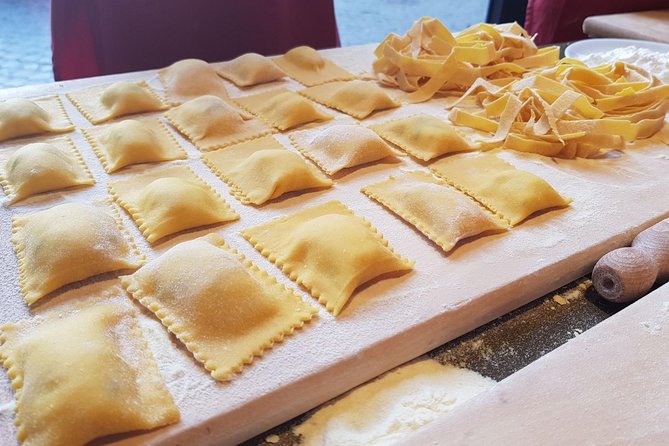
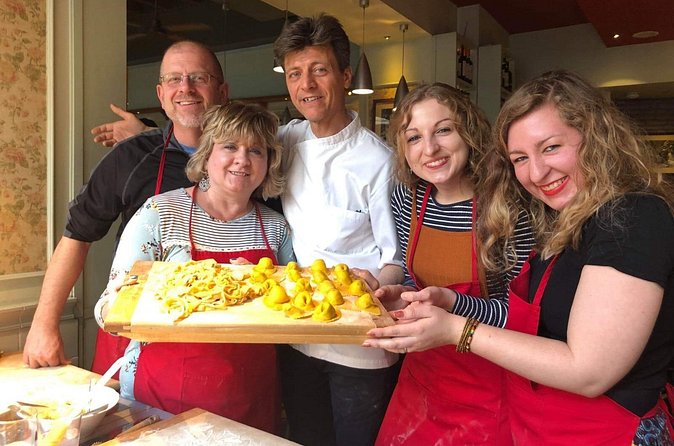
After the preparation and cooking, you sit down to eat the meal. The main course is the handmade ravioli and cavatelli you prepared during the class. That creates a direct payoff: you are not just watching food being made, and you are not eating an unrelated restaurant lunch.
The meal takes place at a lovely table decorated with pictures of popular Italian movie stars. It is a playful touch that gives the dining area a distinct personality. The setting may not appeal to everyone, especially if you prefer a plain, modern restaurant, but it adds some Italian character to the lunch.
Dessert follows the pasta. The information does not name the dessert, so you should not book this expecting a specific sweet. You can expect dessert to be part of the meal, but the exact item is not stated.
Italian wine is also included, and you sip it with the meal. This helps make the class feel like a social lunch rather than a technical workshop. If you do not drink wine, the description does not say whether an alternative is available, so that is worth checking before booking if it matters to you.
Same kitchen, a different thing to make:
- 3 in 1 Cooking Class near Navona: Fettuccine, Ravioli & Tiramisu
★ 5.0 · 7,376 reviews - Rome: Pasta & Tiramisu Class with Fine Wine by the Vatican
★ 4.9 · 4,852 reviews - Rome Cooking Class: Make Pasta and 3 Spritz Cocktails
★ 5.0 · 2,937 reviews - Rome: 3-in-1 Fettuccine, Ravioli, and Tiramisu Cooking Class
★ 4.9 · 2,704 reviews
Why Roy’s Teaching Style Matters
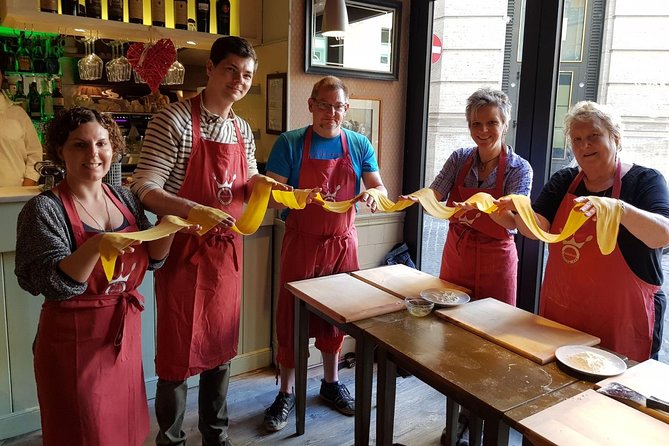
The strongest praise centers on Roy, the chef and teacher. He is described as both entertaining and effective, which is a useful combination in a hands-on class. A teacher can know the recipe perfectly and still make beginners feel clumsy. The comments suggest that Roy keeps the process approachable.
I would place special value on the chance to ask questions. Cooking lessons often move too quickly when the instructor gives a demonstration and then leaves everyone to work alone. Here, the small group and question-friendly approach should make it easier to correct mistakes as you go.
The class is also described as welcoming and free of pressure. That is important for pasta making because your first ravioli will probably not look identical to a chef’s. The stated aim is to get messy and enjoy yourself, so perfection is not the goal.
This is a good fit if you want a social activity that still teaches a real skill. It is less suited to you if you prefer a quiet meal, do not want to handle food, or want a tightly scripted professional kitchen experience with advanced instruction.
Is $225.01 a Fair Price?
At $225.01 per person, this is not an inexpensive lunch. You should judge the cost as a combination of a cooking lesson, a small-group activity, ingredients, kitchen equipment, an apron, the meal, dessert, and wine.
The small group adds value. A class capped at 10 people is much more personal than a large demonstration, especially when the main benefit is being able to ask questions. You are paying not only for the food but also for the instructor’s attention and the chance to make the pasta yourself.
The included meal also matters. You do not finish the class and then need to find lunch elsewhere. You eat the ravioli and cavatelli you prepared, then have dessert and wine. That makes the price easier to understand, though it will still feel high if you mainly want a quick pasta meal.
I would book it for a special occasion, a final-day activity, or a couple who values food experiences more than saving money. The class was described as a great way to end an Italy trip, and the timing supports that idea. You get a relaxed meal, a new skill, and a memorable activity without spending the entire day away from Rome.
If your budget is tight, compare this with the cost of an ordinary Roman lunch and ask yourself what you want from the outing. If you want instruction and hands-on practice, the fee has a clearer purpose. If you simply want fresh pasta, a restaurant meal will cost much less.
Who Should Choose This Rome Cooking Class?
I would recommend it most strongly to:
- Couples looking for a shared food activity
- Families who enjoy hands-on experiences
- First-time pasta makers who want patient instruction
- Food lovers who want to recreate part of the trip at home
- Visitors seeking a relaxed midday break from sightseeing
- Anyone who prefers a small group to a large tour
The class should suit beginners because the teaching is described as simple and low-pressure. You do not need to bring equipment or ingredients, and the instructor is praised for making the process easier to understand.
It can also work well for people who have already made pasta. You will still be preparing two different shapes and can use the question time to improve your technique. The value depends on how much you enjoy learning from a chef rather than simply eating the finished dish.
I would be more cautious if you have very limited time in Rome. The class takes about two and a half hours, begins at noon, and requires you to reach the meeting point on your own. It is not a quick stop between major sights.
Practical Details for the Noon Start
Your mobile ticket is accepted for the experience, and the class is offered in English. Confirmation is provided at the time of booking, which gives you the basic information you need before the day.
Plan to arrive at Vicolo della Scalaccia, 8, in time for the noon start. Since no private transportation is included, check the route from your previous activity and allow enough time to find the address. The meeting point is near public transportation, but the exact transport option depends on where you are staying.
The activity ends back at the meeting point. That makes it easier to plan lunch afterward, though you will already have eaten during the class. You can use the rest of the afternoon for sightseeing without arranging a separate return transfer.
The booking terms require special care. This experience is non-refundable and cannot be changed for any reason. If you cancel or request an amendment, the amount paid will not be returned. I would only book once your Rome schedule is firm.
What Makes This Experience Worth Remembering?
The best part is the connection between the work and the meal. You prepare ravioli and cavatelli, then eat those same dishes at the table. That simple link gives the class more meaning than a standard restaurant lunch.
I also like the balance between structure and play. You have a chef, ingredients, equipment, and a set start time, but the class encourages you to get messy and enjoy the process. That is a better mood for beginners than a lesson where every pasta piece must look perfect.
The movie-star photographs add a small visual detail to the meal, while the wine and dessert make the ending feel complete. None of these elements alone justifies the price, but together they create a full activity rather than a short demonstration.
The main limit is the lack of detail about the exact recipes, fillings, dessert, and wine. If you want a take-home recipe booklet or a named menu, you should ask before booking. The available information supports a fun, practical lesson, but not a highly technical culinary program.
Should You Book the Handmade Pasta Class?
Book this class if you want to spend part of your Rome visit cooking, asking questions, and eating a meal you helped prepare. The maximum group size of 10, Roy’s clear teaching style, and the inclusion of equipment, ingredients, dessert, and wine make the experience feel personal and well-rounded.
Skip it if $225.01 is more than you want to spend on lunch, if you need a fully flexible schedule, or if you would rather spend those two and a half hours visiting Rome’s sights. Also remember that the booking cannot be refunded or changed.
For the right person, this is a pleasant way to finish an Italy trip: practical, social, and centered on food you can try making again at home.
FAQ
Where does the cooking class take place?
The class takes place at a restaurant at Vicolo della Scalaccia, 8, 00153 Roma RM, Italy, in the heart of Rome.
What time does the class start?
The class starts at 12:00 pm.
How long does the experience last?
The cooking class lasts approximately 2 hours and 30 minutes.
How many people can join the class?
The activity has a maximum of 10 travelers.
Which types of pasta will I make?
You will make two types of handmade pasta: ravioli and cavatelli.
Is the class offered in English?
Yes. The experience is offered in English.
Are ingredients and cooking equipment provided?
Yes. Ingredients, cooking equipment, and an apron are provided as part of the class.
Is lunch included?
Yes. You eat the handmade ravioli and cavatelli you prepare. Dessert and Italian wine are also included.
Is transportation included, and can I cancel for a refund?
Private transportation is not included. The activity is near public transportation, but you must make your own way to the meeting point. The booking is non-refundable and cannot be changed for any reason.
More Small Group Pasta Classes in Rome
- Rome Small Group Pasta Making Class with Wine and Italian Chef
★ 5.0 · 295 reviews - Rome Cooking Class: Gelato and Fettuccine Small Group Experience
★ 5.0 · 128 reviews - Small-Group Pasta Making steps from the Vatican Museums
★ 5.0 · 44 reviews - Rome: Small Group Pasta cooking class near Piazza Navona
★ 4.9 · 8 reviews
Just added around Rome
- Spritz and Pasta! Spritz, Fettuccine & Tiramisù★ 5.0 · 2 reviews
- Top Class in Fettuccine, Ravioli, and Tiramisu★ 5.0 · 7 reviews
- Rome: Pasta and tiramisu class with wine pairing at Come Na Vorta★ 5.0 · 30 reviews
- Traditional Pasta Cooking Class with Tiramisu Small Group★ 5.0 · 7 reviews
- Trastevere Food Tour with Pasta-Making Class★ 5.0 · 5 reviews
- The Original Fettuccine Alfredo Experiences in Roma★ 4.5 · 38 reviews
- Italian Pasta & Dessert Class in Historic Center (3-Course Meal)★ 5.0 · 2 reviews
- The Pasta Factory Class★ 4.5 · 21 reviews
Fresh Pasta Workshops, compared.
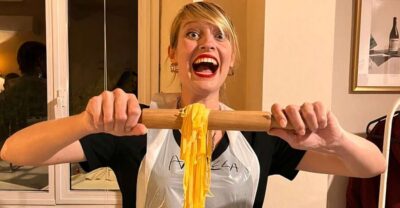
Pasta Making Class with Wine, Limoncello, and Dessert
Read our review →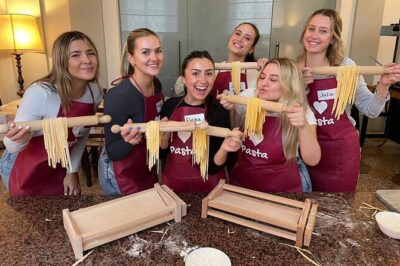
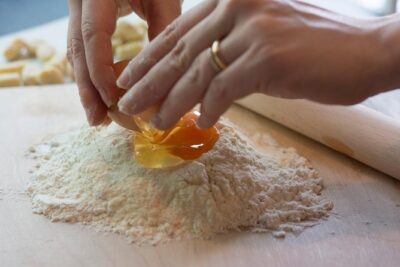
Enjoy Spritz and Pasta Making in Piazza Navona
Read our review →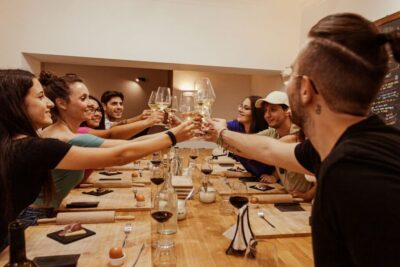
Pasta Making & Wine Tasting with Dinner in Frascati from Rome
Read our review →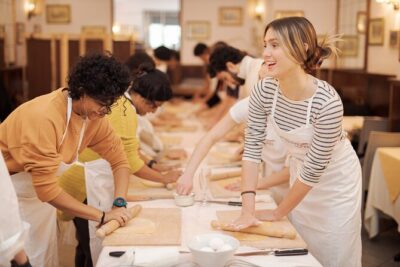
The Secrets to Learn Fresh Pasta and Tiramisù in a Glam Home
Read our review →
Pasta Making with Wine Tasting and Dinner in Frascati
Read our review →
Browse the lists this tour appears in