
Review · MILAN
Milan: Pasta, Tiramisu, Cooking Class! Learning Premium Products!
Good food starts with good ingredients. This Milan cooking class brings you into Rafael’s home for about three and a half hours of hands-on pasta making, sauce preparation, tiramisu, wine, and conversation. I like the focus on premium basics, especially aged Parmigiano Reggiano, single-origin DOP olive oil, and long-aged balsamic vinegar. I also like the small setting, which makes it easier to ask questions and take part rather than watch from the back of a large room.
The main thing to consider is the informal home setting. Rafael is warm, funny, and direct, but he also speaks freely and uses colorful language. That relaxed style will feel like dinner with an opinionated friend. If you prefer a quiet, polished culinary studio, this may not be your ideal match.
Key points before you book
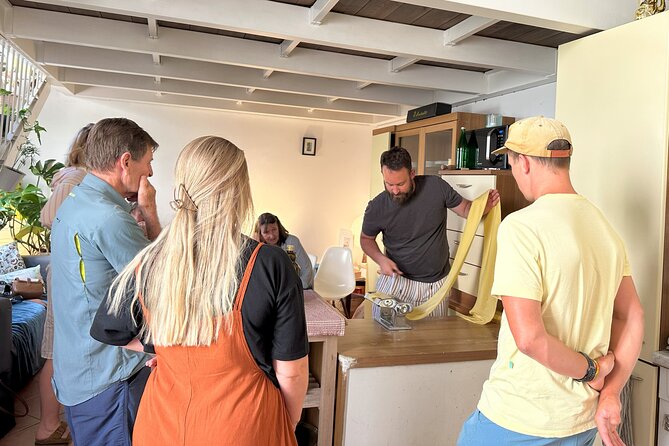
- You make fresh pasta from eggs and flour, then use a traditional pasta machine to prepare the noodles.
- Two sauces share the spotlight: a classic tomato sauce and a creamy Parmigiano Reggiano and butter sauce.
- Ingredient tasting comes first, with artisan bread, single-origin olive oil, and aged balsamic vinegar.
- Rafael teaches more than recipes, including food labels, Italian cooking customs, product quality, and stories from restaurant kitchens.
- The meal ends family-style, with your handmade dishes, tiramisu, and Italian wine.
- The group is intentionally small, although the details describe the limit as either six or eight people, so confirm the exact number when booking.
Why this Milan class feels different
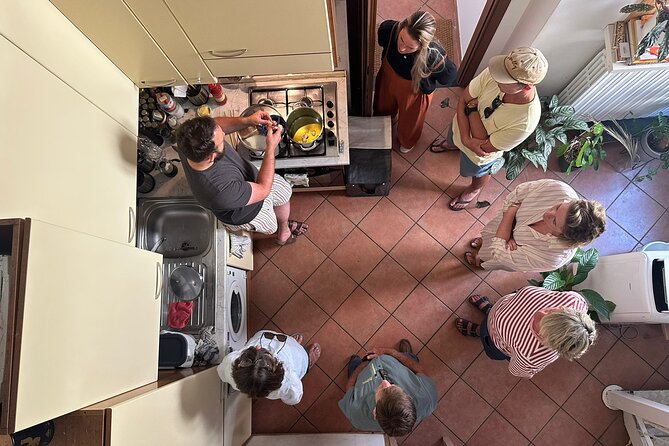
Milan has plenty of food tours, but this class is built around a meal you help create. You are not simply shown how pasta is made, then handed a plate. You mix, roll, shape, cook, taste, and sit down with the people beside you.
That matters because Italian cooking often looks simple on paper. Flour, eggs, tomatoes, butter, cheese, and coffee do not form a long shopping list. The skill lies in choosing good products and treating them properly. Rafael makes that point early by tasting ingredients before the cooking begins.
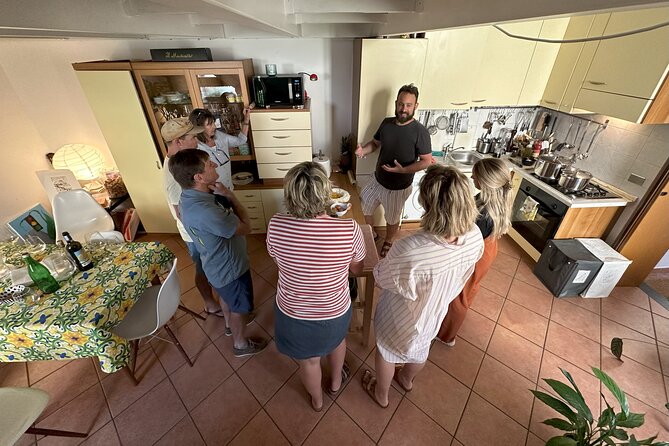
The class takes place at Via Giuseppe Ripamonti, 7/a, in Milan. It is near public transportation, and the activity ends at the same meeting point. You can select a lunch or early dinner class when booking, which helps you fit it around sightseeing.
The tone is personal rather than formal. Rafael welcomes you into his own living space, tells stories, plays music, and talks about food and Italian life. Several parts of the class feel more like a shared family meal than a standard tourist activity.
More Tiramisu Classes in Milan
- The Secrets to Learn Fresh Pasta and Tiramisù in a Glam Home
★ 5.0 · 1,182 reviews - Milan: Pasta and Tiramisu Cooking Class with Wine
★ 4.8 · 1,106 reviews - Gnocchi, Pasta, Tiramisù and Wine Class
★ 5.0 · 691 reviews
Starting with olive oil, balsamic vinegar, and bread
The opening tasting is not filler. You learn how to choose ingredients, then sample high-quality olive oil and aged balsamic vinegar with artisan bread.
This is one of the strongest parts for anyone who wants to cook Italian food at home. You get a direct lesson in how much flavor can come from a few well-chosen products. The olive oil is single-origin and DOP, while the balsamic vinegar is aged for 12 years. Those details help explain why a short ingredient list can still produce a powerful result.
You also learn to pay attention to labels. Rafael explains differences between products and discusses how to make sensible choices in the country where you live. That is more useful than simply being told to buy expensive ingredients. A good cooking class should help you understand what you are paying for.
The setting also affects this opening section. You are tasting at home, close to the host and the other people in the group. That makes it easy to ask why one oil tastes sharper or why one vinegar feels sweeter and thicker. If you enjoy food talk, this section can be as interesting as the pasta itself.
Making pasta from only eggs and flour
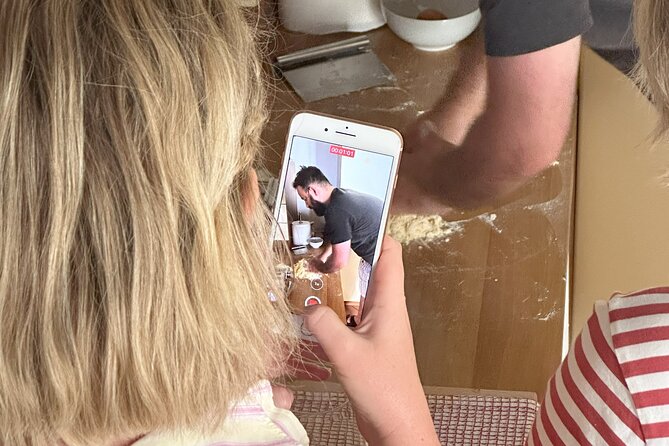
The main hands-on lesson begins with fresh pasta dough. The basic mix uses eggs and flour, followed by kneading and rolling with a traditional pasta machine.
You will likely spend more time working with the dough than watching Rafael. That is important. Fresh pasta is not difficult because the ingredient list is complicated. It is difficult because the texture must feel right, and because small changes in flour, moisture, and handling affect the result.
Rafael explains the differences between flours and how to adjust your method. This is especially helpful if you want to repeat the class at home, where flour types and egg sizes may differ from those in Italy.
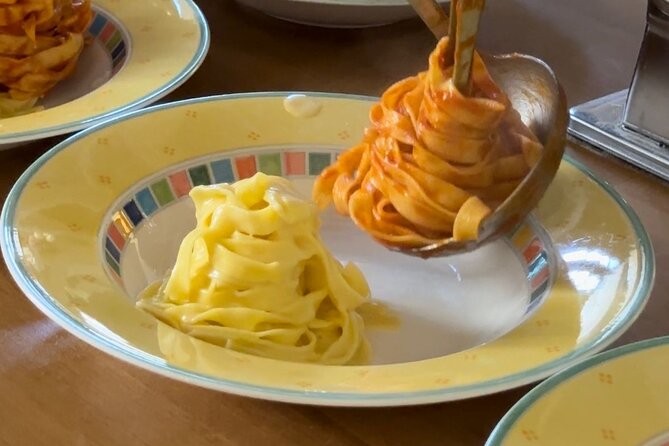
The pasta becomes fettuccine for the two main dishes. One version is paired with a classic tomato sauce. The other uses butter and 24-month-aged Parmigiano Reggiano in the style of Alfredo.
The recipes are deliberately simple. That gives you a clear lesson in technique. With only a few ingredients, there is nowhere for poor quality or careless cooking to hide. You learn why the timing, heat, mixing, and cheese matter.
Families can take part together. A seven-year-old was included in the preparation during one class, and children aged 12 and 15 were reported to have enjoyed the activity. Still, the class involves kitchen work and shared space, so adults should expect to help younger children stay involved.
The tomato sauce proves that simple can be serious
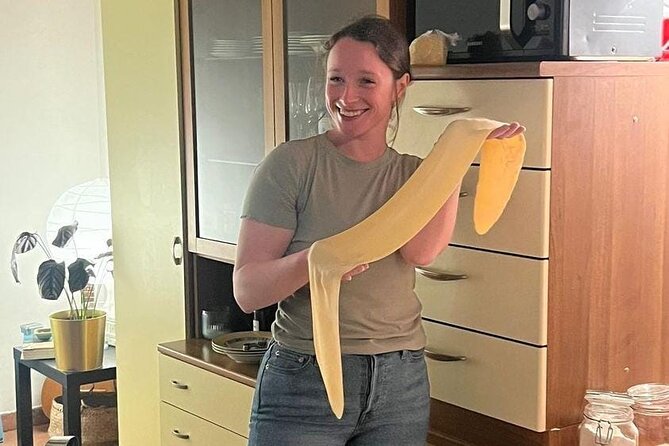
The tomato pasta is built around a small number of ingredients. That may sound basic, but it is exactly why this dish teaches well.
Rafael focuses on the quality of the raw materials and the cooking method. You learn that a tomato sauce is not just something to pour over noodles at the last minute. The sauce must be treated with care, and the pasta must meet it at the right moment.
This is the type of dish you can repeat often at home. You do not need a long recipe or specialist equipment beyond the pasta machine used in class. The lesson is less about copying a complicated menu and more about learning how to get a few essentials right.
The result also gives you a useful comparison with the creamy sauce. Two plates of fettuccine can taste completely different when the sauce, fat, cheese, and cooking method change.
Same kitchen, a different thing to make:
- Milan: Pasta and Tiramisu Small Group Cooking Class with Wine
★ 5.0 · 660 reviews - Milan: Fresh Pasta & Tiramisù Class in a Glamorous Home
★ 4.9 · 478 reviews - Milan Culinary Experience: Pasta & Gelato or Tiramisù Class
★ 5.0 · 337 reviews - Milan: Traditional Pasta and Tiramisù Masterclass
★ 5.0 · 307 reviews
Parmigiano Reggiano and butter create the creamy course
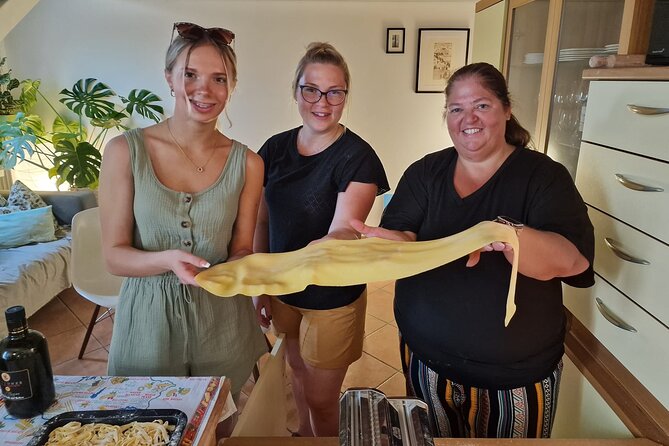
The second pasta dish uses 24-month-aged Parmigiano Reggiano and premium butter. It is described as a fettuccine Alfredo, though the Italian approach centers on quality butter, cheese, pasta, and proper mixing rather than a heavy cream sauce.
This is a good reminder that restaurant-style richness does not always require a long list of ingredients. Rafael shows how aged cheese brings salt and depth, while the butter gives the sauce its smooth body.
The ingredient tasting at the beginning makes more sense once you reach this course. You have already discussed why product quality matters. Now you see it on the plate.
For people who already cook often, the value is in the small decisions: how much cheese to use, how to bring the sauce together, and how to avoid turning a simple dish greasy or dull. For beginners, the class offers a manageable first pasta project.
Tiramisu closes the meal on a sweet note
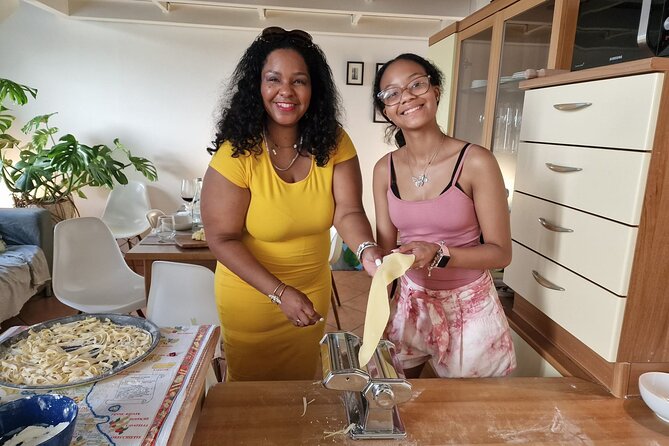
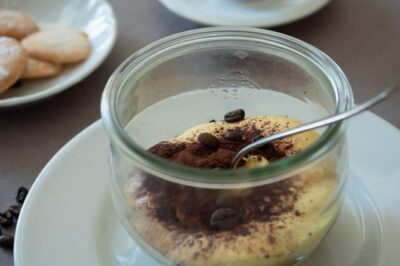
The dessert lesson covers traditional tiramisu and the story behind it. You prepare it with premium ingredients, then serve it as part of the final meal.
Tiramisu is a smart choice for a group class. It does not require complex equipment, but the balance of coffee, cream, sweetness, and texture matters. Rafael explains the technique rather than treating dessert as an afterthought.
The reviews repeatedly praise the tiramisu, and several people singled it out as one of the best parts of the meal. That makes sense for a dessert that can vary widely from one kitchen to another. You leave with a recipe you can make for friends and family, along with a better sense of how to keep it traditional.
One practical point: this class can run longer than the advertised three hours and 30 minutes. One person reported that it lasted a couple of hours beyond the listed time. That may be a sign of a generous, social evening, but you should avoid booking tight transportation or another timed activity afterward.
Wine, conversation, and the family-style meal
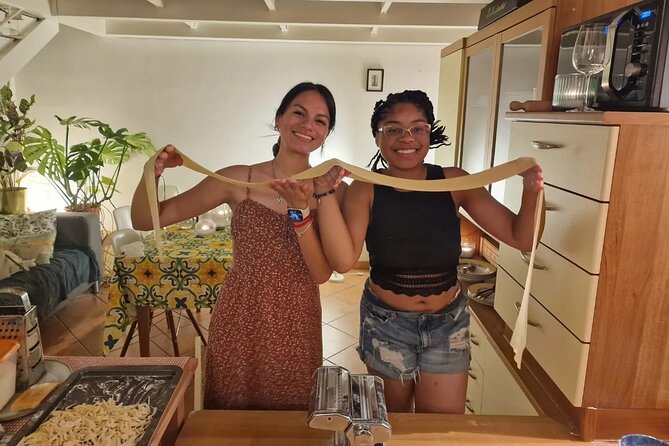
After the cooking, you sit down to eat what the group has prepared. Italian wine is included, and the meal is served in a family-style setting.
This final part is not just a reward for finishing the recipes. It is where the class becomes social. You share food with the other people in the room, compare your work, and hear more about Rafael’s experiences with Italian restaurant kitchens and life in Italy.
Several aspects of the host’s personality come through here. He is described as funny, generous, and warm, with a direct style that keeps the room lively. His music choices also receive praise. The mood can feel festive from the start, but it is still educational.
That informality has a tradeoff. Rafael is opinionated and speaks openly about his preferences. Some people will enjoy the frank humor and relaxed conversation. If you want a strictly neutral instructor who sticks to measurements and technique, you may find the style a little much.
What the $102.80 price includes
At $102.80 per person, this is not a budget meal, but the price covers more than a plate of pasta. You receive a roughly three-and-a-half-hour activity, ingredient tastings, hands-on cooking, two pasta preparations, tiramisu, and wine.
You are also paying for the instruction and the small group. The details describe the class as capped at six in the highlights, while the additional information gives a maximum of eight. Either way, this is far smaller than a large demonstration class, and that should give you more time at the counter and more access to Rafael.
The value is strongest if you want to learn techniques you can use later. You taste products, work with pasta dough, prepare sauces, and discuss labels and ingredients. If you only want a quick meal, a Milan restaurant will cost less and require less time. If you want a social cooking lesson with dinner included, the price is easier to justify.
The premium ingredients also affect the value. Aged Parmigiano, 12-year balsamic vinegar, single-origin olive oil, artisan bread, butter, and wine are part of the experience. You are not simply cooking with ordinary supermarket basics while being told that the lesson is authentic.
Who will enjoy this class most
I would recommend this for people who want a personal introduction to Italian cooking rather than a formal culinary course.
It suits:
- First-time pasta makers who want to work with dough directly
- Couples looking for a shared food activity
- Families with older children
- Home cooks who want better results from simple recipes
- Visitors who enjoy conversation, humor, and local stories
- Anyone who wants to learn how to judge olive oil, vinegar, flour, and cheese
It may be less suitable for people who dislike group dining, home-based activities, or strong personalities. It is also not a good choice if you have a fixed appointment soon afterward, since the class may run well past its stated duration.
The experience is offered in English. Service animals are allowed, and the meeting point is near public transportation. The mobile ticket and immediate booking confirmation make the arrival process simple, but you should still allow time to reach Via Giuseppe Ripamonti, 7/a.
Booking advice for lunch or early dinner
You can choose between a lunch and an early dinner session. Pick lunch if you want a long afternoon activity and a substantial meal before more sightseeing. Choose early dinner if you prefer to cook once the day’s museum visits and walks are finished.
Do not schedule this as a quick stop between major Milan sights. The official length is about three hours and 30 minutes, and the social format may extend it. You want enough time to enjoy the meal rather than watching the clock.
The activity is often booked about 31 days ahead, so it is sensible to reserve early if your Milan dates are fixed. Free cancellation is available when you cancel at least 24 hours before the start time. Cancellations or changes made within 24 hours are not refunded or accepted.
Should you book Rafael’s Milan cooking class?
Book it if you want to make fresh pasta, understand why ingredients matter, and share a relaxed meal in a private home. The best parts are the hands-on work, the premium product tasting, the two contrasting sauces, and Rafael’s warm, entertaining approach.
Skip it if you want a short, quiet, highly structured lesson or if you have strict plans after the class. The informal setting and strong personality are central to the appeal, not minor details.
For most food-focused visitors, I think the $102.80 price is fair because you receive instruction, ingredients, wine, dinner, and a personal introduction to Italian cooking. You leave with more than a full stomach. You leave with a method for making pasta and sauces at home, plus a better eye for the products that make simple Italian food taste so good.
FAQ
Where does the cooking class begin?
The class begins at Via Giuseppe Ripamonti, 7/a, 20136 Milano MI, Italy.
Where does the activity end?
The activity ends back at the meeting point on Via Giuseppe Ripamonti.
How long does the class last?
The stated duration is approximately three hours and 30 minutes. You should allow extra time because the class may run longer.
What language is the class offered in?
The class is offered in English.
How much does the class cost?
The listed price is $102.80 per person.
What dishes will I prepare?
You will prepare handmade fettuccine, a classic tomato sauce, a creamy Parmigiano Reggiano and butter sauce, and traditional tiramisu.
Is wine included?
Yes. The meal includes a bottle of Italian wine.
How large is the group?
The highlights describe a group capped at six people, while the additional details give a maximum of eight travelers. Confirm the exact group size when booking.
Can I choose the time of day?
Yes. You can choose a lunch or early dinner class when booking.
Is cancellation free?
You can cancel for a full refund up to 24 hours before the start time. Cancellations within 24 hours are not refunded, and changes within that period are not accepted.
Just added around Milan
- Share Your Pasta Love in a Local’s Home in Milan★ 5.0 · 3 reviews
- Small group Pasta and Tiramisu class in Milan by Cesarine★ 5.0 · 25 reviews
- Easily Make Pasta, Bruschetta & Tiramisù★ 5.0 · 14 reviews
- Rockin kitchen : Fresh Pasta lesson with Music Aperitif Dinner★ 5.0 · 28 reviews
- Pasta and Tiramisu Cooking Class at Come Na Vorta Navigli Milan★ 5.0 · 16 reviews
- Italian Cocktail + Art of Making Pasta Cooking Class In Unique Milan Location★ 5.0 · 16 reviews
- PRIVATE Cooking Class in a Local Home – Pick Your Menu★ 5.0 · 18 reviews
- Milan: The Ultimate Pasta Mastery Workshop★ 4.0 · 21 reviews
Tiramisu Classes, compared.
3 in 1 Cooking Class near Navona: Fettuccine, Ravioli & Tiramisu
Read our review →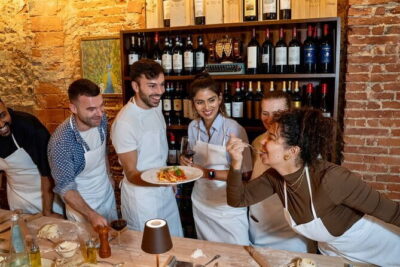
Pasta & Tiramisu Cooking Class with Unlimited Wine
Read our review →
Pasta & Tiramisu Class with Fine Wine by the Vatican
Read our review →
3-in-1 Fettuccine, Ravioli, and Tiramisu Cooking Class
Read our review →
Learn to Make Pasta & Tiramisu with Wine and Limoncello Included
Read our review →
Cooking Class Pasta & Tiramisu Making Unlimited Wine
Read our review →
Become a Masterchef in Rome: Pasta, Ravioli and Tiramisù Class
Read our review →
Fettuccine & Tiramisù: Cooking Class with Wine & Limoncello
Read our review →Browse the lists this tour appears in