
Review · BOLOGNA
Bologna: Original Lasagna & Gelato Class at a Cooking School
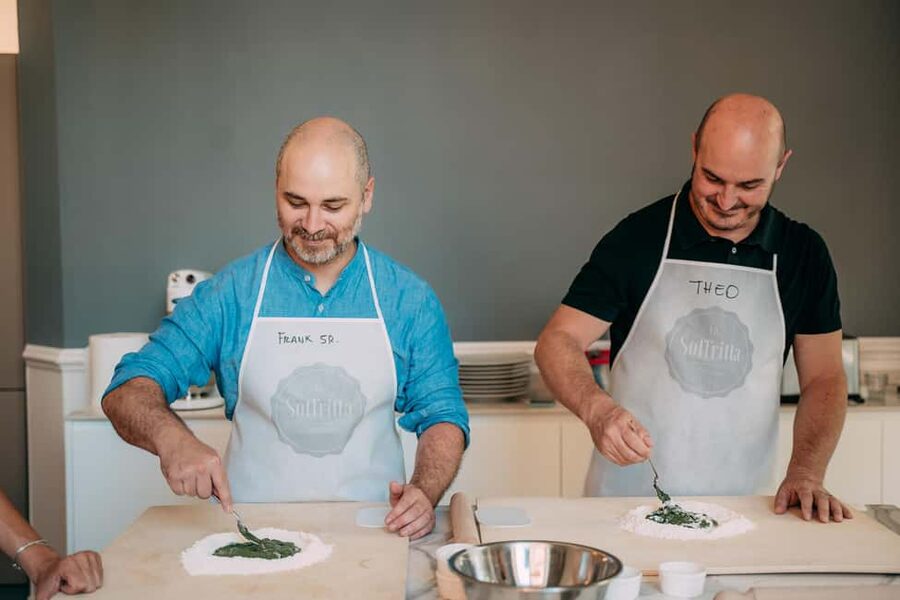
Lasagna here wears a green coat. This Bologna cooking class teaches the traditional Emilia-Romagna version with spinach pasta, handmade béchamel, and slow-cooked ragù. I especially like the small-group attention and the chance to finish with a proper meal, not just a quick taste. The $69 price also covers wine, cured meats, cheese, equipment, and a cookbook.
The session takes place at La Soffritta, a new, polished school inside the Falcone and Borsellino Gallery. I like that the recipes are practical enough to repeat at home, and that the English-speaking chefs explain the reasons behind each step. One point to note: the ragù is prepared partly in advance, so you will assemble and use it rather than make the entire sauce from raw ingredients.
This is a good fit for adults who want a hands-on taste of Bolognese food culture. Some parts involve watching the chef, especially the sauces, and one participant wished the setup had an overhead mirror. Still, the near-perfect 4.9 rating from 59 verified bookings reflects a class that is organized, friendly, and very satisfying at the table.
Key points at a glance
- Green pasta from scratch: Knead, rest, roll, and cut spinach dough for traditional Bolognese lasagna sheets.
- The right lasagna lesson: Prepare béchamel by hand, use pre-cooked ragù, and build the dish layer by layer.
- Two possible desserts: Make one or two gelato flavors with seasonal ingredients, such as yogurt gelato or pear sorbet.
- Aperitivo included: Taste mortadella, regional ham, cheese, and Emilia-Romagna wine while the lasagna cooks.
- Recipes to take home: The cookbook includes the dishes from the class plus extra Italian recipes and tips.
- Central but not fully accessible: Meet inside La Soffritta in the Falcone and Borsellino Gallery, arriving 10 minutes early.
Why Bolognese lasagna is different
Many people picture lasagna as a stack of pale pasta, tomato sauce, cheese, and meat. In Bologna, the traditional version has a different look and feel. The pasta sheets are green because spinach is worked into the dough, and the finished dish depends on a careful balance of ragù, béchamel, and pasta.
That distinction gives this experience a real sense of place. You are not simply learning a generic Italian comfort food. You are learning a local preparation tied to Emilia-Romagna, the food-producing region known for dishes such as tortellini, tagliatelle, mortadella, and Parmigiano.
I like cooking classes that explain technique rather than just handing you a recipe. Here, the method matters. You learn how thin the dough should be, how the béchamel should come together, and how the layers work as one dish. The result is useful beyond this single meal.
The school is in the heart of Bologna, inside the Falcone and Borsellino Gallery. The kitchen is described as modern, elegant, spacious, and welcoming, with large windows and plenty of daylight. That matters during a hands-on lesson. You want a clean, comfortable space where you can see the dough, sauces, and tools clearly.
More Ravioli and Gnocchi Classes in Bologna
- Bologna: Pasta Tagliatelle al Ragu Cooking Class with Wine
★ 4.7 · 225 reviews - Authentic Bologna Home Cooking Class: Tagliatelle & Tortellini
★ 4.5 · 136 reviews - Bologna: Traditional Bolognese Pasta Making with Meal
★ 4.8 · 97 reviews
Rolling spinach pasta by hand
The pasta portion is the heart of the class. You begin with fresh dough made with spinach, following the traditional green-sheet recipe associated with Bolognese lasagna.
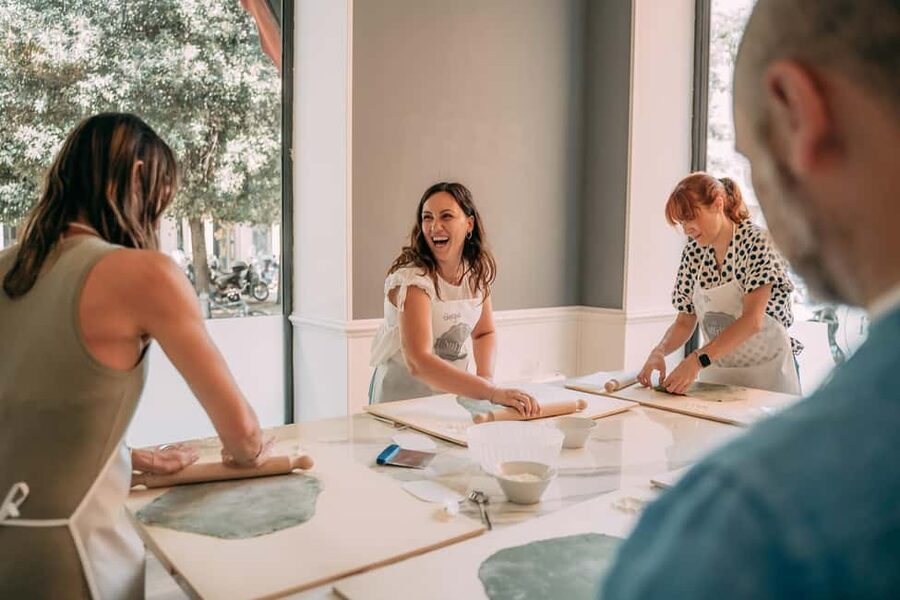
The chef guides you through kneading the dough, allowing it to rest, rolling it thin, and cutting it into suitable pieces. These are simple steps in theory, but fresh pasta has a feel that is hard to learn from a cookbook. You need to notice the dough’s firmness, its surface, and how it changes under pressure.
That hands-on practice is one of the strongest reasons to book this experience. Several participants left feeling more confident about making pasta at home. The instruction appears to be paced so the group keeps moving without losing the teaching.
You should not expect every minute to involve your own hands. One participant, an experienced home cook, felt there was more watching than expected, especially during the sauces. That is a fair point. In a group kitchen, the chef must demonstrate some steps for everyone, and the amount of personal work may vary.
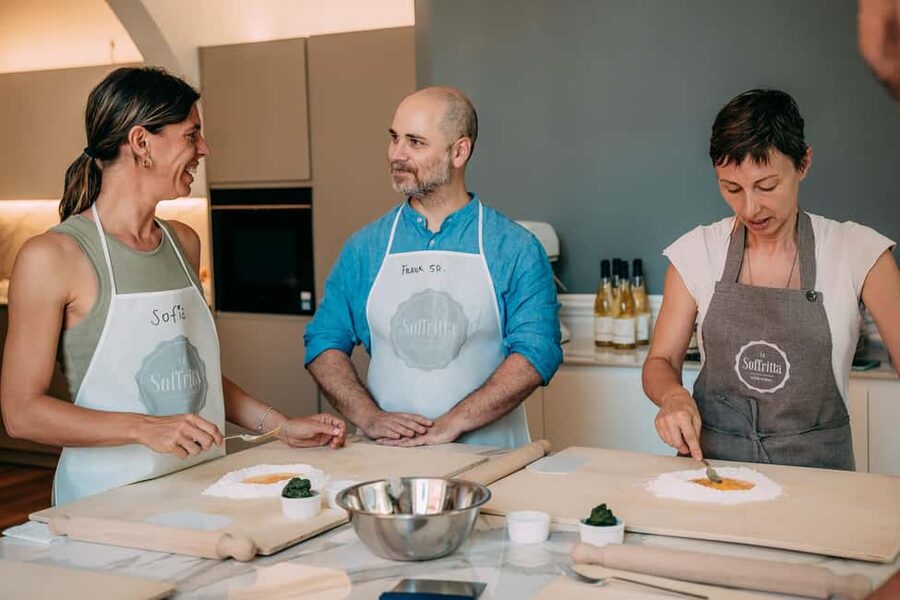
The class is generally small, which helps. Reports of groups receiving close attention are common, and some sessions have been private or nearly private. Chef Moina, also referred to as Monia in the feedback, received particular praise for patient explanations and useful techniques. Francesca was also singled out for making the experience engaging and informative.
An overhead mirror would improve the setup. Without one, you may need to shift your position to see exactly what the chef is doing. This is a minor issue, but it matters if you learn best by watching rather than listening.
Béchamel, ragù, and the art of layering
Once the pasta has rested and been rolled, the class turns to the two sauces that give the dish its character.
You make the béchamel by hand. This creamy white sauce is not difficult, but it rewards attention. You will see how the mixture thickens and how its texture needs to remain smooth enough to spread between the pasta sheets.
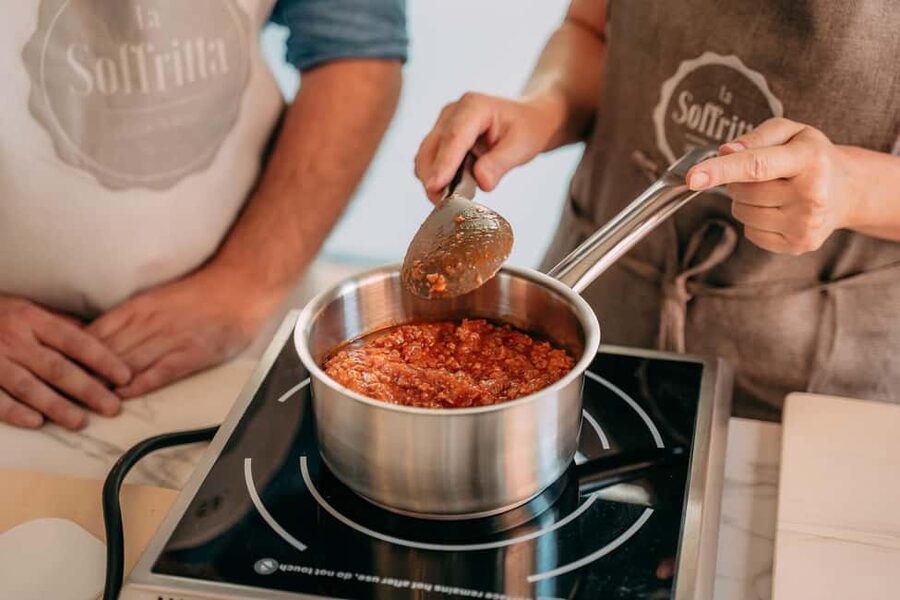
The Bolognese ragù is different. The sauce has already been slow-cooked in advance because a proper ragù takes time. You will work with the prepared sauce and learn how it fits into the dish, but you will not complete the entire ragù process from beginning to end.
That limitation is worth understanding before you book. If your main aim is to learn a full meat-sauce recipe, this class will not cover every stage. If your goal is traditional lasagna, the choice makes sense. The long simmering happens before the group arrives, leaving enough time for pasta, béchamel, assembly, dessert, and the shared meal.
You then layer the green pasta, béchamel, and ragù. This is where the separate lessons begin to make sense. The pasta must be thin enough, the béchamel must spread well, and the ragù must be distributed so no single layer overpowers the others.
The lasagna goes into the oven while you move on to dessert. That timing keeps the session active and avoids the dead period that can make some cooking classes feel slow.
Seasonal gelato while the lasagna bakes
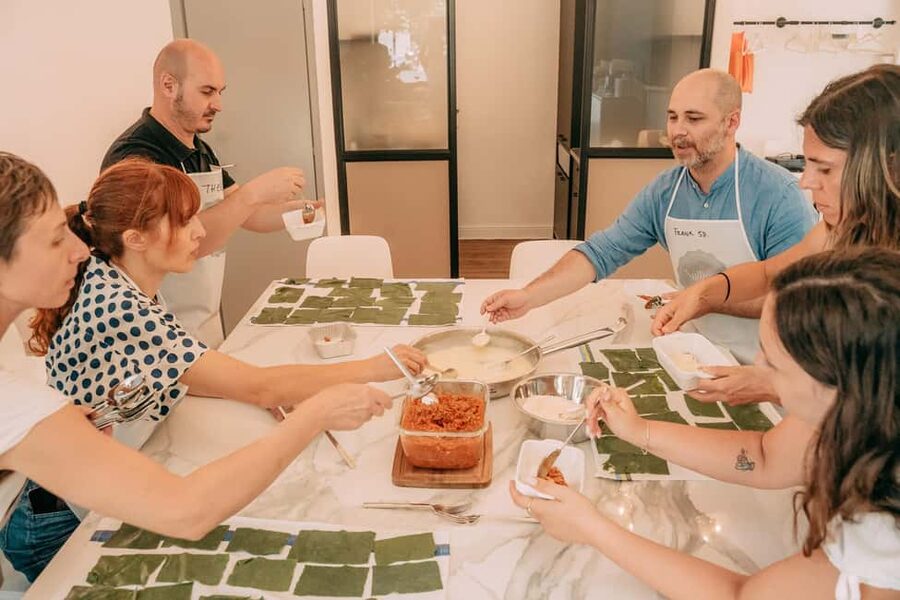
The sweet portion is more than a token dessert demonstration. You make one or two gelato flavors using seasonal ingredients and straightforward techniques.
Past combinations have included yogurt gelato and pear sorbet. Those flavors show the range of the lesson: one creamy preparation and one fruit-based option. Depending on the session and ingredients, you may prepare one flavor or two.
I like this pairing because it gives you a second skill to take home. Fresh pasta can feel like a special project, but gelato and sorbet techniques may be easier to adapt to your own kitchen. The recipes are presented as approachable rather than as restaurant secrets.
The dessert also gives the class a nice change of pace. After working with dough and sauces, you are making something cool, sweet, and seasonal while the main dish finishes cooking.
The information provided does not promise a specific gelato flavor for every date, so you should expect the ingredients to vary. That is part of the appeal, but anyone hoping for pear sorbet specifically should not assume it will be offered at every session.
More Gelato Making Classes in Bologna:
- Bologna: Pasta Cooking Class, Ragu, Spritz, Wine & Gelato
★ 4.9 · 775 reviews - Bologna Local Pasta Cooking Class, Ragu, Spritz, Wine & Gelato
★ 5.0 · 527 reviews - Bologna Original Lasagna and Gelato Class with Aperitif
★ 5.0 · 18 reviews - Florence Pizza or Pasta Class with Gelato Making at a Tuscan Farm
★ 5.0 · 6,801 reviews
An aperitivo before the meal
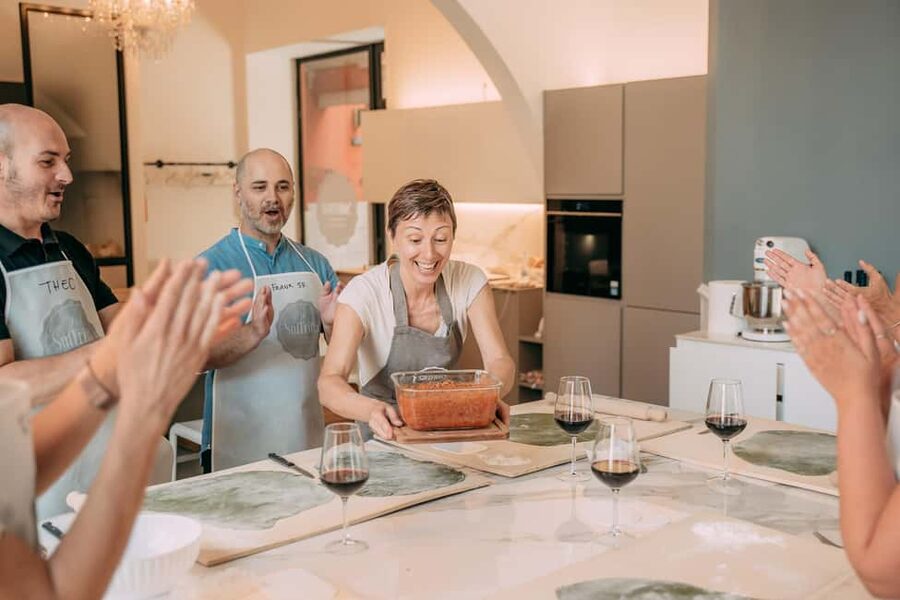
While the food comes together, the class includes a traditional aperitivo with local wine, mortadella, regional ham, and cheese.
This is not just an extra snack. It gives you a taste of Emilia-Romagna’s food culture before the main course. Mortadella is strongly associated with Bologna, and regional cured meats and cheese help put the pasta lesson into a wider local context.
The aperitivo also creates time to talk with the other participants. A cooking class can be a pleasant way to meet people you would not otherwise encounter during a city break. The format feels more social than a standard restaurant meal because everyone has helped make what comes next.
The wine is from Emilia-Romagna, adding another local touch. If you do not drink alcohol, the supplied information does not specify an alternative, so mention any needs when booking.
Eating the lasagna and gelato you made
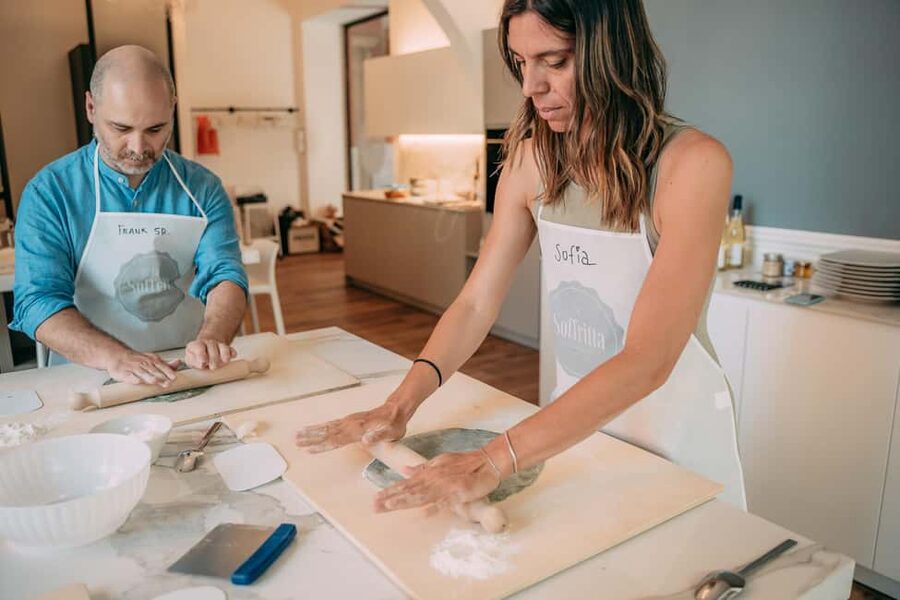
At the end, you sit down to eat the lasagna and gelato. This shared meal is the reward for the work, but it also serves as a useful final lesson. You can taste whether the pasta is thin enough, how the béchamel balances the ragù, and how the finished layers hold together.
The food receives some of the strongest praise. One participant called it the best lasagna they had tasted, while others said the meal was delicious and easy enough to reproduce at home. Those are encouraging signs, especially for a class aimed at practical cooking rather than a one-time performance.
The meal is presented as lunch or dinner, depending on the start time. The full experience may last from 1.5 to 3 hours, so allow flexibility. The longer sessions likely include more time for preparation, conversation, and eating, but you should check the available starting time when choosing a date.
You will also receive a cookbook with the recipes prepared during the class, along with additional Italian classics and cooking tips. This adds real value to the price. A recipe card for one dish is easy to lose or forget. A small collection gives you more reason to continue cooking after Bologna.
How much value do you get for $69?
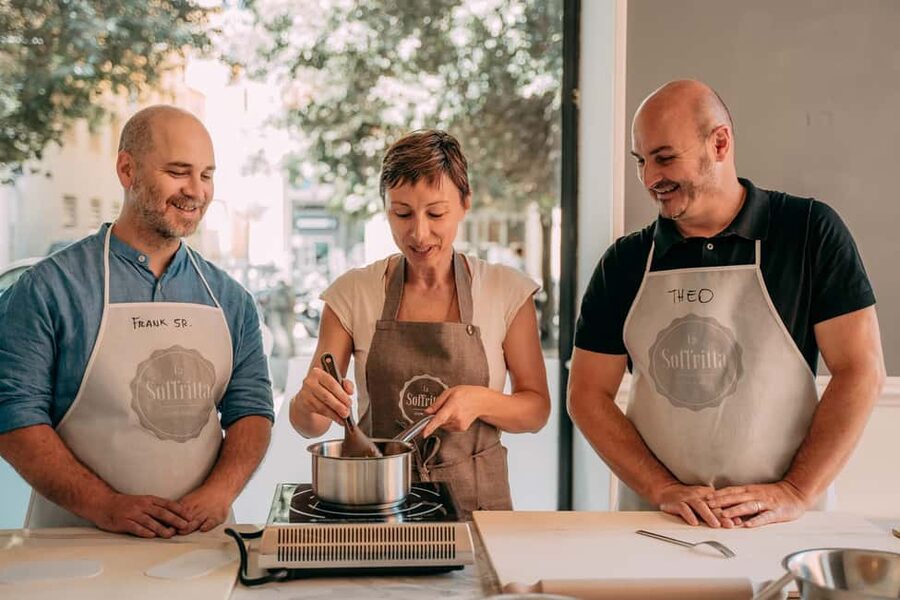
At $69 per person, this is a fair price for a central Bologna food activity that includes instruction, ingredients, equipment, an apron, aperitivo, wine, the full meal, dessert, and a cookbook.
The value is strongest if you would otherwise pay separately for lunch or dinner. You are not only watching a demonstration. You are learning pasta techniques, making béchamel, assembling lasagna, preparing gelato, tasting regional products, and sitting down to eat.
It is less compelling if you want a highly technical professional course or a full lesson in ragù from raw ingredients. The class is designed for visitors who want a practical introduction to local cooking, not culinary school certification.
The small-group format improves the deal. Close attention can make the difference between leaving with a nice memory and leaving with enough confidence to try the recipe at home. The feedback repeatedly praises the organization, clean kitchen, kind instructors, and useful explanations.
Who will enjoy this cooking class most?
I would recommend it to adults who enjoy food, want a social activity in Bologna, and like the idea of learning by doing. It suits couples, families with older teenagers, friends, and solo participants who do not mind joining a group.
It is especially useful for anyone curious about the difference between home-style lasagna and the Bolognese version. One participant attended with adult children and found the class both tasty and confidence-building. Another said the lesson changed their understanding of how differently lasagna can be made.
You need to be comfortable standing and working in a kitchen. The activity is not suitable for wheelchair users, and some parts may be difficult for people with reduced mobility or other disabilities. Contact the school if you are unsure about your specific needs.
Children under 14 cannot participate, and minors who are old enough to attend must be accompanied by an adult. Pets are not allowed.
Tell the school about food allergies or dietary requirements in advance. The information does not promise that every dietary restriction can be accommodated, so do not wait until you arrive.
Meeting point and practical timing
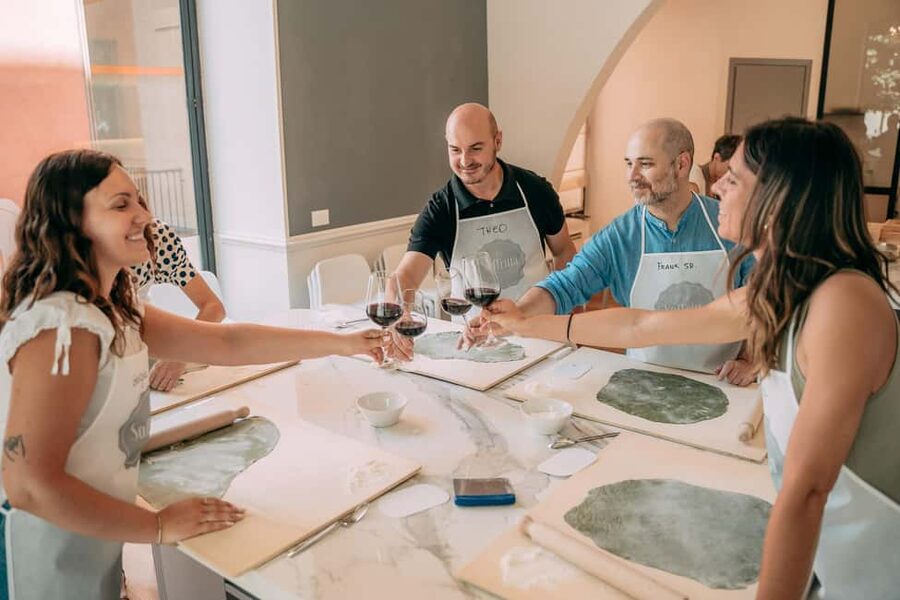
The chef waits inside the cooking school La Soffritta, located in the Falcone and Borsellino Gallery. Use the provided Google Maps location and arrive 10 minutes early.
There is no hotel pickup or drop-off. You will make your own way to the school, so build in enough time to find the gallery and settle in before the start.
The class is taught in English. The chefs receive consistent praise for clear instruction, patience, and friendly teaching. Chef Moina, Monia, and Francesca are among the instructors named in the feedback, though the chef on your date may be different.
The activity requires at least two participants to run. You can reserve now and pay later, and cancellation is free up to 24 hours before the start for a full refund. Those policies help if your Bologna schedule is still shifting.
Should you book the Bologna lasagna and gelato class?
I would book this if you want a relaxed, food-focused activity that ends with a proper Bolognese meal. The combination of spinach pasta, béchamel, ragù, gelato, regional wine, and cured meats gives you a broad taste of local cooking in one sitting.
Go in knowing that the ragù is partly prepared and that some sauce work will be demonstration rather than individual practice. If you want every step to be completely hands-on, ask how much active cooking your group will do.
For $69, the package is strong: a central school, an English-speaking chef, a small-group feel, a full meal, and recipes to use later. Book it if you would rather eat a meal you helped create than simply order another plate of pasta.
FAQ
Where does the cooking class take place?
The class takes place at La Soffritta cooking school inside the Falcone and Borsellino Gallery in Bologna.
How early should I arrive?
You should arrive 10 minutes before the scheduled start time.
How long does the experience last?
The listed duration is between 1.5 and 3 hours. Starting times and exact duration depend on availability.
Is the class taught in English?
Yes. The instructor language is English.
What food do I make?
You make traditional Bolognese lasagna with spinach pasta, béchamel, and slow-cooked ragù. You also make one or two gelato flavors using seasonal ingredients.
Is the ragù made completely during the class?
No. The ragù is partially prepared in advance because traditional ragù requires a long cooking time. You use it while assembling the lasagna.
What is included in the price?
The price includes the professional chef, lasagna and gelato instruction, ingredients, equipment, an apron, an aperitivo with wine, cured meats and cheese, lunch or dinner, and a cookbook.
Can children join the activity?
Children under 14 cannot participate. Minors who are allowed to attend must be accompanied by an adult.
Is the class suitable for wheelchair users?
No. The activity is listed as unsuitable for wheelchair users, and some parts may not be easily accessible for people with reduced mobility or other disabilities.
Just added around Bologna
- Colorful Pasta Workshop in Bologna with meal★ 5.0 · 2 reviews
- 3 hour Lasagna Bolognese cooking class★ 5.0 · 6 reviews
- Cesarine: Small group Tortellini Class at Local’s Home in Bologna★ 5.0 · 18 reviews
- Pasta Making Class: Tagliatelle & Bolognese Sauce★ 5.0 · 15 reviews
- Tortelloni and Tagliatelle Cooking Class in Bologna + Wine★ 3.0 · 2 reviews
- Cesarine: Pasta & Tiramisu Class at a Local’s Home in Bologna★ 5.0 · 29 reviews
- Lasagna Masterclass: Learn, Cook & Taste Authentic Bolognese★ 5.0 · 4 reviews
- Pasta Class in Bologna in a 15th-Century Estate Home with Chiara★ 5.0 · 25 reviews
Ravioli and Gnocchi Classes, compared.
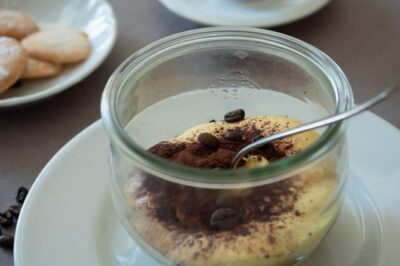
3 in 1 Cooking Class near Navona: Fettuccine, Ravioli & Tiramisu
Read our review →
3-in-1 Fettuccine, Ravioli, and Tiramisu Cooking Class
Read our review →
Fettuccine Pasta Cooking Class in Rome’s City Center
Read our review →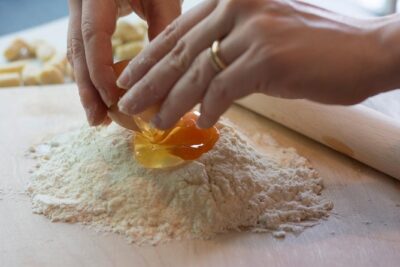
Become a Masterchef in Rome: Pasta, Ravioli and Tiramisù Class
Read our review →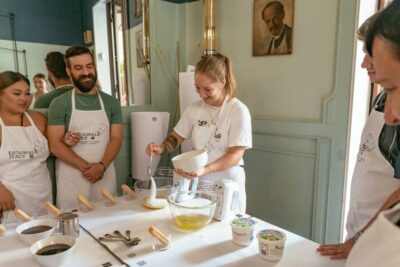
Fettuccine & Tiramisù: Cooking Class with Wine & Limoncello
Read our review →
Rome Pasta and Tiramisu Class: Ravioli, Fettuccine & Fine Wine 5*
Read our review →
Pasta Cooking Class in Rome – Fettuccine Class in Piazza Navona
Read our review →
Browse the lists this tour appears in